2027 Choosing an Online Data Science Master's for a Career in Climate Technology

Co-Founder and Chief Data Scientist
Choosing an online data science master's for a climate technology career means looking beyond a program's name. A degree can teach strong machine learning skills yet offer little practice with weather data, power systems, or environmental uncertainty.
For prospective students moving into clean energy, climate risk, or emissions analytics, the best fit is a program that builds technical depth and lets them apply it to their intended role. This guide shows what to compare, what to verify with schools, and when another path may make more sense.
Key Things You Should Know
- Prioritize statistics, machine learning, data engineering, and a project you can complete with climate- or energy-related data; a climate-themed course title alone is not enough.
- The U.S. Bureau of Labor Statistics reports a $120,230 median annual wage for data scientists in May 2025, but that figure is not a climate-tech salary or a forecast of graduate earnings.
- Compare the full cost and scheduling requirements, then verify institutional accreditation and whether the program supports the specific career move you want.
What Is an Online Data Science Master's for Climate Technology?
It is usually a data science master's degree whose methods can be applied to climate-related work - not necessarily a degree with "climate technology" in its title. Relevant applications include forecasting electricity demand, analyzing renewable generation, estimating emissions, mapping physical climate risks, and improving the quality of environmental measurements. The work differs by employer: a grid operator, a building-efficiency company, and a climate-risk firm may all hire data scientists but need different domain knowledge.
Choose a general data science program if it offers rigorous methods and room for an appropriate elective, research project, or capstone. A specialized climate or energy program may be more suitable when its domain courses and collaborators closely match your target job. Neither label establishes quality on its own; inspect the courses and the work students can actually produce.
What Careers Can an Online Data Science Master's Lead To?
Possible destinations include data scientist or analyst roles at clean-energy companies, utilities, climate-risk firms, environmental technology providers, and organizations measuring emissions. Some jobs emphasize software and forecasting; others require geographic analysis, scientific interpretation, or communication with policy and operations teams. Search job descriptions for the tools, domain knowledge, and experience requested rather than assuming every "climate data scientist" role has the same requirements.
The Bureau of Labor Statistics projects 35% growth in U.S. data scientist employment from 2025 to 2035. That describes the broader occupation, not climate-technology hiring specifically. It supports considering the field, but a candidate still needs evidence of fit for a particular employer and problem.
For a move from another discipline, connect existing expertise to an adjacent role: an energy analyst might build forecasting skills, while an environmental scientist might add production-ready coding and statistical modeling. A master's can provide structured preparation, but it is not the only route. Compare degree options with online degree pathways into data careers before assuming a new graduate credential is necessary.
How Much Do Climate Technology Data Scientists Earn?
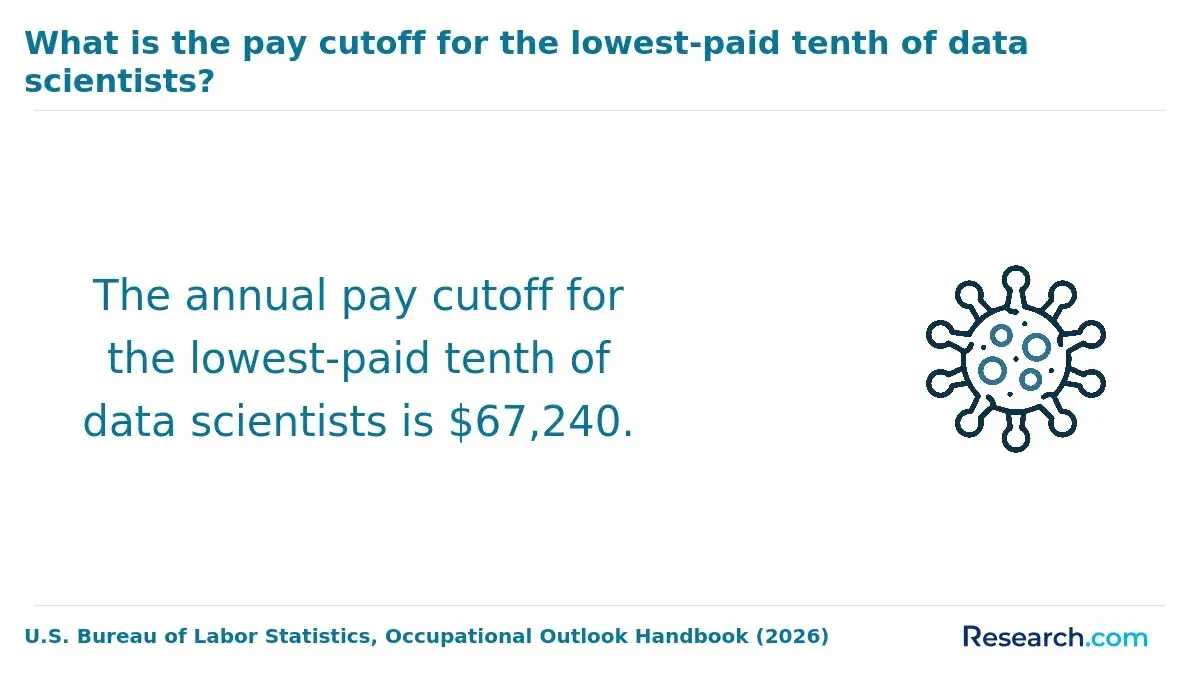
The Bureau of Labor Statistics reports a $120,230 median annual wage for U.S. data scientists in May 2025. It does not isolate climate-technology employers, so the figure is a broad occupational benchmark - not an expected starting salary or evidence that a master's causes a particular pay increase. Compensation can differ with location, prior experience, employer, technical responsibilities, and whether a position is classified as data science at all.
For a more useful personal estimate, compare current job postings for your target role and location, noting which requirements you already meet. Evaluate a degree against the roles it may help you qualify for, not against the national median alone.
What Coursework Prepares Students for Climate Technology Careers?
Look first for probability and statistics, machine learning, programming, databases, and data engineering. Climate applications also reward training in time-series forecasting, geospatial analysis, uncertainty quantification, and evaluating models when conditions change. These topics may appear in core courses, electives, or a substantial project; a passing mention in a course description is not equivalent to hands-on depth.
The examples below show how the intended climate-tech role changes what to look for in coursework and projects. They are selection criteria, not claims that every program offers these experiences.
| Target work | Useful data and methods | Convincing project evidence |
| Energy forecasting | Meter, weather, and generation data; time-series modeling | A forecast evaluated against a simple baseline and tested across seasons |
| Physical climate risk | Location and hazard data; geospatial analysis and uncertainty assessment | A map-based analysis that explains geographic limits and uncertainty |
| Emissions analytics | Activity and measurement data; data pipelines and quality checks | A reproducible calculation with documented assumptions and missing-data treatment |
Ask whether students may choose their own capstone topic, use external datasets, and receive feedback from a relevant faculty member or partner. An attractive dashboard is less persuasive than a reproducible analysis with clear assumptions, appropriate validation, and an explanation a domain expert can challenge.
AI-focused study can help with forecasting or extracting information from complex datasets, but it should not displace statistical evaluation and domain judgment. Use a guide to online AI programs if your target roles call for deeper AI coursework than a data science curriculum provides.
What Are the Admission Requirements for Online Data Science Master's Programs?
Requirements vary by school. Programs may assess an applicant's undergraduate preparation, quantitative coursework, programming ability, work experience, and application materials. Some specify prerequisite courses; others offer ways to demonstrate readiness or complete preparatory study. Do not treat self-study or a short course as formal fulfillment of a prerequisite unless the program confirms it.
A climate or environmental background can supply valuable domain knowledge, while a computing background can supply stronger software preparation. Neither automatically establishes readiness for graduate statistics and programming. Applicants without a computer science major can use AI programs for applicants without a computer science major as an adjacent comparison, but should check each data science program's own prerequisite policy.
Before applying, match your transcript and projects against published prerequisites. If a gap remains, ask admissions which courses or other evidence would count, whether they must be completed before enrollment, and whether preparatory coursework adds time or cost.
How Long Does an Online Data Science Master's Take and Cost?
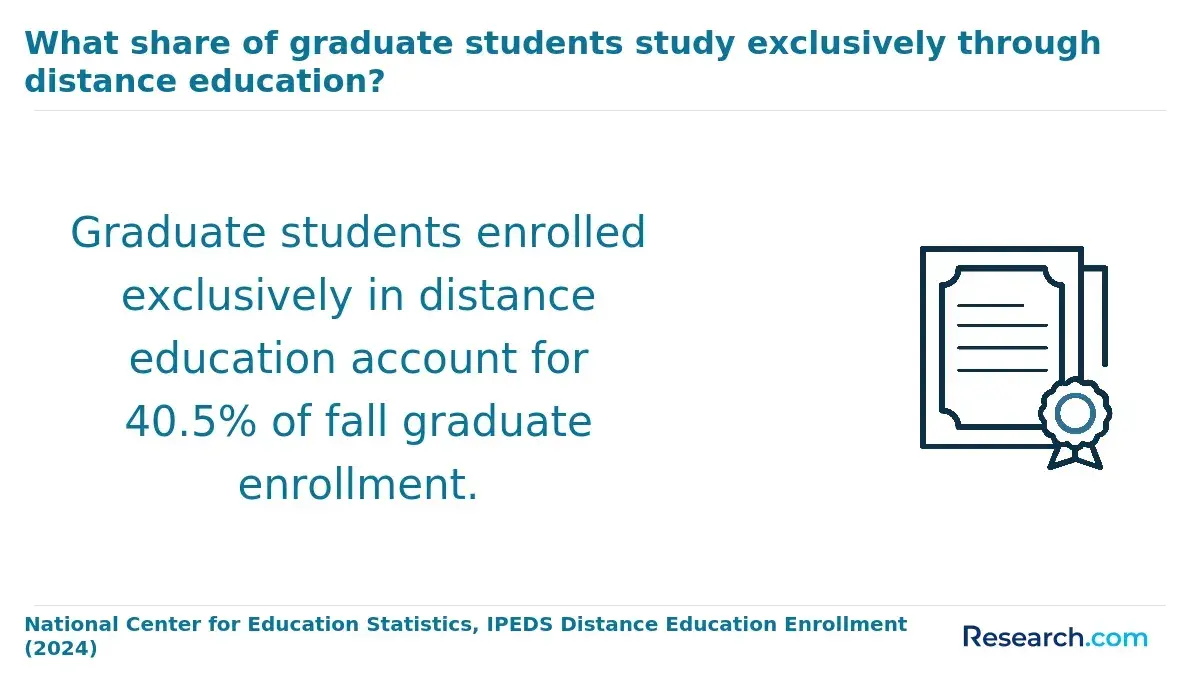
There is no reliable single price or completion time for online data science master's programs. The total depends on required credits, the school's tuition and mandatory fees, enrollment pace, and whether prerequisite courses or a project add expense. Published tuition may omit technology charges, materials, travel for any required in-person component, and financing costs.
Ask each school for an estimate based on your planned course load and start term. Check how often required climate-relevant electives are offered: a course available only occasionally can delay completion even when the advertised timeline looks short. If you plan to work while studying, also account for reduced work hours or the cost of an unsustainable schedule.
When weighing an AI degree as an alternative, AI master's program costs and completion timelines offer a separate comparison. Use the same cost categories and attendance pace for both options; do not compare one program's tuition-only figure with another's fuller estimate.
How Do Online and Campus Data Science Master's Programs Compare?
An online program may be easier to fit around employment and may widen the schools you can consider. A campus program may offer more convenient access to in-person research groups, equipment, or local employer relationships. Those are possibilities, not guarantees of either format. The decisive question for climate-tech applicants is whether they can complete relevant work and receive useful feedback in the format they will actually attend.
Verify whether online courses are live or self-paced, when group work meets, whether exams require set times, and whether any residency or campus visit is mandatory. Ask how remote students find capstone collaborators and use career services. Choose online delivery when its flexibility preserves your ability to finish and build a strong portfolio; consider campus delivery when a specific in-person opportunity is important enough to justify its scheduling and relocation costs.
How Can Students Verify Data Science Program Accreditation?
Check the institution's accreditation status through the U.S. Department of Education's accreditation database or the accreditor's official directory, then confirm that the degree is offered by that institution. Institutional accreditation matters when assessing educational oversight and potential eligibility for federal student aid, but it does not establish that a particular data science curriculum is strong in climate applications.
Do not mistake a ranking, industry partnership, or certificate badge for accreditation. Also ask the school whether it is authorized to enroll online students in your state and whether your specific program is eligible for the aid you intend to use. These are separate checks, and policies can vary by location and program.
Are Certifications or Licenses Required for Climate Data Science Jobs?
Data scientist jobs generally do not have a single occupation-wide license. Employers may value evidence of cloud, geospatial, or other technical skills, but a certification is not a substitute for being able to clean data, evaluate a model, and explain its limits. Review actual job postings before paying for an additional credential.
Be more careful when a position extends beyond data science into work reserved for a regulated profession. For example, an engineering role may have requirements that differ from those of an analytics role, and applicable rules can vary by state and duties. Confirm requirements with the employer and relevant state board rather than assuming a data science master's satisfies them.
How Should Students Choose an Online Data Science Master's Program?
Start with a specific target, such as energy forecasting or climate-risk analysis, and compare programs against the evidence you would need to show an employer. This prevents a common mistake: choosing a recognizable degree title without checking whether its electives and projects support the work you want.
Use the following checks when narrowing a shortlist; each addresses a different reason an apparently suitable program might fail to meet your goal.
- Identify target job descriptions and separate required technical skills from domain-specific knowledge you could build through projects or experience.
- Read course descriptions and sample assignments for evidence of statistical depth, relevant data types, and substantial applied work - not just climate-related keywords.
- Confirm capstone choice, data access, faculty support, and whether remote students can complete a climate-relevant project.
- Calculate comparable total costs and realistic schedules, including fees, prerequisites, elective availability, and any required travel.
- Verify accreditation, state enrollment eligibility, and program-specific aid options before making a deposit.
If cost is the deciding constraint, investigate employer tuition assistance, institutional aid, and funding an online data science master's degree. Choose the program that closes your most important skills gap at a manageable cost - not the one with the most climate terminology. If no program offers a credible project path or the needed coursework, targeted classes and portfolio work may be the better immediate step.
Other Things You Should Know About Data Science
Yes. Public datasets from agencies such as NOAA and the U.S. Energy Information Administration can support weather or energy analyses. State the question, document how you prepared the data, and show how you tested your results; public data does not remove the need to discuss its limitations.
Possibly, but get approval from both the employer and program before planning around it. Ask about confidentiality, data ownership, publication rules, and whether you can submit enough detail for academic assessment.
Show where the data and assumptions may fail, compare results with a simple baseline, and report performance on data not used to fit the model. Explain what a decision-maker should - and should not - conclude from the output.
Pair technical study with a defined domain problem, relevant public data, and feedback from practitioners where possible. A carefully documented project and clear explanation of its operational context may be more useful than a portfolio full of unrelated model demonstrations.
References
- Cost of Attendance (Budget) | 2025-2026 Federal Student Aid Handbook https://fsapartners.ed.gov/knowledge-center/fsa-handbook/2025-2026/vol3/ch2-cost-attendance-budget
- How Financial Aid Is Calculated | studentaid.gov https://studentaid.gov/complete-aid-process/how-calculated
- Environmental Data Science | ucdavis.edu https://esm.ucdavis.edu/tracks/environmental-data-science
- Computer Science Bridge Program | Case School of Engineering https://engineering.case.edu/computer-and-data-sciences/bridge
- Information for Prospective Students - Statistics https://stat.as.uky.edu/ms-phd/admissions
- Employer Tuition Assistance Plans May Help Pay for College | Campus https://campus.edu/blog/financial-aid/employer-tuition-assistance-programs-can-help-pay-for-college
- What Can I Do With a Degree in Data Science? Career Paths & Skills | Harvard SEAS https://seas.harvard.edu/news/what-can-i-do-degree-data-science-career-paths-skills
- Climate Work Across CUNY - The City University of New York https://www.cuny.edu/research/research-development-programs/cuny-climate-consortium/climate-initiatives-around-cuny/
- Students - Educational Costs - ADHE Scholarship https://sams.adhe.edu/student/educational-costs
- Geospatial Data Science PSM | Temple University https://www.temple.edu/academics/degree-programs/geospatial-data-science-psm-la-gsds-psm