2027 Employee Attrition Capstones: What to Look for in a Data Science Master's

Co-Founder and Chief Data Scientist
An employee attrition capstone can reveal whether a data science master's program teaches students to solve a sensitive, real-world problem - not merely fit a prediction model. For prospective students interested in people analytics, the key questions are whether they can access suitable data, receive sound methodological guidance, and produce work they can discuss with employers.
This guide explains what a credible project looks like and which program features make it feasible.
Key Things You Should Know
- Look for a capstone that defines an actionable retention question, handles employee data responsibly, tests results against a realistic baseline, and explains what its findings cannot prove.
- Ask about data access, faculty and sponsor support, privacy review, and portfolio permissions before assuming a program can support an attrition project.
- The Bureau of Labor Statistics projects 35% growth in data scientist employment from 2025 to 2035, but that occupation-wide forecast does not establish demand for people-analytics specialists or guarantee a job.
What Is an Employee Attrition Capstone in a Data Science Master's?
An employee attrition capstone is a substantial project examining why workers leave, which groups face elevated turnover, or how an organization might evaluate retention efforts. Depending on the program and available data, the deliverable might be an analytical report, a reproducible prediction pipeline, an intervention-evaluation design, or a stakeholder presentation. A program may permit the topic without supplying an employer dataset or an HR sponsor.
The strongest project starts with a decision, such as whether an HR team should investigate turnover in particular roles or locations. It defines the outcome carefully: voluntary resignations, all departures, and departures within a specified future period are different targets. It also identifies who could act on the result. A high model score alone does not tell a manager what to change - or whether acting on a prediction would be fair.
How Do Data Science Programs Use Employee Attrition Projects to Build Job Skills?
Attrition projects connect graduate coursework to messy organizational decisions. Students may need to reconcile HR records collected for different purposes, choose a defensible analysis population, communicate uncertainty, and explain results to readers who do not work in data science. That combination makes the topic useful for aspiring people analysts as well as generalist data scientists.
A good program requires more than a final presentation. Look for opportunities to receive feedback on the question before analysis begins, review data-governance constraints, defend methodological choices, and revise a report for a nontechnical audience. Ask whether industry partners provide substantive feedback or only a dataset. If you hope to show the work to employers, confirm early whether the sponsor permits a public, anonymized, or simulated-data version of the deliverables.
What Should an Employee Attrition Capstone Include to Demonstrate Data Science Expertise?
A persuasive capstone matches its methods to its claim. The table separates three project aims that are often conflated; each can be valuable, but none establishes more than its design supports.
| Project aim | What it can demonstrate | Important limit |
| Describe turnover patterns | Clear outcome definitions, data quality checks, and interpretable comparisons | A group difference does not identify the cause of departures |
| Predict future departures | Appropriate baselines, time-aware validation, calibration, and error analysis | Predictive features do not necessarily suggest effective interventions |
| Assess a retention intervention | An evaluation design tied to a decision and relevant outcomes | A before-and-after comparison alone may not isolate the intervention's effect |
For a predictive project, a credible submission states when each feature would have been available. Including an exit-interview field or another post-departure variable creates leakage: the model may appear accurate because it has information unavailable at decision time. A time-based test and a simple baseline often tell a more useful story than a complicated model assessed only on a random split.
Data access is an equally important test of program fit. Real employee records may be restricted by employer agreements and privacy obligations; publicly available demonstration datasets may be simulated and cannot establish findings about an actual workforce. Ask how the program approves data use and whether students can still complete a rigorous capstone when an employer dataset falls through.
Finally, look for documented assumptions, reproducible code or procedures, subgroup error analysis where appropriate, and a plan for communicating results without exposing individuals. Employee departure predictions can affect workers. A responsible project addresses consent and access controls, the possibility of unfair treatment, and the risk of turning uncertain predictions into decisions about individual employees.
Which Courses Prepare Students for Employee Attrition Capstone Research?
Prioritize coursework in statistical inference, data management, machine learning, and research design. Statistics helps students distinguish an association from evidence that a workplace policy caused turnover. Data engineering supports reliable joins and time-stamped records; machine learning covers validation and calibration; ethics or data-governance instruction helps students handle sensitive employee information.
Course titles alone do not show whether students practice these skills on realistic projects.
Electives in organizational research, experimental design, or causal inference are particularly useful if the intended capstone asks whether a retention measure works. Domain interests can shape elective choices, but they should not displace the methods the project needs.
For example, a student interested in hospital workforce retention may also explore master's pathways connecting AI and healthcare; they should check whether a pathway addresses employee data and organizational decisions rather than primarily patient-facing applications.
How Do Online and Campus Data Science Master's Programs Support Capstone Projects?
Either format can support a strong project if students can work with an advisor, obtain approved data, and receive timely feedback. Online students should ask how sponsor meetings, privacy reviews, group work, and presentations are scheduled across time zones. Campus students should ask the same substantive questions rather than assume proximity guarantees access to an HR partner.
Request a capstone handbook or recent project examples. Confirm whether students propose their own topics, must choose from sponsored projects, or need to secure their own data.
Check whether an employment-based project can satisfy the requirement and what happens if a sponsor withdraws. Students comparing remote options with low-cost online AI degree programs should also verify that the lower-cost option actually includes the statistical, governance, and project support an attrition capstone requires.
What Admission Requirements Apply to Data Science Master's Programs?
Requirements vary by institution, so do not assume that HR experience substitutes for quantitative preparation - or that a nontechnical bachelor's degree rules an applicant out. Check each program's current policy for prior coursework, transcripts, programming preparation, recommendations, and any essay or test requirement. For this capstone topic, readiness in statistics and coding matters more than familiarity with a particular HR software product.
Applicants choosing among closely related degrees may find machine learning graduate programs with no essay requirement relevant to application planning. An easier application process is not evidence of better capstone access, however. Ask admissions staff to distinguish formal prerequisites from recommended preparation and to identify any courses that must be completed before project work.
How Long Do Data Science Master's Programs Take and What Do They Cost?
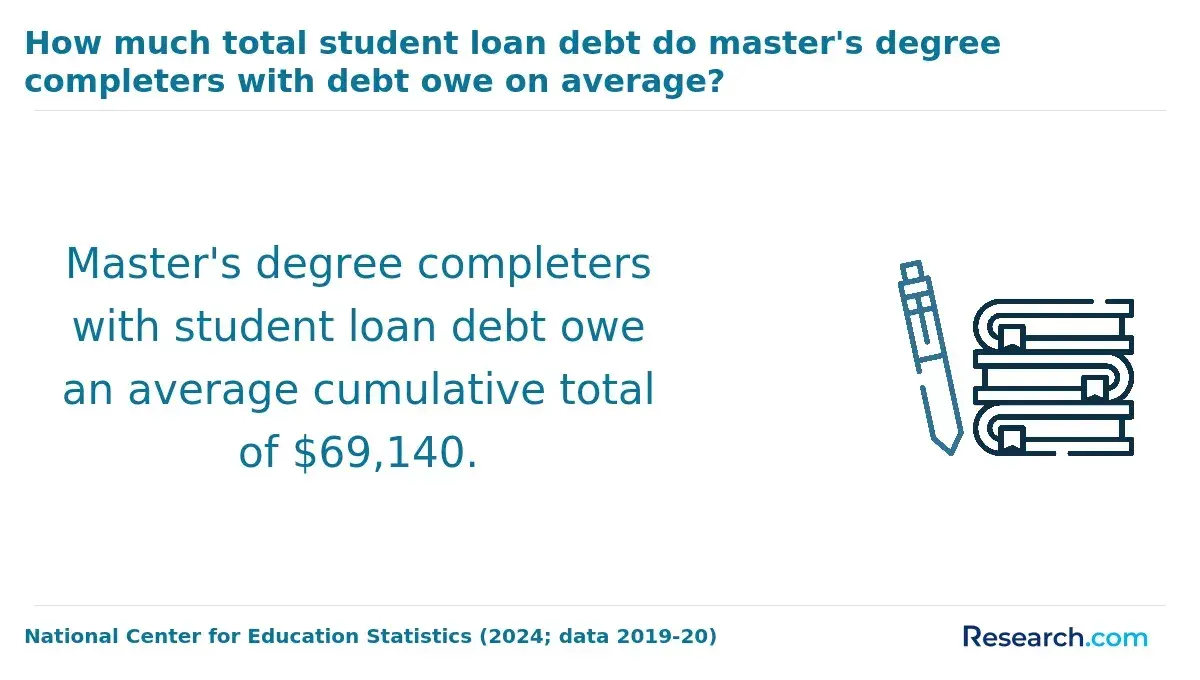
There is no reliable single duration or price for a data science master's: credit requirements, enrollment pace, tuition rules, and capstone scheduling differ by program. For an attrition project, the consequential scheduling question is whether students have enough time to arrange data access and obtain approvals before the capstone term. A short program may be a poor fit if its timeline leaves little room for that work.
Compare each school's published tuition and mandatory fees using the same expected course load. Add potential technology charges, travel or residency expenses, and any extra term that a delayed project might require; ask about employer assistance before calculating your likely out-of-pocket cost.
If you are comparing with AI degrees, review affordable online artificial intelligence master's options on a total-cost basis, not by tuition alone. Neither a lower price nor a higher salary figure from a different population establishes your return on investment.
Which Accreditation Standards Should Students Verify for Data Science Programs?
Verify the institution's recognized accreditation status through the accreditor or an official government directory, rather than relying solely on marketing language. Then examine the actual data science curriculum and capstone rules: institutional accreditation does not certify that a program teaches employee-data governance, provides HR datasets, or guarantees a sponsor.
For online study, also ask the institution to confirm that it can enroll students in your state and whether any in-person activity is required. These checks address different risks. Accreditation concerns institutional standing; state authorization concerns access to the program; capstone policies determine whether the project you want is feasible.
What Careers and Salaries Can Data Science Master's Graduates Expect?
An attrition capstone can provide relevant evidence for people analytics, workforce planning, HR analytics, and broader data science roles. Its strongest portfolio value is usually the ability to explain a consequential decision, defend the analysis, and discuss privacy and limitations - not the claim that a model can identify employees who will resign.
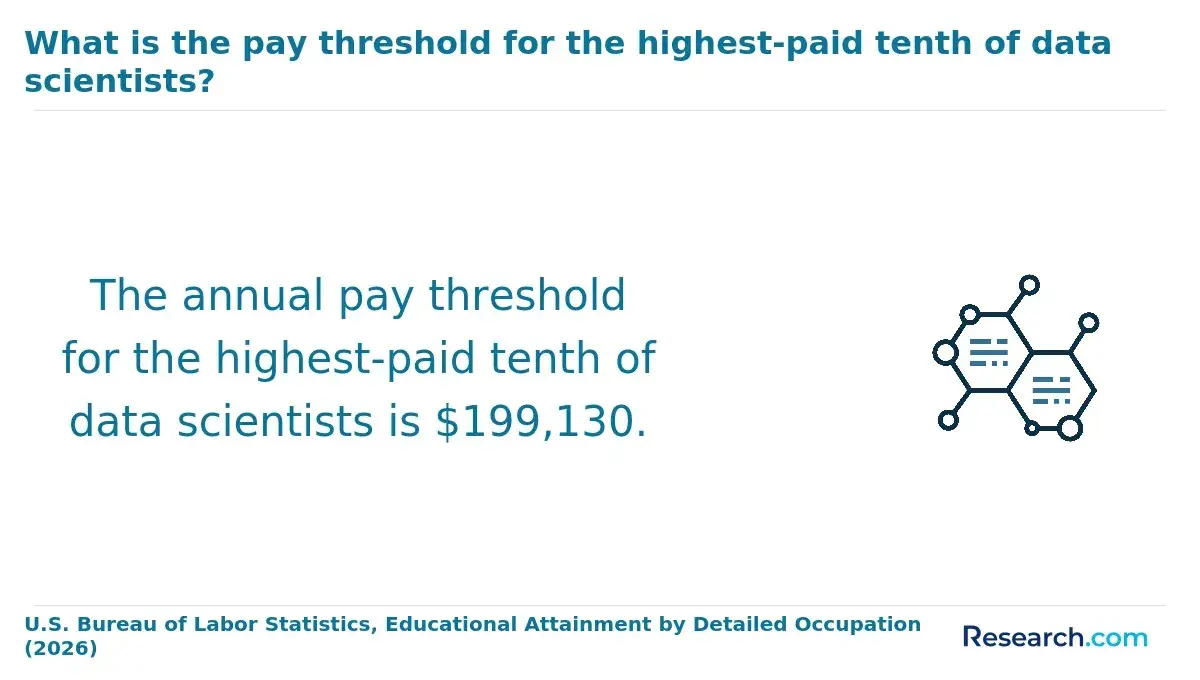
The Bureau of Labor Statistics reports a median annual wage of $120,230 for U.S. data scientists in May 2025. That occupation-wide median is not an entry-level offer, a people-analytics salary, or a return attributable to a master's degree. Prior experience, employer, role, and location all affect compensation. Readers exploring sector differences can use industry pay patterns for data science degree holders as context while evaluating specific jobs and programs separately.
What Job Outlook and Certifications Matter for Data Science Graduates?
The Bureau of Labor Statistics projects about 24,800 annual openings for U.S. data scientists, on average, from 2025 to 2035. The figure includes openings associated with workers leaving the occupation and does not indicate how many positions involve employee attrition analysis. Use it as broad labor-market context, not as a forecast for a particular capstone specialty.
A certification in a cloud platform, analytics tool, or HR system may help when a target employer names that tool, but it does not replace evidence of statistical judgment and responsible data use. Before paying for one, review several relevant job descriptions and identify a recurring requirement you cannot already demonstrate. A well-documented capstone may be more useful when it shows how you handled leakage, uncertainty, and sensitive data - skills a tool-specific credential may not assess.
Other Things You Should Know About Data Science
Only if the employer and program permit it. Get written guidance on data, code, charts, and presentation materials; a public portfolio may need to use simulated data and a revised narrative.
Keep a record of your individual methods, code, analyses, and presentations. In interviews, distinguish your work from the team's conclusions without disclosing restricted information.
Not necessarily. A carefully validated negative result can be valuable if the project explains what was tested, why the comparison is credible, and what decision the result informs.
Not necessarily. Relevant experience can help with problem framing, but ask the program whether a faculty advisor or sponsor can provide domain feedback and whether you meet its project requirements.
References
- Automated Prediction of Employee Attrition Using Ensemble Model Based on Machine Learning Algorithms - PMC https://pmc.ncbi.nlm.nih.gov/articles/PMC9251085/
- "Predicting Employee Attrition with Machine Learning: Data-Driven Strat" by Ali Almheiri | rit.edu https://repository.rit.edu/theses/12425/
- Deployment as a Critical Business Data Science Discipline | Harvard Data Science Review https://hdsr.mitpress.mit.edu/pub/2fu65ujf
- MS Applied Data Science-Capstone Chronicles 2025 | sandiego.edu https://digital.sandiego.edu/cgi/viewcontent.cgi
- Predictive Analytics for Employee Attrition & Performance | iastate.edu https://dr.lib.iastate.edu/bitstreams/887712d1-1ad4-4c3f-aa8f-a84b3fb6dd46/download
- Leakage-Free Evaluation for Employee Attrition Prediction on Tabular Data | mdpi.com https://www.mdpi.com/2078-2489/17/3/308