2027 Survey Analytics in an Online Data Science Master's: Courses, Projects, and Program Selection

Co-Founder and Chief Data Scientist
An online data science master's can teach you to analyze survey responses, but that does not mean it teaches you to design a sound survey or draw defensible conclusions from one.
This guide is for prospective students interested in public opinion, customer research, program evaluation, or other survey-based work. It explains which courses and projects demonstrate real survey analytics depth, and how to weigh those features against format, cost, and career goals before enrolling.
Key Things You Should Know
- Look for survey design, sampling, nonresponse, weighting, and statistical inference alongside programming; a general machine-learning curriculum may not cover them in depth.
- A strong project should address how respondents were selected and evaluate bias, not merely visualize answers or train a model.
- The U.S. Bureau of Labor Statistics projects 35% growth in data scientist employment from 2025 to 2035, but that broad occupation forecast does not measure demand for survey specialists specifically.
What is survey analytics in an online data science master's program?
Survey analytics is the process of turning responses from a defined population into useful, appropriately qualified findings. It combines data preparation and statistical analysis with survey-specific questions: Who was invited? Who responded? How were questions worded? Can results be generalized beyond the respondents?
In a data science master's, survey work may appear in statistics, social research, marketing analytics, public health, or capstone courses rather than under a course titled "survey analytics."
The distinction matters: predicting which existing customers will answer a questionnaire is a data science task, while estimating what all customers think also requires attention to sampling and nonresponse. A program is a better fit when it teaches both.
If your goal is primarily to build AI systems rather than produce defensible survey estimates, assessing artificial intelligence degree options by career path may help clarify which curriculum serves that different goal.
What courses do online survey analytics master's programs typically include?
Relevant coursework varies by institution. The table separates common data science foundations from the survey-specific depth a prospective student should look for in course descriptions, syllabi, and elective lists.
| Curriculum area | Typical subject matter | Relevance to survey analytics |
| Statistics and inference | Estimation, uncertainty, regression, and hypothesis testing | Supports conclusions that go beyond a chart of observed responses. |
| Programming and data management | Python or R, SQL, cleaning, reproducible workflows, and visualization | Supports the handling of response files, metadata, and repeatable analysis. |
| Survey methods | Questionnaire design, sampling frames, response patterns, and measurement error | Addresses whether the data can answer the research question. |
| Advanced survey analysis | Complex-sample estimation, weighting, missing data, and subgroup analysis | Develops methods for analyzing surveys beyond simple random-sample assumptions. |
| Applied electives | Experimental design, causal inference, text analysis, or domain research | Extends survey work toward testing interventions or analyzing open-ended responses. |
Check depth, not just keywords. A passing mention of weighting is different from a unit that requires students to apply it; a dedicated survey methods course and a survey-based capstone offer stronger evidence still. Ask for a recent syllabus and confirm that the relevant electives are available to online students on a workable schedule.
If you need programming or math preparation before graduate study, AI graduate programs with foundation study illustrate another way to compare formal preparatory pathways; confirm whether any such coursework fulfills the requirements of the data science programs you are considering.
How do online data science master's programs compare with campus programs?
Delivery mode alone does not establish academic depth. Online study may suit someone keeping a job or living far from a university; campus study may offer easier access to in-person research teams, subject to the institution's actual opportunities. In either format, survey-focused students need to know whether they can take the methods courses and complete an appropriate project.
Compare published schedules as carefully as course lists. An asynchronous lecture may still be paired with live group meetings, fixed exams, or a capstone that depends on an outside partner. Ask whether remote students can work with faculty who study surveys, obtain approved datasets, and receive feedback on sampling and inference, not only on code.
Choose a faster route only if its sequencing leaves room for the electives and project you need. Shorter online data science master's programs can be useful comparisons, but speed is a poor trade if it removes the survey-methods work central to your goal.
What projects and capstone experiences prepare students for survey analytics careers?
A useful survey analytics capstone starts with a question about a clearly defined population, not just an available spreadsheet.
For example, a student might evaluate a community service using an approved survey dataset, then explain which residents the results represent and which may be missing. Public datasets can work well when documentation describes the survey design and permits the intended use.
The strongest projects make the analytical choices inspectable. A portfolio report should state the question, population, data source, response limitations, treatment of missing values, whether and why weights were used, uncertainty around estimates, and the implications for a stakeholder. Reproducible code and a plain-language findings memo demonstrate complementary skills.
Before enrolling, ask whether students can propose their own topic, use an employer's data with appropriate permission, or work with a faculty or external partner. A red flag is a capstone described only as "apply machine learning to a dataset" if your intended role requires survey design or population estimates. Avoid publishing identifiable responses or claiming that a convenience sample represents a wider population.
What are the admission requirements for an online data science master's?
Requirements differ by program; there is no universal survey analytics admission standard. Schools may request evidence of quantitative preparation, programming ability, an undergraduate degree, transcripts, recommendations, or a statement of purpose. Some programs accept varied academic backgrounds but expect applicants to complete specified preparation before or during graduate study.
Match your preparation to the curriculum rather than relying on a job title or degree name. Someone with survey research experience may need more coding or calculus; a software developer may need statistics and research methods.
Ask admissions staff which prerequisites are mandatory, whether prior coursework or professional work satisfies them, and whether preparatory courses count toward the degree. Self-study may help you succeed without formally satisfying a stated prerequisite.
How long does an online survey analytics master's take and cost?
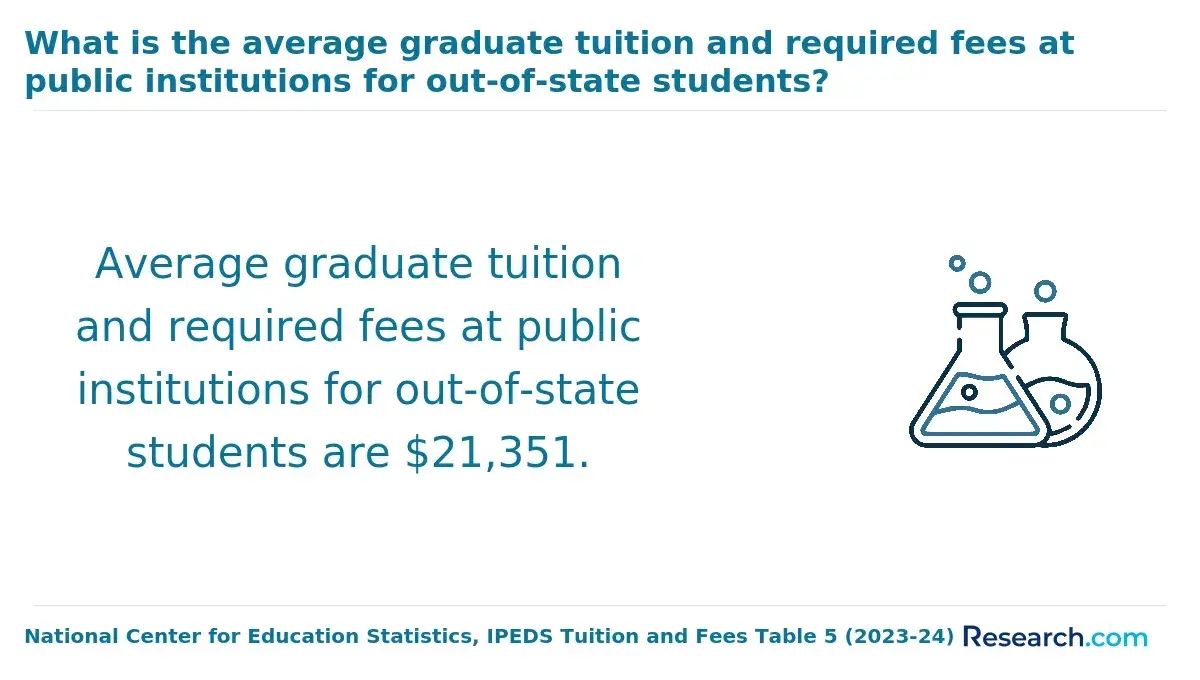
Time and cost depend on required credits, tuition rules, course availability, and whether you study full- or part-time. No single duration or price represents all online data science master's programs.
Survey-oriented students should pay particular attention to how often the needed electives run: a required sequence or infrequent methods course can determine your actual completion date.
Use the school's current tuition and fee schedule to build a total-cost estimate for your own enrollment plan. Include mandatory fees, required software or materials, any travel, and the cost of additional terms if you cannot take the planned course load. Then check scholarship eligibility, employer tuition support, and financial-aid terms rather than treating advertised tuition as the final bill.
If you are also considering AI-focused study, lower-tuition artificial intelligence degree options provide a price comparison, not evidence that those degrees teach survey methods. Compare total estimated costs only after confirming that each curriculum fits the same career objective.
How can students verify accreditation and program quality?
Confirm an institution's current accreditation through the institution and its recognized accreditor; do not assume that "online" or a familiar school name establishes the status of a particular offering. Also ask the school whether it can enroll students residing in your state and whether any on-site requirements apply to you. Accreditation, state authorization, and curriculum quality answer different questions.
For survey analytics, quality evidence includes accessible course descriptions, recent syllabi, qualified faculty, examples of permitted capstone topics, and a clear account of how online students receive methods feedback. Ask for outcomes specific to the program if the school publishes them. If completion rates or career results are unavailable, do not substitute a university-wide figure or a ranking for evidence about this degree.
What careers and salaries can survey analytics graduates pursue?
Possible paths include survey analyst, research analyst, customer insights analyst, program evaluation analyst, and data scientist working with survey data. The best fit depends on whether you want to design instruments and interpret population estimates, combine surveys with other organizational data, or build broader predictive systems. Job postings and the curriculum should be compared at that level of specificity.
The U.S. Bureau of Labor Statistics reports a $120,230 median annual wage for data scientists in May 2025. That is an occupation-wide midpoint, not a starting salary, a survey analyst pay figure, or a prediction of what a graduate will earn. Prior experience, duties, employer, and location matter. For a broader comparison of curricula against target roles, see data science programs aligned with data career demand.
What is the job outlook for data scientists and survey analysts?
The U.S. Bureau of Labor Statistics projects 35% employment growth for data scientists from 2025 to 2035, with about 24,800 openings each year on average over that period. The projection signals demand across a broad occupation; it does not establish an equivalent growth rate or number of openings for survey-specific jobs.
For a survey-focused decision, examine current postings for the roles and employers you would realistically pursue. Look for repeated requirements such as sampling, questionnaire development, weighting, statistical software, or stakeholder reporting.
If postings emphasize research design, choose a program with methods depth; if they emphasize data engineering or prediction, a broader technical curriculum may be more suitable.
Which certifications complement an online survey analytics master's degree?
A certification can document proficiency with a tool or specialized method, but it is not a substitute for evidence that you can design, analyze, and explain a survey.
Consider a software credential when target postings consistently name a tool you have not used professionally. Consider short-form training in research ethics or privacy when your intended projects involve sensitive responses and an employer or project partner requires it.
Before paying for any credential, check whether the issuer is recognized by your target employers, what skills the assessment actually tests, and whether your degree projects already demonstrate those skills. A carefully documented survey capstone may be more persuasive than an additional general analytics certificate; employer expectations vary.
Other Things You Should Know About Data Science Programs
Usually, if its access terms permit your intended use. Read the documentation and usage conditions, protect respondent confidentiality, and identify the population the dataset was designed to represent.
Yes. Text analysis can help organize themes, but check how responses were collected and validate automated classifications against human-reviewed examples before drawing conclusions.
Sometimes. The organization must have an appropriate basis and permissions for linking the records. Data access, privacy obligations, and the possibility of mismatched records can limit what is feasible.
Not for every role. Relevant experience and a strong portfolio may be sufficient for some positions. A master's is more worth considering when your target work requires deeper statistical, research-design, or cross-disciplinary training than you can obtain through narrower preparation.
References
- An Overview of Survey Research - PMC - NIH https://pmc.ncbi.nlm.nih.gov/articles/PMC10468179/
- Federal Policy for the Protection of Human Subjects ('Common Rule') | HHS.gov https://www.hhs.gov/ohrp/regulations-and-policy/regulations/common-rule/index.html
- What leads to measurement errors? Evidence from reports of program participation in three surveys - ScienceDirect https://www.sciencedirect.com/science/article/pii/S030440762300297X
- Best Practices | WSU Surveys | Washington State University https://surveys.wsu.edu/surveys/best-practices/
- Master's in Data Science | utexas.edu https://cdso.utexas.edu/msds
- Masters Program | MPSDS - University of Michigan https://surveydatascience.isr.umich.edu/education/masters-program/
- Survey design - Scientific Inquiry in Social Work (2nd Edition) | VCU Libraries https://pressbooks.library.vcu.edu/bswresearch/chapter/12-survey-design/
- Encyclopedia of Survey Research Methods - Response Bias https://methods.sagepub.com/ency/edvol/encyclopedia-of-survey-research-methods/chpt/response-bias
- Advanced Topics in Survey Data Analysis - OARC Stats - UCLA https://stats.oarc.ucla.edu/other/mult-pkg/seminars/advanced-topics-in-survey-data-analysis/
- 3. Math Major Course Requirements and Emphases | arizona.edu https://kb.math.arizona.edu/mathcenter/index.php