
2027 Online Data Science Master's Programs for Minnesota Residents: In-State and National Options

Co-Founder and Chief Data Scientist
Minnesota residents can consider both local universities and online programs based elsewhere. The best choice depends less on a school's location than on its curriculum, total cost, schedule, and opportunities to connect with the work you want to do.
This guide compares credible starting points and shows what to verify before applying - especially whether a program is fully online, available where you live, and priced differently for Minnesota residents.
Key Things You Should Know
- Minnesota residents can compare a Minnesota-based online analytics degree with national online data science programs; a local school is not automatically cheaper or a better career fit.
- Check each program's current delivery format, Minnesota enrollment eligibility, complete tuition and fees, and required courses before applying. Residency may affect tuition at some public universities but not every online program.
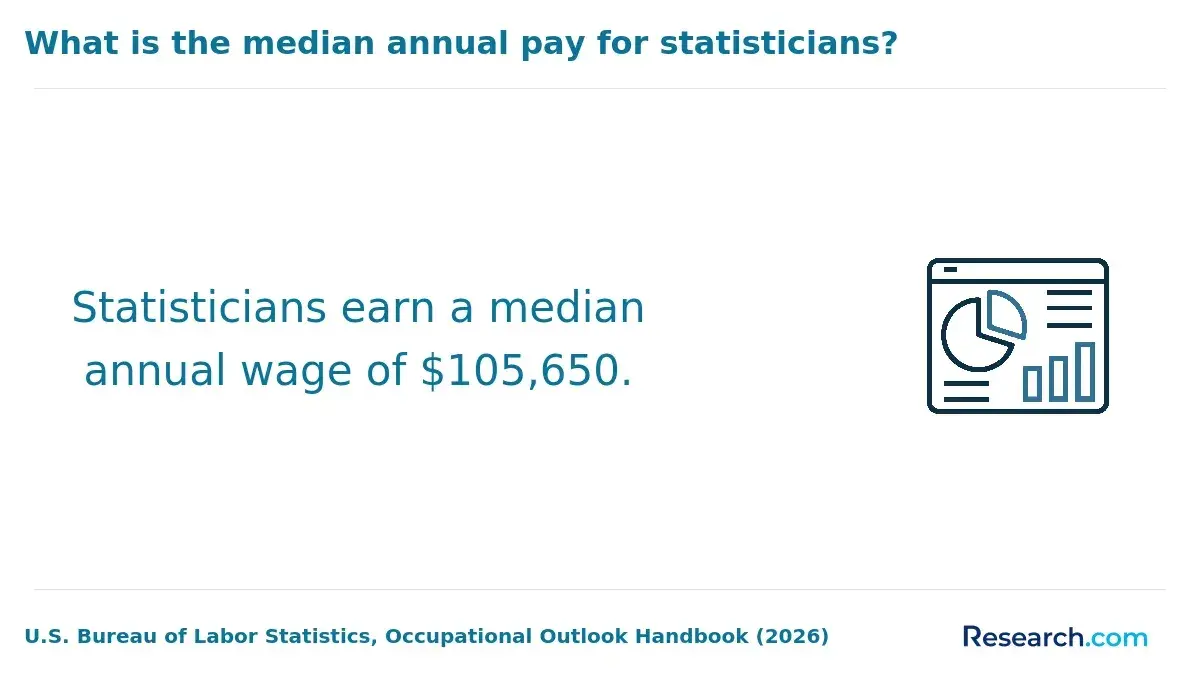
- The U.S. Bureau of Labor Statistics reports a $120,230 national median annual wage for data scientists in May 2025; that is not a Minnesota salary estimate or a projected salary for graduates.
What online data science master's programs can Minnesota residents choose?
A practical shortlist includes Minnesota-based degrees and national programs that enroll online students living in Minnesota. Degree titles matter: a business analytics or computing degree may teach relevant skills without offering the same curriculum as a master's specifically titled data science.
The following programs are starting points for comparison, not a claim that their formats, admissions policies, or enrollment eligibility will remain unchanged. Confirm the current catalog and ask each school whether every required course can be completed from Minnesota.
| Institution and program to investigate | Location and academic emphasis | Key fit question |
| Saint Mary's University of Minnesota, business intelligence and data analytics master's | Minnesota-based; business-focused analytics | Does its current online curriculum provide the programming and statistical depth your target role needs? |
| University of Texas at Austin, online M.S. in Data Science | National option; data science curriculum | Do its mathematics and computing expectations fit your preparation? |
| University of Colorado Boulder, online M.S. in Data Science | National option; data science curriculum | Does its course structure suit the way you want to learn and progress? |
| Georgia Institute of Technology, online M.S. in Analytics | National option; analytics curriculum | Are its analytics specializations a closer match than a data science degree? |
Saint Mary's is worth examining if a Minnesota institutional connection and applied business analytics matter to you, but verify its current degree name and delivery requirements. Do not assume a Minnesota public university's data science master's is fully online simply because the university offers other online degrees.
How do Minnesota online data science master's programs compare with national options?
Choose by curriculum and access, not distance alone. A Minnesota-based program may make campus events or regional contacts easier to use. A national program may offer a closer match to your interests in statistical modeling, computing, or applied analytics. Neither advantage is automatic: ask about access to career services, faculty, projects, and employer events for online students specifically.
For a fair cost comparison, request the tuition and mandatory fees for the entire degree at your intended pace. Ask whether Minnesota residency changes the price, whether a national program charges one online rate, and whether any campus visits are required. A nearby institution can still cost more than a national online option.
Location also affects scheduling. Minnesota is in Central Time, so compare live-session times, office hours, group-work expectations, and exam windows rather than relying on the label "online." If your goal is AI infrastructure rather than statistical analysis, compare AI master's degrees with data engineering content before deciding that a data science title is the right fit.
What accreditation should an online data science master's program have?
Verify that the institution holds recognized institutional accreditation using the school's accreditation disclosure and the U.S. Department of Education's accreditation database. A data science master's generally does not need a separate, field-specific accreditation to be legitimate. Institutional accreditation matters for considerations such as federal student aid eligibility and how other institutions evaluate prior study; it does not guarantee that credits will transfer.
Accreditation and permission to enroll Minnesota residents are different questions. Check the university's state-authorization disclosures and confirm eligibility with the program, particularly if you expect to move during your studies. Treat vague claims of "accreditation" without a named accreditor as a reason to investigate before paying an enrollment deposit.
What do you learn in an online data science master's program?
Relevant curricula commonly combine statistics, programming, data management, machine learning, and communication of results. Their balance varies considerably. For a data scientist role, examine required courses - not just electives - for evidence that you will build and evaluate models, work with imperfect data, and explain limitations. For business-facing analytics, decision-making and stakeholder projects may matter more; for data engineering, databases and data pipelines deserve closer attention.
Read course descriptions and project requirements before treating a mention of AI as substantive training. A program with one introductory unit on machine learning offers a different experience from one with advanced electives and an assessed modeling project. Ask whether students can use real or appropriately anonymized Minnesota employer data and what support is available for securing a project partner.
What are the admission requirements for online data science master's programs?
Requirements vary by school. Expect to check the required bachelor's degree, academic record, mathematics and programming preparation, application materials, and any English-language or standardized-test policy that applies to you. Professional experience may strengthen an application, but do not assume it formally replaces a stated prerequisite.
Before applying, compare your transcript with each program's published expectations for calculus, linear algebra, statistics, and coding. If you have a gap, ask admissions whether a specific course would satisfy the requirement; independent study may improve your readiness without counting toward formal admission. Readers considering an AI-focused alternative can also review options for bridging skill gaps before graduate AI study.
How long do online data science master's programs take to complete?
Completion time depends on required credits or courses, enrollment pace, course availability, and whether a project must be completed in sequence. Rather than relying on a school's fastest advertised timeline, ask for a term-by-term plan based on the number of courses you can realistically take while working. Confirm whether required courses run every term and whether there is a maximum time allowed to finish.
An accelerated pathway may reduce time out of the labor market but can compress demanding programming and quantitative work into fewer terms. If speed is a priority, review accelerated data science master's pathways, then check whether their schedules fit your job and family commitments.
How much do online data science master's programs cost?
There is no reliable Minnesota-wide price: institutions set different rates, and a resident discount may apply to some programs but not others. Calculate required courses or credits × the applicable tuition rate, then add mandatory fees, materials or software, and any required travel. Ask whether tuition can change before you finish and whether employer assistance, scholarships, or eligible financial aid would reduce your out-of-pocket cost.
Compare written estimates built for the same enrollment pace; a per-credit tuition figure is not a total-degree price. If an AI degree is also on your shortlist, use cost comparisons for online AI degrees as a separate comparison, not as a substitute for checking each school's current charges. Borrowing costs and time away from work can also change the affordability of an apparently inexpensive program.
What careers can you pursue with a data science master's degree?
Depending on the curriculum and your prior experience, potential directions include data scientist, machine learning practitioner, analytics specialist, or data-focused engineering roles. A degree alone does not establish readiness for all of them: employers may expect different levels of software development, statistical inference, industry knowledge, or production-system experience.
Choose programs whose projects resemble the work you want to show employers. In Minnesota, that could mean seeking projects tied to industries in which you already have contacts, rather than assuming a local degree is the only route to a local job. Ask how online students meet graduates and employers; advice on alumni relationship building in AI graduate education may also help if you are comparing AI-oriented programs.
How much can data science professionals earn in Minnesota?
A current Minnesota-specific wage figure should come from a dated state or federal occupational wage release for data scientists. Without a verified Minnesota figure, the national median should not be presented as local pay. The U.S. Bureau of Labor Statistics reports a $120,230 national median annual wage in May 2025. That describes people employed in the occupation across the United States - not starting offers in Minnesota, pay for every analytics job, or an increase caused by earning a master's.
For an individual decision, compare Minnesota job postings for your target role with your present compensation, experience, and likely borrowing costs. BLS projects 35% growth in U.S. data scientist employment from 2025 to 2035, but national growth does not establish how many suitable openings will be available in your part of Minnesota.
What certifications and skills improve data science job prospects?
Prioritize demonstrable skills that match the roles you are applying for: SQL and data preparation, Python or another relevant programming language, statistical reasoning, model evaluation, and clear presentation of findings. A project that explains its data, methods, errors, and business implications is more informative to an employer than a list of tools without evidence of use.
A cloud or platform certification can complement that work when Minnesota employers you target request the platform, but it is not a substitute for a strong project or the underlying skills. Before paying for a certification, inspect relevant postings and identify a recurring requirement. The common mistake is collecting credentials for tools that your desired jobs do not use.
Other Things You Should Know About Data Science
Diploma wording is set by the university. Ask the registrar for a sample diploma and, if it matters to you, how the program appears on the transcript.
Possibly, if the program permits employer-sponsored work and your employer approves the use of its data. Confirm privacy, intellectual-property, and publication rules before proposing a project.
Not necessarily. Ask the program for its current hardware requirements and whether it provides remote computing resources before purchasing equipment.
It may, but doctoral programs assess research preparation as well as the degree. If a doctorate is a possibility, look for research-oriented courses, substantial independent projects, and opportunities to work with faculty.
References
- School Licensure and Registration | MN Office of Higher Education https://ohe.mn.gov/licensure-and-registration
- DAPIP | Homepage - Office of Postsecondary Education (OPE) https://ope.ed.gov/dapip/
- University of Minnesota Online | umn.edu https://online.umn.edu/
- Online Program - UChicago Data Science Institute https://datascience.uchicago.edu/education/masters-programs/online-program/
- What Is Data Science? Definition, Skills, Applications & More | Harvard SEAS https://seas.harvard.edu/news/what-data-science-definition-skills-applications-more
- Data Science vs. Applied Data Science: Main Differences | Syracuse University https://ischool.syracuse.edu/applied-data-science-vs-data-science/
- How Does Online Learning Work at CSU? | colostate.edu https://online.colostate.edu/faqs/online-learning.dot
- Minnesota State - Tuition, Fees, and Financial Aid | Minnesota State Colleges and Universities https://www.minnstate.edu/admissions/tuition.html
- Online Master's in Data Science | Saint Mary's University of Minnesota https://www.smumn.edu/degree/masters/data-science/
- Cost of Attendance | Office of Admissions https://admissions.tc.umn.edu/cost-aid/cost-aid-scholarships/cost-attendance


