2027 Can a Data Science Master's Help You Change Careers After a Tech Layoff?

Co-Founder and Chief Data Scientist
A tech layoff can create time to retrain, but a data science master's is a substantial investment - not a shortcut to a new job. If you have experience in software, product, operations, or another tech role, the decision depends on what skills you can carry forward, what your target job requires, and whether graduate study fills a gap you cannot close more efficiently.
This guide helps you compare those factors before committing to a program.
Key Things You Should Know
- A master's can support a career change when it builds missing statistical and modeling skills and gives you credible project evidence; it cannot replace a targeted job search or guarantee employment.
- The U.S. Bureau of Labor Statistics reports a $120,230 median annual wage for data scientists in May 2025, but that figure is for workers in the occupation, not new master's graduates.
- Before enrolling, compare the full cost and time out of work with adjacent roles you could pursue using your existing tech experience.
Can a data science master's help you change careers after a tech layoff?
Yes, if the degree closes a specific gap between your previous work and the roles you want next. A former software engineer may already know how to write production code but need deeper statistics and experimental design. A product manager may bring stakeholder and metrics experience but need stronger programming and modeling skills. Those existing strengths still matter: data teams need people who can define useful questions, work with technical partners, and explain results.
Choose a master's when target job descriptions repeatedly call for skills you lack, the curriculum teaches them in depth, and you can afford the time and cost. Try a narrower route first when you can qualify for analytics, experimentation, or data-adjacent roles through focused coursework and a strong portfolio. A layoff alone is not a reason to enroll.
Test the decision against actual openings: identify a target role, note its recurring skill requirements, and build a small project that resembles its work. If you also need to rebuild professional connections, you can compare AI graduate programs by alumni networking when AI-focused study fits your goal. Treat networking support as a feature to verify, not as evidence of placement.
What jobs can you get with a data science master's degree?
The most realistic target is not always a job titled "data scientist." Your prior occupation can make an adjacent role a better first move. The comparison below shows how different paths use experience you may already have and where graduate study could add value.
| Target role | Useful prior tech experience | Gap to assess |
| Data scientist | Software development, experimentation, or product metrics | Statistical inference, modeling, and communicating uncertainty |
| Analytics or product analyst | Product decisions, reporting, stakeholder work | SQL, experimental analysis, and clear analytical writing |
| Machine learning engineer | Software engineering and production systems | Model development, evaluation, and deployment |
| Data engineer | Backend engineering or infrastructure | Data pipelines, architecture, and reliability at scale |
These are possible career paths, not automatic outcomes of one credential. Read job postings for the work you want to do: some emphasize research and statistics, while others emphasize software systems or business decisions. If you are still selecting a target, a guide to choosing a data science degree for data career opportunities can help you connect program features to roles.
How much do data science master's graduates earn?
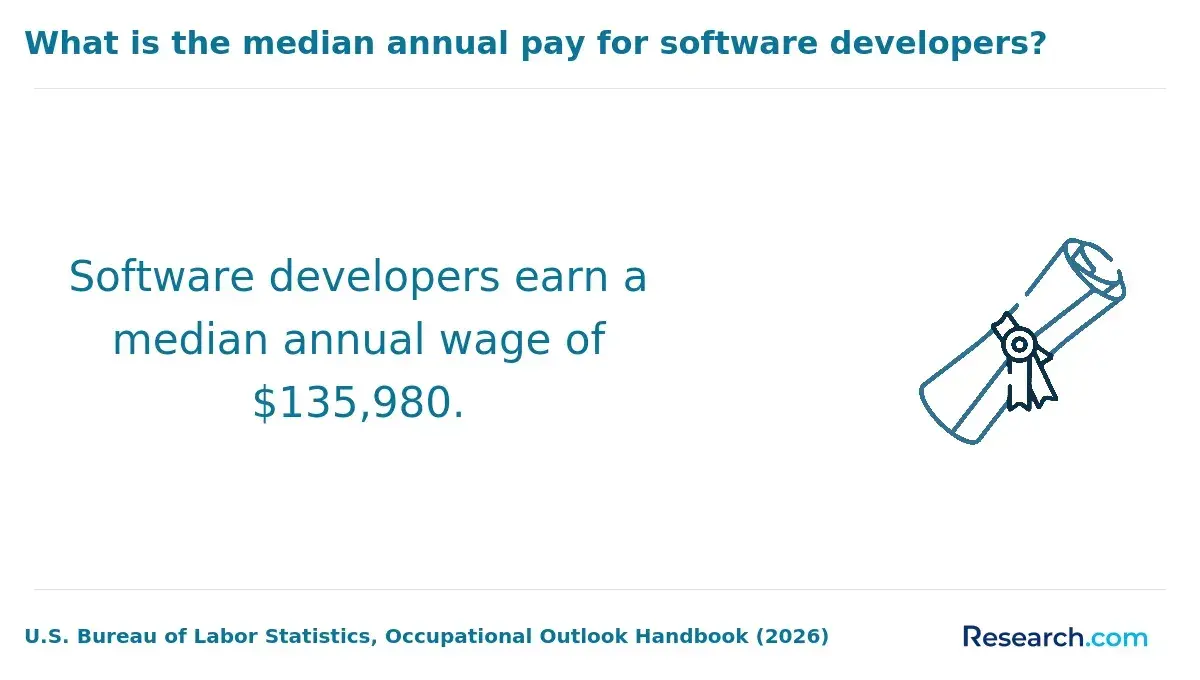
There is no reliable single salary for everyone who completes a data science master's. The Bureau of Labor Statistics reports that the median annual wage for U.S. data scientists was $120,230 in May 2025. That occupational median includes workers with different education levels and experience; it is not an entry-level offer or a measure of the salary increase caused by a degree.
For a personal return-on-investment estimate, compare likely pay in roles you could obtain without graduate school with roles the program might help you reach. Account for tuition, fees, borrowing, and income you might forgo while studying. Be cautious with school-reported salaries unless the school explains who responded, their previous experience, where they work, and whether the figure reflects starting pay or a change in pay.
What does a data science master's program teach?
For a career changer, the useful curriculum is the one that addresses identifiable gaps. Look beyond a course title for substantive work in statistics, probability, programming, data management, machine learning, and responsible use of data. If you already write software professionally, a program heavy on introductory coding may offer less value than one with rigorous modeling and experimental analysis.
Project work matters because employers can assess what you actually did. Seek opportunities to define a problem, prepare data, justify a method, evaluate results, and explain limitations to a nontechnical audience. For machine learning roles, check whether students also build and assess working systems rather than only train models in notebooks. Review course descriptions and sample capstones; a passing mention of AI is not evidence of advanced instruction.
What are the admission requirements for a data science master's?
Requirements vary by program. Schools may evaluate a bachelor's degree, quantitative preparation, programming ability, prior coursework, professional experience, recommendations, and application materials. Neither a tech job title nor a layoff automatically establishes eligibility. Check each program's current admissions page to distinguish required prerequisites from skills it merely recommends.
If your background is in product or operations, assess your readiness for programming and mathematics before applying. If you come from software engineering, check your preparation in statistics and probability. Coursework or independent projects can demonstrate readiness, but they do not necessarily satisfy a formal prerequisite; ask admissions staff what evidence they accept. Applicants considering a machine-learning-specific alternative can also review ML graduate programs without personal statement requirements, while confirming each program's current application policy directly.
How long does a data science master's take and cost?
There is no dependable single timeline or price across programs. Compare required credits, course availability, part-time options, prerequisite courses, and any limit on time to completion. A shorter advertised schedule may be impractical if you need to work or search for a job while enrolled.
Build a total-cost estimate from the school's current tuition and fee schedule, not a headline tuition figure. Include mandatory fees, required software or materials, potential travel, financing costs, and income you would give up by studying instead of working. Ask whether aid or employer support is available and whether it applies to your intended enrollment pace. If an AI degree is also on your shortlist, online AI degrees with lower tuition may provide alternatives to investigate - but compare total costs and relevant coursework, not price alone.
Is an online or campus data science master's better for career changers?
Online study may be the better fit if you need to keep working, search for jobs across locations, or avoid relocating. Campus study may suit you if regular in-person access to classmates, faculty, and local employers would materially strengthen your transition. Neither format is inherently better for learning or hiring; the useful comparison is how a particular program delivers instruction, feedback, projects, and career support.
Ask whether online classes meet live, when group projects are scheduled, whether exams or residencies require travel, and whether career services are available to remote students. Check the pace against your financial runway after a layoff. If you are weighing an AI-focused alternative, you can compare AI master's programs by duration, then verify that a faster schedule still leaves room for the projects and job search your transition requires.
How can you choose an accredited data science master's program?
Start by verifying that the institution holds recognized institutional accreditation through the U.S. Department of Education's accreditation database or the accreditor's official records. Then evaluate the specific program: accreditation of the institution alone does not tell you whether its curriculum fits your target role or whether its career services work for career changers.
Request the current course sequence, total cost, completion rules, sample student projects, and an explanation of any published employment outcomes. A warning sign is a program that promotes a strong salary or placement figure without identifying the graduates counted, the reporting period, or the method used. Rankings and alumni testimonials can prompt questions, but they should not substitute for those details.
Do data scientists need licenses or professional certifications?
Data scientist is not generally a state-licensed occupation in the United States. Employers may value certifications tied to particular software or cloud platforms, but a certification is not a universal substitute for statistical skill, relevant projects, or a degree. Check the postings for your target role before paying for one.
If you plan to work with sensitive data, learn the privacy, security, and industry rules relevant to that employer. Such obligations depend on the setting; they should not be confused with a general professional license for data scientists.
What is the job outlook for data science careers?
The Bureau of Labor Statistics projects 35% growth in U.S. data scientist employment from 2025 to 2035, much faster than the average for all occupations. That supports considering the field, but national growth does not predict the number of suitable openings in your location or guarantee that a new graduate will beat experienced applicants.
Use the outlook alongside a local test: review openings you would realistically apply for, separate required from preferred skills, and note whether employers seek data scientists or a more specific kind of analyst or engineer. A master's makes the strongest case when it helps you meet those requirements and produce evidence of that ability - not merely when the occupation is growing.
Other Things You Should Know About Data Science
If an application asks about your work history, explain the layoff briefly and accurately. Spend more space showing how your prior work and intended studies connect to a clear career goal.
Eligibility and availability-for-work rules vary by state and personal circumstances. Check with your state unemployment agency before assuming full-time or part-time study will preserve your benefits.
Not without checking ownership, confidentiality, and any agreements you signed. When permission is unclear, build a comparable project with public or synthetic data and explain the skills it demonstrates.
It may affect the financial picture a school uses to assess your need, but aid is not automatic. Contact each school's financial aid office, describe the change in income, and ask what documentation and review process it requires.
References
- Reskilling and Upskilling the Future-ready Workforce... - PMC https://pmc.ncbi.nlm.nih.gov/articles/PMC9278314/
- Graduate Degree Fields - COE https://nces.ed.gov/programs/coe/indicator/ctb/graduate-degree-fields
- What Can You Do with a Master's Degree in Data Science? | UCLA MSOL Data Science https://www.msol.ucla.edu/data-science-engineering/articles/what-can-you-do-with-masters-degree-data-science/
- Tuition & Financial Aid: UW MS in Data Science Program | Trends and Issues in Higher Ed https://www.washington.edu/datasciencemasters/tuitionfinancialaid/
- Why a Master's in Data Analytics is a Strong Career Transition | NMSU Global Campus https://global.nmsu.edu/blog/sciences/career-transition-with-data-analytics-degree/
- Data Science Bootcamp vs master's degree: How to Choose | Boston University https://www.bu.edu/online/2026/09/17/bootcamp-certificate-or-masters-in-data-science-how-to-choose/
- An Internship Can Help Change the Direction of Your Career | illinois.edu https://blogs.illinois.edu/view/6397/409183
- What Can I Do With a Degree in Data Science? Career Paths & Skills | Harvard SEAS https://seas.harvard.edu/news/what-can-i-do-degree-data-science-career-paths-skills
- Cost & Financial Aid - Master of Data Science - UC Irvine https://mds.ics.uci.edu/financial-aid-tuition/
- Online Master of Applied Data Science Tuition & Financial Aid | UNC-Chapel Hill online https://online.unc.edu/online-masters-programs/masters-data-science/admissions/tuition-financial-aid/