2027 Choosing a BS in Business Administration When Your Employer Pays Only for General Business
Audited and Verified:
Our Editorial and Data Verification Process
Research.com uses government datasets, official education statistics and primary institutional information to support its career and degree guides. Our review process checks factual accuracy, occupational definitions, source dates and the requirements associated with the credentials discussed.
How This Article Was Fact-Checked
Our editorial team verifies salary estimates, employment projections, education requirements and program information against original data providers and official organizations. Salary figures are checked against the relevant occupational definitions and reporting periods. Information about licensure, accreditation and required in-person training is reviewed separately.
Fact-checked and verified on:

Co-Founder and Chief Data Scientist
Your employer will pay for "general business," but the degree you want is called a BS in Business Administration. Those labels may describe similar coursework - or different benefit categories. For an employee trying to finish a bachelor's degree, the distinction can determine which courses are reimbursed and how much cash is needed before reimbursement arrives.
This guide explains how to confirm eligibility, compare degree options, and estimate your actual cost before enrolling. It also helps you decide whether the degree advances your specific career goal, rather than assuming that employer payment alone makes it the right choice.
Key Things You Should Know
- A BS in Business Administration may qualify as "general business," but only your employer's written benefit rules and approval establish coverage; the degree title alone does not.
- Get approval for the exact school, degree, concentration, and courses before enrolling, then compare reimbursement limits, payment timing, and any repayment obligation. A business degree can support advancement without guaranteeing it.
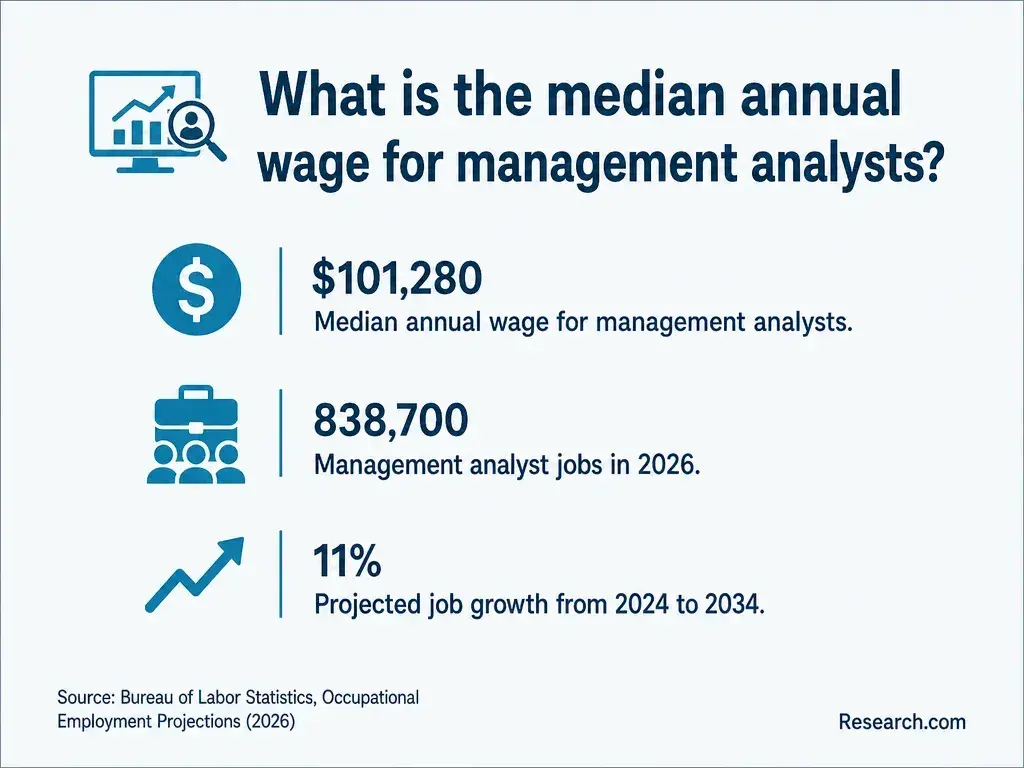
- For context, the U.S. Bureau of Labor Statistics reports a $75,940 May 2025 median wage for human resources specialists - an occupation-wide figure, not a starting salary for degree graduates.
What is the difference between a BS in Business Administration and General Business?
Business administration is a formal degree title at some schools. General business may be a degree title, a major or concentration, or simply an employer's label for broadly applicable business study. Neither term has a universal meaning across schools or tuition policies. A BS in Business Administration with a broad core could fit your employer's category, while a similarly named program with a specialized concentration might require separate approval.
Compare the official catalog description and degree audit - not just the name on a search result. Look at the credential awarded, required courses, any concentration shown on the transcript, and how the employer defines eligible study. If your intended work is specifically in HR, a guide to studying human resources can help you assess the trade-off between a broad business degree and more focused preparation. Do not assume an elective or informal course grouping becomes an approved concentration.
Can employer tuition assistance cover a BS in Business Administration?
Yes, if the employer approves that exact program under its benefit policy. Start with the written policy and ask the benefits administrator whether "general business" includes a BS in Business Administration at your proposed school. Approval for one course, an institution, or a broad subject area may not equal approval for the full degree.
Request a written determination that identifies the degree and any concentration. The questions below separate eligibility from the cash-flow and employment conditions that can change the value of the benefit:
- Is the school or degree restricted to an approved provider list, and must each course be approved before registration?
- Which tuition, mandatory fees, books, or other charges qualify, and what caps or grade requirements apply?
- Does the employer pay the school directly or reimburse you after grades post, and when is the claim deadline?
- Can you combine the benefit with grants or scholarships, and must you repay assistance if you leave or become ineligible?
If the employer declines a specialized alternative, compare its out-of-pocket cost rather than assuming it is unaffordable. For a project-management path, funding sources for a bachelor's in project management are a starting point; confirm actual aid eligibility and award amounts with the school. Ask payroll or a qualified tax adviser about your benefit's tax treatment rather than treating every payment as tax-free.
Is a BS in Business Administration worth choosing for career advancement?
It is most compelling when a bachelor's degree is required or preferred for your next identifiable role, the curriculum addresses skills you lack, and employer support leaves a manageable total cost. Experience still matters: an employee who already coordinates budgets or operations may use the degree to meet a hiring requirement, but the credential does not itself establish readiness to manage people or major budgets.
Review internal job postings and talk with the hiring manager about the work involved. If your goal is a specific function, compare the covered degree's electives and projects with a specialized program, certificate, or employer training. An approved workplace project can demonstrate applied skill, but confirm academic requirements and obtain permission before using company data. If cost remains decisive, budget-friendly online business schools can supply candidates for a school-by-school net-cost comparison - not a substitute for checking benefit eligibility.
First, verify the institution's current accreditation with the accreditor and check that it covers the school awarding your degree. Then determine whether the business school or named program has separate AACSB, ACBSP, or IACBE accreditation, if that matters to you or your employer. Institutional accreditation and business-specific accreditation are distinct; a claim about the business school does not automatically cover every degree it offers.
Ask the benefits office whether it requires a particular form of accreditation or an approved-school list. When reviewing online business school comparisons across the United States, verify each candidate's status and program scope directly before applying. Accreditation helps establish recognized oversight; it does not prove that courses will transfer, that your employer will pay, or that you will receive a promotion.
A typical program combines general education with accounting, economics, finance, marketing, management, operations, statistics or quantitative reasoning, and business communication. Requirements and depth differ by school. Some programs add a capstone, internship, or formal concentration; others allow electives without awarding a separate concentration.
For the tuition decision, map the required courses against the employer's rules. A policy might accept the general-business core but question electives in a narrowly specialized area. If supply chain is your target, compare the operations courses in the covered BS with an online supply chain bachelor's fast-track guide to see what additional depth a specialized program may offer. Check prerequisites and course schedules before assuming either path is faster.
Choose the format you can complete alongside work and that your employer will fund. Online does not necessarily mean self-paced: scheduled sessions, group work, proctored exams, and fixed deadlines can conflict with shifts. Campus programs may offer useful in-person access but add commuting and class-time constraints. Ask both the school and benefits office whether delivery format changes eligibility, fees, or approved providers.
Request a sample term schedule and confirm required campus visits, evening commitments, leave options, and how often required courses run. For employees comparing formats, study business administration without leaving your job offers options to investigate; the decisive evidence is each program's actual schedule and your available study time.
Requirements depend on whether you are entering college, transferring, or returning after a break. Schools may request previous transcripts and specify GPA, mathematics, or business-course prerequisites. Admission to the institution, admission to the business major, and application of transfer credits toward graduation are separate decisions.
Before committing benefit funds, ask for a program-specific credit evaluation and degree audit showing general education, business core, electives, and remaining residency requirements. Prior coursework accepted as elective credit might not replace a required accounting or statistics course. If you are also considering a specialized degree, guidance on how to use prior college credits in a project management bachelor's highlights why transfer acceptance and applicability must be checked separately for each program. Only the receiving school can confirm your result.
Completion time depends on credits that apply to the degree, required-course sequencing, course availability, and how many classes you can take while working. Ask the school for a term-by-term plan rather than relying on an advertised completion time. A delayed required course can also push expenses into another employer-benefit period.
Calculate your share from the remaining required courses, tuition and mandatory fees, books or technology, and any travel or lost work time. Then subtract only aid and employer payments you are confirmed to receive. Keep total cost separate from cash needed upfront: reimbursement after grades post may require you to pay the bill first. If comparing a specialized option, use the same remaining-credit and fee assumptions; tuition budgeting for an accredited project management degree illustrates categories to check, not a price for your business administration program.
A broad business degree can support applications for roles in operations coordination, HR, marketing, procurement, or project support, depending on your experience and demonstrated skills. Compare actual postings with your current responsibilities: a degree may remove an education barrier, while advancement into a specialist or managerial job may still require function-specific experience.
The U.S. Bureau of Labor Statistics projects 6% employment growth for human resources specialists from 2025 to 2035. That occupation-wide projection signals a field to investigate, not a forecast of openings or pay for BS in Business Administration graduates. If finishing sooner would help you apply for an internal opening, ranked programs for finishing a business bachelor's sooner can help form a shortlist; confirm how your credits and required-course schedules affect your own completion date.
Do Business Administration graduates need licenses or certifications?
There is no general license required simply to hold a BS in Business Administration or work in many business-support roles. Particular occupations can have separate rules: accounting licensure, financial-services activities, and some other regulated work require qualifications beyond a broad business degree. Voluntary credentials may help in a target function, but a course or concentration does not automatically meet a certifying body's eligibility rules.
Check the requirements for the job you actually want before paying for additional education. For example, if project management is your goal and an eligible general-business degree would leave a skills gap, compare targeted training, experience, and credentials first. You can compare affordable project management schools if a specialized degree remains necessary, while accounting for the employer funding you would give up.
Other Things You Should Know About Business Administration
Ask which policy applies to courses already approved and whether there is a transition period. Keep copies of approvals and confirm future-term coverage before registering.
Possibly, but obtain new written approval first. A concentration change may alter covered courses, graduation requirements, or both.
Only with the necessary instructor and employer permissions. Check confidentiality, data-use, and intellectual-property rules before sharing company information.
Save the policy version, written program and course approvals, itemized bills, grades, reimbursement claims, and payment records. These documents help resolve coverage or repayment questions later.
- Cost of Attendance (Budget) | 2025-2026 Federal Student Aid Handbook https://fsapartners.ed.gov/knowledge-center/fsa-handbook/2025-2026/vol3/ch2-cost-attendance-budget
- Accreditation in the U.S. | ed.gov http://www.ed.gov/laws-and-policy/higher-education-laws-and-policy/college-accreditation/accreditation-in-the-us
- Qualified Ed expenses | Internal Revenue Service https://www.irs.gov/credits-deductions/individuals/qualified-ed-expenses
- Rule 3358:5-7-12 | Prior learning assessment policy. https://codes.ohio.gov/ohio-administrative-code/rule-3358:5-7-12
- Detail for CIP Code 52.0201 | ed.gov https://nces.ed.gov/ipeds/cipcode/cipdetail.aspx
- Additional College and Course Fees and Incidental Charges | utsa.edu https://catalog.utsa.edu/policies/tuitionfees/additionalfees/
- College of Business Administration - Academic Catalog https://catalog.uic.edu/ucat/colleges-depts/business-administration/
- Accreditation Process | AACSB https://www.aacsb.edu/educators/accreditation/accreditation-process
- Credit for Prior Learning | University of Arizona Catalog https://catalog.arizona.edu/policy/courses-credit/credit/credit-prior-learning