2027 Choosing a BS in Business Administration When You Want Supply Chain Study but Have Only Warehouse Experience
Audited and Verified:
Our Editorial and Data Verification Process
Research.com uses government datasets, official education statistics and primary institutional information to support its career and degree guides. Our review process checks factual accuracy, occupational definitions, source dates and the requirements associated with the credentials discussed.
How This Article Was Fact-Checked
Our editorial team verifies salary estimates, employment projections, education requirements and program information against original data providers and official organizations. Salary figures are checked against the relevant occupational definitions and reporting periods. Information about licensure, accreditation and required in-person training is reviewed separately.
Fact-checked and verified on:

Co-Founder and Chief Data Scientist
Warehouse work gives you firsthand knowledge of inventory, receiving, shipping, and the problems that disrupt deliveries. Moving into supply chain planning or analysis, however, calls for skills your current role may not let you demonstrate.
This guide is for warehouse employees considering a BS in Business Administration with supply chain study. It explains when that degree is a good fit, when a more specialized path may be better, and how to evaluate programs against your experience, schedule, and target job.
Key Things You Should Know
- Warehouse experience is relevant to supply chain study, but it does not automatically earn college credit or qualify you for planning and analyst roles.
- Choose a business administration degree if you want broad business skills alongside substantial supply chain coursework; compare a specialized supply chain degree if you want greater functional depth.
- The U.S. Bureau of Labor Statistics projects 18% employment growth for logisticians from 2025 to 2035, but that occupation-wide figure does not predict an individual graduate's prospects.
What Is a Business Administration Degree With Supply Chain Study?
A BS in Business Administration combines a general business core with electives or a formal concentration. Supply chain study typically examines how organizations source materials, manage inventory, coordinate transportation, and meet customer demand. A concentration is an officially designated part of a degree; taking a supply chain elective does not necessarily put that designation on your transcript.
For a warehouse employee, the choice depends on the next function you want to learn. A broad business degree can make sense if you want to connect daily operations with purchasing, finance, and management decisions. A specialized supply chain bachelor's may offer more courses in logistics and planning, but compare actual curricula rather than degree titles.
An online supply chain bachelor's fast-track guide can help you identify alternatives; confirm each school's current requirements and whether accelerated pacing is feasible with your shifts.
Can Warehouse Experience Help You Earn a Supply Chain Degree?
Yes, primarily by giving you context for assignments and a credible starting point for career development. Receiving discrepancies, cycle counts, warehouse management systems, and shipment delays are practical examples of supply chain problems. They are not, by themselves, academic credit. Ask a school whether it offers prior-learning assessment, employer-training evaluation, or work-based credit, what documentation it requires, and where any awarded credit would apply in the degree audit.
If you already have college credits, request an evaluation showing which satisfy general education, business core, and supply chain requirements. Accepted credits may count only as electives. If your experience centers on coordinating implementations rather than inventory flow, online project management bachelor's programs accepting transfer credits offer a different pathway to compare. Only the receiving institution can determine how your courses apply.
What Supply Chain Careers Can You Pursue With a Business Degree?
Your strongest first move may be from warehouse execution into a role that uses both your operational knowledge and new analytical skills. These roles differ in how much planning responsibility they involve:
| Potential role | Typical work | Experience gap to assess |
| Inventory coordinator or analyst | Investigates stock accuracy, replenishment, and inventory reports | Spreadsheet analysis and interpreting inventory measures |
| Logistics coordinator | Tracks shipments and resolves carrier or delivery exceptions | Transportation systems and external communication |
| Buyer or purchasing assistant | Supports orders, supplier records, and delivery follow-up | Purchasing processes and supplier evaluation |
| Supply chain analyst or logistician | Analyzes flows, service levels, and improvement options | Data analysis and cross-functional planning |
A degree does not replace the experience an employer may require for analyst or management positions. Seek assignments that let you explain a process, examine a measure, and recommend a change without claiming results you have not verified. If your real goal is coordinating projects rather than managing product flow, compare affordable project management schools alongside supply chain programs.
Expect a business foundation that may include accounting, economics, statistics, finance, information systems, and management, followed by program-specific supply chain courses. For someone coming from warehousing, the most valuable additions are often demand planning, procurement, transportation, operations analytics, and spreadsheet-based decision-making. Check whether those subjects are required, offered as electives, or absent.
Read course descriptions and prerequisite sequences, not just a concentration label. An inventory assignment might draw on your work experience, but forecasting requires you to interpret data and uncertainty rather than rely only on what usually happens on the floor. If your goal is primarily supervising people at your current site, shorter online bachelor's pathways in organizational leadership may be worth comparing for their coursework and remaining degree requirements.
Online study can eliminate a commute, but it may still require live meetings, timed exams, group projects, or fixed weekly deadlines. Campus classes can offer predictable face-to-face access and local employer connections, but their meeting times may conflict with rotating shifts. Neither format is automatically easier.
Before enrolling, ask when required supply chain courses run, whether attendance is synchronous, and how team assignments and exams work. Then compare those obligations with your actual work schedule, including peak-season overtime. Business administration degree planning for employed applicants can help frame the scheduling comparison, but obtain the specific program's course calendar and policies before committing.
Requirements vary by institution and by whether you apply as a first-year, transfer, or returning student. Schools may request a high school record, prior college transcripts, and evidence that you have met - or can complete - mathematics or business prerequisites. Warehouse employment can strengthen the account of your goals, but it is not a substitute for a stated academic requirement unless the school approves an alternative.
Ask admissions about entry to the university, then ask the business department whether entry to the major or supply chain concentration has separate conditions. An accelerated format does not necessarily waive prerequisites; accelerated business education for working adults is worth comparing only after you confirm eligibility and course sequencing.
Completion time depends on applicable prior credits, course availability, prerequisites, and how many classes you can manage while working. Compare programs using the credits still required after an official evaluation, not the number a school says it will accept. A faster calendar can mean a heavier weekly workload rather than less coursework.
For cost, request an itemized estimate covering remaining tuition, mandatory fees, books or software, and any travel or exam charges. Check whether employer assistance is available, when reimbursement arrives, and what happens if your schedule forces you to reduce enrollment. You can compare inexpensive business administration degree options, but the lowest advertised tuition is not necessarily your lowest completion cost.
First, verify that the institution holds recognized institutional accreditation and that the exact degree and delivery format are offered. If a school advertises AACSB, ACBSP, or IACBE accreditation, check the accreditor's stated scope rather than assuming it covers every program. Accreditation is an important screening factor, not proof that graduates receive particular jobs.
Next, compare the supply chain curriculum, applied assignments, course schedule, transfer audit, and career support available to working students. Ask whether an internship is required and whether a current warehouse role could meet its learning objectives with prior academic approval. Ranked US college pathways in online business can provide a starting list, but make the final choice using verified program details that fit your goal.
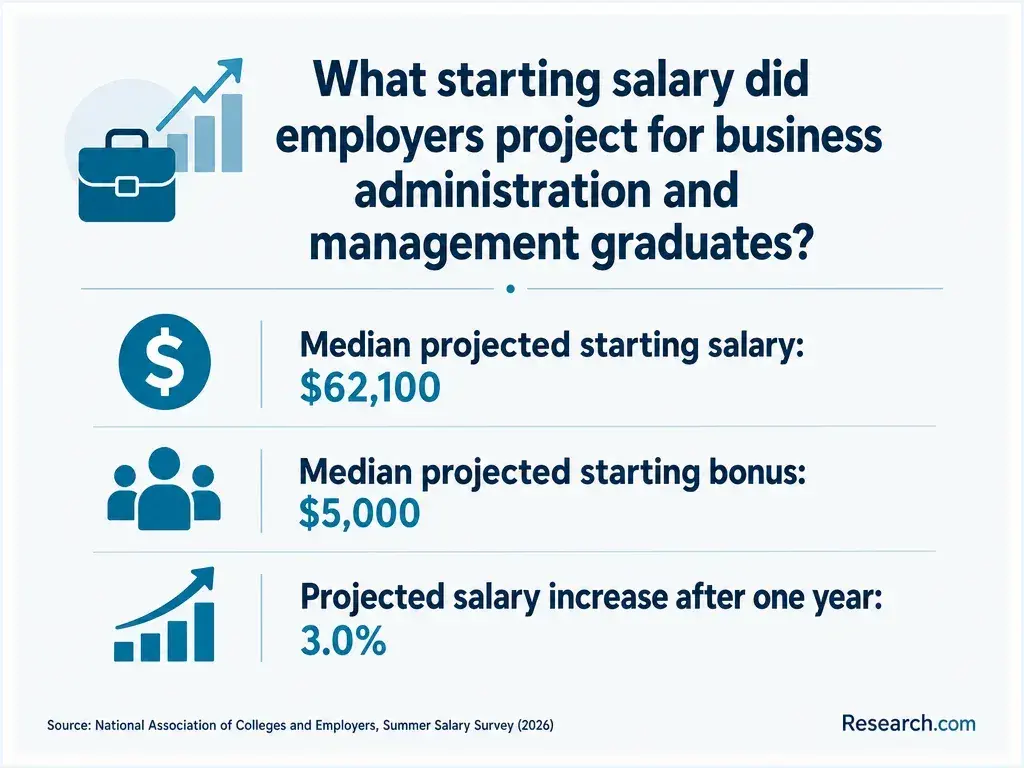
There is no single salary for graduates of a business administration program with supply chain study. The U.S. Bureau of Labor Statistics reports a May 2025 median annual wage of $82,320 for logisticians. That is an occupation-wide median, not a starting salary or a forecast of what a warehouse employee will earn after graduation. Pay depends on the job's duties, location, industry, and the experience you bring beyond the degree.
For a personal return-on-education decision, compare local postings for the roles you could realistically pursue with your current responsibilities and planned coursework. Weigh the pay and qualification requirements against your remaining degree cost and time. Business administration degree return and completion planning can inform that comparison, but occupation-wide wages should not stand in for a job offer.
Which Supply Chain Certifications Can Strengthen Your Career?
Certifications can help you demonstrate knowledge beyond your warehouse duties, but choose one for a defined skill gap rather than collecting credentials. ASCM's supply chain credentials, including CPIM for planning and inventory and CSCP for broader supply chain management, address different functions. Check the issuing organization's current exam content, fees, and eligibility or maintenance rules before paying; a degree does not automatically award a certification.
If you are exploring the field, a targeted course or employer-supported training may be a less costly first step than either a certification or a bachelor's program. If you need the degree to pursue your target roles, investigate how to reduce tuition costs for a business degree before adding optional credential expenses.
Other Things You Should Know About Business Administration
Yes, if the figures are accurate and your employer permits disclosure. Otherwise, describe the process you monitored and the tools you used without revealing confidential results.
List your official title, then describe the inventory, reporting, or coordination tasks you actually performed. Specific responsibilities are more useful to a prospective employer than an inflated title.
Not for every role. Start with the spreadsheet, reporting, and system skills requested in your target job postings; pursue programming when those roles require it.
Generally, no. Planning and analysis roles differ from commercial driving. Check individual job postings for requirements tied to transportation operations or site duties.
- Paying For College | The Ohio Department of Higher Education https://highered.ohio.gov/wps/portal/gov/odhe/students/pay-for-college
- Credit for Prior Learning | Transfer Credit Ohio https://transfercredit.ohio.gov/students/student-programs/Prior-Learning-Assessments
- B.B.A. Major in Management (Supply Chain Concentration) | Texas State University https://mycatalog.txstate.edu/undergraduate/mccoy-business-administration/management/management-supply-chain-concentration-bba/
- Introduction to Supply Chain Analytics | Smeal College of Business https://smeal.psu.edu/exec-education/individuals/supply-chain-management/introduction-to-supply-chain-analytics
- Admissions Requirements | University of Cincinnati https://www.business.uc.edu/future-students/admissions-requirements.html
- What Can You Do With a Bachelor's Degree in Supply Chain, Transportation and Logistics Management? | Bellevue University https://www.bellevue.edu/articles/what-can-you-do-with-a-bachelors-degree-in-supply-chain-transportation-and-logistics-management/
- Operations and Supply Chain Management Concentration | buffalo.edu https://catalogs.buffalo.edu/preview_program.php
- BS in Business Administration (Supply Chain Management) | Sacramento State Catalog https://catalog.csus.edu/colleges/business-administration/marketing-and-supply-chain-management/bs-in-business-administration-supply-chain-management/
- Supply Chain Management Major - Rutgers Business School https://www.business.rutgers.edu/undergraduate-new-brunswick/supply-chain-management
- Jobs & Internships | cpp.edu https://www.cpp.edu/cba/technology-and-operations-management/current-students/jobs-internships.shtml