2027 BS in Business Administration: Funding a Degree Without Assuming a Management Job
Audited and Verified:
Our Editorial and Data Verification Process
Research.com uses government datasets, official education statistics and primary institutional information to support its career and degree guides. Our review process checks factual accuracy, occupational definitions, source dates and the requirements associated with the credentials discussed.
How This Article Was Fact-Checked
Our editorial team verifies salary estimates, employment projections, education requirements and program information against original data providers and official organizations. Salary figures are checked against the relevant occupational definitions and reporting periods. Information about licensure, accreditation and required in-person training is reviewed separately.
Fact-checked and verified on:

Co-Founder and Chief Data Scientist
A BS in Business Administration can be worth pursuing even if you plan to stay in a specialist, coordinator, or support role. But a financing plan built around an assumed management salary is risky: the degree does not guarantee a promotion, and tuition bills arrive before any career benefit does.
This guide is for prospective and returning students who need a realistic way to pay. It explains how to compare total completion costs, combine funding sources, protect household cash flow, and decide whether the degree - or a narrower qualification - fits the work you actually want.
Key Things You Should Know
- Budget for the role you can reasonably pursue, not an automatic management promotion; the $102,320 May 2025 median for project management specialists, for example, describes an occupation, not new business graduates.
- Compare the cost of remaining required credits, fees, lost work time, and loan interest - not advertised tuition alone. Accepted transfer credits may not satisfy business-major requirements.
- Apply grants and scholarships before borrowing, and confirm employer-benefit approval and reimbursement timing before relying on that money to pay a bill.
What Is a BS in Business Administration?
A BS in Business Administration is an undergraduate degree combining general education with study of functions such as accounting, finance, marketing, operations, and management. Its breadth can help someone move among business functions without committing to a supervisory job. A BBA or BA in Business may cover similar ground, but titles alone do not establish the same curriculum, transfer rules, or cost.
For a funding decision, the useful question is whether the degree closes a documented qualification gap. If employers in your target role request a bachelor's degree, completing one may be valuable even without a management ambition. If you primarily need one technical skill, a course or certificate may cost less. Compare the credits you would actually need against shorter business administration study options and career prospects; "shorter" only applies to you if the school accepts and applies your prior credits.
What Careers Can You Pursue With a BS in Business Administration?
Possible paths include operations coordinator, project coordinator, procurement assistant, marketing coordinator, HR specialist, and business-services roles. Match a job posting's tasks to your existing experience: customer service may support an operations transition, while purchasing experience may make procurement a more credible next step. A degree can meet an education preference, but it cannot substitute for every software skill, industry requirement, or record of results.
Management roles generally add responsibility for people, budgets, or major decisions. Plan for them only if you want that work and have a plausible route to the required experience. If your goal is specifically logistics or purchasing, compare the business core with fastest online supply chain bachelor's programs rather than assuming the broadest degree is the best investment.
How Much Can You Earn With a BS in Business Administration?
There is no single salary for this degree: pay attaches to occupations, locations, industries, and experience. The U.S. Bureau of Labor Statistics reports a May 2025 median annual wage of $75,940 for human resources specialists. That occupation-wide midpoint includes experienced workers; it is not an expected starting wage for a new BS graduate. BLS projects 6% employment growth for the occupation from 2025 to 2035, but growth does not ensure an individual opening or promotion.
For a borrowing decision, use compensation from roles you could credibly seek with your current experience, then treat any future raise as upside rather than money already available for payments. HR-focused readers can compare HR education costs and career planning before paying for broad business coursework they may not need.
Typical coursework builds financial-statement literacy, quantitative reasoning, communication, marketing, operations, and organizational decision-making. Programs differ in how deeply they teach each subject and whether they offer an official concentration. Check required courses and prerequisites rather than treating a concentration label - or one elective - as proof of job-ready expertise.
Applied assignments matter when you are funding the degree for a nonmanagement role. A process map, spreadsheet-based budget, or documented customer analysis can show how you use what you learned, provided you have permission to use any workplace information. If your intended work is narrowly in logistics, compare those assignments and electives with low-cost shorter supply chain degree options. A more focused curriculum may be preferable if its additional credits and completion cost fit your goal.
A conventional bachelor's plan is often built around four academic years of full-time study, but your completion time depends on credits that apply to requirements, enrollment pace, prerequisite sequences, and when required courses run. A school may accept a prior course as elective credit without using it to replace accounting or statistics in the business core.
Request a written degree audit and a term-by-term schedule before comparing bachelor's programs for faster completion. Accelerated terms can shorten calendar time without reducing required coursework. If the pace forces you to cut paid hours or retake a course, the apparent time savings may increase your total cost.
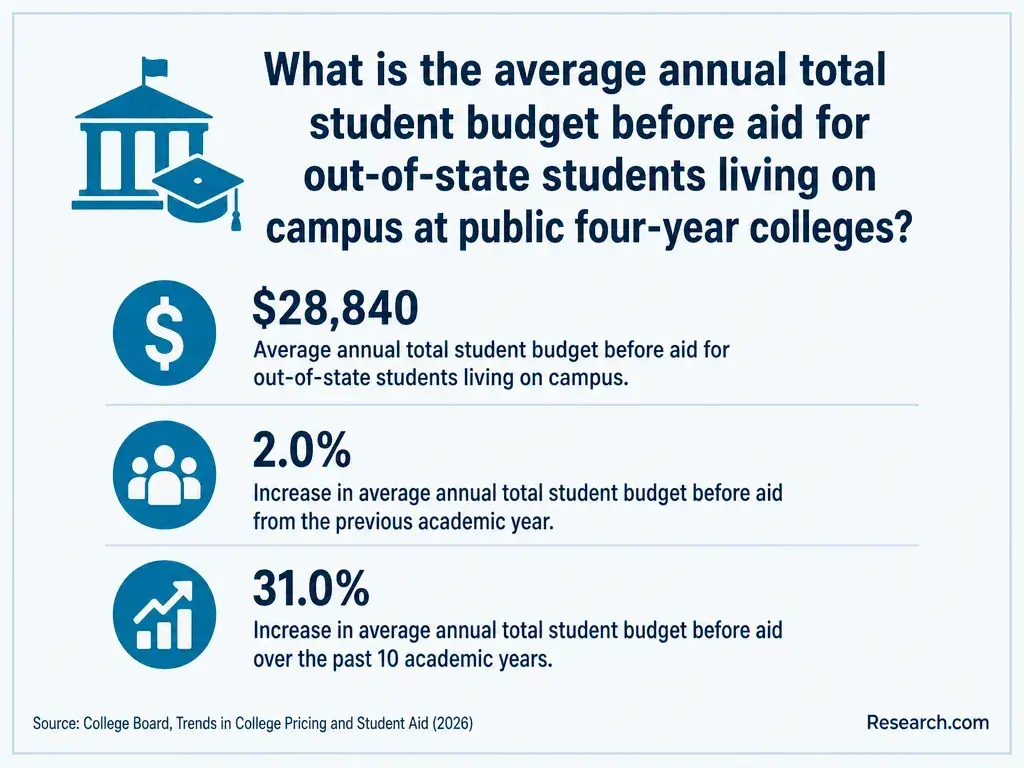
There is no reliable universal price. Schools may charge by credit, course, term, or subscription period, and an advertised rate may exclude fees or reflect a pace you cannot maintain. Ask each school for an estimate based on its evaluation of your records - not the price of an idealized transfer student. The components below separate the bill you must pay from costs that can be easy to miss.
| Cost component | What to confirm | Why it changes the decision |
| Tuition and mandatory fees | Billing method, rate eligibility, and required technology or course fees | The same published tuition rate can produce different final bills. |
| Remaining coursework | Credits applied to general education, business core, electives, and residency | Accepted credits do not always reduce the courses you must take. |
| Study-related expenses | Books, software, proctoring, equipment, and travel | These may come due before aid or reimbursement arrives. |
| Time and borrowing | Work-hour changes, likely completion pace, loan terms, and repayment | A lower tuition quote can still produce a higher overall cost. |
Build a funding plan in this order: obtain the school's aid offer and scholarship terms; check employer eligibility, approval, caps, grade rules, and repayment obligations; then calculate any remaining amount you must pay or borrow. Federal grants and loans generally require eligible enrollment and a financial-aid application; awards are not automatic. Employer reimbursement may arrive after you pay tuition, creating a cash-flow gap even when it lowers your eventual net cost.
Compare identical assumptions - remaining courses, pace, fees, and aid - when reviewing low-cost online business administration pathways. Do not count an unapproved transfer award, scholarship, or future raise as secured funding.
An online BS can be a sound choice when the institution and curriculum meet your needs; delivery mode alone does not establish quality or employer acceptance. For a student keeping a job to fund school, scheduling may be the decisive difference. Check live-session times, group meetings, proctored exams, campus visits, internship rules, and whether required courses are offered when you need them. "Online" does not necessarily mean self-paced.
Ask whether grants, employer benefits, and your chosen enrollment pace apply to the online version of the program. Rules can vary by school or benefit plan. Guidance on funding an online project management bachelor's degree can provide comparison questions for a related program, but confirm every award and eligibility rule with your business school and aid office.
Schools commonly request prior academic records, but requirements differ for first-time, transfer, and returning students. Admission to the university may be separate from admission to its business major; required mathematics, economics, accounting, or GPA standards may also differ. None of these decisions establishes how prior courses will apply to graduation.
Send official transcripts and ask for both a major-admission review and a degree-applicability evaluation. For transfers, request the catalog year, residency requirement, prerequisite decisions, and an appeal route for disputed equivalencies. Project management bachelor's credit transfer rules illustrate questions worth asking of a related degree, but only the business program you choose can decide its own credit awards.
Verify institutional accreditation through the accreditor's directory and the institution's current records. Then check whether any claimed AACSB, ACBSP, or IACBE recognition covers the specific business school or program you would enter; institutional and business-specific accreditation have different scopes. Accreditation is an important check, not proof that a program is affordable or will produce a particular job outcome.
For a funding decision, also request the current catalog, a course-availability plan, student-support details, and any published completion or employment outcomes with their cohort definitions. When comparing a more specialized path, affordability checks for accredited project management programs offer a useful contrast: verify both the accreditation claim and the full bill for the exact program, not just the institution's name.
Do Business Administration Graduates Need Certifications or Licenses?
No general license is required merely to hold a BS in Business Administration or work in many business-support roles. A particular occupation may have separate requirements: regulated accounting or financial-services work, for example, cannot be entered solely on the strength of a general business degree. Voluntary credentials in HR or project management also have their own eligibility and exam rules.
Do not pay for a credential - or a second degree - until target job postings show what it would add to your existing experience. If project coordination is your goal, compare the degree's coursework and cost with economical project management degree programs and with targeted training. The better-funded route is the one that closes a real qualification gap without assuming you must become a manager to make the expense worthwhile.
Other Things You Should Know About Business Administration
Yes. Some policies require advance approval, an eligible program, or a minimum grade. Get the written policy and course approval before enrolling if reimbursement is essential to your budget.
It depends on the award's permitted uses and how the school applies the funds. Ask the scholarship administrator and financial-aid office before counting it toward equipment.
Not necessarily, but some plans limit providers or offer different benefit levels. Confirm the eligible-school rules before comparing offers.
Only with the permissions your employer and school require. Use public or approved, appropriately anonymized information when confidential records, personal data, or company intellectual property cannot be shared.
- How To Evaluate Your Aid Offers | studentaid.gov https://studentaid.gov/articles/evaluating-financial-aid-offers/
- Your financial path to graduation | consumerfinance.gov https://www.consumerfinance.gov/paying-for-college/your-financial-path-to-graduation/
- Cost of Attendance (Budget) | 2026-2027 Federal Student Aid Handbook https://fsapartners.ed.gov/knowledge-center/fsa-handbook/2026-2027/vol3/ch2-cost-attendance-budget
- 17 types of business degrees and the jobs they can lead to | ASU Online https://asuonline.asu.edu/newsroom/online-learning-tips/types-business-degrees-jobs/
- Affording a UM Education https://admissions.miami.edu/undergraduate/financial-aid/um-within-reach/index.html
- What Can I Do with a Business Administration Degree? | CTU https://www.coloradotech.edu/degrees/studies/business-and-management/articles/what-can-i-do-with-a-business-administration-degree
- Business Administration (BBA) - UNM Online http://online.unm.edu/online-degrees/business-administration-bba.html
- BS in Business Administration | Online Bachelor's Degree | Capella University https://www.capella.edu/online-business-degrees/bs-business-program/bachelors-business-administration/
- 11 Types of Business Degrees and Career Pathways | National University https://www.nu.edu/blog/types-of-business-degrees/
- What Jobs Can You Get With a Business Degree? | snhu.edu https://www.snhu.edu/about-us/newsroom/business/what-jobs-can-you-get-with-a-business-degree