2027 Choosing a BS in Business Administration for Business Roles in Medical Billing Businesses
Audited and Verified:
Our Editorial and Data Verification Process
Research.com uses government datasets, official education statistics and primary institutional information to support its career and degree guides. Our review process checks factual accuracy, occupational definitions, source dates and the requirements associated with the credentials discussed.
How This Article Was Fact-Checked
Our editorial team verifies salary estimates, employment projections, education requirements and program information against original data providers and official organizations. Salary figures are checked against the relevant occupational definitions and reporting periods. Information about licensure, accreditation and required in-person training is reviewed separately.
Fact-checked and verified on:

Co-Founder and Chief Data Scientist
A medical billing business needs more than accurate claims: it needs people who can manage workflows, client relationships, staff, budgets, and sensitive information. A BS in Business Administration can prepare you for that business side, but it does not replace billing expertise or qualify a new graduate to manage a team immediately.
This guide is for prospective students, career changers, and billing employees considering a bachelor's degree. It explains which roles the degree supports, where specialized training matters, and how to judge whether the time and cost fit your next career step.
Key Things You Should Know
- A BS in Business Administration is most useful for medical billing operations, client service, and eventual leadership; billing or coding training is a more direct route into claims-processing work.
- Compare programs by their accounting, operations, analytics, and healthcare-related learning opportunities - not by the degree title alone. Supervisory roles also require demonstrated billing and people-management experience.
- The Bureau of Labor Statistics reports a May 2025 median wage of $114,130 for administrative services managers, a broad occupation - not an expected wage for a new graduate or a medical billing manager specifically.
What is a business administration degree for medical billing businesses?
A BS in Business Administration teaches general business functions rather than medical billing itself. In a billing company, those functions support the revenue cycle: the processes through which a healthcare organization records services, submits claims, follows up on payment, and resolves balances. A graduate might apply accounting to budgets, operations coursework to claim queues, and communication skills to practice-client relationships.
The distinction matters when choosing a pathway. If your immediate goal is to submit claims accurately, focused billing training and supervised experience may be more direct. If you already understand claims and want broader responsibility for staffing, performance, or business growth, the BS may fill a meaningful gap. A BBA may serve a similar goal, but compare actual courses rather than assuming the titles are interchangeable. If finishing quickly is essential, examine US fast-track undergraduate business degree options alongside their transfer and scheduling rules; speed does not supply missing billing experience.
What careers can a business administration graduate pursue in medical billing?
The best entry point depends on what you already do. A billing specialist with claims experience may be ready to coordinate a workflow, while a business graduate new to healthcare may first need a billing support or client-service role. The following distinctions help prevent a management-focused degree from being mistaken for immediate management qualification.
| Role | Typical responsibility | Additional evidence employers may seek |
| Billing or accounts receivable specialist | Prepare or follow up on claims and payment issues | Payer rules, billing software, accuracy, and supervised claims experience |
| Client services or operations coordinator | Track service requests, reporting, and workflow handoffs | Clear communication, spreadsheets, and familiarity with revenue-cycle measures |
| Billing team lead or manager | Coach staff, monitor quality and backlogs, and resolve escalations | Substantial billing knowledge, sound judgment, and demonstrated supervision |
| Business operations manager | Oversee staffing, budgets, service delivery, or client accounts | Relevant operating results and responsibility beyond classroom preparation |
Human resources work is another possible direction in a growing billing company, but hiring and employee relations are distinct from managing claims. If that is your primary goal, compare human resources degree pathways with a general business curriculum before choosing.
What education and certifications are needed for medical billing management roles?
There is no single degree or certification required for every medical billing manager job. Employers may value a bachelor's degree for business oversight, but they commonly need evidence that a candidate understands claims, denials, payer communication, staff training, and privacy obligations. Requirements vary by employer and by whether the position also performs coding or specialized compliance work.
Billing and coding are related but different tasks: billing concerns claim submission and payment follow-up, while coding assigns standardized codes to documented services. Professional credentials offered by organizations such as AAPC and AHIMA can signal relevant knowledge, but credential names, eligibility rules, and exams differ. Check the issuing organization and target job postings before paying for training. A business degree alone does not award a coding credential.
For an experienced biller aiming to improve workflows across clients, project management study may be useful; it is not a substitute for billing competence. Compare the extra cost of a separate program using affordability checks for accredited project management programs only if project work is central to the roles you want.
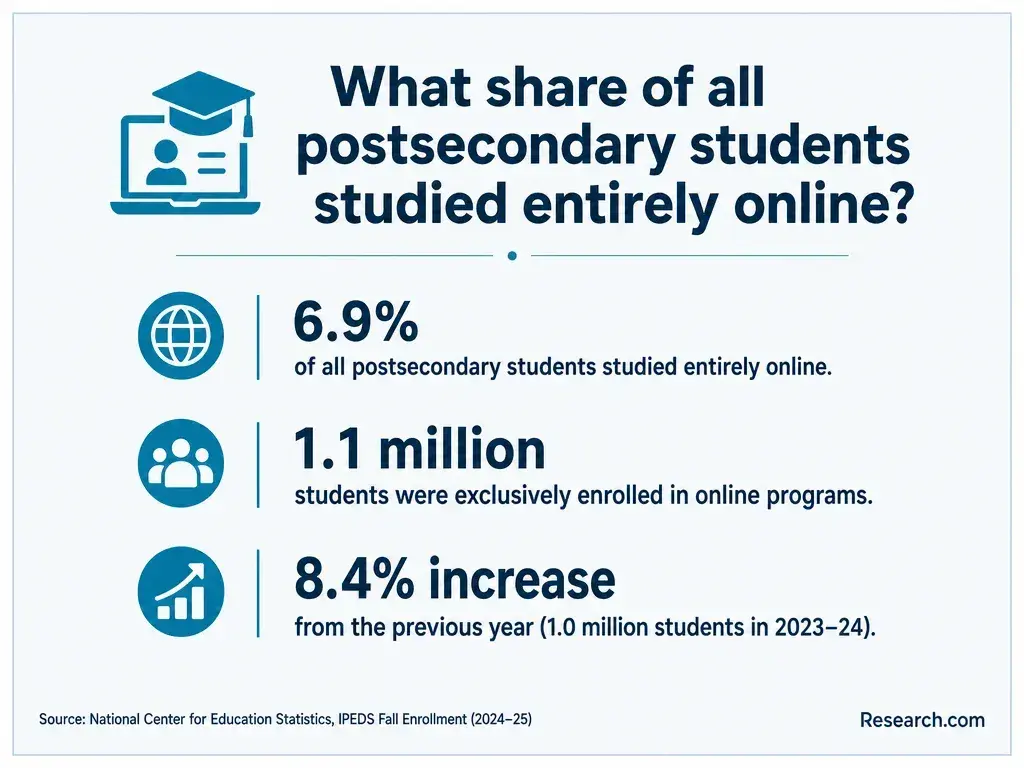
Yes, if the program teaches the needed business skills and its schedule works alongside billing work or other obligations. Online study can make it easier to remain employed, and a current job may provide context for assignments. It does not automatically provide training on claims systems, access to an internship, or a self-paced schedule.
Ask whether courses require live meetings, group presentations, proctored exams, campus visits, or an approved internship. Check when required courses run and whether a workplace project needs faculty approval and employer permission. When comparing business degrees through accelerated online learning, consider the weekly workload as well as the advertised completion calendar. A faster course can be a poor fit if it conflicts with month-end billing demands.
Look for a curriculum that connects business decisions to a service operation. Managerial accounting helps with labor costs and client profitability; operations and project management address handoffs and backlogs; statistics and spreadsheets help interpret reports; management and business law support staffing and contracts. Healthcare administration or revenue-cycle electives are useful additions, but verify that they are actually offered and apply to the degree.
A practical assignment could analyze a hypothetical claims queue using de-identified or synthetic data, define a backlog measure, and propose an improvement with stated assumptions. It would demonstrate reasoning, not a proven reduction in denials. Never assume a course permits access to patient records or a client's proprietary reports.
If you are considering a project-management-focused degree rather than business administration because you want to lead implementations, compare its curriculum and total funding options separately. Guidance on financial assistance for aspiring project management graduates can inform that alternative, but aid availability does not establish that it is the better degree for billing operations.
Requirements depend on the institution and whether you apply as a first-year, transfer, or returning student. Schools commonly request prior academic records; a business major may also have its own GPA or prerequisite rules. Do not assume that healthcare work experience waives accounting or quantitative coursework, or that accepted transfer credits satisfy the business core.
Before applying, obtain an evaluation of previous coursework, confirm any mathematics and business prerequisites, and ask for a degree audit showing what remains. If you are applying to several schools, compare accredited schools with no application charge where appropriate - but weigh the remaining degree requirements more heavily than the application fee.
A traditional full-time bachelor's pathway generally spans four academic years; transfer credits, part-time enrollment, required course availability, and school residency rules can change the time remaining. Get an official evaluation before relying on an accelerated completion estimate.
Compare total cost to completion, not tuition alone: include required remaining credits, fees, books or software, possible travel, financing costs, and any income lost by reducing work hours. Ask whether employer tuition assistance is paid upfront or reimbursed after grades are posted. To build a shortlist, review budget-friendly colleges for business administration online, then request each school's current charges and a personalized degree plan. A low advertised per-credit rate may not be the least expensive route if more credits are required.
Pay depends on the job, location, employer, and experience; there is no single reliable salary for someone holding this degree and working at a billing business. As a broad managerial comparison only, the Bureau of Labor Statistics reports a May 2025 median annual wage of $114,130 for administrative services managers. That occupation covers many industries and responsibilities, so its median is not a starting offer or a medical billing manager salary.
Use local postings for your intended role and required experience to set a more realistic range. Compare that potential compensation with your personal education cost rather than assuming the degree creates a pay increase. Reviewing affordable business education options online can help narrow costs, but a school-specific aid offer and credit evaluation are needed to estimate your return.
Outlook depends on the occupation, not the degree title or the fact that an employer serves healthcare clients. The Bureau of Labor Statistics projects 5% employment growth from 2025 to 2035 for administrative services managers. That projection describes a broad management occupation; it does not predict the number of medical billing openings or guarantee advancement from billing specialist to manager.
For a career move, review local openings for the specific responsibilities you want and identify recurring requirements for payer knowledge, software, reporting, and supervision. If you need a bachelor's credential sooner, bachelor's degrees with compressed schedules may shorten the calendar, but relevant work experience still matters when competing for leadership roles.
How can you choose an accredited business administration program?
First, verify the institution's accreditation through the accreditor or the U.S. Department of Education's recognition resources. Then check whether any advertised AACSB, ACBSP, or IACBE business accreditation actually covers the school and program you are considering. Institutional accreditation and business-program accreditation have different scopes; neither proves a medical billing employer will hire you.
Request the current catalog and ask an adviser to identify the exact degree, available healthcare-related electives, transfer-credit applicability, internship or capstone rules, and a realistic course schedule. Compare those answers with your target job postings. If federal student aid is part of your plan, review affordable business administration programs with federal aid access, then confirm the school's current eligibility and your own aid award directly before enrolling.
Other Things You Should Know About Business Administration
Yes, a business degree can help with planning and operations, but it does not establish billing competence or satisfy every contractual, privacy, or state-specific business obligation. Validate those requirements before taking clients.
It can. Describe the claims, follow-up, reporting, or client-facing tasks you actually performed. Employers will decide how closely that experience matches their services and software.
Not necessarily. Employers may restrict hiring locations because of payroll, client contracts, security procedures, or required work hours. Check each posting before applying.
Submitting claims on a provider's behalf is not the same as being the enrolled provider of care. The company and its clients should confirm their respective enrollment, authorization, and contracting responsibilities.
- Overview of rules & fact sheets | cms.gov https://www.cms.gov/initiatives/no-surprise-billing/overview/policies-resources/overview-rules-fact-sheets
- Requirements Related to Surprise Billing | Federal Register https://www.federalregister.gov/documents/2022/08/26/2022-18202/requirements-related-to-surprise-billing
- Revenue Cycle Management: The Art and the Science - PMC https://pmc.ncbi.nlm.nih.gov/articles/PMC11219169/
- What Can You Do With a Business Administration Degree? | LSU Online https://online.lsu.edu/newsroom/articles/what-can-you-do-business-administration-degree/
- 10 Key Skills for Data Analysts | Johns Hopkins AAP https://advanced.jhu.edu/about/on-the-advance/mastering-your-future/10-key-skills-for-data-analysts/
- Implementing the No Surprises Act: What We Know from Early Complaint Data | Center on Health Insurance Reforms https://chir.georgetown.edu/implementing-the-no-surprises-act-what-we-know-from-early-complaint-data/
- What Degree Do You Need for Medical Billing and Coding? | American Career College https://americancareercollege.edu/blog/what-degree-do-you-need-for-medical-billing
- Revenue Cycle Management in Health Care Explained | Tulane University https://online.tulane.edu/public-health/blog/revenue-cycle-management-health-care
- What Can You Do With a Business Administration Degree? | snhu.edu https://www.snhu.edu/about-us/newsroom/business/what-can-you-do-with-a-business-administration-degree
- The Top 5 Medical Billing & Coding Certifications for 2026 | Berks Technical Institute https://www.berks.edu/blog/medical-billing-coding-program/medical-billing-and-coding-certifications/