2027 BS in Business Administration Decision Guide: A Required Internship or a Work-Experience Alternative
Audited and Verified:
Our Editorial and Data Verification Process
Research.com uses government datasets, official education statistics and primary institutional information to support its career and degree guides. Our review process checks factual accuracy, occupational definitions, source dates and the requirements associated with the credentials discussed.
How This Article Was Fact-Checked
Our editorial team verifies salary estimates, employment projections, education requirements and program information against original data providers and official organizations. Salary figures are checked against the relevant occupational definitions and reporting periods. Information about licensure, accreditation and required in-person training is reviewed separately.
Fact-checked and verified on:

Co-Founder and Chief Data Scientist
A required internship can complicate a BS in Business Administration if you already work, support a family, or cannot leave a paid job for a new placement. Yet relevant employment does not automatically satisfy an internship requirement. This guide explains how schools distinguish internships from approved workplace projects and credit for prior learning, what evidence to request, and how to compare programs before committing. The goal is to help you choose a degree path that builds useful experience without creating an avoidable barrier to graduation.
Key Things You Should Know
- An internship is required only if your particular program and catalog require one; a capstone or work-experience option is not automatically interchangeable.
- A current job may qualify only with school approval of the role, learning objectives, supervision, documentation, and assessment - or through a separate prior-learning-credit policy.
- A bachelor's degree commonly takes four academic years of full-time study, but an unresolved internship requirement can extend an individual completion plan; get the decision in writing before enrolling.
What Is a BS in Business Administration, and Is an Internship Required?
A BS in Business Administration is an undergraduate degree combining general education with subjects such as accounting, finance, marketing, management, operations, and business analysis. Its exact curriculum differs by institution. Some programs require a credit-bearing internship; others offer an internship as an elective or use a capstone, simulation, or approved project instead.
There is no universal internship requirement for the degree. Check the catalog that will govern your enrollment, not just a program overview. Look for requirements in the business core, your intended concentration, and graduation rules. If you are comparing business administration admission prerequisites, keep them separate from experiential requirements: qualifying to enter a program does not establish what you must complete to graduate.
Can Work Experience Replace an Internship in a Business Administration Degree?
Sometimes - but only under the school's rules. A department may approve your current job as an internship site, permit a supervised project at work, award credit through a formal prior-learning assessment, or allow a different required course. These are distinct routes. Years of employment alone do not award credit or waive a graduation requirement.
The comparison below shows what each route typically asks you to demonstrate. It is a framework for interpreting a school's policy, not a promise that the option is available.
| Possible route | What the school may assess | Important limitation |
| Current job as internship site | New learning objectives, eligible business tasks, supervision, and ongoing evaluation | Routine duties may not meet internship learning goals |
| Workplace project or capstone | An approved problem, deliverable, faculty assessment, and employer permissions | A project may satisfy a capstone but not an internship requirement |
| Credit for prior learning | Documented learning assessed under a separate institutional policy | Credit may count as an elective rather than replace the internship |
| Separate placement | Site approval, supervised work, required hours or milestones, and reflection | Scheduling and lost earnings may make it difficult to complete |
Ask the internship coordinator and academic adviser for a written answer tied to your degree audit. Provide a job description, examples of actual responsibilities, a proposed learning plan, and a supervisor willing to participate. Ask whether approval must precede the work, whether your employer can supervise it, and exactly which requirement any resulting credit will satisfy. Do not share customer, employee, or proprietary records without permission.
If the required placement is infeasible, compare another business degree's documented experiential policy rather than assuming a different title solves the problem. For example, leadership bachelor's degrees with accelerated pacing may offer a different curriculum, but their internship and project rules still need individual verification.
How Do You Choose an Accredited Business Administration Program?
Start with recognized institutional accreditation, then check whether the business school or specific program holds applicable AACSB, ACBSP, or IACBE accreditation. Those are different questions: business accreditation has a defined scope and does not, by itself, establish that an internship can be waived or that graduates obtain particular jobs.
For this decision, compare each school's current catalog, internship handbook, prior-learning policy, and sample degree audit. Ask who approves an existing job site, whether remote or part-time work is eligible, how supervisors are selected, and whether required courses and placements are available when you need them. A list of leading US colleges for online business study can identify schools to investigate, but use each institution's own policies to confirm your path to graduation.
Most programs build a broad business foundation through financial statements, budgeting, economics, marketing, organizational behavior, operations, quantitative reasoning, and communication. Applied work might include a case analysis, spreadsheet model, presentation, supervised internship, or capstone. A classroom project demonstrates different learning from supervised workplace practice; neither should be assumed to replace the other.
Choose electives or a formal concentration around the work you want to do, then inspect the prerequisite sequence and applied requirements. If operations or procurement is your goal, compare the actual supply chain courses and internship rules of a general business program with online colleges with accelerated supply chain bachelor's study. Faster advertised pacing does not establish that a program has fewer requirements or that your prior work will satisfy them.
An online program can provide the same awarded degree as its campus counterpart, but value depends on the accredited institution, curriculum, support, and opportunities to produce credible work - not delivery mode alone. An online internship may still involve fixed work hours, a qualified supervisor, live meetings, and deadlines. A campus program may offer easier access to local placements, while an online program may better accommodate an existing employer-approved site.
Before choosing online delivery, request a sample course schedule and the experiential-learning handbook. Check live attendance, group projects, proctored assessments, campus visits, and whether career services help remote students find placements. When comparing colleges offering economical online business study, include these practical obligations; low tuition will not help if the required internship conflicts with your work schedule.
Applicants generally need qualifying secondary-school or previous college records, but the required GPA, mathematics preparation, documents, and rules for entering the business major vary. Transfer admission and acceptance into the major may be separate decisions. Prior employment can strengthen an application without automatically earning academic credit or resolving an internship requirement.
Ask admissions for entry requirements and the registrar or business adviser for a preliminary review of prior coursework. Then request a degree audit showing where accepted credits apply - including general education, business core, electives, and residency requirements. If application costs matter while you compare policies, colleges with no upfront application payment offer a starting point, but confirm each school's current fees and experiential rules directly.
Four academic years of full-time study is a common bachelor's-degree benchmark, not a completion promise. Transfer-credit applicability, part-time enrollment, course sequencing, and internship availability can change the timeline. A work-experience option may reduce scheduling disruption, but it saves time or tuition only if the school confirms how it applies to required credits.
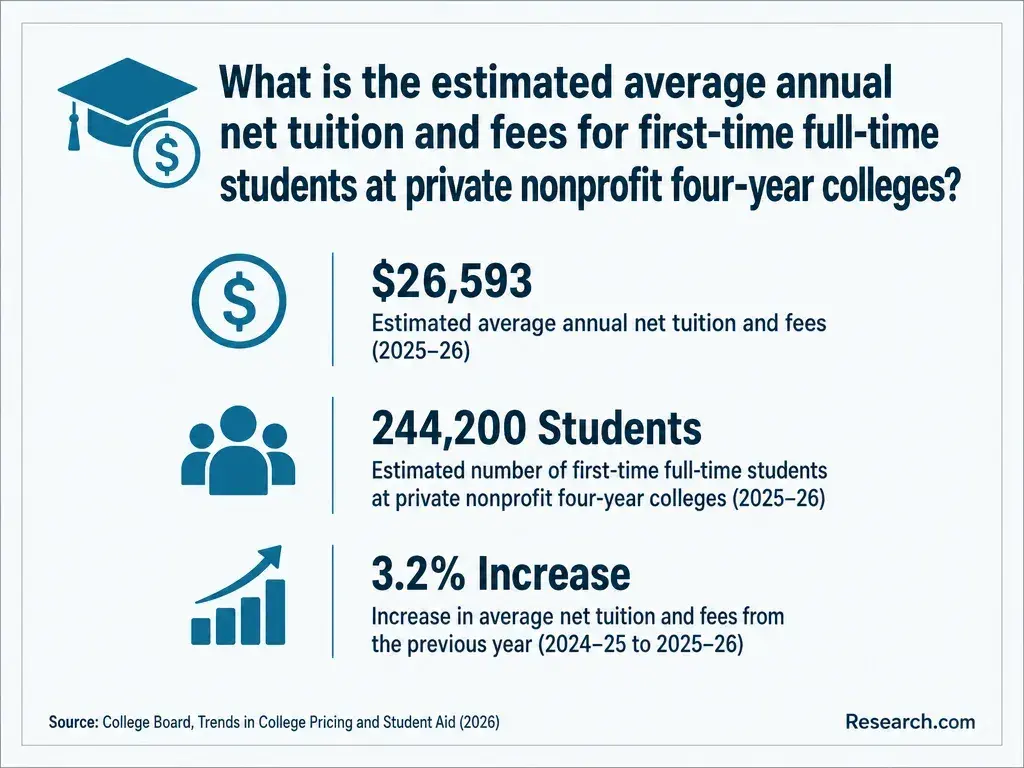
Compare the cost of finishing, not just advertised tuition: remaining required courses, fees, books or software, travel, placement-related expenses, and earnings you might forgo. Ask the financial-aid office whether a proposed internship or prior-learning-credit route affects enrollment status or aid eligibility. Resources on cheaper business administration study with FAFSA-based aid can help narrow choices; your aid offer and approved degree audit determine your actual costs.
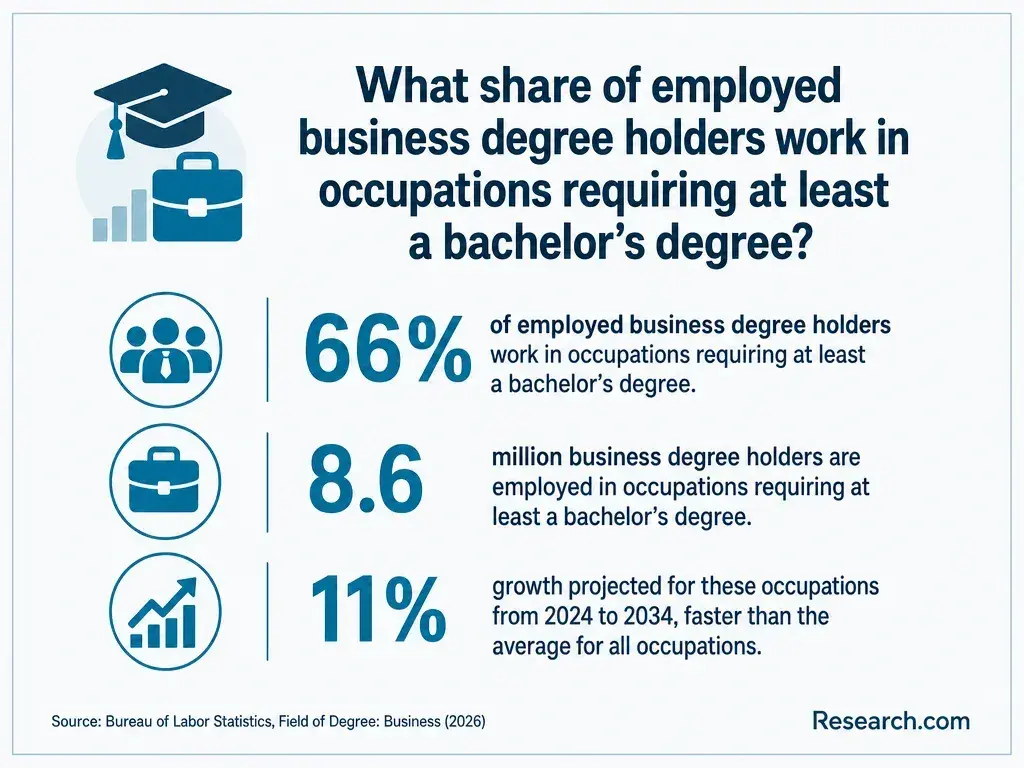
Depending on skills and experience, graduates may pursue operations coordinator, marketing coordinator, HR assistant, procurement support, sales operations, or project coordinator roles. Employers assess relevant tasks - not the degree title alone. An approved internship can supply supervised examples of work, while an existing job can be equally persuasive when you can describe your responsibility and results without disclosing confidential information.
Match your applied-learning choice to a target role. A project coordinator candidate, for instance, could demonstrate schedules, stakeholder communication, and risk tracking through authorized work samples; an internship in an unrelated function may offer less relevant evidence. If project management is your direction, information on FAFSA grants and scholarships for project management students can inform a comparison with a more specialized degree, but neither route makes a new graduate an experienced project manager.
There is no single salary or growth rate for BS in Business Administration graduates; outcomes depend on occupation, experience, location, and employer. The US Bureau of Labor Statistics reports a May 2025 median annual wage of $75,940 for human resources specialists and projects 6% employment growth from 2025 to 2035. The median covers workers across experience levels and is not a starting salary or a forecast for everyone with this degree.
Use occupation-specific evidence alongside local job postings to judge whether an internship would help you enter your chosen function. For a financial comparison, weigh likely remaining education costs against the requirements of jobs you can realistically pursue - not a managerial wage you might earn only after substantial experience. Lists of economical college choices for business administration majors are useful for screening, but confirm total completion costs and internship feasibility before estimating a return.
Do Business Administration Careers Require Licenses or Professional Certifications?
Many general business support and coordination roles do not require an occupational license, although employers may prefer particular skills or credentials. Regulated activities are different: accounting licensure and some financial-services work have separate education, examination, experience, and jurisdictional rules. A BS in Business Administration, internship, or workplace project does not automatically meet them.
Check the requirements of the specific job and, for regulated work, the relevant licensing authority before choosing courses. Voluntary HR or project management certifications also set their own eligibility rules. If speed is part of your decision, ranked online business bachelor's completion routes may help you compare degree schedules, but completing a degree faster does not bypass a separate credential's requirements.
Other Things You Should Know About Business Administration
Possibly. Pay depends on the employer and placement, while academic eligibility depends on the school. Confirm both before accepting an offer.
Some programs allow remote placements if supervision, business tasks, and assessment meet their standards. Obtain approval before the placement begins.
Do not assume so. Schools may require advance registration and supervision; older experience might instead be considered under a separate prior-learning policy.
Ask faculty about a public-data, fictionalized, or otherwise permitted deliverable. Do not submit confidential material or assume anonymization alone satisfies employer rules.
- School-Determined Requirements - FSA Partner Connect https://fsapartners.ed.gov/knowledge-center/fsa-handbook/2026-2027/vol1/ch1-school-determined-requirements
- Starting and Maintaining a Quality Internship Program | Engineering Career Center https://ecc.ku.edu/starting-and-maintaining-quality-internship-program
- Business Administration, Decision Sciences Concentration, B.A. | fullerton.edu https://catalog.fullerton.edu/preview_program.php
- What Questions to Ask When You Get an Internship Offer? | University of Wyoming https://haubcareers.uwyo.edu/resources/what-questions-to-ask-when-you-get-an-internship-offer/
- Fieldwork Options & Approved Alternatives - Field Study https://fieldstudy.soceco.uci.edu/pages/fieldwork-options-approved-alternatives
- Enrollment Policies for Graduate Students | Harvard Extension School https://extension.harvard.edu/enrolled-students/enrollment-policies-for-grad-students/
- Internship Policies and Procedures | The University of Texas at Dallas https://jindal.utdallas.edu/career-management-center/student-resources-cmc/internship-policies-procedures/
- Suggestions for Preparing and Instructing Student-Interns | psu.edu https://altoona.psu.edu/student-success/student-success-center/academic-internships/faculty-adviser-resources/guidelines-supervising-internships
- Bachelor's Degree in Business: 3-Year Track | One-Stop Student Services Center https://www.adelphi.edu/program/undergraduate/business-administration/
- Can Work Experience Count Toward a College Degree? | Whitworth Online https://online.whitworth.edu/news-articles/can-work-experience-count-toward-a-college-degree/