2027 Paying for an Online BS in Business Administration: Borrowing for Required Courses but Not Electives
Audited and Verified:
Our Editorial and Data Verification Process
Research.com uses government datasets, official education statistics and primary institutional information to support its career and degree guides. Our review process checks factual accuracy, occupational definitions, source dates and the requirements associated with the credentials discussed.
How This Article Was Fact-Checked
Our editorial team verifies salary estimates, employment projections, education requirements and program information against original data providers and official organizations. Salary figures are checked against the relevant occupational definitions and reporting periods. Information about licensure, accreditation and required in-person training is reviewed separately.
Fact-checked and verified on:

Co-Founder and Chief Data Scientist
Borrowing for the courses you need to finish an online BS in Business Administration - but not for electives - can be a sensible debt limit. However, degree requirements, financial-aid eligibility, and tuition bills do not always divide neatly into "required" and "optional."
This guide is for students planning a new degree or finishing one with prior credits. It explains how to identify courses you must take, estimate what you will actually owe, and coordinate grants, employer benefits, cash, and loans without accidentally delaying graduation.
Key Things You Should Know
- Use an official degree audit to separate courses still needed for graduation from optional courses; an elective can be required to fill a credit category even if you choose its subject.
- Set a borrowing ceiling based on the net cost of remaining required coursework, then check each term's bill and aid offer: schools generally disburse aid to the account, not to individually selected classes.
- Compare the cost of finishing, not advertised tuition alone. Transfer-credit applicability, course sequencing, fees, and delayed reimbursement can change both borrowing needs and graduation timing.
What does borrowing for required courses but not electives mean for an online business degree?
It is a personal borrowing rule, not usually a separate federal loan category. A required course fulfills a specific graduation requirement, such as accounting or a capstone. An elective may still be necessary to reach the degree's total credits or complete an approved concentration. Only courses outside your remaining degree requirements are truly optional for completion.
Ask an adviser for an official audit that identifies unmet general education, business core, concentration, elective-credit, and residency requirements. Mark the courses and credits that can satisfy each category. If you take a course that does not count toward your eligible program, it may not qualify for federal aid; the financial-aid office must determine how your planned enrollment affects eligibility.
Do not assume you can instruct a school to apply loan proceeds only to accounting while applying cash only to marketing. Aid is generally credited against your term charges. Instead, limit the amount you accept or request to your planned borrowing ceiling and use nonloan funds to cover the rest.
If avoiding elective costs would require changing degrees, compare the new program's accepted credits and remaining requirements first; shorter online bachelor's pathways in organizational leadership are not automatically cheaper for a student already close to finishing business administration.
How much does an online bachelor's degree in business administration cost?
There is no reliable single price. Schools may charge by credit, course, or term, and an online student may also pay technology, software, books, proctoring, or graduation fees. For a returning student, the useful figure is the cost of the credits still required at that institution, not the published price of a full degree.
The table separates costs that affect your eventual total from those that create an immediate cash need. Request figures for your intended enrollment term rather than using a general tuition estimate.
| Cost component | What to verify | Why it matters to this borrowing rule |
| Remaining tuition | Applicable credits in the official audit and the school's charging method | Accepted transfer credits save money only if they reduce coursework you must complete. |
| Required fees and materials | Online, technology, software, proctoring, books, and any campus-visit costs | These may create costs even when tuition is covered. |
| Extra terms or courses | Prerequisites, course availability, residency rules, and repeat policies | A delayed required class can extend enrollment and add charges. |
| Net payment | Confirmed grants, scholarships, and employer benefits | Award conditions and reimbursement timing determine what you must pay upfront. |
Build a term-by-term estimate: add tuition and necessary fees for the courses on your approved plan, subtract confirmed nonloan aid, then separate required-course costs from costs you have chosen to pay without borrowing. Include any reduction in work hours if scheduling makes that likely.
When comparing business administration degrees for limited tuition budgets, apply the same remaining-credit and fee assumptions to each school; the lowest advertised rate may not produce the lowest completion cost.
How can you pay for required courses without borrowing for electives?
Start with a course plan and a cash-flow plan for every term. This makes the borrowing limit workable even if a bill combines all courses into one balance.
- Get the official degree audit and identify the courses required to graduate, including any elective credits that are required as a category.
- Price each planned term using the school's actual tuition and fees, and note payment and refund deadlines.
- Apply confirmed grants and scholarships under their award rules; then account for savings, a payment plan, or employer assistance.
- Accept no more loan funding than your chosen ceiling permits, and confirm with the financial-aid office how reducing an offered loan affects the term balance.
- Recheck the plan whenever a course changes, transfer credit is reevaluated, or an employer payment is delayed.
One workable rule is to borrow only for the net amount you cannot cover on required courses and pay any additional, optional electives from cash. If an elective fills a required credit category, decide explicitly whether your rule permits borrowing for it; otherwise, set aside cash before enrolling.
Cutting avoidable upfront costs can help, but it should not outweigh the degree's total price. For example, reduce upfront college application expenses only after checking program fit and completion costs.
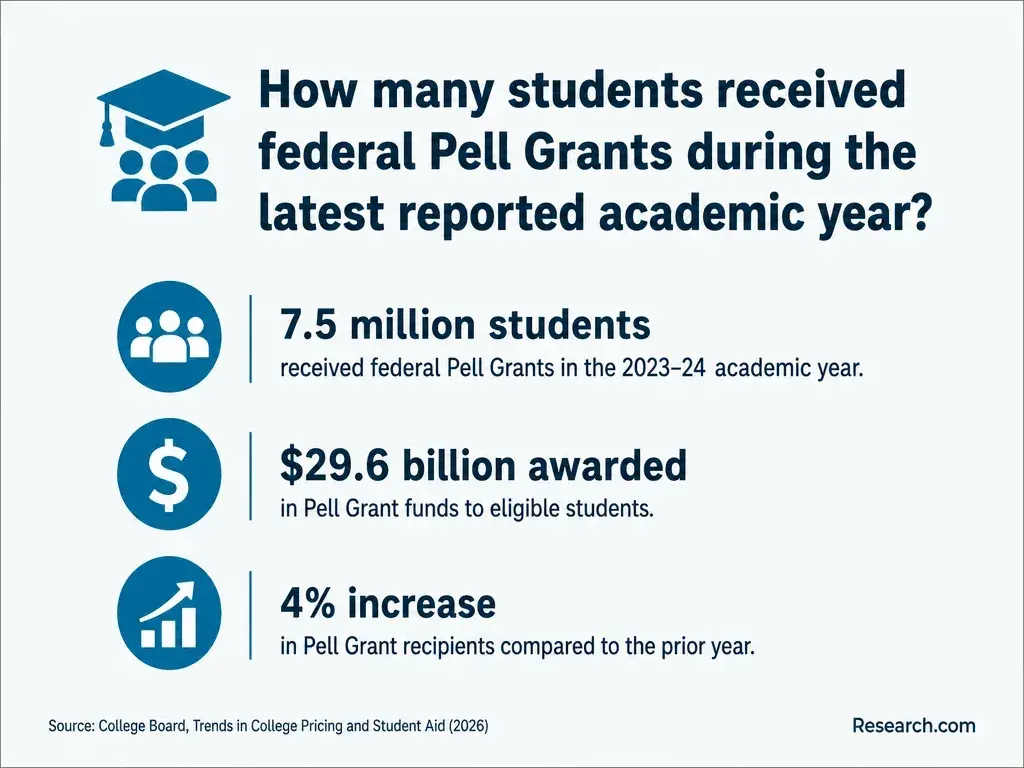
Submit the FAFSA for consideration for federal grants, loans, and other aid administered through participating schools. State grants, institutional scholarships, employer tuition assistance, and eligible education benefits may also reduce what you need to borrow. Eligibility and amounts depend on your circumstances, the institution, enrollment, and each award's rules; an online format alone does not determine eligibility.
Prioritize aid that does not need repayment, but check whether an award requires a minimum course load, satisfactory academic progress, a particular grade, or enrollment in courses that count toward your program. Federal loans must be repaid with interest.
Employer assistance can also leave a cash-flow gap if you must pay the school before your employer reimburses you. The distinction between grants versus loans for project management bachelor's study applies here too, although the program-specific award terms must be checked for your business degree.
Ask the aid office for a term-level explanation of how your proposed schedule affects each award and what happens if you decline part of a loan. Do not count a proposed scholarship, transfer award, or employer reimbursement as available money until its conditions and payment date are confirmed.
Check institutional accreditation first with the accreditor and the U.S. Department of Education's accreditation records. Then confirm that the particular online BS in Business Administration is offered by that institution and is eligible for the aid you intend to use. Accreditation matters to this plan because a mistaken assumption about aid eligibility or transferable credits can change the amount you must pay.
AACSB, ACBSP, and IACBE accredit business education within their respective scopes; none should be assumed to cover every degree at an institution. Verify whether the named business program is included if business-specific accreditation matters to you.
Use online business programs in US college rankings as a starting list, not as proof of accreditation, affordability, or a favorable transfer evaluation. Request the current catalog, fee schedule, online-course schedule, and written transfer assessment before committing.
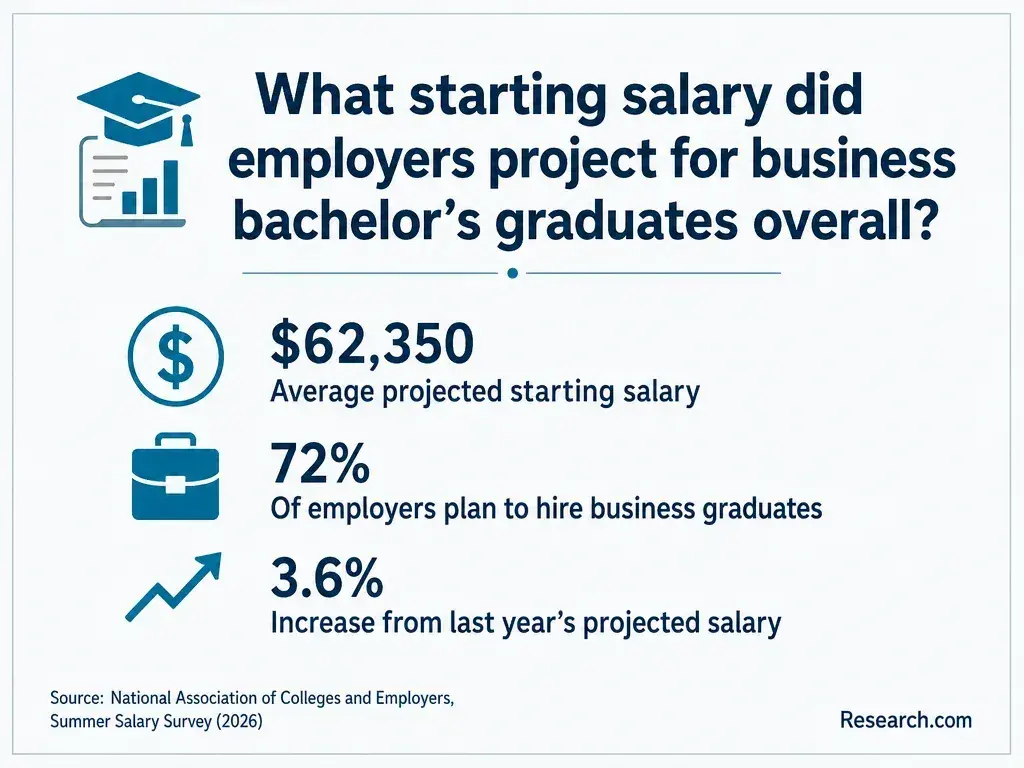
Requirements vary, but a BS in Business Administration commonly combines general education with a business core that may cover accounting, economics, finance, marketing, management, operations, statistics, information systems, and business communication. Some programs also require an internship, applied project, or capstone. Prerequisites and the order in which courses are offered can determine when you finish.
The important financial distinction is between a specific required course, a required number of elective credits, and an optional extra course. A concentration may prescribe electives that become necessary for that formal concentration, even if the general BS could be completed another way. Ask whether a less expensive approved course can fill an open elective category without adding a term.
If you are considering project management electives mainly for a particular job, compare their cost and applicability with project management degrees with prior-credit pathways before changing programs. A course that is useful professionally does not automatically satisfy a BS requirement, and switching degrees does not guarantee that previously earned credits will apply.
Employer Confidence in Online vs. In-Person Degree Skills, Global 2024

Completion time depends on how many credits the school applies to your degree, your enrollment pace, prerequisites, residency requirements, and when required courses run. Online does not necessarily mean self-paced: deadlines, live meetings, team assignments, or supervised work may restrict your schedule.
For a cost-conscious plan, ask an adviser to map required courses by term and flag any course offered infrequently. A faster schedule may reduce the number of terms with recurring fees, but it can also increase weekly workload or force you to cut paid work. Compare that trade-off before pursuing shorter undergraduate business programs across the US. An advertised completion time applies only if your credits, course access, and available study time support it.
Schools typically ask first-time applicants for secondary-school records and transfer applicants for transcripts from prior colleges. Some distinguish admission to the university from admission to the business major or require specified prior coursework before upper-level classes. GPA rules, application materials, and treatment of older or nontraditional credits vary.
Before paying an enrollment deposit, send official transcripts and ask for a written evaluation showing which credits satisfy general education, business core, prerequisites, and elective requirements. Ask separately about remaining residency credits and whether any required course must be repeated. Reviewing college coursework required for business administration entry can help you prepare questions, but the receiving school has final authority over admission and credit applicability.
A business administration BS can support applications for business operations, HR, marketing, purchasing, and project-coordination work, depending on your skills and experience. It does not itself qualify a new graduate to manage a department. To judge whether borrowing is worthwhile, compare your target job postings with the coursework and work samples you can realistically gain, rather than assuming a salary increase upon graduation.
For one occupation-specific reference, the U.S. Bureau of Labor Statistics reports a May 2025 median annual wage of $75,940 for human resources specialists. That is the median across workers in the occupation, not expected starting pay for business graduates; local wages, experience, and HR-specific duties matter.
If HR is your goal, compare general business coursework with human resources education and career options before paying for extra electives. Relevant employment or an approved project may demonstrate job-ready skills more clearly than an additional course alone.
Do business administration graduates need licenses or professional certifications?
There is no general license to work in business administration. Particular activities and occupations can have separate state licensing rules, and voluntary certifications may have their own education, examination, and experience requirements. A business course or concentration does not automatically make you eligible for a CPA license, an HR certification, or another professional designation.
Before borrowing for a credential-oriented elective, check the credentialing body's current requirements and whether the course fills a degree requirement or a documented knowledge gap. If your target is specifically HR and the required coursework would substantially change your plan, compare the remaining cost of your BS with transfer admission options for human resources majors. Seek a written credit evaluation before assuming that changing majors saves money.
Other Things You Should Know About Business Administration
Yes. You can generally make payments on a federal student loan while enrolled without a prepayment penalty. Ask your servicer how a payment will be applied and whether returning recently disbursed funds through the school is an available, preferable option.
Possibly, if the expense and your circumstances meet the applicable IRS rules. Tax-credit rules do not simply mirror your personal "required versus elective" borrowing rule. Check qualified-expense and income requirements, and do not claim the same expense for incompatible tax benefits.
Compare its interest rate, repayment terms, and borrower protections with federal options before signing. First confirm whether the gap reflects a necessary degree cost, an optional course, or a temporary reimbursement delay that a payment plan could address.
A pause can affect in-school status, interest, and the start of repayment, depending on the loan and how long you are out. Contact the school's financial-aid office and your loan servicer before taking leave so you can plan for payments as well as your return to required courses.
- Staying Eligible | Federal Student Aid https://studentaid.gov/understand-aid/eligibility/staying-eligible
- Qualified Ed expenses | Internal Revenue Service https://www.irs.gov/credits-deductions/individuals/qualified-ed-expenses
- Cost of Attendance (Budget) | 2025-2026 Federal Student Aid Handbook https://fsapartners.ed.gov/knowledge-center/fsa-handbook/2025-2026/vol3/ch2-cost-attendance-budget
- What are the different ways to pay for college or graduate school? | Consumer Financial Protection Bureau https://www.consumerfinance.gov/ask-cfpb/what-are-the-different-ways-to-pay-for-college-or-graduate-school-en-545/
- Chapter 3 - Courses and Enrollment, Full Course of Study, and Reduced Course Load | USCIS https://www.uscis.gov/policy-manual/volume-2-part-f-chapter-3
- Bachelor of Business Administration - KU Catalog https://catalog.ku.edu/business/bachelor-business-administration/
- Retaining your financial aid | Transfer to Wayne State University https://wayne.edu/financial-aid/receiving/retain
- How Enrollment Affects Your Federal Student Loans | The University of Iowa https://financialaid.uiowa.edu/types-aid/loans/how-enrollment-affects-your-federal-student-loans
- Course Program of Study FAQ - Niner Central - UNC Charlotte https://ninercentral.charlotte.edu/financial-aid-loans/receiving-your-aid/course-program-of-study/faq
- Requirements to Retain Federal Aid | jhu.edu https://seam.jhu.edu/financial-aid/financial-aid-policies/requirements-to-retain-federal-aid/