2027 Can a BS in Business Administration Prepare You for a Financial Operations Specialist Role? Skills and Entry Requirements
Audited and Verified:
Our Editorial and Data Verification Process
Research.com uses government datasets, official education statistics and primary institutional information to support its career and degree guides. Our review process checks factual accuracy, occupational definitions, source dates and the requirements associated with the credentials discussed.
How This Article Was Fact-Checked
Our editorial team verifies salary estimates, employment projections, education requirements and program information against original data providers and official organizations. Salary figures are checked against the relevant occupational definitions and reporting periods. Information about licensure, accreditation and required in-person training is reviewed separately.
Fact-checked and verified on:

Co-Founder and Chief Data Scientist
A financial operations specialist job may call for accounting knowledge, accurate transaction processing, and confidence with business systems—but job titles do not always make the required depth clear. If you are considering a BS in Business Administration, the important question is whether its courses and applied experience match the work employers need done.
This guide explains the role, maps degree coursework to job tasks, and identifies where experience or targeted training matters more than another credential. It will help you assess a program or plan a practical route into financial operations.
Key Things You Should Know
- A BS in Business Administration can prepare you for financial operations work if you build accounting, spreadsheet, systems, and reconciliation skills; the degree alone does not establish job readiness.
- "Financial operations specialist" is not a single standardized occupation. Some openings emphasize payments and account records, while others require budgeting, controls, or industry-specific experience.
- For context—not an entry-level pay estimate—the US median annual wage for accountants and auditors was $83,680 in May 2025; that broader occupation is projected to grow 5% from 2025 to 2035.
Can a BS in Business Administration Prepare You for Financial Operations Specialist Roles?
Yes, with the right coursework and evidence of practical skill. A BS in Business Administration typically provides a broad foundation in accounting, finance, operations, and business systems. That breadth suits roles connecting financial records to purchasing, payments, reporting, and process controls. It may be less direct than an accounting degree for jobs requiring substantial general-ledger work or technical accounting.
Start with the duties in actual openings, not the title alone. A student targeting payment operations should prioritize transaction accuracy and reconciliations; one targeting budget operations needs stronger variance analysis and reporting. If the work you want is primarily scheduling projects and tracking deliverables rather than financial transactions, it may be more useful to finish project management studies with transferred college credits. Compare the remaining coursework and credits that apply to each degree before switching paths.
What Does a Financial Operations Specialist Do?
A financial operations specialist helps an organization process, check, and report financial activity. Depending on the employer, that can mean reviewing invoices or payments, reconciling records, investigating exceptions, maintaining documentation, supporting month-end close, or preparing routine budget reports. The work combines transaction detail with procedures designed to reduce errors and unauthorized activity.
The setting changes the job. A bank's operations team may focus on account transactions; a company's finance team may focus on payables and reconciliations. Purchasing-related financial operations overlap with supply chain work, but they are not identical to planning inventory or moving goods. Readers drawn mainly to procurement and logistics can compare shorter online supply chain bachelor's pathways before choosing a broad business program.
What Education and Experience Do Financial Operations Specialists Need?
There is no universal degree or license for a job called "financial operations specialist." Employers may accept relevant experience, prefer a bachelor's degree, or require particular accounting and systems knowledge. Entry routes often include accounts payable, billing, payroll processing, banking operations, or an internship with supervised reconciliation and reporting tasks. More analytical or control-focused openings may expect prior finance experience.
For an early-career applicant, a degree is most persuasive alongside specific evidence: the transactions handled, discrepancies resolved, reports prepared, and controls followed. A career changer should document comparable work rather than assume a new degree will replace experience. Payroll openings also need careful reading: some sit in finance operations, while others emphasize HR administration. If the latter is your goal, compare human resources college study options against the accounting preparation required by the jobs you want.
Financial accounting teaches the structure of statements and ledger entries; managerial accounting connects costs and budgets to operating decisions. Business finance, statistics, and information systems add context for interpreting reports and working with data. Check the actual syllabus: a broad business core may not provide much practice reconciling accounts or investigating transaction exceptions.
Applied assignments can close part of that gap. Look for opportunities to build spreadsheet checks, explain a budget variance, map an approval process, or document how a sample transaction moves through a system. Use fictional or authorized data, not confidential employer records. A project management elective may strengthen workflow tracking, but an entire project management degree is a different investment; project management degree tuition comparisons are useful only if project delivery, rather than financial operations, is a serious alternative goal.
They can be. Online coursework can teach accounting concepts and provide practice with spreadsheets, reports, and process analysis. What matters is whether students can demonstrate those skills and obtain feedback—not whether classes meet on campus. Ask how the program assesses accounting work, what software students use, and whether internships or relevant workplace projects are available.
Online does not necessarily mean self-paced. Check live-session times, group assignments, exam rules, course sequencing, and any campus or internship requirements. Working students wanting to compare fast-paced online business degrees should first establish a realistic weekly study schedule; a shorter calendar does not remove the work required.
A bachelor's degree is commonly planned around four years of full-time study, but your remaining time depends on applicable transfer credits, enrollment pace, prerequisites, and course availability. Cost likewise depends on tuition, fees, books, software, and any income lost by reducing work hours. A school may accept a transfer course as elective credit without counting it toward accounting or another required business course.
Request a written degree audit and an estimate based on the courses you still need, rather than the advertised per-credit rate alone. When you compare inexpensive business administration degree options, include required fees and the likely number of terms. If you already hold a bachelor's degree, targeted accounting or spreadsheet study may cost less and address your gap faster than a second degree.
Requirements vary by institution and by whether you apply as a first-time, transfer, or returning student. Schools may review secondary-school records, prior college transcripts, GPA, and preparation in mathematics or introductory business subjects. Admission to the university is not always the same as admission to its business major.
Before applying, ask admissions about eligibility, the transfer office about course equivalencies, and a business adviser about prerequisites and the degree audit. That distinction matters if you expect prior accounting or statistics coursework to shorten the path. For a closer look at qualifying for a business administration college program, compare each school's published requirements rather than assuming a common checklist.
Employers need people who can keep records accurate, spot exceptions, explain findings, and follow approval and privacy procedures. Spreadsheet proficiency is particularly useful when it includes checking source data, using formulas carefully, and making a report another person can review. Familiarity with an employer's accounting or enterprise system helps, but system names vary.
Build evidence around the task: describe a supervised reconciliation, a documented error check, or a clearly labeled sample report. Explain what you checked and what you would escalate rather than claiming that a classroom exercise produced business savings.
If job postings instead emphasize project schedules, budgets, and stakeholder coordination, investigate that distinct skill path and its full expense, including project management fees books and aid considerations.
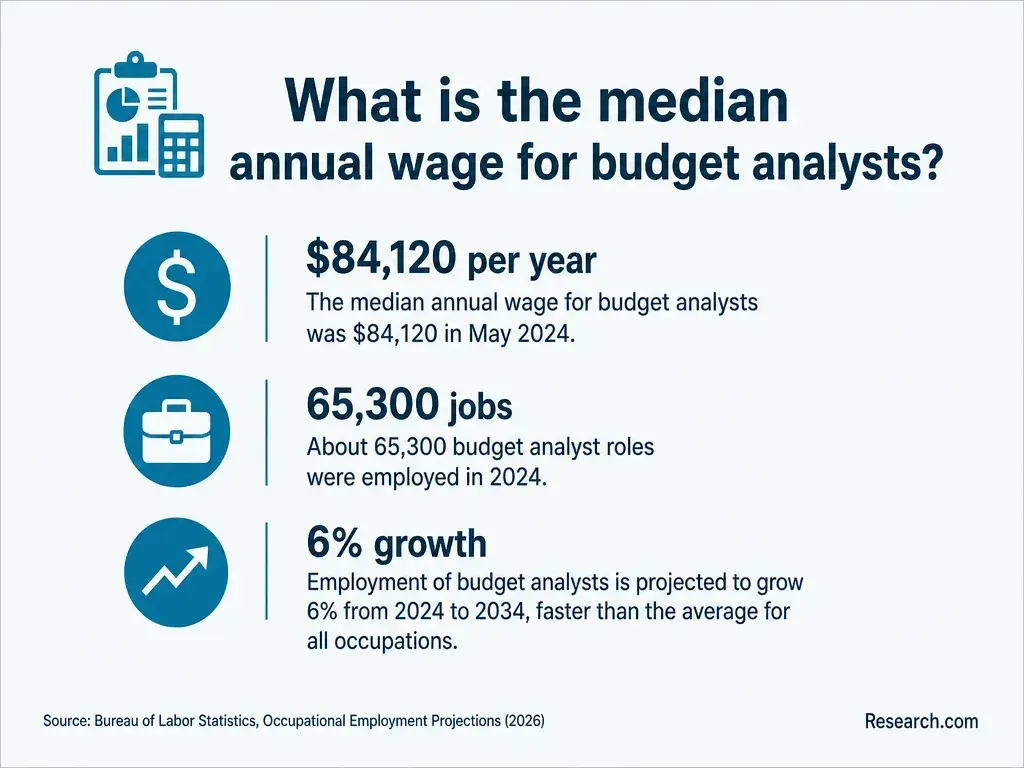
Because "financial operations specialist" covers different duties, there is no single reliable national wage or growth figure for the title. For one related—but often more accounting-intensive—occupation, the US Bureau of Labor Statistics reports a May 2025 median annual wage of $83,680 for accountants and auditors and projects 5% employment growth from 2025 to 2035. Neither figure represents the starting salary or forecast for every financial operations opening.
For a useful pay comparison, match local postings by duties, required experience, industry, and location. Then weigh likely opportunities against your remaining education cost. Readers still choosing a degree can compare lower-cost business degree options but should not assume that lower tuition or the occupation-wide median predicts their return.
Which Certifications or Credentials Help Financial Operations Specialists Advance?
Choose a credential for the work you intend to do, not the job title alone. Employer training in a specific accounting or payments system may be more immediately useful than a broad certificate. An accounting-focused credential can matter for an accounting career, while a project credential fits project-heavy work; each has its own eligibility rules. A BS in Business Administration does not itself confer CPA licensure or another professional designation.
Before paying for training, compare job postings with the credential's official requirements and ask whether your employer supports it. If a bachelor's degree is the remaining qualification you need, examine aid eligibility alongside total borrowing: lists of online business administration degrees accepting federal aid applications can be a starting point, but submitting a federal aid application does not guarantee aid or make a program affordable.
Other Things You Should Know About Business Administration
Yes, particularly if you have handled account questions, investigated discrepancies, or documented resolutions. Show how those tasks relate to the opening; customer service experience alone may not replace required accounting knowledge.
Ask which transactions the team handles, how exceptions are escalated, what systems it uses, and how accuracy is measured. The answers reveal whether the job is mainly processing, analysis, or controls.
Only with appropriate employer permission. Otherwise, create a fictional or fully authorized example that demonstrates your method without exposing financial, customer, or proprietary information.
Yes. Businesses, nonprofits, healthcare organizations, and public agencies also process payments and maintain financial records. Their hiring rules and reporting obligations can differ, so evaluate each posting on its own terms.
- Accounting Analyst | NC State Online and Distance Education https://online-distance.ncsu.edu/career/accounting-analyst/
- 10 Key Subjects Taught in a Bachelor of Business Administration Program | Carson-Newman University https://www.cn.edu/cps-blog/10-key-subjects-taught-in-a-bachelor-of-business-administration-program/
- 6 Types of Business Degrees and Career Paths | UMass Global https://www.umassglobal.edu/blog-news/6-types-business-degrees-and-career-paths
- Jobs You Can Get With a Business Administration Degree | AUM Online https://online.aum.edu/resources/article/what-jobs-can-you-get-with-a-business-administration-degree/
- Entry-Level Jobs With a Business Administration Degree | Warner Pacific University http://www.warnerpacific.edu/blog/top-entry-level-jobs-ba-business-administration/
- Top Skills Employers Look for in Business Professionals | Lasell University https://www.lasell.edu/academics/lasell-insights/top-skills-employers-look-for-in-business-professionals.html
- 27 Most Popular Job Roles in Finance | GoSkills.com https://www.goskills.com/finance/resources/finance-roles