2027 Cheapest Online Child Psychology Doctorate Programs That Pay Well: Tuition, Duration, and Career Outcomes

Co-Founder and Chief Data Scientist
Applications to low-cost online Child Psychology doctorate tracks are increasingly coming from working master's-prepared professionals who need flexibility without taking on excessive debt. Tuition varies widely, but affordability now depends as much on transfer credits, dissertation fees, and employer funding as sticker price.
The payoff can be strong in the right role: BLS May 2024 data places the median wage for clinical and counseling psychologists at $96,100. This guide helps prospective doctoral students compare estimated tuition, duration, accredited low-cost options, aid, and high-paying outcomes so they can reduce out-of-pocket costs and improve ROI.
Key Things About the Cheapest Online Child Psychology Doctorate Programs That Pay Well
- Most affordable online Child Psychology-related doctorates are not always titled "Child Psychology"; the lowest-cost options are usually institutionally accredited Ph.D., Psy.D., or Ed.D. programs in developmental psychology, school psychology, clinical psychology, counseling psychology, or human development with child and adolescent coursework.
- A realistic low-cost tuition-only range is often about $35,000 to $75,000 before fees, with the best savings coming from transfer credits, employer tuition assistance, assistantships, military benefits, and avoiding extended dissertation enrollment.
- Completion commonly takes 3 to 7 years: applied online doctorates may be faster for working professionals, while licensure-focused psychology doctorates usually require practicum, internship, and state-specific supervised experience that can lengthen the timeline.
What is the estimated cost of completing an online doctorate in Child Psychology?
The estimated cost of an online doctorate in Child Psychology depends on whether the program is a research Ph.D., applied Psy.D., Ed.D., or a related developmental psychology doctorate. The cheapest route is usually an institutionally accredited online program with a child/adolescent concentration, generous transfer credit, and no repeated dissertation-continuation charges.
NCES data published in 2024 shows that graduate tuition remains substantially lower at public institutions than at many private institutions, but online psychology doctorates are often offered by private nonprofit or private for-profit universities. That means applicants should compare total program cost, not just annual tuition.
The table below gives practical cost bands for U.S. online Child Psychology-related doctoral pathways. These are planning ranges, because universities may change tuition, fees, residency requirements, and dissertation billing each academic year.
| Program type | Typical credit structure | Estimated tuition-only range | Best fit | Cost caution |
| Online Ph.D. in Developmental Psychology or Psychology with child/adolescent focus | About 60 to 90 semester-equivalent credits | $35,000 to $75,000 | Research, teaching, program evaluation, policy, nonprofit leadership | May not meet psychologist licensure requirements without clinical training and internship |
| Online or hybrid Psy.D. with child, school, or clinical focus | Often 90+ credits plus supervised training | $70,000 to $150,000+ | Clinical practice with children and families, if licensure requirements are met | APA accreditation and internship match quality matter more than online convenience |
| Online Ed.D. in School Psychology, Educational Psychology, or Human Development | About 45 to 70 credits beyond the master's | $30,000 to $80,000 | School systems, district leadership, assessment, intervention design | May support education leadership more than independent clinical practice |
| Hybrid APA-accredited clinical, counseling, or school psychology doctorate | Often 5+ years including practicum and internship | Varies widely by institution | Licensure-focused child psychology careers | Few fully online options meet APA expectations for doctoral professional psychology training |
Applicants who are not yet ready for doctoral admission can reduce later costs by choosing affordable child psychology master's programs that provide strong research preparation, supervised fieldwork, and transferable graduate credits.
To estimate your true cost before applying, ask each school for a written cost sheet that includes tuition, fees, residency travel, dissertation continuation, internship requirements, and the maximum number of transfer credits accepted.
How long does it take to complete the cheapest online Child Psychology doctorate program?
The cheapest online Child Psychology doctorate programs usually take 3 to 7 years, depending on credit load, dissertation pace, clinical requirements, and whether the student enters with a relevant master's degree. A non-licensure developmental psychology doctorate can be shorter than a licensure-focused clinical or school psychology doctorate because it may not require the same level of supervised practicum and internship training.
The timeline matters financially because each extra term may add tuition, technology fees, dissertation continuation fees, and lost time before promotion or salary growth. Students who work full time should be realistic: the cheapest program on paper can become expensive if an overloaded schedule causes course withdrawals or dissertation delays.
Use the comparison below to decide which pacing model fits your budget and career goals.
| Enrollment path | Typical completion time | Who it works best for | Budget implication |
| Full-time accelerated online doctorate | About 3 to 4 years | Students with strong research preparation, employer flexibility, or reduced work hours | Can shorten fee exposure but may reduce income while enrolled |
| Part-time online doctorate while working | About 5 to 7 years | School counselors, behavior specialists, social service managers, and clinicians keeping full-time jobs | Preserves income but may increase total fees and dissertation-continuation costs |
| Hybrid licensure-focused doctorate | Often 5 to 7+ years | Students pursuing psychologist licensure with child, clinical, counseling, or school psychology training | Travel, practicum, and internship logistics can raise the total cost |
To finish faster without sacrificing quality, prioritize programs that publish clear dissertation milestones, allow approved transfer credits, provide online research support, and assign dissertation chairs early. Avoid assuming that "self-paced" means easier; competency-based or accelerated formats still require sustained writing, statistics, ethics, and research design work.
Which accredited universities offer the lowest tuition for an online Child Psychology doctorate?
Fully online doctorates specifically titled "Child Psychology" are limited, so the lowest-tuition choices are often adjacent degrees in developmental psychology, educational psychology, school psychology, counseling psychology, or psychology with a child and adolescent concentration. For career planning, the key distinction is whether you need eligibility for psychologist licensure or a doctorate for research, teaching, consulting, administration, or program leadership.
The universities below are examples of U.S. institutions that have offered online or hybrid doctoral pathways relevant to child and adolescent psychology. Tuition changes frequently, so use the table as a starting point and verify current tuition, fees, residency requirements, and accreditation status directly with each school.
| University | Relevant online or hybrid doctoral pathway | Accreditation point to verify | Why cost-conscious applicants consider it | Important limitation |
| Liberty University | Online Ph.D. in Psychology with developmental psychology coursework | Institutional accreditation through SACSCOC | Often among the lower advertised per-credit tuition options for online psychology doctorates | Not the same as an APA-accredited clinical child psychology doctorate |
| Grand Canyon University | Online Ph.D. in General Psychology with related emphases such as cognition, instruction, or performance | Institutional accreditation through the Higher Learning Commission | Structured online format and predictable credit model can help with budgeting | Child psychology specialization depth should be checked course by course |
| Capella University | Online Ph.D. or Psy.D.-adjacent psychology pathways depending on current catalog offerings | Institutional accreditation through the Higher Learning Commission | Online delivery and transfer review may appeal to working professionals | Applicants must verify whether the selected track supports their state licensure goal |
| Walden University | Online Ph.D. in Developmental Psychology or related psychology specializations, subject to catalog availability | Institutional accreditation through the Higher Learning Commission | Developmental and lifespan coursework may align with child and adolescent research interests | Total cost can rise if dissertation enrollment extends beyond the planned schedule |
| Fielding Graduate University | Hybrid doctoral psychology and human development options | Institutional accreditation and any program-specific accreditation relevant to the track | Hybrid model may support advanced research and professional flexibility | Residency and travel requirements can affect affordability |
Before applying, confirm whether the program is institutionally accredited, whether any psychology-specific accreditation applies, and whether the degree will be accepted by your state licensing board or target employer. For licensure as a psychologist, APA accreditation, practicum quality, internship eligibility, and supervised postdoctoral rules may be more important than online affordability.
What hidden fees should you expect in an online Child Psychology doctorate program?
Hidden fees can turn a "cheap" online Child Psychology doctorate into a much more expensive degree. The most important step is to request a full cost-of-attendance estimate that includes every term from coursework through dissertation completion.
These are the most common charges to check before you enroll, especially if you are comparing programs with similar tuition rates.
- Technology or online learning fees charged per course, credit, or term.
- Residency, intensive, or orientation fees, including travel, lodging, meals, and time away from work.
- Dissertation continuation fees after coursework is completed.
- Clinical placement, practicum, internship, background check, liability insurance, or fingerprinting costs.
- Assessment software, statistics software, testing kits, research transcription, participant incentives, and data collection tools.
- Graduation, transcript, portfolio, comprehensive exam, and late registration fees.
- Professional membership, conference, and licensure exam preparation costs if the degree is tied to clinical or school psychology practice.
Common budgeting mistakes include comparing only per-credit tuition, ignoring residency travel, assuming transfer credits will be accepted, and underestimating dissertation time. A practical safeguard is to ask the financial aid office for three scenarios: on-time completion, one extra dissertation term, and two extra dissertation terms.
What financial aid options and federal grants are available for online Child Psychology doctoral candidates?
Financial aid for online Child Psychology doctoral candidates usually combines federal loans, institutional aid, employer benefits, military education benefits, and occasional grants or scholarships. Federal grant aid is more limited at the doctoral level than at the undergraduate level, so students should avoid building a budget around grants that may not apply.
The table below summarizes major U.S. funding options and how they can affect out-of-pocket cost.
| Funding option | Who may qualify | How it helps | Key limitation |
| FAFSA-based federal aid | Eligible U.S. graduate students enrolled in qualified programs | Determines eligibility for federal Direct Unsubsidized Loans and Grad PLUS Loans | Loans must be repaid with interest |
| Federal Direct Unsubsidized Loan | Eligible graduate and professional students | Can cover part of annual graduate education costs | Annual borrowing limits may not cover the full program cost |
| Grad PLUS Loan | Eligible graduate students who meet credit criteria | Can cover remaining cost of attendance after other aid | Higher borrowing can weaken ROI if salary gains are modest |
| Institutional scholarships | Students meeting university criteria | Reduces tuition directly and does not require repayment | May be competitive, small, or limited to certain terms |
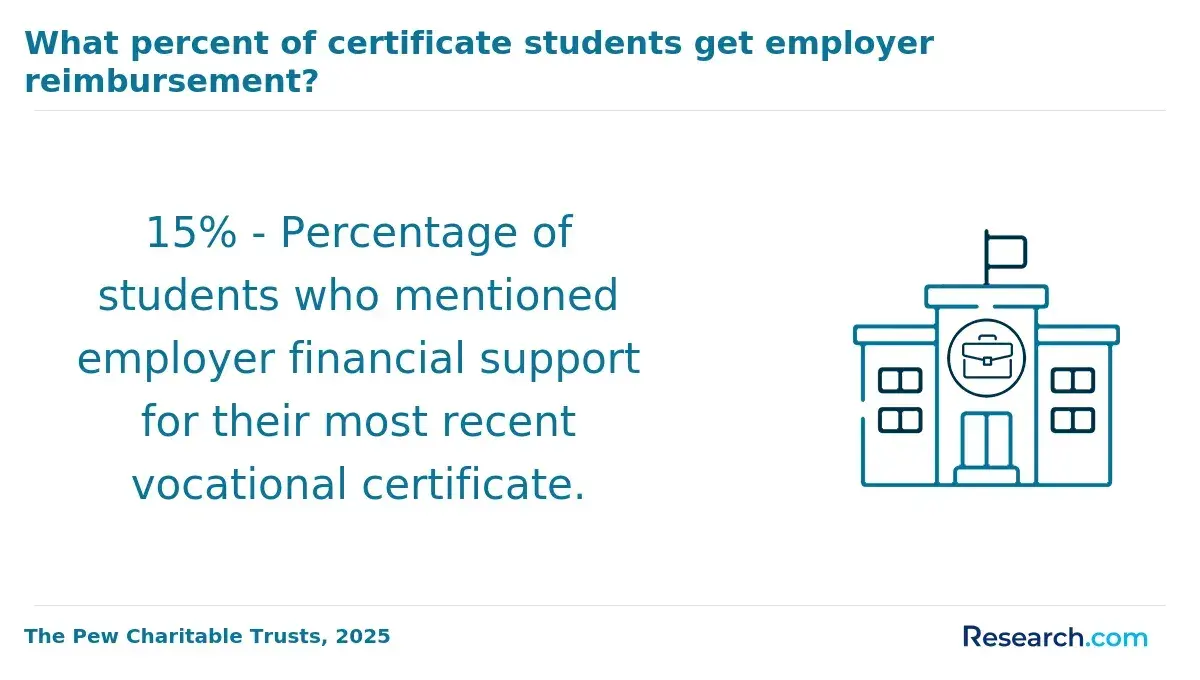
| Employer tuition assistance | Employees at schools, hospitals, clinics, nonprofits, government agencies, and companies with education benefits | Can reduce cash payments while preserving income | May require continued employment or grade minimums |
| Military and veteran benefits | Eligible service members, veterans, and dependents | Can offset tuition, fees, and housing-related costs depending on benefit type | Rules vary by benefit, school participation, and remaining entitlement |
Apply for aid before paying out of pocket. A smart sequence is to complete the FAFSA, request the university's scholarship application, ask your employer about reimbursement, compare monthly loan repayment estimates, and then choose the lowest net-cost accredited program that still supports your career goal.
How can fellowships and research stipends offset the cost of an online Child Psychology doctorate?
Fellowships, assistantships, and research stipends can reduce the cost of an online Child Psychology doctorate, but they are not equally available across all online programs. Traditional residential Ph.D. programs are more likely to offer full funding, while online professional doctorates more often rely on tuition discounts, scholarships, or employer-sponsored support.
For online doctoral students, the best opportunities often come from faculty research projects, university centers, school districts, children's hospitals, nonprofit evaluation teams, and grant-funded behavioral health initiatives. Candidates with statistics, assessment, program evaluation, bilingual service, or early-childhood intervention experience may be more competitive.
Use this process to uncover funding that may not appear on the main tuition page.
- Email the program director and ask whether online doctoral students can serve as research assistants, teaching assistants, graders, or project coordinators.
- Review faculty profiles and identify researchers studying child development, trauma, autism, school mental health, family systems, or adolescent risk behavior.
- Ask whether dissertation topics can connect to funded projects, which may reduce data collection and software costs.
- Contact the graduate school, not just the psychology department, because university-wide fellowships may be administered centrally.
- Ask your employer whether a doctoral capstone, dissertation, or evaluation project can be completed as part of your job duties with tuition support.
A stipend is most valuable when it reduces both tuition pressure and dissertation delay. Do not accept a low-paid research role if it will slow your progress so much that extra enrollment terms erase the financial benefit.
What is the average starting salary and long-term earnings potential for Child Psychology doctorate graduates?
Salary outcomes for Child Psychology doctorate graduates vary by licensure status, role, industry, state, and prior experience. The doctorate can support higher-paying roles, but the strongest ROI usually comes when it leads to licensed practice, leadership responsibility, specialized assessment work, research administration, or executive-level program oversight.
BLS May 2024 data reports a median wage of $96,100 for clinical and counseling psychologists and $84,940 for school psychologists. These figures are useful benchmarks, but they do not isolate child-focused specialists or guarantee earnings for online graduates.
The table below summarizes salary context for common doctoral-level outcomes in the U.S. labor market.
| Career outcome | Relevant salary benchmark | Why the doctorate may matter | ROI note |
| Licensed child or adolescent psychologist | BLS median for clinical and counseling psychologists: $96,100 | Doctoral training is typically required for psychologist licensure | ROI improves when the program meets state licensure and internship expectations |
| School psychologist or district assessment leader | BLS median for school psychologists: $84,940 | Advanced credentials may support leadership, assessment, and specialist roles | Public-sector salary schedules may limit short-term earnings but provide stability |
| Psychology faculty or researcher | Salary varies by institution, rank, grant funding, and publication record | A Ph.D. is commonly expected for tenure-track and advanced research roles | ROI depends heavily on assistantship funding and academic job competitiveness |
| Behavioral health program director | Often aligned with healthcare or social service management pay bands | Doctoral expertise can support clinical governance, evaluation, and compliance | Leadership experience may be as important as the credential |
| Forensic child and family assessment consultant | Compensation varies by licensure, court work, and specialization | Doctoral training can strengthen credibility for specialized evaluation work | Income may be irregular if work is consulting-based |
Students focused on clinical earnings should compare doctoral pathways with online clinical psychology master's options first, especially if they still need prerequisites, supervised experience, or clearer confirmation that clinical licensure is the right path.
What high-paying career paths justify the cost of an online doctorate in Child Psychology?
High-paying career paths justify the cost of an online doctorate in Child Psychology when the degree unlocks work that a master's degree alone cannot access, or when it significantly improves credibility for leadership, assessment, research, or consulting. The doctorate is less likely to pay off if the target role values experience, licensure, or administrative credentials more than doctoral research training.
These paths tend to offer stronger ROI potential for doctoral graduates with child and adolescent expertise.
- Licensed child psychologist in clinical, counseling, hospital, or integrated behavioral health settings, if the doctoral program satisfies licensure requirements.
- Director of child and family behavioral health programs in hospitals, community mental health centers, school-based health networks, or nonprofit agencies.
- School district psychological services administrator overseeing assessment, intervention, crisis response, and special education evaluation systems.
- Developmental psychology researcher or evaluation lead for early-childhood, trauma-informed, autism, adolescent mental health, or family intervention programs.
- Expert consultant in child welfare, juvenile justice, custody evaluation, or trauma assessment, when paired with appropriate licensure and forensic training.
Students interested in court-involved youth, custody issues, or juvenile justice may also compare doctoral plans with lower-cost forensic psychology master's programs before committing to a doctorate, because some roles require specialized experience more than a child psychology doctorate.
The biggest mistake is choosing a research Ph.D. when your goal is independent clinical practice, or choosing a clinical doctorate when your real goal is nonprofit leadership or policy work. Match the degree type to the job requirement first, then optimize for price.
Which high-paying industries actively recruit professionals with an online doctorate in Child Psychology?
Employers that recruit Child Psychology doctorate graduates typically look for a blend of doctoral-level assessment, research literacy, child development expertise, ethics training, and leadership experience. Online delivery is usually less important than accreditation, licensure eligibility, supervised training quality, dissertation relevance, and measurable experience with children, adolescents, families, schools, or clinical systems.
The industries below can offer stronger compensation potential when doctoral training is paired with the right license, specialization, and management experience.
| Industry | Typical roles | Why doctoral child psychology expertise is valued | Hiring caution |
| Hospitals and integrated behavioral health systems | Pediatric psychologist, behavioral health director, assessment specialist | Supports complex assessment, treatment planning, and interdisciplinary care | Licensure and supervised clinical training are usually essential |
| K-12 school systems and educational agencies | District psychologist, assessment coordinator, mental health program leader | Supports special education, crisis response, intervention design, and child development policy | State school psychology credential rules vary |
| Government and child welfare agencies | Program evaluator, policy advisor, child mental health administrator | Applies research to prevention, trauma, family services, and youth systems | Public salary bands may be structured and less negotiable |
| Universities and research institutes | Faculty member, postdoctoral researcher, principal investigator, research director | Doctoral research training is central to grant-funded and academic work | Academic roles can be highly competitive |
| Legal, forensic, and consulting organizations | Custody consultant, juvenile justice advisor, expert witness support specialist | Child development expertise can inform evaluations and court-related recommendations | Specialized forensic training and licensure may be required |
For readers comparing psychology specialties by compensation, the guide on how much do forensic psychologists make can provide useful salary context for adjacent forensic and legal psychology roles.
How quickly can you achieve a positive ROI on an online Child Psychology doctorate?
A positive ROI on an online Child Psychology doctorate depends on net cost, borrowing, salary lift, time to completion, and whether the degree changes your career ceiling. A lower tuition program can still have poor ROI if it does not support licensure or credible advancement, while a higher-cost program may be worthwhile if it leads to a clearly required credential for a higher-paying role.
A simple way to estimate payback is to divide your net degree cost by the annual income increase you reasonably expect after graduation. For example, a $40,000 net cost with a $10,000 annual salary increase has a four-year pre-tax payback period; a $90,000 net cost with the same salary increase takes much longer and carries more borrowing risk.
Use these steps before enrolling to test whether the program is financially defensible.
- Confirm the exact job you want and whether a doctorate is required, preferred, or optional.
- Check whether the program supports your state licensure, certification, internship, or employer credential requirements.
- Calculate total tuition and fees through dissertation completion, not just coursework.
- Subtract grants, scholarships, tuition remission, employer reimbursement, military benefits, and transfer-credit savings.
- Estimate conservative, moderate, and optimistic salary outcomes using local job postings and BLS benchmarks.
- Compare monthly loan repayment with your expected post-graduation budget.
- Choose the lowest net-cost accredited program that still protects your career objective.
The fastest ROI usually comes from students who keep working while enrolled, secure employer assistance, avoid unnecessary borrowing, finish the dissertation on schedule, and move into roles where doctoral-level training is directly rewarded. Students should avoid a doctorate if their target job can be reached with a license, certification, master's degree, or experience at far lower cost.
Other Things You Should Know About Child Psychology
They can be respected when the university is properly accredited, the curriculum is rigorous, and the degree matches the role. For clinical psychologist roles, employers and licensing boards may care more about APA accreditation, supervised training, internship quality, and state eligibility than whether coursework was online.
Many online doctoral programs prefer or require a relevant master's degree, especially for shorter post-master's pathways. Some accept bachelor's-prepared applicants, but those routes usually take longer and may require additional foundational coursework.
Most Ph.D. programs require a dissertation. Some applied doctorates may use a dissertation, doctoral project, capstone, or applied research study, but students should still expect advanced research, writing, ethics review, and faculty approval.
Students should pause if they are unsure about licensure rules, cannot commit to years of research and writing, need immediate income growth, or can reach their target role with a master's degree, certification, supervised experience, or employer-funded training.
References
- Doctor of Psychology (PsyD) Online Degree Program https://www.calsouthern.edu/online-degree-programs/behavioral-sciences/doctor-psychology-psyd/
- Psychology Ph.D. & Psy.D.: Costs, Requirements, And Careers https://www.psychology.org/degrees/phd/
- Online Graduate Certificate Programs in Child Psychology https://www.counselingpsychology.org/psychology/degrees/child-psychology/graduate-certificate/
- Psy.D Programs.org - Best Accredited Psychology Doctorate Degrees Near Me https://psydprograms.org/
- Funding Your Psychology Degree | Scholarships And Other Aid https://www.accreditedschoolsonline.org/psychology/resources/scholarships/
- 2025 Most Affordable Online Master's Degrees in Child Development https://www.onlineu.com/most-affordable-colleges/child-development-masters-degrees
- PhD in Clinical Psychology https://www.fielding.edu/school-of-psychology/phd-in-clinical-psychology/
- Child Psychology Degree and Career Guide https://www.psychologydegree411.com/degrees/child-psychology/
- Psychology Accreditation: What you need to know https://www.onlinepsychologydegrees.com/articles/accreditation/