2027 Online Child Psychology Doctorate Programs That Do Not Require the GRE or GMAT

Co-Founder and Chief Data Scientist
Choosing an online child psychology doctorate without the GRE or GMAT can save time and money, but it also raises bigger questions about quality, licensure, and career fit. The need is real: CDC data released in 2024 found that 40% of high school students reported persistent feelings of sadness or hopelessness. This guide is for prospective doctoral students who want flexible, test-free options focused on children, adolescents, development, or youth mental health. You will learn how to compare programs, avoid weak choices, and decide whether a no-test doctorate supports your goals.
Key Things You Should Know
- Most online child psychology doctorate options that do not require the GRE or GMAT are PhD, PsyD, EdD, or applied developmental psychology programs; fully online licensure-track clinical psychology doctorates are uncommon and require careful accreditation review.
- No-GRE does not mean low standards: programs usually weigh graduate GPA, prior psychology coursework, research fit, recommendations, writing samples, interviews, and relevant work with children or families more heavily.
- The U.S. Bureau of Labor Statistics reported a 2024 median annual wage of $94,310 for psychologists, with employment projected to grow 7% from 2024 to 2034, but licensure, specialization, and setting strongly affect outcomes.
Which Online Child Psychology Doctorate Programs Do Not Require the GRE or GMAT?
Online child psychology doctorate programs without GRE or GMAT requirements usually fall into two broad categories: licensure-oriented psychology doctorates and non-licensure doctoral programs in developmental, educational, or applied psychology. The distinction matters because a program can be academically legitimate yet still not qualify graduates for independent clinical psychologist licensure.
The GMAT is rarely relevant in psychology admissions; applicants usually see GRE language instead. When a school says "no standardized test required," confirm whether that means test-free for all applicants, test-optional, or waiver-based admissions.
The table below summarizes common types of online or hybrid doctoral options related to child psychology. Use it as a screening tool, not as a substitute for checking each school's current catalog and state licensure disclosures.
| Program type | Common child-focused emphasis | GRE or GMAT status to look for | Best fit | Licensure caution |
| PhD in Developmental Psychology | Child and adolescent development, lifespan development, learning, family systems | Often no GRE or test-optional at online universities | Students interested in research, teaching, program evaluation, or applied child development | Usually not a clinical licensure pathway by itself |
| PhD in Psychology with Child and Adolescent Specialization | Youth behavior, developmental risk, intervention design, social-emotional development | Often no GRE; GMAT generally not used | Working professionals who want doctoral-level expertise without relocating | May not meet psychologist licensure requirements unless explicitly designed for that purpose |
| PsyD in Clinical Psychology, hybrid or partially online | Child, adolescent, family, or pediatric mental health tracks | May be no GRE, optional, or waiver-based depending on school | Students seeking clinical training with in-person practica, internship, and supervision | Must verify APA accreditation, internship eligibility, residency requirements, and state rules |
| EdD or PhD in Educational Psychology | Learning, assessment, school-based development, special populations | Frequently no GRE or waiver available | Educators, school leaders, consultants, and learning specialists | Does not automatically lead to school psychologist or clinical psychologist licensure |
Students who are not ready for doctoral admission may strengthen their profile through child psychology master's programs, especially if their bachelor's degree is outside psychology or their undergraduate GPA is not competitive.
Before applying, ask each admissions office for the exact standardized testing policy in writing. A program that was no-GRE last cycle may change its requirements, and a waiver policy may apply only to applicants with a prior graduate degree, a minimum GPA, or professional experience.
Why Have Online Child Psychology Doctorate Programs Eliminated GRE and GMAT Requirements?
Many psychology doctoral programs have reduced or removed GRE requirements because standardized tests are not always the best predictor of doctoral readiness. Schools increasingly use holistic admissions to evaluate whether applicants can complete advanced coursework, conduct research, write at the doctoral level, and contribute to the field.
This shift also reflects practical realities for adult learners. Many online doctorate applicants are working professionals, school employees, counselors, case managers, behavior specialists, or parents who may not have time to prepare for a standardized test before an application deadline.
The reasons behind no-test admissions are usually a mix of access, evidence, and enrollment strategy. Understanding these motivations helps applicants interpret the policy accurately.
- Access: Removing test requirements can reduce cost and scheduling barriers for applicants who already have graduate coursework or professional experience.
- Holistic evaluation: Programs can focus on writing ability, academic history, research interests, professional maturity, and fit with faculty expertise.
- Adult learner demand: Online doctoral programs often serve students who have been out of school for years and can show readiness through work history rather than test scores.
- Program alignment: Applied developmental and educational psychology programs may value experience with children, schools, families, and community systems more than quantitative test performance.
No-GRE policies should not be viewed as a shortcut. In strong programs, removing the test simply shifts the burden of proof to the rest of the application.
What Admissions Factors Matter Most Without GRE or GMAT Scores?
Without GRE or GMAT scores, admissions committees look more closely at evidence that you can handle doctoral-level work. The strongest applications usually connect academic preparation, professional experience, research interests, and career goals into one coherent story.
The table below shows the application factors that tend to matter most when standardized tests are absent. It can help you decide where to invest your time before submitting applications.
| Admissions factor | Why it matters | How to strengthen it |
| Graduate or undergraduate GPA | Shows academic consistency and readiness for advanced theory, statistics, and research | Explain upward grade trends and consider prerequisite coursework if your record is uneven |
| Prior psychology coursework | Helps programs assess whether you understand developmental, cognitive, social, and abnormal psychology foundations | Complete missing prerequisites before applying when possible |
| Research alignment | Doctoral study often requires a dissertation, applied project, or original scholarship | Identify faculty interests, describe possible research questions, and show familiarity with child development issues |
| Professional experience | Experience with children, adolescents, schools, clinics, social services, or family systems can demonstrate applied insight | Quantify responsibilities without exaggerating clinical authority |
| Writing sample or statement of purpose | Replaces some of what standardized tests claim to measure: reasoning, clarity, and readiness | Use a focused statement that links your background, doctoral goals, and program fit |
| Recommendations | Third-party evidence can confirm your judgment, persistence, ethics, and ability to work with vulnerable populations | Choose recommenders who can speak specifically about graduate-level potential |
If your long-term goal is clinical practice but your background is still developing, comparing online clinical psychology masters can help you decide whether to build clinical and research foundations before pursuing a doctorate.
Applicants should also understand the difference between test-free, test-optional, and waiver-based admissions. Test-free means the program does not use scores. Test-optional means you may submit scores if they strengthen your application. Waiver-based means the school may waive scores only if you meet specific criteria.
Are No-GRE or No-GMAT Online Child Psychology Doctorate Programs Easier to Get Into?
No-GRE or no-GMAT online child psychology doctorate programs are not automatically easier to get into. They may be easier to apply to because you can skip test registration, preparation, and score reporting, but the admissions review can become more detailed.
A practical way to evaluate difficulty is to ask what replaces the test. Programs that require interviews, faculty matching, writing samples, prior graduate credits, minimum GPAs, or professional experience may still be selective even without standardized testing.
Use the following decision rules when deciding whether to apply without scores or submit optional scores.
- Apply without scores if your GPA, graduate coursework, child-focused experience, recommendations, and writing sample are stronger than your likely test performance.
- Consider submitting optional scores if the program states that strong scores may offset a weaker GPA or limited formal psychology coursework.
- Ask about waivers early if the program is not fully test-free, because waiver decisions can take time and may require documentation.
- Do not rely on the no-test policy alone if your application lacks a clear doctoral purpose, relevant experience, or evidence of research readiness.
The best no-GRE applicant is not simply someone who avoids an exam. It is someone who can show readiness through stronger, more relevant evidence.
Does Skipping the GRE or GMAT Affect the Quality of an Online Child Psychology Doctorate?
Skipping the GRE or GMAT does not determine the quality of an online child psychology doctorate. Program quality depends on accreditation, faculty qualifications, curriculum, clinical or field requirements, student support, graduation outcomes, and whether the degree aligns with your intended career.
For applicants interested in becoming licensed psychologists, accreditation deserves special attention. In the United States, state psychology boards often place significant weight on whether a doctoral program is APA-accredited, designated, or otherwise acceptable under state rules. Many fully online psychology doctorates are designed for research, education, consulting, or leadership rather than independent clinical licensure.
The table below separates admissions convenience from quality indicators. This distinction helps prevent a common mistake: choosing a doctorate mainly because it does not require a test.
| Feature | What it tells you | What it does not tell you |
| No GRE or GMAT | The application process may be more accessible and faster | It does not prove the program is easy, high quality, licensure-eligible, or affordable |
| Regional institutional accreditation | The school meets broad institutional quality standards recognized in U.S. higher education | It does not automatically mean the psychology program meets clinical licensure standards |
| APA accreditation | The doctoral clinical, counseling, or school psychology program has met professional psychology training standards | It may not apply to non-clinical developmental psychology programs |
| Residency or practicum requirements | The program includes supervised or in-person learning components | It may reduce flexibility and add travel costs |
| Dissertation or capstone | The program requires advanced scholarly or applied work | It does not guarantee a specific job outcome |
A strong online doctorate should make its accreditation, curriculum, faculty, residency expectations, and licensure limitations easy to verify. If those details are vague, treat that as a red flag.
Which Students Benefit Most From Online Child Psychology Doctorate Programs Without GRE or GMAT Requirements?
No-GRE online child psychology doctorate programs are especially useful for applicants whose strengths are not captured well by standardized tests. They can also fit working adults who need flexible study formats and have already built meaningful experience with children, adolescents, or families.
These programs tend to benefit several types of students. The key is matching the degree type to your goal rather than assuming every child psychology doctorate leads to the same outcome.
- Experienced educators and school professionals: Teachers, school counselors, administrators, and learning specialists may benefit from developmental or educational psychology doctorates focused on child learning and behavior.
- Behavioral health and social service professionals: Case managers, family advocates, youth program leaders, and behavior technicians may use doctoral study to move into research, leadership, policy, or program evaluation roles.
- Master's-prepared psychology graduates: Applicants with prior graduate training may be ready for advanced research or applied doctoral work without needing a standardized test score.
- Career changers with relevant experience: Professionals from education, healthcare, juvenile justice, or nonprofit youth services may be competitive if they can explain their transition clearly.
Students interested in youth behavior in legal, correctional, or victim-services settings may also compare forensic psychology master's programs before committing to a doctorate, because a master's path may be more targeted for some roles.
Who should be cautious? Applicants who need a guaranteed path to licensure, want a fully online clinical doctorate with no in-person training, or are choosing primarily to avoid the GRE should slow down and verify whether the program actually supports their intended credential.
How Do Tuition and Financial Aid Compare for No-GRE Online Child Psychology Doctorate Programs?
Tuition for online child psychology doctorate programs varies widely because schools charge by credit, quarter hour, term, or dissertation phase. No-GRE programs are not automatically cheaper; the standardized test requirement affects application cost, not the total cost of doctoral study.
For federal aid planning, one current benchmark is the federal Direct Unsubsidized Loan annual limit for graduate and professional students, which remains $20,500. This matters because doctoral tuition, fees, travel for residencies, and dissertation continuation charges may exceed what that loan covers in a given year, requiring savings, employer support, scholarships, payment plans, or Grad PLUS borrowing.
The table below shows the cost categories applicants should compare before deciding that a no-GRE option is financially better.
| Cost factor | Why it matters | Question to ask the school |
| Per-credit or per-term tuition | Determines the core academic cost of the program | What is the full estimated tuition through dissertation completion? |
| Dissertation or continuation fees | Doctoral students may pay fees after coursework ends | What happens financially if the dissertation takes longer than planned? |
| Residency or intensive travel | Hybrid programs may require lodging, transportation, and time away from work | How many in-person sessions are required, and where are they held? |
| Practicum or internship costs | Licensure-oriented programs may involve supervised placements that affect work schedules | Does the school help locate approved placements in my state? |
| Transfer credits | Accepted graduate credits may reduce time and cost | How many credits can transfer, and do they reduce tuition or only prerequisites? |
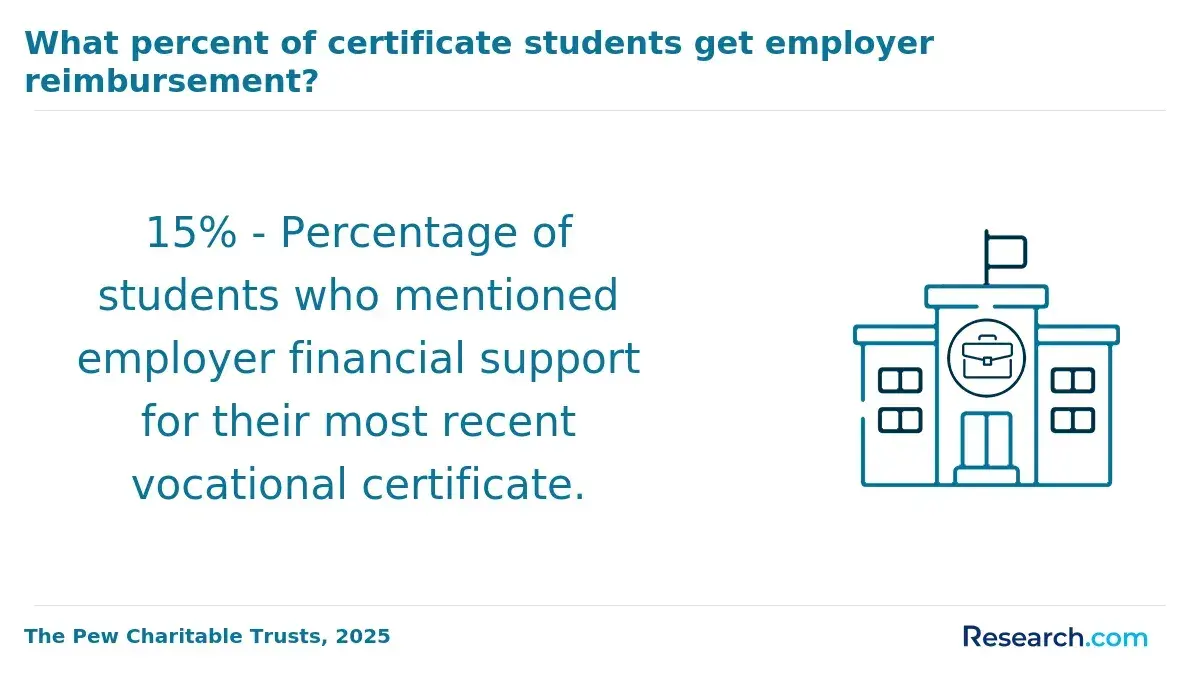
| Employer tuition assistance | Working professionals may lower out-of-pocket cost | Can the program schedule and billing structure align with employer reimbursement? |
A no-GRE program can save the cost of test preparation and score reporting, but those savings are small compared with doctoral tuition. The better financial question is whether the program's format, accreditation, timeline, and career relevance justify the total investment.
What Career Outcomes Can Graduates Expect From No-GRE Online Child Psychology Doctorate Programs?
Career outcomes depend heavily on the doctorate type. A clinical or school psychology doctorate that meets state licensure requirements can support different opportunities than a non-licensure PhD in developmental or educational psychology.
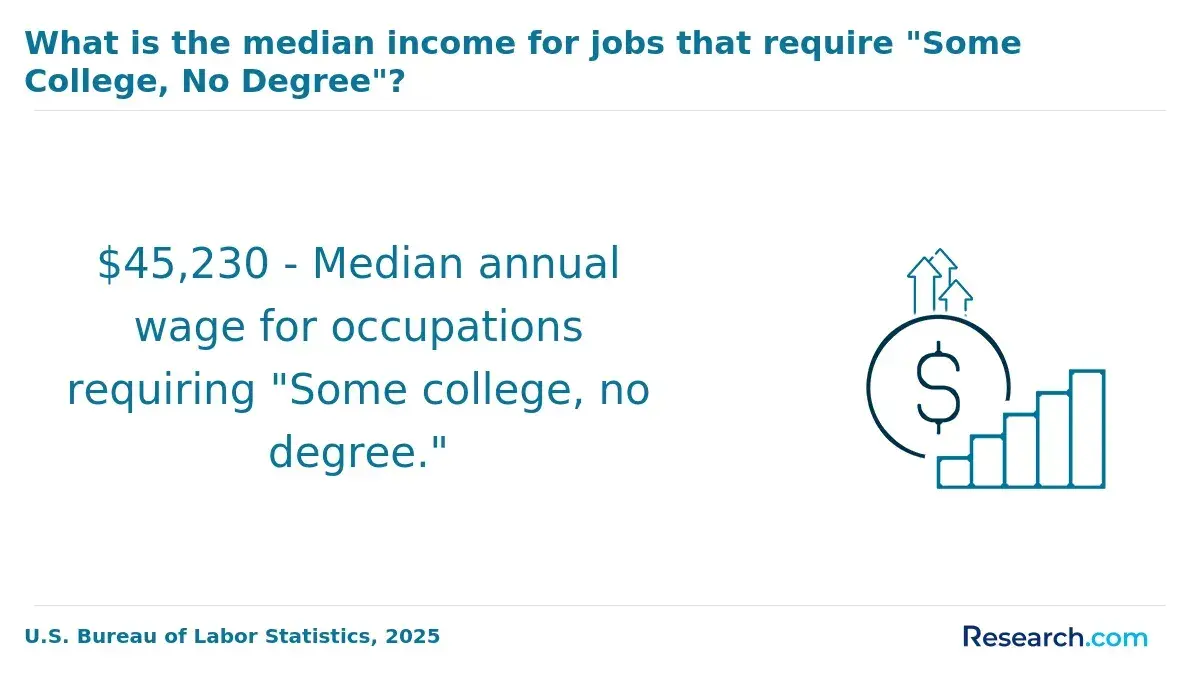
The U.S. Bureau of Labor Statistics reported a 2024 median annual wage of $94,310 for psychologists. This is a broad occupational figure, so applicants should not treat it as a predicted salary for every graduate; pay varies by license status, employer, specialization, geography, and experience.
The table below connects common doctoral pathways to possible career directions. It is designed to help readers assess whether a no-GRE program fits the work they actually want to do.
| Doctoral pathway | Possible roles | Typical work focus | Important limitation |
| Licensure-oriented PsyD or PhD in Clinical Psychology | Licensed psychologist, child or adolescent clinician, assessment specialist | Diagnosis, therapy, psychological assessment, supervision, consultation | Requires state licensure and usually extensive supervised training |
| PhD in Developmental Psychology | Researcher, faculty member, program evaluator, policy analyst | Child development, adolescent behavior, family systems, learning, prevention programs | May not qualify graduates to provide independent clinical services |
| EdD or PhD in Educational Psychology | Educational consultant, learning specialist, administrator, researcher | Learning science, assessment, school improvement, instructional systems | School psychologist credentialing requirements vary by state |
| Applied psychology doctorate with child focus | Youth program director, nonprofit leader, behavioral services administrator, consultant | Program design, staff training, evaluation, community intervention | Job titles may depend more on experience than the doctorate alone |
Students comparing psychology paths that involve youth, courts, trauma, or family systems may also find salary context in resources explaining how much do forensic psychologists make, although forensic psychology and child psychology are distinct fields.
Employers generally care less about whether you submitted GRE scores and more about whether the degree is accredited, relevant, rigorous, and appropriate for the role. For licensed roles, state board approval matters more than admissions testing policy.
What Common Application Mistakes Reduce Admission Chances to No-GRE Online Child Psychology Doctorate Programs?
Many applicants weaken their chances by treating no-GRE admissions as the main advantage rather than one part of a broader fit. Doctoral admissions committees still need evidence that you understand the field, can persist through research, and are prepared for ethical work involving children and families.
The following mistakes are common in no-GRE doctoral applications. Avoiding them can make your application more credible and help you choose stronger programs.
- Assuming no-GRE means easy admission: Replace the missing score with stronger writing, clearer goals, and better documentation of relevant experience.
- Ignoring accreditation: Verify institutional accreditation and, for clinical goals, whether the program meets state licensure expectations.
- Using a generic statement of purpose: Explain why child psychology, why doctoral study, why this program, and why now.
- Overlooking prerequisites: Some programs expect coursework in statistics, research methods, developmental psychology, or abnormal psychology.
- Choosing recommenders by title only: A specific letter from a supervisor or professor who knows your work is stronger than a vague letter from a prominent person.
- Underestimating residency or field requirements: Online does not always mean fully remote, especially in programs connected to clinical training.
- Failing to verify state rules: Licensure, school psychology credentials, and supervised experience requirements vary by state.
A strong application shows readiness for the actual doctorate, not just interest in avoiding an exam. If your file has weaknesses, address them directly rather than hoping the no-test policy will compensate.
How Should Students Compare Online Child Psychology Doctorate Programs Without GRE or GMAT Requirements?
The best way to compare online child psychology doctorate programs without GRE or GMAT requirements is to start with your end goal. A program that is excellent for research may be the wrong choice for clinical licensure, while a clinically intensive program may be unnecessary for students focused on education leadership or program evaluation.
Use a structured comparison process before applying. This reduces the risk of being persuaded by flexible admissions while missing more important factors.
- Define your target outcome: licensed psychologist, researcher, professor, school leader, consultant, policy specialist, or youth services administrator.
- Confirm whether the program is test-free, test-optional, or waiver-based, and ask whether the policy applies to all applicants.
- Verify institutional accreditation and, if clinical practice is your goal, confirm state licensure compatibility before enrolling.
- Compare curriculum depth in child development, adolescent psychology, assessment, family systems, ethics, statistics, and research methods.
- Review dissertation, capstone, practicum, internship, and residency requirements, including any in-person obligations.
- Ask for total estimated cost through completion, not just first-year tuition.
- Compare student support, faculty access, dissertation mentoring, placement support, and technology expectations.
- Request outcome information where available, including licensure pass rates, internship match data, completion rates, or alumni career examples.
As a final test, ask yourself whether you would still consider the program if it required the GRE. If the answer is no, the program may be attractive mainly because of admissions convenience rather than academic or career value.
Other Things You Should Know About Child Psychology
Child psychology usually focuses on children's mental, emotional, behavioral, and social functioning. Developmental psychology is broader and studies human development across the lifespan, although many programs offer child and adolescent concentrations.
Some programs allow local placements, but approval rules vary. Students should ask whether the school has placement support, whether supervisors must meet specific credentials, and whether local sites satisfy state licensing or program requirements.
Some doctoral programs admit bachelor's-prepared applicants, while others require or prefer a master's degree. Applicants with a master's may be able to transfer credits, but transfer limits and eligibility vary by school.
Most graduates who pursue independent practice prepare for the Examination for Professional Practice in Psychology (EPPP), which is required by most U.S. state licensing boards. Some states also require a jurisprudence exam, supervised postdoctoral hours, and a state-specific application before licensure.
References
- Psy.D Programs.org - Best Accredited Psychology Doctorate Degrees Near Me https://psydprograms.org/
- Online and Hybrid PhD & PsyD Programs in Psychology https://www.psychologist-license.com/phd/
- Doctor of Psychology (PsyD) Online Degree Program https://www.calsouthern.edu/online-degree-programs/behavioral-sciences/doctor-psychology-psyd/
- 2025 Online EdD Programs No GRE Required (Doctor of Education No GRE) https://www.onlineeddprograms.com/faqs/gre-mat-gmat-requirements
- General Requirements https://abpp.org/application-information/general-requirements/
- Psychology Ph.D. & Psy.D.: Costs, Requirements, And Careers https://www.psychology.org/degrees/phd/
- Doctor of Psychology in Clinical Psychology (PsyD) - Chestnut Hill College https://www.chc.edu/academics/programs/doctor-of-psychology-in-clinical-psychology-psyd/