2027 Online Child Psychology Doctorate Program Costs: Tuition, Fees, Financial Aid, and Employer Reimbursement

Co-Founder and Chief Data Scientist
An online Child Psychology doctorate can be a career-changing investment, but the bill can grow quickly once tuition, fees, residencies, dissertation enrollment, and loan interest are included. Federal Reserve data continues to show U. S. student loan balances above $1.6 trillion, while Federal Student Aid lists graduate Direct Unsubsidized Loan interest at 7.94% for 2025-26.
This guide is for prospective doctoral students comparing affordability, aid, and employer support. You will learn how to estimate total cost, spot hidden expenses, and decide whether the degree fits your career goals.
Key Things to Know About Online Child Psychology Doctorate Program Costs
- There is no single federal average for online Child Psychology doctorates; most students should compare total tuition by multiplying required credits, often 60 to 120, by the program's published per-credit rate.
- Federal graduate borrowing can cover major costs, but Direct Unsubsidized Loans are capped at $20,500 per academic year, so high-cost programs may require Grad PLUS loans, scholarships, assistantships, employer reimbursement, or cash payments.
- The biggest hidden costs are usually technology fees, online course fees, practicum or internship travel, in-person residency lodging, testing, background checks, and extended dissertation enrollment.
What is the average tuition cost of an online Child Psychology doctorate program?
The short answer is that a nationally published average specifically for online Child Psychology doctorate programs is not available. This field is also narrower than general psychology, so students often compare online PhD, PsyD, EdD, or school psychology doctorates with child, adolescent, developmental, counseling, or clinical psychology concentrations.
For planning purposes, tuition is best evaluated as a total-program calculation rather than a headline per-credit rate. A lower per-credit price can still become expensive if the program requires many more credits, dissertation continuation terms, or required residencies.
The table below shows how different tuition models can change the total cost before aid. These are planning scenarios based on common doctoral credit structures, not a guaranteed national average.
| Program cost model | Typical credit structure | Planning tuition calculation | What it means for students |
| Lower-cost public or regional online doctorate | 60 credits at $600 per credit | $36,000 before fees | Often more affordable, but availability may depend on residency, admissions fit, and whether the program supports child-focused goals. |
| Mid-range online psychology doctorate | 75 credits at $900 per credit | $67,500 before fees | A realistic benchmark for many working professionals comparing tuition-only budgets. |
| Higher-cost PsyD or private online doctorate | 90 credits at $1,200 per credit | $108,000 before fees | May be appropriate only if the curriculum, licensure pathway, clinical training, and career outcome justify the debt load. |
| Longer doctoral route after bachelor's entry | 120 credits at $1,000 per credit | $120,000 before fees | Can be significantly more expensive than post-master's options unless transfer credits or advanced standing reduce the requirement. |
If you do not yet have a graduate degree, compare whether completing one of the more affordable child psychology master's programs first could reduce doctoral credits, strengthen admissions, or clarify whether a doctorate is necessary for your target role.
A useful affordability rule is to ask the school for a written, itemized cost of attendance for the full degree. The estimate should include tuition, mandatory fees, books, residencies, practicum expenses, dissertation continuation, and expected annual tuition increases.
Are online Child Psychology doctorate programs subject to distance learning or technology fees?
Yes. Online doctoral students may pay technology, distance learning, online course, library, clinical placement, graduation, and student services fees. These fees are usually smaller than tuition, but they can affect affordability because they often recur every semester or every credit.
The most important step is to distinguish mandatory fees from optional expenses. Mandatory fees should be included in your total cost of attendance, while optional expenses should be evaluated based on your study style and career pathway.
The table below summarizes common online doctoral fees and why they matter when comparing programs.
| Fee type | How it is usually charged | Why it matters |
| Technology or online learning fee | Per credit, per course, or per term | A small recurring charge can add several hundred or several thousand dollars over a doctoral program. |
| Student services fee | Per term | May cover advising, library access, wellness services, or administrative support for online learners. |
| Clinical placement or field experience fee | Per placement or practicum term | Important for students pursuing applied child, school, or clinical psychology pathways. |
| Residency fee | Per required in-person session | May not include travel, lodging, meals, parking, or lost wages from time away from work. |
| Dissertation continuation fee | Per term after coursework | Can become costly if the dissertation takes longer than expected. |
Before enrolling, ask the bursar or program director for a fee schedule covering every year of the degree. A common mistake is comparing only tuition while ignoring recurring online fees and dissertation charges that continue after coursework ends.
What out-of-pocket expenses should online Child Psychology doctorate students anticipate?
Out-of-pocket costs are the expenses that may not be fully covered by tuition-based aid or that you may need to pay before reimbursement arrives. They are especially important in Child Psychology pathways because applied training can require travel, background checks, liability coverage, testing, or supervised fieldwork.
Use the list below as a budgeting checklist when requesting a program cost estimate. These items are not always obvious on the tuition page, but they can influence whether a program is affordable while you continue working.
- Books, assessment manuals, testing kits, journal access, and research software required for advanced psychology coursework.
- Reliable computer equipment, webcam, microphone, secure internet, data storage, and any required telehealth or assessment platforms.
- Travel, lodging, meals, parking, and time off work for campus residencies, intensives, dissertation defenses, or clinical skills evaluations.
- Practicum, internship, or field placement costs, including transportation, immunizations, background checks, fingerprinting, and professional liability insurance.
- Licensure-related expenses, including state board applications, exam preparation, exam fees, and supervised-hour documentation costs where applicable.
- Dissertation expenses such as transcription, participant incentives, data analysis software, editing, formatting, and continuation enrollment.
If you are comparing doctoral options with related psychology pathways, it may also be useful to review forensic psychology master's programs to understand how different psychology specializations structure online learning, applied training, and total program costs.
The best way to avoid surprises is to build a three-column budget: costs paid to the university, costs paid to third parties, and costs tied to lost work time. Many online students underestimate the third category, especially when residencies or weekday field placements are required.
Does in-state versus out-of-state residency status impact online Child Psychology doctorate tuition?
Residency status can matter, but it depends on the university's pricing model. Some public universities charge separate in-state and out-of-state graduate rates, while others use a flat online tuition rate for all distance learners. Private nonprofit and private for-profit institutions commonly use a single tuition rate, though fees and institutional aid can still vary.
The table below explains the most common pricing structures and when each may be favorable.
| Tuition structure | Best fit | Potential drawback |
| Public in-state graduate tuition | Students who live in the state and can access the lowest published rate | May still include online fees, residency travel, or limited course availability. |
| Public out-of-state graduate tuition | Students who strongly prefer a specific program not offered in their state | Can be substantially higher unless the school offers an online rate override. |
| Flat-rate online tuition | Out-of-state students comparing public and private online programs | May look simple but still require careful review of fees and credit requirements. |
| Cohort or program-level tuition | Students who want predictable pricing across the full degree | Less flexibility if you need to pause, reduce course load, or repeat a course. |
Do not assume "online" automatically means "same price for everyone." Ask whether the published tuition rate is locked, whether it increases annually, whether residency changes can lower tuition later, and whether online students qualify for state grants or institutional scholarships.
Students still choosing between clinical, counseling, school, and developmental psychology tracks may also compare prerequisites through online clinical psychology masters options before committing to a doctoral path with higher tuition and stricter fieldwork requirements.
How do total costs for an online Child Psychology doctorate compare to traditional on-campus programs?
Online programs are often cheaper for working adults because they can reduce relocation, commuting, parking, and lost income costs. However, online does not automatically mean lower tuition. Some online doctorates charge premium per-credit rates, and some campus-based PhD programs offer stronger funding packages.
The comparison below focuses on cost categories that usually change by format. This helps you evaluate total cost rather than assuming one format is always more affordable.
| Cost category | Online doctorate | On-campus doctorate | Decision takeaway |
| Tuition | May be flat-rate, per-credit, or cohort priced | May be lower at public universities, especially for in-state students | Compare total credits and fees, not only per-credit tuition. |
| Housing and relocation | Usually avoidable | May be significant if relocation is required | Online can be more affordable for students with established jobs or families. |
| Commuting and parking | Usually minimal except for residencies | Recurring weekly or daily expense | Campus costs can add up over multi-year doctoral study. |
| Assistantship access | May be limited or competitive | Often more available in research-intensive PhD programs | Funded campus programs may beat online options on net cost. |
| Work continuity | Often easier to maintain employment | May require reduced work hours or relocation | Lost income can be a major hidden cost of campus study. |
A traditional on-campus PhD can be less expensive if it includes a tuition waiver and stipend. An online doctorate may be the better financial fit when keeping your current salary is essential and when the program aligns with your licensure, leadership, research, or academic goals.
Can graduate assistantships and fellowships reduce online Child Psychology doctorate costs?
Yes, but access varies widely. Research universities commonly fund full-time doctoral students through teaching assistantships, research assistantships, fellowships, or tuition waivers. Online and part-time doctoral students may have fewer opportunities because many assistantships require campus presence, faculty lab participation, or set weekly work hours.
Assistantships and fellowships can reduce costs in different ways. Understanding the difference helps you ask better questions before choosing a program.
| Funding type | Typical value | Best fit | Key limitation |
| Teaching assistantship | Tuition support, stipend, or both | Students interested in academic teaching or university careers | May require campus work, synchronous teaching, or full-time enrollment. |
| Research assistantship | Tuition support, stipend, or hourly pay | Students whose interests match faculty research in child development, assessment, intervention, or family systems | Often tied to grant funding and faculty availability. |
| Doctoral fellowship | Scholarship, stipend, or tuition waiver | High-achieving applicants or students in priority research areas | Highly competitive and may require separate applications. |
| Professional association award | Smaller scholarship or research grant | Students funding dissertation research, conference travel, or specialized training | Usually does not cover full tuition. |
To improve your odds, contact faculty before applying, identify research alignment, and ask whether online students can hold remote assistantships. If your interests cross into law, juvenile justice, or evaluation settings, reviewing adjacent psychology pathways such as forensic training can help you clarify whether doctoral funding is necessary for your target role; salary context from resources on how much do forensic psychologists make can also help frame ROI expectations.
A red flag is a program that markets doctoral affordability but cannot explain whether online students have actually received assistantships, tuition waivers, or fellowships. Ask for recent examples rather than general statements.
What financial aid options are available for students enrolled in an online Child Psychology doctorate?
Online doctoral students may qualify for federal aid if the institution is accredited, the program is eligible, and the student meets federal requirements. The format alone does not disqualify a program, but accreditation, enrollment status, satisfactory academic progress, and program classification matter.
Federal Student Aid lists the annual graduate Direct Unsubsidized Loan limit at $20,500. That cap is important because doctoral programs with high tuition may require additional funding sources if the school's cost of attendance exceeds the unsubsidized loan amount.
The list below shows the main aid categories to compare before borrowing the full cost.
- Federal Direct Unsubsidized Loans, which do not require demonstrated financial need but accrue interest while enrolled.
- Federal Grad PLUS Loans, which may cover remaining cost of attendance after other aid but require a credit check and typically carry a higher interest rate than unsubsidized loans.
- Institutional scholarships, tuition discounts, diversity fellowships, dissertation grants, or department-level awards offered by the university.
- State, foundation, or professional association scholarships for psychology, counseling, education, school psychology, behavioral health, or child development students.
- Military and veteran education benefits, when the institution and program are approved for eligible benefits.
- Payment plans that spread semester charges across months, which can reduce short-term cash pressure but do not lower the actual price.
Before accepting loans, complete the FAFSA, request a full award letter, and calculate the debt you would carry at graduation. The strongest funding strategy usually combines lower tuition, institutional aid, employer support, and careful borrowing rather than relying on Grad PLUS loans by default.
Does employer tuition reimbursement cover an online Child Psychology doctorate?
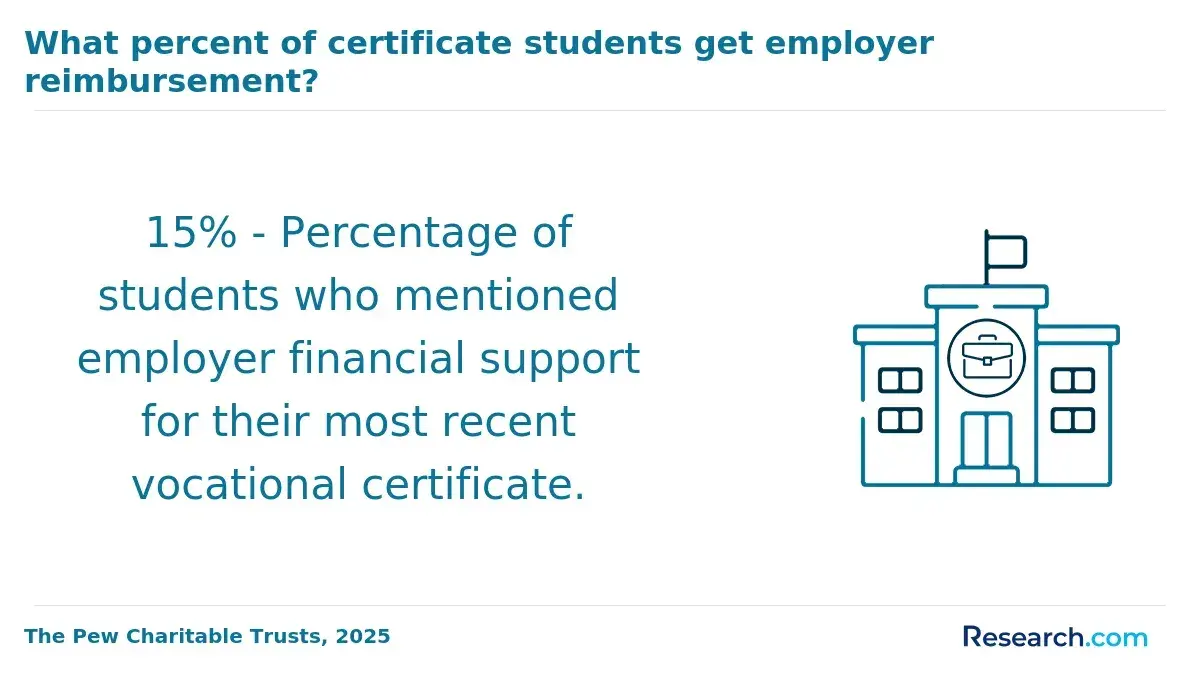
It can, especially for professionals working in schools, hospitals, behavioral health agencies, universities, nonprofits, government agencies, or human services organizations. Coverage depends on employer policy, job relevance, accreditation, grades, annual caps, and whether the degree supports the employee's current or future role.
Employer reimbursement is usually different from direct sponsorship. Reimbursement often requires the student to pay first and submit proof of completion, while sponsorship may involve the employer paying the school directly or committing support before the term begins.
The table below compares common employer education benefits and how they affect cash flow.
| Employer benefit type | How it works | Financial impact | Watch for |
| Tuition reimbursement | You pay tuition, complete the course, and submit documentation | Reduces net cost after reimbursement | Cash-flow gap before repayment, grade requirements, annual caps. |
| Tuition assistance | Employer pays part of the cost upfront or during enrollment | Reduces immediate borrowing need | Program approval rules and required continued employment. |
| Full or partial sponsorship | Employer funds the degree because it meets workforce needs | Can substantially lower out-of-pocket cost | Service commitments, repayment clauses, or role-specific obligations. |
| Professional development funds | Smaller annual budget for courses, conferences, or certifications | Useful for residencies, testing, or continuing education | May not apply to tuition or degree programs. |
A major mistake is enrolling before getting written approval. Ask HR whether doctoral coursework is eligible, whether online programs qualify, whether the school must be regionally accredited, and whether reimbursement applies to fees, books, residencies, or only tuition.
How can working professionals negotiate employer sponsorship for an online Child Psychology doctorate?
Negotiating sponsorship works best when you connect the doctorate to measurable employer needs. Instead of presenting the degree as a personal goal, frame it as a workforce investment tied to assessment capacity, program leadership, supervision, grant development, school-based intervention, behavioral health service quality, or retention.
Use a structured proposal so your manager can evaluate the request without guessing how the organization benefits. The steps below can help you make a stronger case.
- Identify the organization's problem that doctoral training can help solve, such as child behavioral health demand, staff supervision needs, program evaluation, or evidence-based intervention design.
- Choose a program that is accredited, relevant to your role, and realistic for your work schedule so the employer sees lower risk.
- Prepare a cost-sharing plan that includes tuition, fees, expected reimbursement timing, and any amount you are willing to cover personally.
- Explain the return to the employer, such as improved service capacity, leadership readiness, retention, grant competitiveness, or internal training capabilities.
- Offer safeguards, including grade minimums, annual progress updates, a cap on employer contribution, or a reasonable service commitment after reimbursement.
- Get the agreement in writing before enrolling, including eligible expenses, payment timing, tax handling, repayment clauses, and what happens if your job changes.
Be realistic about timing. Many employers set annual education benefit budgets, so asking before the budget cycle closes can improve your chances. If full sponsorship is not possible, negotiate partial support for high-cost items such as residencies, dissertation research, licensure exams, or one course per term.
What ROI can graduates expect from an online Child Psychology doctorate?
ROI depends on your starting salary, total debt, licensure pathway, employer support, and target role. A doctorate may make sense for students pursuing licensed psychologist roles, advanced clinical leadership, school psychology leadership, applied research, assessment, consulting, program administration, or university teaching. It may not be financially wise if your desired role only requires a master's degree or if the program does not meet licensure requirements in your state.
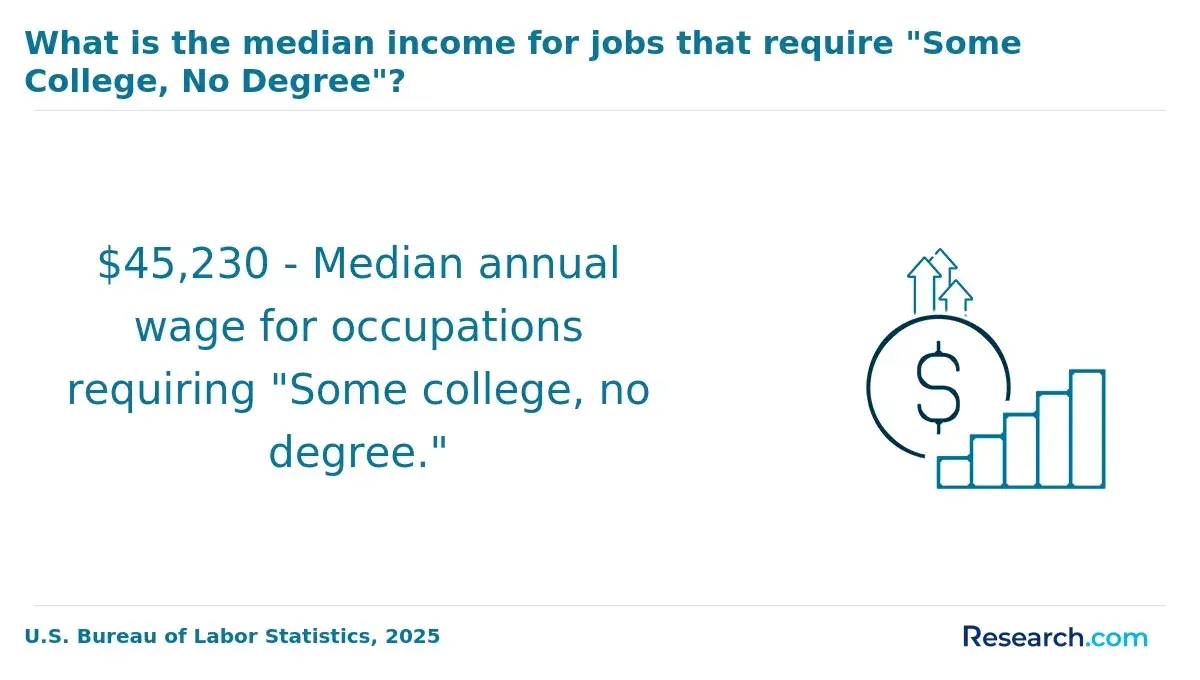
BLS data reports a May 2024 median annual wage of $94,310 for psychologists, with employment projected to grow 6% from 2024 to 2034. This does not mean every Child Psychology doctorate graduate will earn that amount, but it provides a useful labor-market benchmark when comparing expected debt to realistic career outcomes.
The table below shows how ROI considerations differ by career direction. Use it to test whether doctoral tuition aligns with the credential actually required for your goal.
| Career direction | Doctorate value | ROI consideration |
| Licensed psychologist focused on children or adolescents | Often essential, depending on state licensure rules and program accreditation | ROI depends heavily on licensure eligibility, supervised hours, internship quality, and debt level. |
| School or educational psychology leadership | Can support advanced practice, supervision, assessment, or district-level roles | Check state credentialing rules because requirements vary by role and setting. |
| Behavioral health administration or nonprofit leadership | May strengthen credibility and leadership qualifications | ROI is stronger when the employer helps pay or when the degree leads to a clear promotion path. |
| Research or higher education teaching | Usually valuable for academic and research roles | Funded PhD routes may offer better ROI than high-debt online programs. |
| Current role that only requires a master's degree | May offer limited financial return | Consider lower-cost credentials, certificates, licensure upgrades, or supervised specialization first. |
To estimate your personal ROI, compare total net cost after aid with the salary difference you reasonably expect after graduation. Include loan interest, years to completion, lost income, licensure expenses, and the possibility that promotions may take time. The degree is most defensible when it unlocks a role you cannot access otherwise, when debt is controlled, and when the program's accreditation and training model match your state and career requirements.
Other Things You Should Know About Child Psychology
No. Many programs charge separate dissertation, residency, and graduation fees beyond base tuition. Typical dissertation continuation fees range from about $500 to $2,000 per term, and required residencies can add travel, housing, and on-site assessment costs. Always check the program’s fee schedule before enrolling.
Possibly. Some programs accept graduate transfer credits or award advanced standing for a relevant master's degree, but policies vary. Ask how many credits can transfer, whether they reduce tuition, and whether transferred courses shorten time to graduation.
In 2027, online Child Psychology doctorate students can access federal student loans, scholarships, grants, and work-study programs. Some universities offer specific scholarships for online learners, and employer reimbursement plans may also be available to help offset the cost.
Part-time study can improve cash flow because you pay for fewer credits at once, but it may not reduce total cost. If the program charges recurring term fees or dissertation continuation fees, taking longer can increase the final price.
References
- Company Funded Grad School: Getting Your Employer Pay for a Degree https://www.gograd.org/financial-aid/companies-paying-for-grad-school/
- Employer Tuition Assistance Program / Employee Tuition Reimbursement - Finance | Learn & Work Ecosystem Library https://learnworkecosystemlibrary.com/topics/employer-tuition-assistance-program-employee-tuition-reimbursement-finance/
- Financial Aid for Psychology Students https://www.onlinepsychologydegrees.com/financial-aid/
- 2025 Most Affordable Online Colleges for a PhD in Psychology https://www.onlineu.com/most-affordable-colleges/psychology-doctoral-degrees
- Average Cost of a Doctorate Degree [2026]: Ph.D., Psy.D. & More https://educationdata.org/average-cost-of-a-doctorate-degree
- Nonprofit vs. For-Profit Nursing Schools: Which to Choose? | NursingEducation https://nursingeducation.org/insights/non-profit-vs-profit/
- Best Online Doctorate In Psychology 2025 | Psychology.org https://www.psychology.org/rankings/best-online-doctorate-degree-programs/
- Professional Doctorate in Educational and Child Psychology, Nightcourses Course (ID: #124452) https://www.nightcourses.com/course/professional-doctorate-in-educational-and-child-psychology-124452/
- Profit or nonprofit? Why it matters. https://ps.sckans.edu/profit-or-nonprofit-why-it-matters/
- Educational Psychology Funded Training (EPFT) scheme https://www.aep.org.uk/EPFT