2027 BS in Business Administration for Insurance Agencies: Which Business Courses Should You Prioritize?
Audited and Verified:
Our Editorial and Data Verification Process
Research.com uses government datasets, official education statistics and primary institutional information to support its career and degree guides. Our review process checks factual accuracy, occupational definitions, source dates and the requirements associated with the credentials discussed.
How This Article Was Fact-Checked
Our editorial team verifies salary estimates, employment projections, education requirements and program information against original data providers and official organizations. Salary figures are checked against the relevant occupational definitions and reporting periods. Information about licensure, accreditation and required in-person training is reviewed separately.
Fact-checked and verified on:

Co-Founder and Chief Data Scientist
An insurance agency needs more than people who can sell policies. It also needs staff who can explain coverage accurately, manage customer relationships, monitor finances, and keep everyday operations organized.
If you are choosing courses for a BS in Business Administration, the best electives depend on whether you want to become a licensed producer, work in agency operations, or eventually lead a team. This guide ranks the most useful subjects, explains where a degree does - and does not - help, and shows how to evaluate a program against your intended role.
Key Things You Should Know
- Prioritize accounting, marketing and sales, business analytics, and operations; choose insurance, risk management, or business law electives when available and relevant to your target role.
- A business degree does not replace a state insurance producer license. Check licensing rules for the state and lines of insurance in which you intend to work.
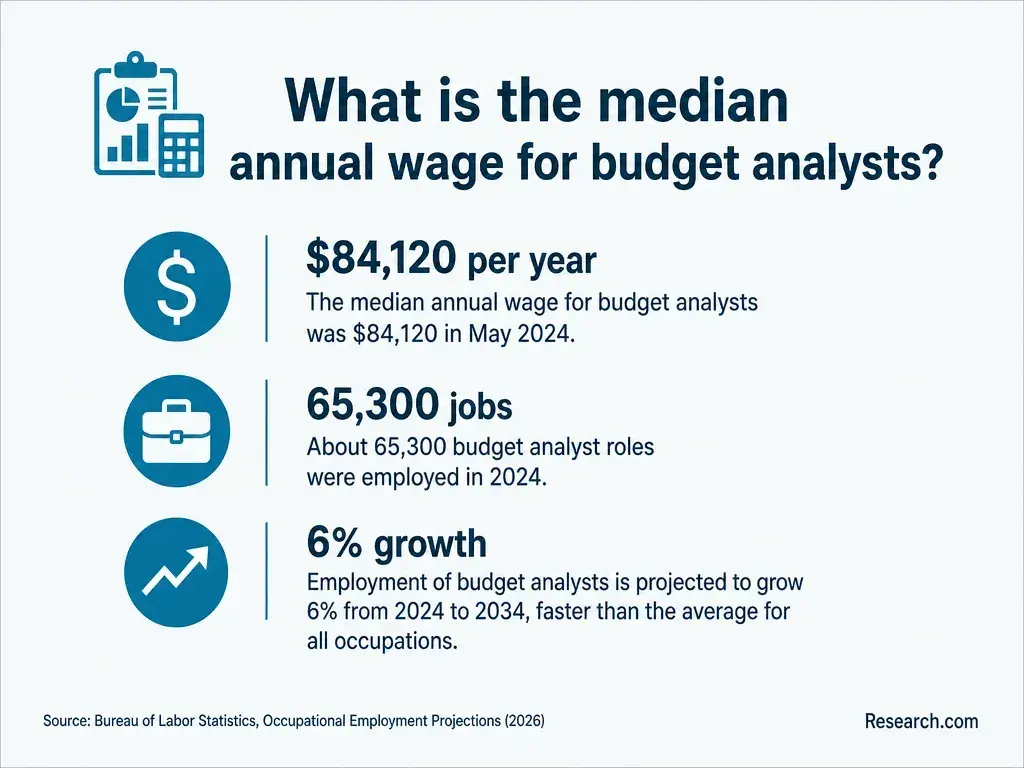
- For context, the U.S. median wage for market research analysts was $78,760 in May 2025, but that occupation-wide figure is not an expected starting salary for an agency employee.
What is a BS in Business Administration for Insurance Agencies?
It is usually a general business bachelor's degree applied to the work of an insurance agency - not a distinct insurance license or necessarily a degree with an insurance concentration. Its accounting, marketing, management, and quantitative courses can support decisions about agency revenue, client service, staffing, and workflows. The exact curriculum depends on the school.
An agency commonly works with customers to place and service coverage, while an insurance carrier issues policies and assumes the insured risk. That distinction matters when choosing electives: agency-focused students may value sales operations and customer experience, while students aiming for carrier logistics or broader operations might compare low-cost shorter supply chain degree options instead. Compare actual course requirements rather than assuming either degree leads to the same jobs.
Which business courses best prepare you for insurance agency careers?
Start with the business core, then use electives to close a role-specific gap. The table ranks subjects by their usefulness across common agency roles; it does not imply that every school offers an insurance elective or that coursework substitutes for supervised practice.
| Course or subject | Agency application | Priority |
| Financial and managerial accounting | Read financial statements; distinguish commission revenue from expenses and cash available to operate. | High for operations and ownership; useful for all roles. |
| Marketing, sales, and customer experience | Plan outreach, evaluate leads, communicate clearly, and improve renewal service without making misleading coverage claims. | High for producers and agency marketing staff. |
| Statistics, spreadsheets, and business analytics | Interpret retention, response, and workload data while recognizing small samples and incomplete records. | High for analysts and growing agencies. |
| Operations and management | Map handoffs, manage service queues, and document processes before taking on supervisory responsibility. | High for agency operations roles. |
| Insurance, risk management, or business law elective | Build vocabulary for coverage, risk, contracts, and compliance; course content varies substantially. | Choose when it fits your role and is actually offered. |
For a future producer, marketing and communication should come before an advanced project management elective. For someone improving agency workflows, operations and analytics may be more valuable than another sales course. If you are returning with prior college work, ask whether a proposed course satisfies a core requirement or only counts as an elective; project management undergraduate transfer pathways offer a useful comparison when operations-focused coursework is part of your plan. Your receiving school makes the final credit decision.
What degree and licensing requirements apply to insurance agency professionals?
A BS in Business Administration is not generally required to enter insurance sales, and it does not authorize someone to sell, solicit, or negotiate insurance. Those activities can require a state-issued producer license for the applicable line of authority. Requirements - including education, examination, application, background review, renewals, and continuing education - vary by state and activity. Check the insurance department in the state where you intend to work before paying for a course or accepting sales duties.
Non-sales roles, such as certain administrative, marketing, and operations jobs, may have different licensing implications, but a job title alone does not determine what activities are permitted. Ask the employer which duties require a license. If your goal is primarily coordinating projects rather than selling insurance, targeted training or economical project management education online may fit better than insurance-oriented electives; compare the role's hiring requirements before committing to another degree.
Either format can teach the relevant business subjects. An online program may make it easier to remain employed at an agency, but online does not mean self-paced: scheduled meetings, group assignments, proctored exams, and fixed deadlines can still affect your workweek. Campus study may offer easier access to in-person faculty discussions and local recruiting, while adding travel and timetable constraints.
Ask for sample schedules for accounting, analytics, and your intended electives - not just the program's marketing description. If speed matters, compare online colleges with accelerated business programs against the hours you can realistically study while working. A shorter calendar does not necessarily mean fewer assignments, lower total cost, or better preparation for licensing.
First, confirm the institution holds recognized institutional accreditation. Then check whether the specific business school or program has applicable AACSB, ACBSP, or IACBE accreditation; these are different from institution-level accreditation, and their scope is not interchangeable. Neither form of accreditation is an insurance producer license or proof of job placement.
For this career goal, inspect the current catalog for the accounting-to-finance and statistics-to-analytics sequence, available insurance or risk courses, and whether an agency-related internship or capstone can be approved. Request the program's actual tuition and fee schedule as well. Even a comparison such as an accredited online project management tuition guide is only a starting point if you are weighing an operations-focused alternative; verify each school's accreditation scope, remaining requirements, and charges directly.
Requirements depend on the school and on whether you apply as a first-year or transfer student. Schools commonly request prior academic transcripts; some business majors also have separate admission or progression rules involving grades or prerequisite courses. Do not assume prior insurance employment waives accounting or quantitative requirements.
Before applying, send your transcripts for an evaluation and ask which credits will satisfy general education, the business core, and electives. If financing affects your choice, confirm aid eligibility with the school rather than assuming admission establishes it. Guidance on federal aid for undergraduate project management study can help frame questions about aid for a related degree, but your business administration program and individual eligibility must be checked separately.
A bachelor's degree commonly takes about four years of full-time study from the beginning; transfer credits, part-time enrollment, course availability, and prerequisites can change the remaining timeline. There is no reliable single price for an agency-focused BS: tuition may be charged by credit or term, and fees, materials, technology, and travel can add to the bill.
For a useful comparison, request an official degree audit and price the remaining required courses at each school - not the advertised price of a full degree you may not need to complete. Include the cost of any separate licensing preparation and the effect of studying while employed. You can use low-cost online business administration pathways to identify programs to investigate, then confirm transfer applicability, current charges, and financial aid with each institution.
Match the degree to tasks you can demonstrate, not just a desired title. An entry-level account or service role may involve customer communication and accurate recordkeeping; a licensed producer develops and services business within the limits of the applicable license. Agency marketing staff work on outreach and lead measurement, while operations staff coordinate processes, reporting, and service capacity. A degree can support these functions, but employers may value agency experience and product knowledge more for a particular opening.
Supervising producers or running an agency usually requires a record of performance, judgment, and responsibility beyond graduation. If that is your long-term goal, compare management electives with undergraduate leadership programs with shorter timelines, then ask whether either pathway offers meaningful agency projects or relevant work experience. Neither degree grants a management position.
There is no single salary for a business administration graduate working at an agency. Pay depends on the occupation, location, experience, employer, and - particularly in sales - the compensation arrangement. Base pay, commissions, and benefits should be compared separately when evaluating an offer.
As one occupation-specific reference, the U.S. Bureau of Labor Statistics reports a May 2025 median annual wage of $78,760 for market research analysts. Some agency marketing-analysis work may resemble that occupation, but its national median covers workers across industries and experience levels; it is not an agency-specific or new-graduate wage. When judging whether tuition is affordable, compare verified local job offers and your likely starting duties with the full education cost. Lists of colleges offering economical online business study can narrow the school search, but they cannot establish your future earnings.
What is the job outlook for insurance agency careers?
Outlook varies by occupation rather than by degree or by the broad label "insurance agency career." For example, BLS projects 7% U.S. employment growth for market research analysts from 2025 to 2035. That can inform a student considering analytical marketing work, but it does not predict openings at a particular agency or describe the outlook for licensed producers, service staff, or managers.
Use local postings to test demand for your target duties and note whether employers ask for a license, agency experience, analytics tools, or a bachelor's degree. If you want to enter a role sooner, bachelor's degrees with compressed schedules are worth comparing only after checking that the pace leaves time for relevant work and, where needed, licensing. Faster graduation alone does not improve a local job market.
Other Things You Should Know About Business Administration
No. It can be useful if its courses match your intended work, but a general business degree paired with relevant experience and any required license may be a better fit than a concentration with limited course choice.
Choose risk management if you need insurance concepts and lack that exposure. Choose analytics if your target role involves reporting and you already have a sound foundation in coverage and agency operations.
Possibly, but employment alone does not award academic credit. Ask the program whether your duties, supervision, learning objectives, and documentation meet its internship rules before enrolling.
Only with appropriate employer permission and any required academic approval. If access is restricted, use public or hypothetical data and label it clearly rather than exposing customer or proprietary records.
- Manage your business - Small Business Administration https://www.sba.gov/counseling/manage-your-business/
- SC Business Law Course Standards https://ed.sc.gov/instruction/career-and-technical-education/programs-and-courses/cte-course-standards/2023-24-new-and-revised-cte-spring-course-standards-review/business-finance/business-law-standards/
- Business Administration: Risk Management and Insurance | Bowling Green State University https://www.bgsu.edu/academics/insurance-and-risk-management.html
- Bachelor's Degree in MIS - Business Analytics | Lamar.edu https://www.lamar.edu/academics/degrees/information-systems-analysis/management-information-systems-business-analytics.html
- Compliance & Risk Management (Concentration) | NELB | New England Law https://www.nesl.edu/academics-and-faculty/certificates-and-concentrations/compliance-and-risk-management
- BA vs. BS in Business Administration | New England College https://www.nec.edu/news/ba-vs-bs-business-administration
- What Can I Do with a Risk Management and Insurance Degree? | Ferris State University https://www.ferris.edu/business/risk-management-insurance/what-can-i-do.htm
- Major in Risk Management & Insurance (Bachelor's) | CU Denver Business School https://business.ucdenver.edu/bsba/risk-management-and-insurance
- Insurance Law (ISGL) | Fordham University https://bulletin.fordham.edu/courses/isgl/
- Functional Areas of Business | Introduction to Business https://courses.lumenlearning.com/wm-introductiontobusiness/chapter/reading-functional-areas-of-business/