2027 Can a BS in Business Administration Prepare You for a Operations Analyst Role? Skills and Entry Requirements
Audited and Verified:
Our Editorial and Data Verification Process
Research.com uses government datasets, official education statistics and primary institutional information to support its career and degree guides. Our review process checks factual accuracy, occupational definitions, source dates and the requirements associated with the credentials discussed.
How This Article Was Fact-Checked
Our editorial team verifies salary estimates, employment projections, education requirements and program information against original data providers and official organizations. Salary figures are checked against the relevant occupational definitions and reporting periods. Information about licensure, accreditation and required in-person training is reviewed separately.
Fact-checked and verified on:

Co-Founder and Chief Data Scientist
If you are considering a BS in Business Administration to become an operations analyst, the degree's name matters less than the skills and work you can show an employer. Operations analyst roles can involve anything from improving service workflows to building quantitative models, and those differences affect how you should prepare.
This guide explains which business courses are useful, where you may need additional technical training, and how to assess programs, costs, and entry-level opportunities before committing to a degree.
Key Things You Should Know
- Yes, with the right preparation: A BS in Business Administration can support entry into operations analysis when it includes quantitative coursework and opportunities to demonstrate process, spreadsheet, and communication skills.
- Check the job description, not just the title: Some operations analyst positions emphasize business processes; others require SQL, advanced statistics, or programming that a general business degree may not cover.
- Use salary data carefully: The U.S. Bureau of Labor Statistics reports a May 2025 median annual wage of $101,860 for management analysts, a related occupation—not a starting salary or a wage estimate for every operations analyst.
Can a BS in Business Administration prepare you for an operations analyst role?
Yes. A BS in Business Administration can provide a foundation in operations, accounting, statistics, and organizational decision-making. But employers hire for demonstrated ability to investigate a process, interpret evidence, and recommend a feasible change. The degree is preparation, not proof that a graduate can perform every analyst task.
"Operations analyst" is not one uniform occupation. An analyst might examine order delays, staffing patterns, purchasing costs, or service quality. The table connects common tasks to evidence you could build during school or work.
| Possible task | Relevant evidence of readiness |
| Identify bottlenecks in a workflow | A process map, defined performance measure, and explanation of constraints |
| Compare operational options | A spreadsheet model showing assumptions, costs, and trade-offs |
| Explain findings to managers | A concise report or presentation that distinguishes findings from recommendations |
If you want to analyze inventory, distribution, or procurement specifically, compare the business curriculum with a supply chain degree's deeper functional coverage, with a potential lens being supply chain college costs versus potential career outcomes. A general business degree may be the better fit if you want room to explore several operating functions.
What education and skills do operations analysts need?
Requirements vary by employer and task. Many analyst openings seek a bachelor's degree in business or a related field, while some accept relevant experience. Quantitatively intensive positions may favor operations research, mathematics, statistics, engineering, or information systems preparation. Read several local job postings and separate stated minimums from preferred skills before choosing courses.
For an entry-level business-operations role, prioritize spreadsheet analysis, descriptive statistics, process mapping, basic financial reasoning, and clear writing. SQL or dashboard tools may strengthen an application when postings name them. Advanced optimization or predictive modeling calls for more specialized study; an introductory analytics course alone is unlikely to establish that depth.
Students entering from another academic field should check the program's actual math and business-course sequence rather than assume their background disqualifies them. This guide to prerequisites for a business administration degree can help frame questions for an admissions adviser; the institution determines its own requirements.
What business administration courses help aspiring operations analysts?
Look beyond the course catalog's titles. Operations management can teach capacity, quality, and workflow concepts; statistics supports comparisons and uncertainty; managerial accounting helps evaluate costs; and information systems or analytics courses may offer practice preparing and interpreting data. Business communication matters because an analysis is useful only if stakeholders can understand its assumptions and limitations.
Ask whether quantitative courses lead to applied assignments and whether operations or analytics electives require prerequisites you can complete in time. An official concentration can provide a coherent sequence, but an elective does not become a concentration simply because it appears on a transcript. A specialized analytics or supply chain bachelor's may offer greater depth if your target postings consistently demand it.
Compressed terms do not remove prerequisite chains or the time needed to practice analytical methods. When considering business degrees through accelerated online learning, confirm that the courses and applied work you need are available in the proposed sequence.
Either format can work if it offers appropriate quantitative instruction, access to software, feedback on projects, and a realistic way to gain experience. Online study may help an employed student keep working, but scheduled meetings, group assignments, proctored exams, and fixed deadlines can still limit flexibility. Campus study may make in-person collaboration and local recruiting easier, though commuting can reduce time available for work or internships.
Before selecting a format, ask how students complete operations projects, obtain career support, and present work samples to employers. Compare the actual curriculum and scheduling policies of schools in leading American online business degree schools rather than treating delivery mode or a ranking as evidence of analyst-job placement.
First-year applicants commonly provide secondary-school records; transfer applicants generally provide transcripts from previous colleges. Institutions may set GPA standards, application deadlines, and separate requirements for entry to the business major. Some programs require foundational math or business courses before students take upper-level work, even if those courses are not required for initial university admission.
Transfer students should request an official evaluation showing not only which credits are accepted but which satisfy statistics, business-core, elective, and residency requirements. Prior coursework in another field may count toward the degree without replacing an operations or analytics prerequisite.
If speed matters, check admission and transfer rules before comparing online degrees with accelerated terms. A shorter course calendar cannot resolve missing prerequisites or guarantee that prior credits apply to the major.
A traditional full-time bachelor's pathway is commonly planned around four academic years, but the time remaining depends on accepted and applicable transfer credits, course sequencing, enrollment intensity, and whether required classes are offered when you need them. A returning student should use an official degree audit, not an advertised completion estimate, to plan a graduation date.
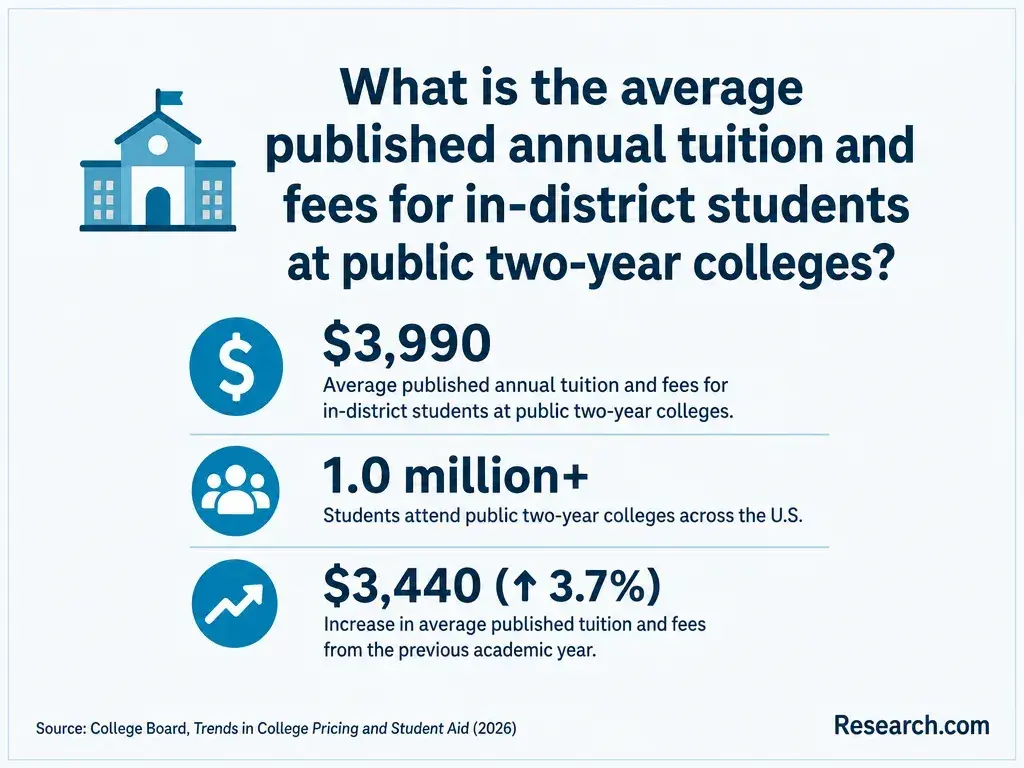
Compare the cost to finish, not just published tuition: include required credits, fees, books or software, travel or technology, and the income or work hours you might give up. Ask the financial-aid office how enrollment intensity affects eligibility and what borrowing would be needed after grants, scholarships, or verified employer assistance. For a starting point, review business administration degree costs after FAFSA-based assistance, then obtain school-specific figures for your own credit evaluation.
Check an institution's accreditation status with its recognized accreditor and confirm that the status covers the school awarding the degree. Institutional accreditation and specialized business accreditation answer different questions: AACSB, ACBSP, or IACBE recognition, where applicable, has a defined scope that may not include every program a school offers. Neither type of accreditation guarantees an analyst job.
Accreditation is one screening factor alongside curriculum, cost, student support, and evidence of applied learning. If a short program appeals to you, use online undergraduate business rankings for shorter study paths to identify options, then verify each school's current accreditation scope and required analyst-relevant courses directly.
Possible starting points include operations coordinator, business operations assistant, procurement assistant, project coordinator, or analyst positions that accept early-career applicants. Their duties differ: a coordinator may maintain schedules and records, while an analyst may be expected to define measures, examine data, and recommend changes. Read the responsibilities and required tools rather than assuming similar titles indicate similar work.
Someone with relevant workplace experience may be able to seek analyst responsibilities sooner by documenting improvements they helped investigate. A new graduate without that experience may benefit from a supervised internship or an operations-support role first. If the work you want centers on schedules, project scope, and delivery rather than recurring business processes, compare online degree options in project management at lower cost with the broader business route.
There is no single U.S. Bureau of Labor Statistics wage category that captures every job titled "operations analyst." For roles focused on evaluating organizational procedures and recommending improvements, management analyst is a useful—but imperfect—comparison. Its May 2025 median annual wage was $101,860, and BLS projects 10% employment growth from 2025 to 2035. Those figures cover the occupation as a whole, not entry-level operations analysts or graduates of a particular degree.
Use local postings with comparable duties to judge likely starting pay, especially if a role instead resembles logistics, data analysis, or project coordination. When weighing tuition against potential earnings, compare your likely entry route and remaining education costs; listings for shorter online business administration degrees with cost details are a starting point, not evidence that a particular salary will follow.
What certifications and experience can advance an operations analyst career?
Relevant experience usually matters more than collecting credentials without a target role. Seek work that lets you define a baseline, clean or organize data, compare alternatives, and communicate a recommendation. An internship, supervised workplace assignment, or class project can provide evidence, but each has different approval and access rules. Never put confidential employer or customer information in a public portfolio without permission.
Choose training to close a specific gap in job postings: a spreadsheet or SQL course for data handling, process-improvement training for workflow analysis, or a project credential for project-focused duties. Check any certification provider's eligibility rules and exam requirements; a business degree or course does not automatically award a professional credential.
If you are deciding between targeted training and another bachelor's program, compare the additional skills, time, and funding required. Students considering a project-focused degree can separately review FAFSA planning for project management bachelor's students; aid eligibility depends on the student and institution, not the intended job title.
Other Things You Should Know About Business Administration
Yes, if you meet the stated minimum requirements and can show relevant work. Explain your strongest matching skills with specific examples, and be candid about tools you have not used.
Not necessarily. Operations research analyst roles often emphasize mathematical modeling and advanced quantitative methods. Compare duties and technical requirements before treating the titles as interchangeable.
Yes. Label it as academic work, explain the data and assumptions, and avoid claiming that a proposed improvement produced real workplace results.
Not always. Some analysis can be done remotely, but roles involving site observation, staff interviews, or physical workflows may require on-site work. Check each posting's location and travel requirements.
- Top Data Analyst Tools Every Professional Should Learn in 2026 | Edgewood College https://online.edgewood.edu/blog/top-data-analyst-tools-for-career-success/
- What Is a Business Analyst? Roles, Skills, and Career Outlook | Florida National University (FNU) https://www.fnu.edu/what-does-a-business-analyst-do/
- Business School Internships: Gaining Practical Experience | Pepperdine Graziadio Business School https://bschool.pepperdine.edu/personal-growth/article/business-school-internships-gaining-practical-experience.htm
- What Can You Do With a Business Analytics Degree? | American Public University https://www.apu.apus.edu/area-of-study/business-and-management/resources/what-can-you-do-with-a-business-analytics-degree/
- Explore 7 exciting careers in data analytics - Penn LPS Online https://lpsonline.sas.upenn.edu/features/interested-data-analytics-explore-7-exciting-careers-field
- What Can You Do With a Business Administration Degree? | snhu.edu https://www.snhu.edu/about-us/newsroom/business/what-can-you-do-with-a-business-administration-degree
- How to Become a Business Analyst: Steps, Skills, and Salary | Touro University Worldwide https://www.tuw.edu/business/how-to-become-a-business-analyst/
- Investigation of Essential Skills for Data Analysts | sciencedirect.com https://www.sciencedirect.com/org/science/article/pii/S1062737523000240
- Areas of Business BBA Grads Can Work In | North Carolina Central University https://online.nccu.edu/blog/areas-of-business/
- Is a Business Administration Degree Right for Me? Five Things You Should Know | Cornerstone University https://www.cornerstone.edu/blog-post/is-a-business-administration-degree-right-for-me-five-things-you-should-know/