2027 Online BS in Business Administration vs. an Executive Education Certificate: Which Route Fits Your Career Plan?
Audited and Verified:
Our Editorial and Data Verification Process
Research.com uses government datasets, official education statistics and primary institutional information to support its career and degree guides. Our review process checks factual accuracy, occupational definitions, source dates and the requirements associated with the credentials discussed.
How This Article Was Fact-Checked
Our editorial team verifies salary estimates, employment projections, education requirements and program information against original data providers and official organizations. Salary figures are checked against the relevant occupational definitions and reporting periods. Information about licensure, accreditation and required in-person training is reviewed separately.
Fact-checked and verified on:

Co-Founder and Chief Data Scientist
If you want to move into business or advance at work, an online bachelor's degree and an executive education certificate solve different problems. One can establish a broad undergraduate credential; the other can sharpen a specific skill without requiring a full degree.
That difference matters when a job posting requires a bachelor's, your employer values a particular capability, or you need to keep working while you study. This comparison will help you match the route to your experience, target role, budget, and available time - and identify what to verify before enrolling.
Key Things You Should Know
- Choose an online BS in Business Administration when you need a bachelor's credential or broad preparation across business functions; a typical bachelor's program requires about 120 semester credits, though prior coursework may reduce what remains.
- Choose an executive education certificate when you already have relevant experience and need focused development in a skill such as leadership, strategy, or operations - not a substitute for a required degree.
- Compare the remaining degree credits or certificate workload, total price, schedule, and evidence of career relevance before deciding. Neither credential guarantees promotion or entry into management.
What Is an Online BS in Business Administration or Executive Education Certificate?
An online BS in Business Administration is an undergraduate degree covering several business functions alongside general education requirements. It may suit someone entering business, changing careers, or completing a bachelor's needed for advancement. "Online" describes delivery, not necessarily pace: courses may still have weekly deadlines, live meetings, or group assignments. Students considering bachelor's degrees with compressed schedules should check whether the faster calendar also means a heavier weekly workload.
An executive education certificate is usually a shorter, nondegree program focused on a defined professional topic. Universities and other providers use the term differently: a certificate might document participation, assessed learning, or completion of several courses. It is not automatically undergraduate or graduate credit, a professional certification, or a qualification for a job requiring a bachelor's degree.
How Does an Online Business Administration Degree Compare With an Executive Certificate?
The decisive distinction is whether your next step requires a degree or a specific capability. This table compares what each route ordinarily provides; the exact terms depend on the institution and program.
| Decision factor | Online BS in Business Administration | Executive education certificate |
| Credential | Awarded bachelor's degree | Usually a nondegree certificate of completion |
| Learning scope | Broad business core, general education, and possible electives or concentration | Focused topic, often designed around workplace application |
| Typical applicant | Undergraduate entrant, transfer student, or returning student | Professional seeking targeted development; experience expectations vary |
| Best use | Meeting a bachelor's requirement or building a broad foundation | Addressing an identified skill gap without pursuing another degree |
| Key limitation | Greater time and financial commitment | Does not ordinarily satisfy a bachelor's requirement |
A certificate is not necessarily the middle ground between a degree and no education. If your target is a specialized project role, a focused degree may warrant comparison too; explore economical project management degree programs against the broader BS and shorter training options. Conversely, if your employer accepts demonstrated performance, an approved workplace project or employer training may be more direct than either credential.
Which Career Goals Suit a Business Administration Degree or Executive Certificate?
Start with your current responsibilities and a specific target role, then inspect actual job requirements. A customer-service supervisor seeking an operations coordinator role may benefit from broad accounting, analytics, and process knowledge - especially if a bachelor's is required. An experienced operations employee already eligible for promotion may get more immediate value from targeted training and a documented improvement project.
A substantial career change needs more than a credential label. For an HR transition, compare entry-level HR tasks, relevant experience, and human resources education and career options before choosing general business study or a short leadership certificate. A certificate aimed at executives may teach strategy without preparing someone for HR records, recruiting processes, or employment-law fundamentals.
If you aspire to management, ask what the role actually controls: people, budgets, vendors, or projects. Employers commonly assess results and judgment as well as education. Neither completing a BS nor attending executive education confers managerial authority.
A BS commonly introduces accounting, finance, marketing, management, economics, operations, statistics, and business communication. General education and a capstone may add writing, quantitative reasoning, and integrated problem-solving. The mix and depth vary: a course in analytics does not establish specialist expertise, and an elective in HR is not necessarily an official concentration.
Compare course descriptions with the work you want to do. An aspiring operations coordinator might look for spreadsheet analysis, process mapping, and project planning; a career changer with strong customer-facing experience might prioritize accounting and data interpretation.
Ask whether projects can use an approved workplace problem, what software is required, and how group assignments are scheduled. If you intend to study while employed, examine online business administration pathways alongside an existing career against your real work hours and the program's assignment calendar.
Eligibility depends on the offering. Some executive education courses are open enrollment; others expect supervisory experience, a particular job function, employer sponsorship, or an application. A prior bachelor's is not universal, and "executive" in the title does not itself establish a formal seniority requirement. Confirm prerequisites, intended audience, assessment, and the exact wording of the award with the provider.
If you do not yet have a bachelor's and your target job requires one, check undergraduate admission and transfer policies rather than assuming executive education will fill the gap. Application costs are a separate consideration when comparing schools; colleges with no upfront application payment may help narrow an initial search, but you still need to confirm current fees and program eligibility directly.
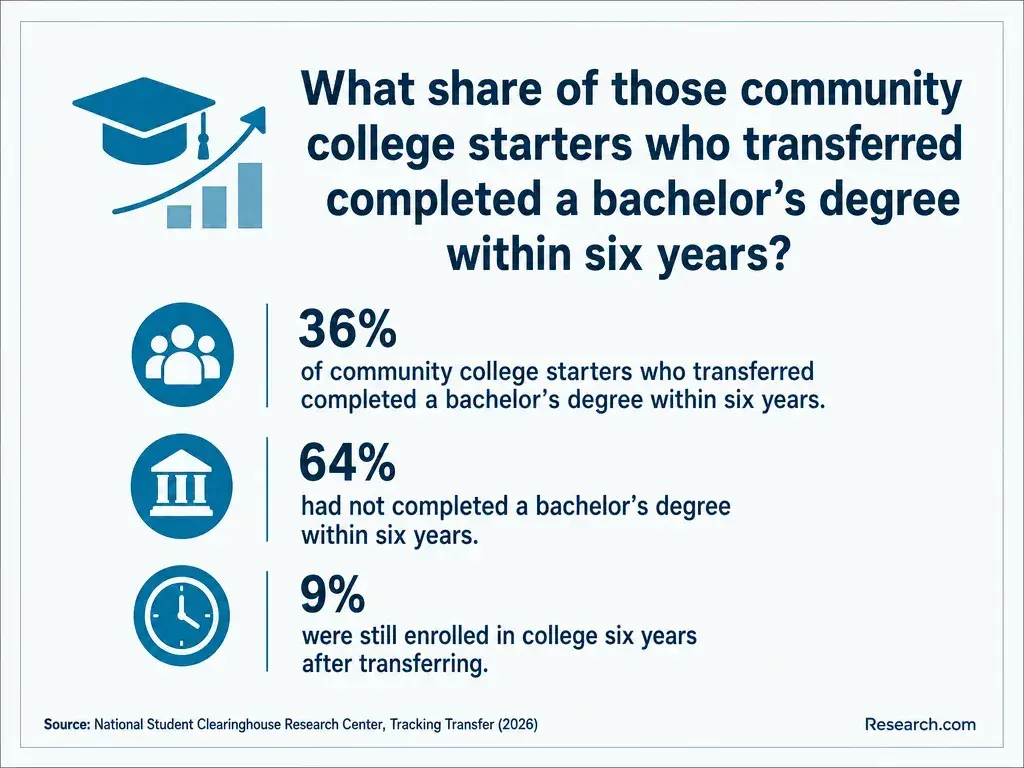
A bachelor's is the larger commitment, but its remaining cost and duration matter more than its advertised full-program length. Request an official evaluation showing which prior credits apply to general education, the business core, electives, and any residency requirement. Accepted transfer credit does not always replace a required course. A certificate may take substantially less time, yet schedules and prices vary widely by provider and format.
For a fair comparison, add required tuition and fees, books or software, travel or campus visits, financing costs, and any work time you must give up. Ask whether an employer pays upfront or reimburses only after successful completion. Use online business administration program cost-and-time comparisons to identify questions for schools, then calculate your own total from a written credit evaluation and current charges. A cheaper certificate is poor value if it does not meet the qualification your target role requires.
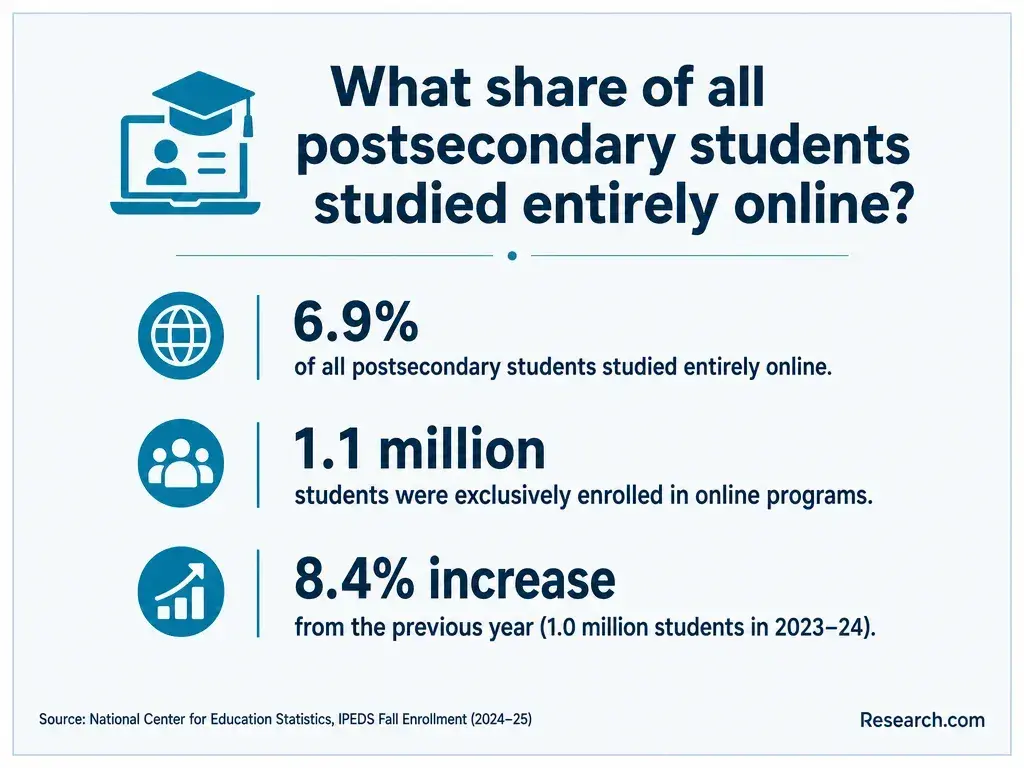
Online study can remove a commute and widen the choice of providers; campus study may make face-to-face collaboration and local networking easier. Neither format is inherently more rigorous or more flexible. Check live attendance, time zones, exam proctoring, presentation requirements, group-work expectations, and any required residency before choosing.
For an employed student, the meaningful comparison is the weekly schedule - not simply online versus campus. Flexible fast-track routes in business education may shorten the calendar while concentrating deadlines. An executive certificate with fixed live sessions could be harder to attend than a part-time degree with asynchronous classes; the reverse is also possible.
For a BS, verify that the awarding institution holds recognized institutional accreditation and that the accreditation covers your enrollment period. Then check whether any claimed AACSB, ACBSP, or IACBE business accreditation actually covers the school or program in question. Institutional accreditation and business-specific accreditation serve different purposes; neither guarantees employment outcomes.
Executive education may be offered by an accredited university without the individual certificate being a separately accredited degree program. Confirm who issues it and whether you receive academic credit, a noncredit certificate, or another record of completion. When looking to reduce tuition spending on an online business administration degree, verify accreditation and credit applicability before treating a low advertised price as a sound bargain.
A business administration graduate might pursue operations coordination, HR, marketing, procurement, sales, or project-support work, depending on prior experience and demonstrated skills. Employers may ask for relevant work samples, software proficiency, or industry knowledge in addition to a degree. An experienced employee using a BS to qualify for an internal role is in a different position from a new graduate seeking a first business job.
For one occupation-specific reference point, the U.S. Bureau of Labor Statistics reports a $75,940 median annual wage for human resources specialists in May 2025 and projects 6% employment growth from 2025 to 2035. Those figures describe the business administration degree cost versus career outlook nationwide. Use postings in your location and industry to assess the qualifications and compensation of the role you actually want.
Do Business Careers Require Licenses, Certifications, or Advanced Education?
Many general business roles do not require an occupational license, but specific work can. Accounting licensure, certain financial-services activities, and some industry roles have separate rules that a general business degree or executive certificate does not satisfy automatically. Voluntary HR or project-management certifications also set their own eligibility and assessment requirements; an academic course is not the same credential.
An MBA or specialized graduate degree may become useful for a defined advancement goal, but neither is a universal prerequisite for management. If project management is your target, compare employers' experience expectations, certification rules, and low-cost project management schools and aid options before committing to another full program. The most useful next step is to collect target job postings and ask prospective schools or certificate providers exactly which requirements their award helps you meet.
Other Things You Should Know About Business Administration
Only if the receiving school agrees. Ask whether the courses carry transcripted academic credit and obtain a written determination of how that credit would apply before enrolling.
Usually, list it under education or professional development instead. Do not present a certificate of completion as a professional designation unless the issuing organization explicitly authorizes that use.
Possibly, but second-degree policies vary. Ask what previous coursework can satisfy requirements and whether a targeted certificate or graduate pathway would serve your goal with less repeated study.
That depends on its education-benefit policy. Check eligible providers and programs, approval deadlines, reimbursement timing, grade requirements, and any obligation to repay benefits if you leave.
- Accreditation in the U.S. | ed.gov http://www.ed.gov/laws-and-policy/higher-education-laws-and-policy/college-accreditation/accreditation-in-the-us
- Cost of Attendance (Budget) | 2025-2026 Federal Student Aid Handbook https://fsapartners.ed.gov/knowledge-center/fsa-handbook/2025-2026/vol3/ch2-cost-attendance-budget
- Certificate vs. Degree: Pros, Cons, and Career Outcomes | National University https://www.nu.edu/blog/certificate-vs-degree/
- What is Cohort vs. Self-Paced Learning? - Wharton | Wharton Executive Education https://executiveeducation.wharton.upenn.edu/thought-leadership/wharton-online-insights/cohort-vs-self-paced-learning/
- Bachelor of Science in Business Administration | Newberry College https://online.newberry.edu/online-offerings/bachelor-of-science-in-business-administration
- BS in Business Administration | Online Bachelor's Degree | Capella University https://www.capella.edu/online-business-degrees/bs-business-program/bachelors-business-administration/
- Business Management vs Business Administration Certificate | Owen Graduate School of Management https://business.vanderbilt.edu/business-management-certificate/business-management-vs-business-administration-certificate/
- Navigating Your Options: How to Choose the Right Business Certificate Program | ashland.edu https://exploreblog.ashland.edu/navigating-your-options-how-to-choose-the-right-business-certificate-program
- Certificate vs. Degree: Which Is Right for You? | UC San Diego Division of Extended Studies https://extendedstudies.ucsd.edu/news-events/extended-studies-blog/certificate-vs-degree-making-the-right-education-decision
- Maximize Your College Transfer Credits | Explore 4 Ways | UMass Global https://www.umassglobal.edu/blog-news/4-ways-transfer-students-can-maximize-college-credits-prior-experience