2027 BS in Business Administration Curriculum: How to Evaluate Preparation in Compliance Program Basics
Audited and Verified:
Our Editorial and Data Verification Process
Research.com uses government datasets, official education statistics and primary institutional information to support its career and degree guides. Our review process checks factual accuracy, occupational definitions, source dates and the requirements associated with the credentials discussed.
How This Article Was Fact-Checked
Our editorial team verifies salary estimates, employment projections, education requirements and program information against original data providers and official organizations. Salary figures are checked against the relevant occupational definitions and reporting periods. Information about licensure, accreditation and required in-person training is reviewed separately.
Fact-checked and verified on:

Co-Founder and Chief Data Scientist
A business administration degree can introduce the rules and controls organizations use, but a course labeled "business law" does not by itself prepare someone to help run a compliance program. For students and early-career employees, the useful question is whether the curriculum builds a connected set of skills: identifying obligations, assessing risk, documenting controls, communicating concerns, and checking whether procedures work. This guide shows what to look for in courses and assignments, how to compare programs, and where experience or more specialized training may matter more than the degree title.
Key Things You Should Know
- Look for coursework that connects legal and ethical obligations to risk assessment, written policies, training, monitoring, and corrective action - not just a single business law elective.
- Ask to see an assessed assignment, such as a control map or compliance risk assessment; a course title alone does not show how deeply students practice the work.
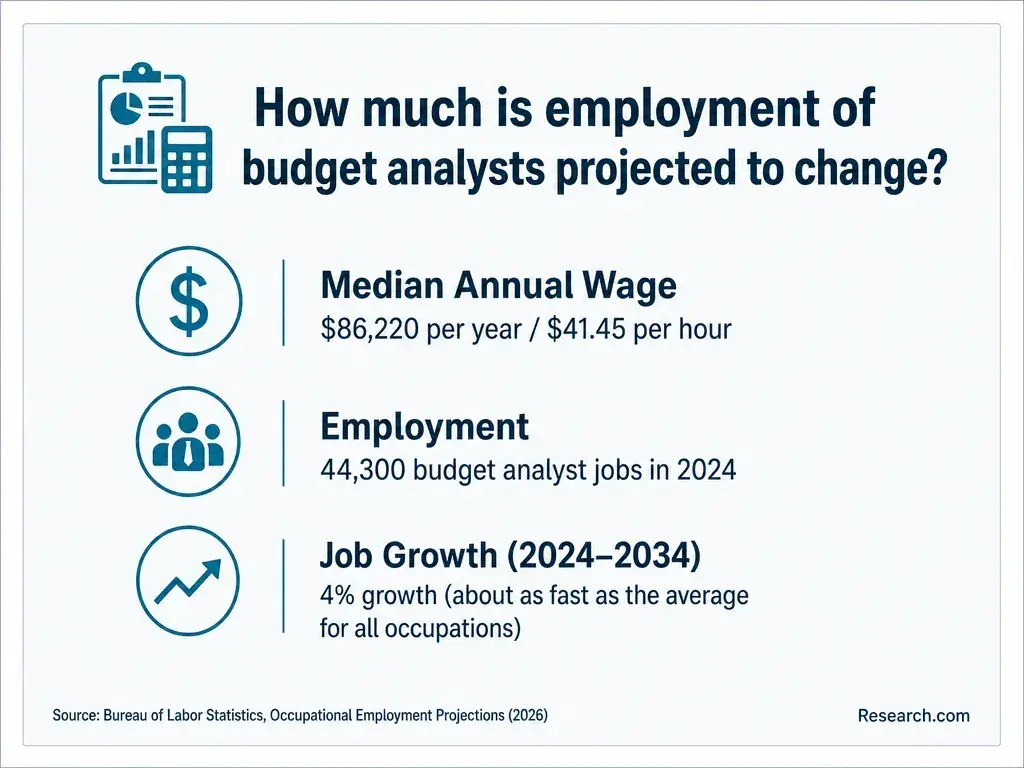
- A business degree is not a compliance credential or a guaranteed job pathway. The Bureau of Labor Statistics reports a May 2025 median wage of $83,680 for accountants and auditors, a related but distinct occupation - not an expected starting salary for compliance graduates.
What Is a BS in Business Administration With Compliance Coursework?
It is a general business bachelor's degree whose core courses, electives, or approved concentration address how an organization follows applicable laws, regulations, contracts, and internal policies. A compliance program is the organization's system for assigning responsibility, communicating standards, detecting problems, responding to them, and improving its controls. Risk management is broader: it also addresses operational, financial, strategic, and other uncertainties.
Check the catalog before treating "compliance" as a concentration. An elective cluster may be useful without appearing on a transcript as a formally awarded concentration. Compare a prospective program's actual required courses and elective access - not just its degree name. If price is a deciding factor, listings of online business administration degrees at lower prices can start a search, but the school's current catalog must establish whether the compliance-relevant courses are available within that price and degree plan.
Which Compliance Topics Should a Business Administration Curriculum Cover?
For broad preparation, the strongest curriculum teaches how obligations become everyday procedures. Students should encounter business ethics and governance; the basics of applicable law; risk identification and prioritization; internal controls; documentation and record retention; reporting and escalation; employee training; monitoring; and responses to identified failures. Privacy, cybersecurity, procurement, employment, and financial-reporting rules may appear as sector-specific examples, but their legal details vary by organization and jurisdiction.
Depth matters more than the number of topics named in a course description. A student who must identify an obligation, assign a control owner, specify evidence, and explain how an exception would be handled has practiced a useful sequence. A student who only memorizes regulatory terms has not. For supplier-heavy roles, compare this general preparation with online supply chain programs balancing cost and completion time; deeper procurement and supplier-management study may be more relevant than a broad compliance elective.
How Does Accreditation Affect a Business Administration Compliance Degree?
First verify the institution's accreditation and whether it covers the institution and location or delivery arrangement you would attend. Separately, check any claimed business-school or programmatic accreditation - such as AACSB, ACBSP, or IACBE - and its stated scope. These are different checks: business accreditation does not mean a program has been certified to prepare compliance officers or to meet a particular employer's requirements.
Accreditation is a starting screen, not evidence that compliance electives run regularly or that graduates obtain compliance jobs. When you compare ranked online business schools in America, use each school's current catalog and accreditation information to confirm the exact BS program. Then ask an adviser for the recent course schedule and examples of assessed work from the relevant classes.
Business law and ethics explain obligations and judgment; accounting and auditing introduce records and controls; operations and information systems show where procedures and data can fail; statistics supports careful interpretation of monitoring results. Organizational behavior and communication matter because a policy works only if people understand and follow it. Project management can help students plan training or corrective action, but it is not a substitute for learning the underlying compliance requirements.
Ask whether these subjects culminate in an applied assignment. A useful, appropriately scoped project might use a hypothetical purchasing process to create a risk register, map approval controls, draft an escalation procedure, and state what evidence would be reviewed. It should identify assumptions and limitations rather than claim a real organization is compliant. If project coordination is the main career goal, cheapest accredited online project management options offer a different curriculum to compare; inspect actual courses and total costs before choosing either route.
They can be, if students receive feedback on realistic decisions rather than only completing quizzes. Look for case analyses, policy writing, control testing with appropriately provided data, and discussion of how to report a concern. Confirm how instructors assess individual contributions to group work and whether students can access relevant electives online.
Online does not necessarily mean self-paced. Check live-session times, group meetings, proctored exams, course rotation, and any internship or campus requirement against your work schedule. You can compare ranked accelerated undergraduate business schools, but a shorter calendar schedule is worthwhile only if the required compliance courses and applied assignments remain feasible at that pace.
Requirements depend on the institution and on whether you enter as a first-year or transfer student. Schools may review prior transcripts, academic standing, and preparation for quantitative coursework; admission to the university and entry into the business major can be separate decisions. A prior course may transfer as credit without satisfying a specific accounting, statistics, or business-core requirement.
Before applying, request the current admission criteria and, if you have college credits, a degree audit showing how they would apply. Ask when prerequisites must be completed and whether the electives you want have their own prerequisites. If you are applying to several schools, options to reduce upfront college application expenses may help, but do not let an application-fee policy outweigh curriculum fit.
A full-time bachelor's path is commonly planned across four academic years; transfer credit, part-time enrollment, prerequisites, and course availability can change the time remaining. Evaluate cost using the courses you still need, not a headline tuition figure. Include mandatory fees, books and software, travel or proctoring, and the effect of changing work hours. A less expensive elective is not a saving if it cannot satisfy a degree requirement.
Request a term-by-term plan and a written estimate based on your evaluated credits. Online business colleges with competitive costs are useful comparison candidates, but confirm each school's current charges and when its compliance-related courses are offered. If you are comparing a project-management degree instead, compare grants for project management undergraduates as part of that separate pathway; aid availability and eligibility must be checked for your own program and circumstances.
Potential starting points include compliance assistant or coordinator, risk or audit support, procurement operations, and administrative roles with policy-documentation duties. The work may involve maintaining records, tracking training, gathering evidence for reviews, or routing concerns to authorized staff. Job titles are inconsistent across industries, so compare vacancy descriptions with the tasks you have practiced rather than assuming that "compliance" in a course title qualifies you for a specialist position.
For employment-policy work, an HR pathway may provide more relevant depth. A transfer student could apply prior credits to an HR bachelor's degree when comparing that route with general business administration; the receiving school determines which credits meet its requirements. For either path, supervised work and well-documented assignments can show more than a concentration label, while responsibility for investigations or major program decisions usually calls for additional experience.
There is no single salary for graduates of a business administration compliance curriculum. Pay depends on the occupation, duties, industry, location, and experience. For a related occupation, the Bureau of Labor Statistics reports that accountants and auditors earned a median annual wage of $83,680 in May 2025 and projects 5% employment growth from 2025 to 2035. Auditors may examine controls, but those figures cover the entire occupation, not new compliance graduates; some accounting and auditing jobs also require more specialized preparation.
For a realistic decision, compare local openings you could qualify for now with the degree's remaining cost and the experience those openings request. Faster completion through short-term classes toward a bachelor's degree could reduce time out of the workforce, but only if the credits apply and the schedule is manageable. Neither an occupational median nor an accelerated format establishes your return on investment.
Which Compliance Certifications Can Business Graduates Pursue?
Certification depends on the type of compliance work. Examples include Certified Compliance & Ethics Professional (CCEP) for corporate compliance and Certified in Healthcare Compliance (CHC) for healthcare settings. Internal audit, privacy, and financial-crime credentials follow different professional tracks. Each certifying organization sets its own examination, experience, education, and continuing-education rules; a BS in Business Administration does not automatically make a graduate eligible.
Choose a target role before paying for a credential. Review the issuer's current eligibility rules, then compare them with your coursework and actual duties. An introductory course or certificate of completion may help you explore the field, but it is not interchangeable with a professional certification or with an employer's required training.
Other Things You Should Know About Business Administration
Not for every role. Entry-level support work may emphasize documentation, communication, and process skills. Jobs requiring legal interpretation may call for attorneys or other specialized professionals.
Usually you can describe work you own and are permitted to share. Label a hypothetical project as hypothetical, and remove employer-confidential information, personal data, and materials you lack permission to disclose.
No. Organizations must train staff on the rules, procedures, and reporting channels relevant to their work. Academic study provides a foundation for understanding that training.
Review entry-level job duties and try an introductory ethics, auditing, or risk course. Notice whether you enjoy documenting processes, checking evidence, explaining requirements, and raising concerns carefully.
- The Compliance Assessment Model | BYUH Compliance & Ethics https://compliance.byuh.edu/the-compliance-assessment-model
- Bachelor of Science in Business Administration | Purdue University Global Academic Catalog https://catalog.purdueglobal.edu/undergraduate/business-information-technology/business-administration-bs/
- How to Become a Compliance Officer - Wake Forest MLS https://mls.law.wfu.edu/articles/how-to-become-a-compliance-officer/
- Compliance Framework and Programs | usc.edu https://oec.usc.edu/ethics-at-usc/compliance-framework-and-programs/
- What Is Business Compliance? Meaning, Types, and Key Benefits | UC News https://www.online.uc.edu/blog/what-is-business-compliance.html
- Compliance, Contracts, and Beyond: Legal Studies for Business Professionals | Drexel University Kline School of Law https://drexel.edu/law/news/legal-studies-blog/compliance-contracts-and-beyond-legal-studies-for-business-professionals/
- Compliance Audits for Businesses: How To Prepare | Insight Assurance https://insightassurance.com/insights/blog/compliance-audits-for-businesses-how-to-prepare/
- What is Regulatory Compliance? Guide | Metricstream https://www.metricstream.com/learn/comprehensive-guide-to-regulatory-compliance.htm
- Compliance Documentation: Importance & Process - Mitti https://mitti.com/topics/compliance-management/compliance-documentation
- Effective Compliance Management Systems | hklaw.com https://www.hklaw.com/en/insights/publications/2026/03/effective-compliance-management-systems