2027 BS in Business Administration and Supply Chain Management and Logistics: Which Prior College Courses Could Count Toward the Focus?
Audited and Verified:
Our Editorial and Data Verification Process
Research.com uses government datasets, official education statistics and primary institutional information to support its career and degree guides. Our review process checks factual accuracy, occupational definitions, source dates and the requirements associated with the credentials discussed.
How This Article Was Fact-Checked
Our editorial team verifies salary estimates, employment projections, education requirements and program information against original data providers and official organizations. Salary figures are checked against the relevant occupational definitions and reporting periods. Information about licensure, accreditation and required in-person training is reviewed separately.
Fact-checked and verified on:

Co-Founder and Chief Data Scientist
A course can transfer to a university without satisfying its supply chain and logistics focus. For students returning to college or moving from another major, that distinction can determine whether a bachelor's degree requires repeated coursework, additional tuition, or another term of study.
This guide identifies the prior courses most likely to be relevant, explains how schools classify them, and shows what to request in a degree audit. Use it to compare programs based on the requirements your credits would actually fulfill, not just the number a school says it will accept.
Key Things You Should Know
- Prior courses in operations, procurement, transportation, inventory, analytics, and related business subjects may count toward a supply chain focus, but only if the receiving school approves the equivalency.
- Accepted credits can apply to general education, the business core, the focus, or free electives. The category matters more than the accepted-credit total when estimating what remains.
- The US Bureau of Labor Statistics reports a May 2025 median annual wage of $82,320 for logisticians and projects 18% employment growth from 2025 to 2035; these occupation-wide figures are not expected earnings for new graduates.
What is a BS in Business Administration with a Supply Chain and Logistics Focus?
It is a business administration bachelor's degree that combines a general business core with study of how organizations source materials, manage inventory, coordinate transportation, and deliver goods or services.
The focus might be an officially designated concentration, a track, or a group of electives. Those labels are not interchangeable: check the catalog to see whether the focus appears on the transcript and which courses it requires.
Compared with a specialized supply chain bachelor's degree, the business administration route may devote more space to accounting, finance, marketing, and management. That breadth can suit someone who wants to keep several operations-related paths open, but it may leave fewer slots for advanced logistics courses.
If working while finishing is essential, compare schedules and workplace expectations alongside the guidance on how to earn a business administration degree while keeping your job.
Which prior college courses can transfer into the supply chain focus?
The strongest candidates have learning outcomes that closely match a required course in the receiving school's catalog. A similarly named course is not enough: a survey of business logistics may not replace an upper-level transportation management course.
The table shows common prior-course categories and where they might fit. It describes possibilities, not guaranteed equivalencies.
| Prior coursework | Possible application | Common limitation |
| Supply chain, logistics, or operations management | Introductory focus course or business core | May lack the depth or prerequisites of an upper-level requirement |
| Procurement, transportation, warehousing, or inventory control | Named focus requirement or approved focus elective | Specific topic and course level must match |
| Statistics, business analytics, or quantitative methods | Statistics or analytics requirement | Spreadsheet-only work may not cover required statistical methods |
| Accounting, economics, information systems, or project management | Business core, prerequisite, or elective | Usually does not replace a specialized logistics course |
| Communication and general education | General education or free elective | May transfer without reducing focus requirements |
Courses from an AA, AS, or AAS, and coursework from a non-business major, can be useful, but applied or technical credits may fit free electives better than upper-level business requirements.
If your previous study points more toward personnel operations than logistics, human resources bachelor's credit transfer options provide a comparison; choose the focus that applies more of your credits to requirements you actually want to study.
How do schools evaluate transfer credit for business and logistics programs?
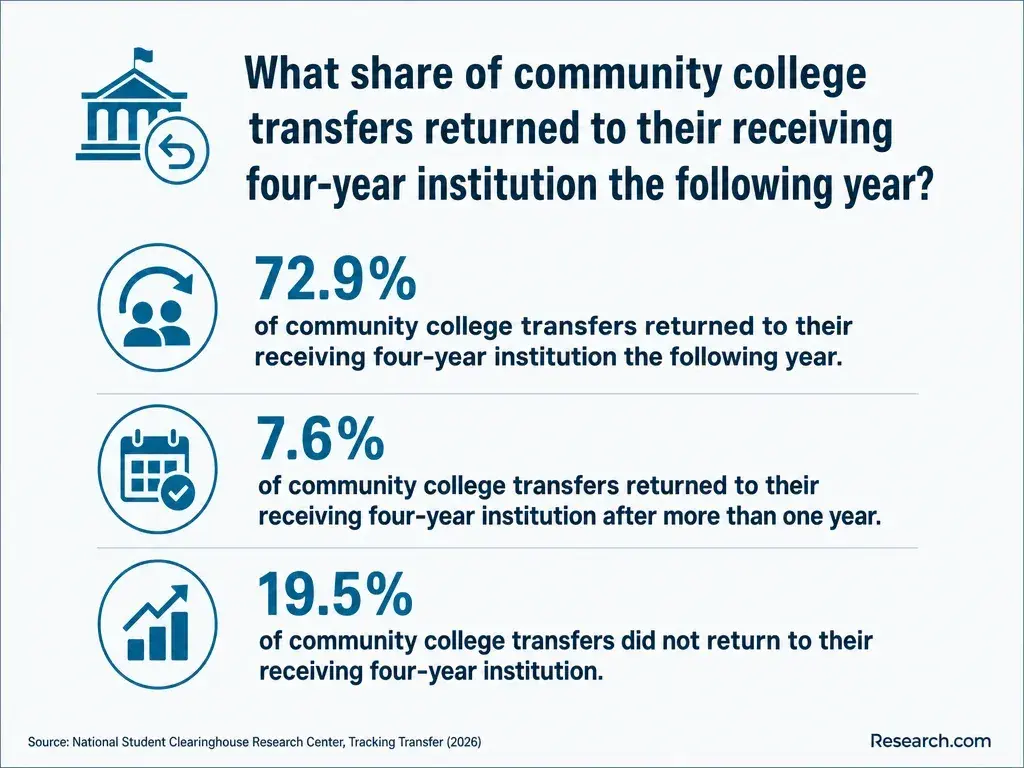
The receiving institution decides what credit to accept, then determines how accepted credit applies to its degree. Its transfer office or registrar may establish a course equivalency, while the business department or adviser may need to approve a substitution within the focus. Admission to the university does not settle either decision.
For a useful evaluation, gather the evidence below and request a degree audit showing both applied and unapplied credits.
- Send official transcripts from every prior college and identify any examination, military, or other assessed learning you want reviewed.
- Provide syllabi for disputed business or logistics courses, including topics, learning outcomes, assignments, and credit hours.
- Ask the transfer office how credits convert, particularly if previous study used quarter hours, and ask the business department who approves focus substitutions.
- Review the audit with an adviser for missing prerequisites, upper-level courses, residency rules, and courses offered only in certain terms; obtain approved exceptions in writing.
A preliminary estimate is not a graduation plan. Two schools may accept the same transcript yet leave different required courses outstanding. This is especially important when comparing fast undergraduate routes into supply chain management: advertised speed cannot establish your individual finish date.
Requirements vary, but a focus commonly builds from operations or supply chain fundamentals toward purchasing, inventory planning, transportation, distribution, and analysis of demand or processes. Some programs add global sourcing, enterprise systems, or a project or capstone. Separately, the business core may require accounting, economics, finance, statistics, and management.
Compare the course sequence, not just the course titles. If statistics precedes forecasting, or introductory operations precedes an advanced logistics course, a transferred elective may not shorten the path through those prerequisites. Ask whether required focus classes run every term and whether an internship or capstone must be completed through the receiving institution.
Prior project management coursework can be relevant to coordinating suppliers and schedules, yet it may remain a business elective rather than satisfy a logistics requirement. If your completed courses and target job are predominantly project-focused, explore economical project management degree programs as an alternative rather than assuming the supply chain focus is the best use of those credits.
Institutional accreditation is an important check on a college's educational standing, but it does not compel another school to accept a course or apply it to a specific requirement. The receiving institution still examines its transfer policies, the course content, and the credential level. Confirm the institution's recognized accreditation status and the policy that will apply to your enrollment term.
AACSB, ACBSP, and IACBE are business-focused accreditors; their coverage depends on the institution and the programs within the accreditor's scope. Do not assume that a school's accreditation claim covers the particular BS or that programmatic accreditation guarantees a transfer equivalency or job outcome.
If accreditation is also a factor in a project-management alternative, compare the exact scope and remaining tuition rather than relying on the word "accredited" alone; accredited project management programs with low tuition are a separate comparison, not evidence that logistics credits will transfer.
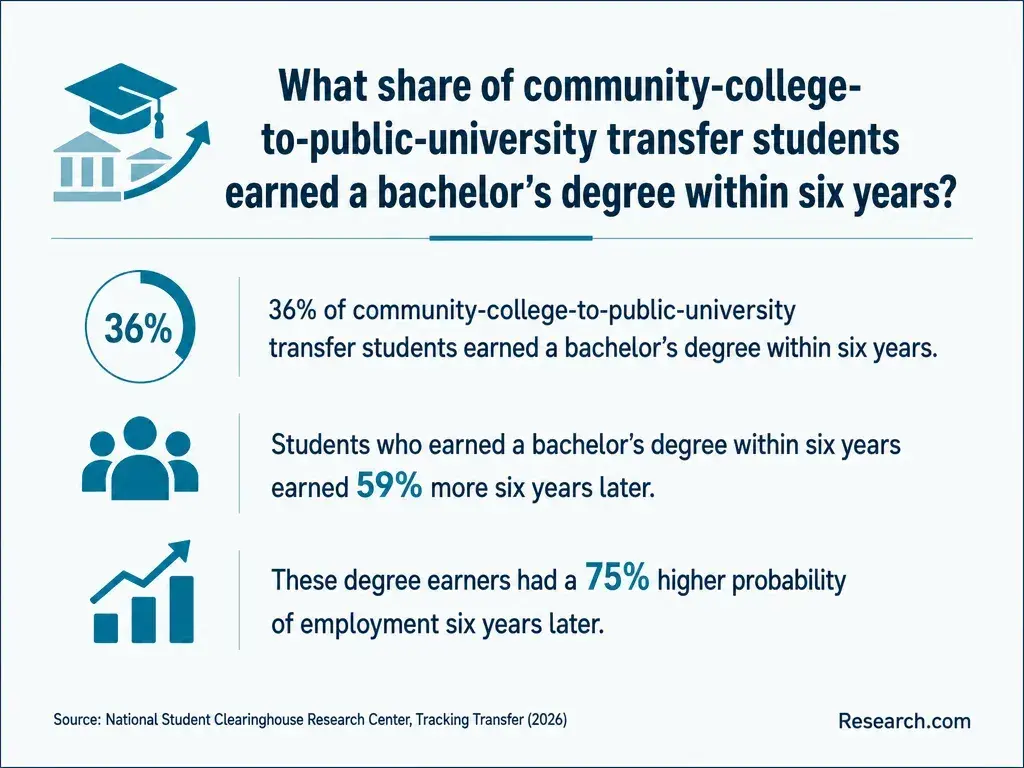
Online enrollment can be compatible with transfer credit, subject to the same receiving-school evaluation and the rules of the specific online program. Verify that the supply chain focus, not merely the general BS, is available online and that its required courses are offered often enough for your planned pace.
Online does not necessarily mean self-paced. Live meetings, group assignments, proctored assessments, internships, or fixed deadlines can affect a working student's schedule. Ask whether transferred prerequisites let you enter the next required course immediately. An accelerated business college program guide can help frame scheduling comparisons, but the official audit and course timetable should control your completion estimate.
Schools may set separate conditions for admission to the university and entry into the business major or focus. Depending on the program, a transfer applicant may need college transcripts, a minimum academic standing, and completion of specified foundational courses. Some requirements can be completed after admission; others may block enrollment in advanced business classes.
Ask admissions which rules apply to your record, then ask the business adviser whether accounting, economics, mathematics, or statistics must be finished before you start focus courses. A prior bachelor's degree, applied associate degree, enrollment gap, or pass/fail grade may be handled differently across institutions. For a broader checklist of business administration admissions eligibility rules, use the receiving school's published requirements as the final authority.
Time and cost depend on required courses remaining, not simply credits accepted. A student whose earlier courses satisfy general education, the business core, and focus prerequisites may have a shorter path than someone with the same accepted-credit total concentrated in free electives. Upper-level requirements, residency rules, and a course offered infrequently can extend the calendar even when few credits remain.
Compare schools using the official audit and a term-by-term plan. Multiply the required remaining credits or terms by the applicable tuition rate, then add mandatory fees, books, technology, and any travel or internship costs.
Check financial-aid eligibility and satisfactory academic progress with each school; do not count an unapproved substitution as a saving. Listings of online business degrees with lower tuition can identify candidates, but a lower advertised rate may not produce the lowest total completion cost for your transcript.
The focus can support applications for logistics coordinator, inventory analyst, purchasing assistant, transportation planner, or related operations roles. The best entry point depends on prior work, software and spreadsheet skills, industry knowledge, and whether you can show relevant projects or internships. Purchasing authority and management responsibility generally require demonstrated experience beyond coursework.
For a closely related occupation, the US Bureau of Labor Statistics reports a May 2025 median annual wage of $82,320 for logisticians and projects 18% US employment growth from 2025 to 2035.
The median covers workers across experience levels; it is not a starting salary or an outcome specific to this degree. When weighing potential return, compare local openings and your likely first role with the remaining education cost. Information on supply chain education costs and career prospects can support that comparison, but it cannot replace a personalized audit or job search.
Which supply chain certifications complement this bachelor's degree?
Voluntary credentials can signal more targeted knowledge after degree study. ASCM's APICS-branded CPIM centers on planning and inventory management, while CSCP addresses broader supply chain coordination. ISM's CPSM focuses on supply management and procurement.
They are separate credentials, not automatic awards for completing a concentration; check each organization's current eligibility, examination, experience, and renewal rules before paying.
Choose a credential for a defined skill gap and target role. Inventory-focused work may make CPIM more relevant, while a purchasing path may favor CPSM. If your goal is instead project coordination, compare that route with the degree and its financing options.
FAFSA-based aid for online project management undergraduates concerns eligible degree enrollment, not automatic financial aid for a standalone supply chain certification.
Other Things You Should Know About Business Administration Programs
Possibly, if the school offers prior-learning assessment and approves your documented experience against that requirement. Employment alone does not award credit.
Not necessarily. Ask the registrar whether the designated focus appears on the diploma, transcript, both, or neither.
Usually subject to school policy. Request a new audit first: credits that apply to one focus may become electives under another.
Ask for its appeal or substitution process and submit the syllabus and assessed work if permitted. The receiving school has final authority over the decision.
- Military Training Evaluation Program (MTEP) | dantes.mil https://www.dantes.mil/credit4training/
- .14 Evaluation and Review Process for Transfer of Courses and Credits. | Library of Maryland Regulations https://regs.maryland.gov/us/md/exec/comar/13B.06.02.14
- How Do Transfer Credits Work When You Go Back to School? | Whitworth Online https://online.whitworth.edu/news-articles/how-do-transfer-credits-work-when-you-go-back-to-school/
- Transfer credit policies - Office of Admissions https://admit.washington.edu/apply/transfer/policies/
- College Credit Opportunities at City Colleges of Chicago - CCC https://colleges.ccc.edu/cpl/
- Equivalencies, Substitutions and Waivers | Maverick OneStop Service Portal https://services.mnsu.edu/TDClient/30/Portal/KB/Article/1478/Understanding-the-Differences-between-Equivalencies-Substitutions-and-Waivers
- Supply Chain Management | Stillman College https://catalog.stillman.edu/supply-chain-management
- How Transfer Credits Work | Lackawanna College https://www.lackawanna.edu/college-transfer-credits-guide/
- Supply Chain Management - Lehigh Catalog https://catalog.lehigh.edu/coursesprogramsandcurricula/businessandeconomics/supplychainmanagement/
- Program: Business Administration, General Option, B.S. | csusm.edu https://catalog.csusm.edu/preview_program.php