2027 Best Stackable Credentials With Generous Transfer Credit Policies

Co-Founder and Chief Data Scientist
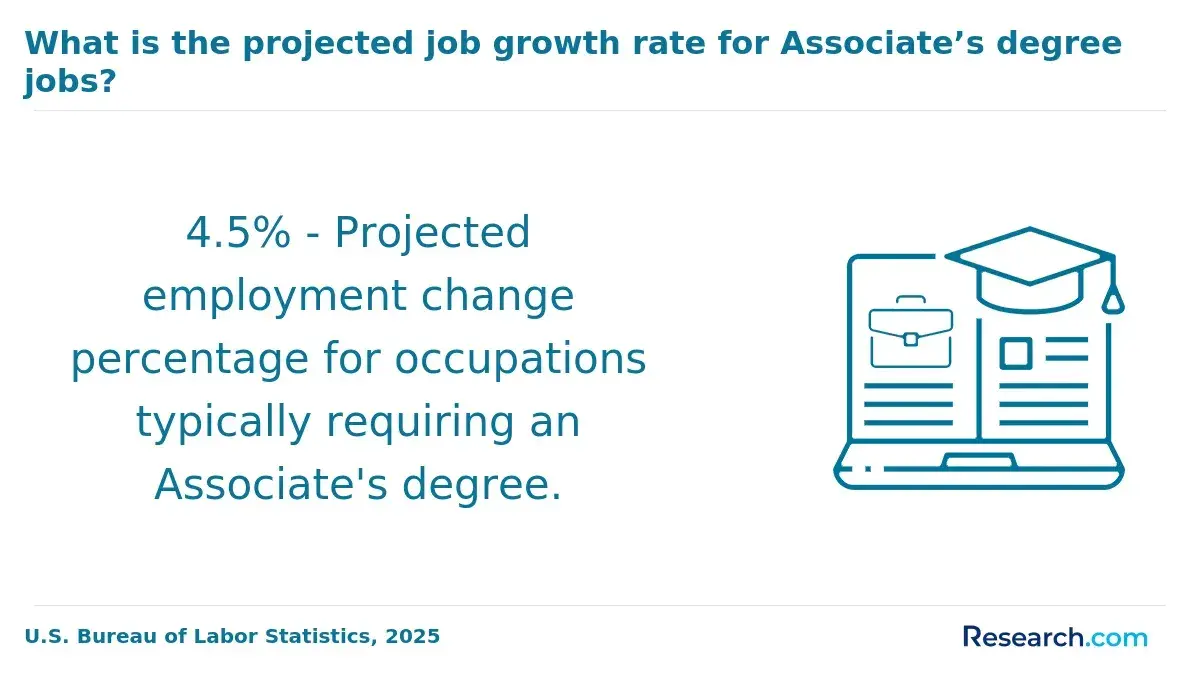
Choosing a short credential is risky when its courses may not count toward your next program. Stackable credentials solve that problem by letting learners apply earned credit from a certificate toward an associate or bachelor's degree. This matters in fields facing changing skill needs: U.S. Bureau of Labor Statistics projections for 2024-2034 show healthcare occupations are expected to grow faster than the average for all occupations.
This guide helps career changers, working adults, and recent graduates compare pathways, verify transfer rules, control costs, and select credentials that preserve future options.
Key Things You Should Know
- Choose credit-bearing certificates with a written pathway showing exactly which courses apply to the next credential; "transfer-friendly" does not mean every credit will transfer.
- Community colleges and institution-owned online programs often provide the clearest stack from a 12-30-credit certificate to an associate degree, while industry certifications can strengthen employability but usually do not carry college credit.
- Compare the full path, not the first certificate price: a 60-credit associate degree can be a better value when it includes the technical courses, general education, licensure preparation, and employer-recognized credential your target role requires.
Top 10 Best Stackable Credentials With Generous Transfer Credit Policies
Popular Trade School Programs
Trade pathways often begin with a certificate in welding, HVAC, electrical technology, industrial maintenance, plumbing, or automotive service and build toward an associate degree in applied science. The strongest stacks use the same technical courses at each level and include required lab hours. Apprenticeships can be a better fit for electrical or plumbing careers because paid supervised work is often central to licensing. Before enrolling, confirm whether the program prepares you for a state license, EPA Section 608 examination, or a manufacturer credential; a school certificate alone may not satisfy those requirements.
Healthcare Programs
Common healthcare stacks move from nursing assistant, medical assisting, phlebotomy, practical nursing, or health information certificates into an associate degree. Credit transfer is especially important because clinical courses, prerequisites, background checks, immunizations, and licensing rules can add time and cost. A certificate may prepare a learner for a separate certification examination, but it is not the certification itself. For nursing and allied health, confirm program approval, clinical placement availability, and whether credits meet the receiving program's science-course and grade requirements before assuming a certificate will advance into registered nursing or another licensed role.
Criminal Justice / Law Programs
Criminal justice certificates commonly stack into associate degrees covering policing, corrections, security management, emergency management, or forensic studies. Paralegal and legal studies certificates may also lead into associate programs, but employers and professional associations can prefer education from a recognized institution. Transfer is easiest when legal research, writing, ethics, and introductory criminal justice courses have matching course numbers and learning outcomes. A credential does not automatically qualify someone as a police officer, paralegal, or investigator; agencies and employers may require background screening, physical standards, training academies, or additional education.
Arts & Design Programs
Graphic design, digital media, web design, photography, animation, and UX-related certificates can stack into associate degrees when foundational software, portfolio, and design-history courses carry academic credit. For creative careers, a portfolio often matters as much as the credential, so assess whether projects can be retained and presented to employers. A short noncredit bootcamp can teach tools quickly but may not transfer into a degree. Choose a credit-bearing certificate when you want academic progression; choose focused career training only when the provider's employer connections and curriculum directly match the software and work samples you need.
What are stackable credentials and how do generous transfer credit policies work?
A stackable credential is a planned sequence of credentials in which coursework completed at one level applies to a later credential. For example, a student may earn a 16-credit IT support certificate, apply those credits to a 30-credit networking certificate, and then apply both toward a 60-credit associate degree. The key is not simply earning multiple badges; it is avoiding repeated coursework.
Generous transfer credit policies generally mean a school accepts more eligible prior coursework, recognizes certain standardized examinations or prior learning, and publishes clear limits and equivalencies. They do not mean automatic acceptance. Transfer decisions commonly depend on course content, grade earned, age of technical coursework, residency requirements, program capacity, and whether the receiving program has licensure standards.
The distinction between a certificate and a certification matters. A college certificate is an educational award for completing a defined course sequence. A professional certification is issued by a certifying body after its eligibility and examination requirements are met. Some certificate programs prepare students for certification examinations, but neither outcome should be assumed without confirmation.
How do accreditation and institutional quality affect stackable credential transferability?
Accreditation affects whether credits are likely to be accepted, but it is not a blanket transfer guarantee. Institutionally accredited colleges typically evaluate coursework from other recognized institutions using official transcripts, course descriptions, grades, and program rules. In regulated fields, programmatic approval or accreditation may be equally important because receiving schools and licensing boards can require it for clinical, technical, or professional coursework.
Start by verifying the school's recognition status and then review the receiving school's written policy. Students comparing distance-learning options can use this overview of online universities that are accredited as one starting point, then confirm the exact program and transfer pathway directly with each institution.
Be cautious with providers that promise "fully transferable" credits without naming destination institutions or articulation agreements. Noncredit workforce training, employer badges, and many third-party certificates can be valuable for skills, yet may receive no academic transfer credit. Their return depends more on employer recognition than on degree progression.
Which online and campus program formats best support stackable learning pathways?
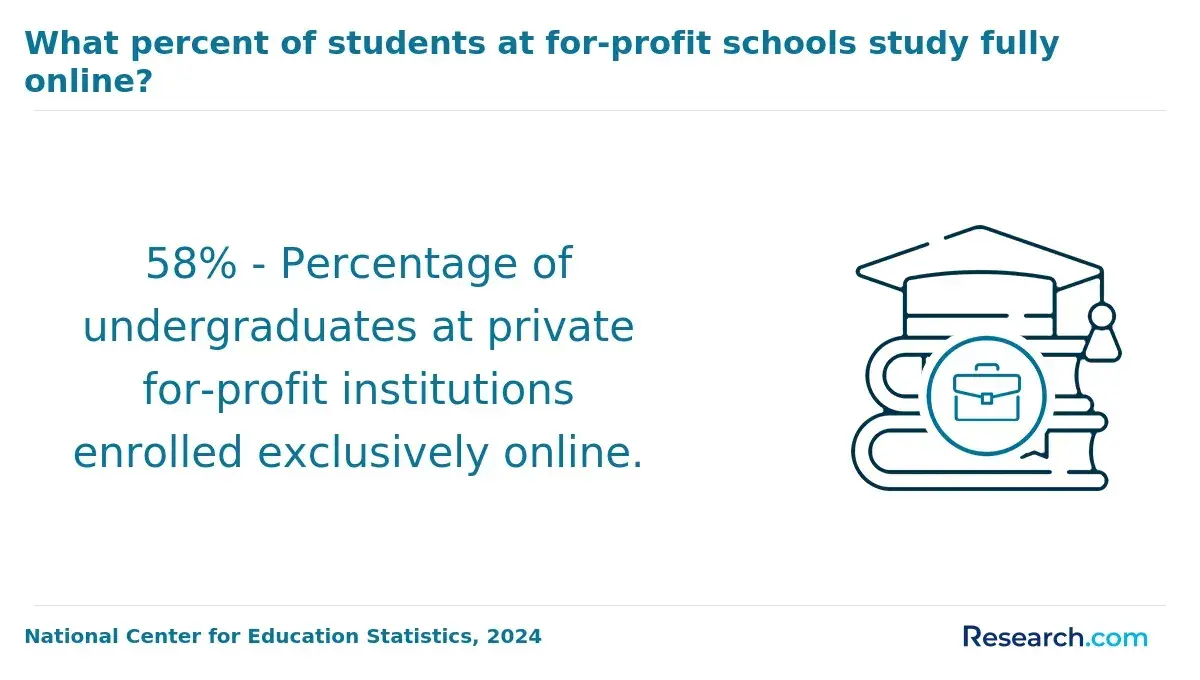
The best format depends on whether the program requires hands-on practice, clinical experience, proctored assessment, or a flexible schedule. Fully online formats work well for many business, IT, criminal justice, and general education courses. Campus or hybrid delivery is often necessary for trades, laboratory science, healthcare clinicals, and equipment-intensive training.
This comparison shows how format can affect a stackable pathway.
| Format | Best fit | Transfer-strength consideration | Trade-off |
| Fully online | Theory-based and general education courses | Check whether online sections use the same course number and credits as campus sections | Requires reliable time management and may not provide hands-on practice |
| Hybrid | Working learners needing labs or scheduled skill practice | Often combines credit-bearing online instruction with documented practical competencies | Requires travel on set dates |
| Campus-based | Clinical, trade, laboratory, and studio programs | May align most directly with equipment hours and program sequencing | Usually offers less scheduling flexibility |
For learners seeking flexibility without sacrificing institutional oversight, compare delivery requirements rather than assuming all online programs are equivalent. Course modality should be listed on the transcript or catalog in a way that the next program can evaluate.
What admission requirements and prior learning assessments apply to stackable credential programs?
Admission rules vary by credential level and provider. Entry-level college certificates may require a high school diploma or equivalent and placement evaluation, while selective healthcare, nursing, and advanced technical programs can require prerequisite courses, minimum grades, entrance testing, background checks, or proof of immunizations. Graduate certificates normally require a bachelor's degree, and industry certifications may require work experience or an examination instead of college admission.
Prior learning assessment can reduce duplicate coursework, but students should obtain a written evaluation before paying for classes. Common options include:
- Transfer credit from an official college transcript, evaluated course by course.
- Credit by examination, such as institutionally accepted standardized exams.
- Military training evaluation when the college accepts documented training recommendations.
- Portfolio or competency assessment for verifiable workplace learning, where offered.
Ask whether awarded credit applies only as elective credit or fulfills a required course in the intended degree. Elective credit can help meet graduation totals but may not shorten the technical sequence that determines completion time.
How long do stackable credential programs take, and what are typical tuition and fees?
Short credit certificates often take one or two terms when studied full time, while a 60-credit associate degree commonly takes about two academic years of full-time enrollment. Part-time study, prerequisite sequences, limited clinical seats, and courses offered only once each year can extend the calendar. A properly designed stack can let students earn an employable milestone first while continuing toward a degree.
Tuition varies substantially by institution and residency, so compare mandatory costs rather than relying on advertised tuition alone. The following categories determine the realistic price of a pathway.
| Cost factor | Why it changes the total | What to verify |
| Tuition per credit | Credit-bearing certificates and degrees are often priced by credit hour | Resident, nonresident, online, and program-specific rates |
| Required fees | Technology, lab, clinical, graduation, and testing fees may not appear in base tuition | Mandatory fee schedule for every term |
| Equipment and supplies | Tools, uniforms, software, books, and protective equipment can be substantial in technical programs | Program supply list and replacement costs |
| Licensure or certification expenses | Examinations, background checks, and applications may be separate from instruction | Whether fees are included and whether the program meets eligibility rules |
Federal aid eligibility generally depends on the institution, program length, and enrollment status; many very short or noncredit programs do not qualify. Compare certificates with short degrees that pay well when deciding whether a longer credit-bearing route has a stronger payoff for your intended occupation.
What curriculum structures and coursework make credentials easy to stack toward degrees?
Credentials stack most cleanly when a college deliberately maps course progression. Look for a published curriculum that identifies which certificate courses satisfy associate-degree requirements, how general education fits into the plan, and whether the program awards an interim credential automatically or by separate application.
Strong curriculum designs usually include these features:
- A shared core of introductory courses that appears in both the certificate and degree plan.
- Clearly sequenced prerequisites so students do not repeat math, writing, science, or technical foundations.
- Academic credit attached to technical learning rather than only attendance or completion badges.
- Documented learning outcomes that another institution can compare during transfer review.
- Advising checkpoints before students move from one credential level to the next.
A red flag is a "ladder" made of separate programs whose credits are merely similar, not formally applicable. Request a degree audit or sample academic plan showing the certificate courses already completed and the remaining credits needed for the next award.
Which careers, job roles, and industries most benefit from stackable credentials?
Stackable pathways are most useful where employers hire at multiple skill levels and workers can progress while employed. They are especially practical in information technology, healthcare support, nursing, skilled trades, business operations, logistics, cybersecurity, criminal justice support, and digital design. The right first credential can support an entry-level job while the learner completes the next stage.
This comparison helps match the initial credential to a realistic career objective.
| Career area | Potential first stack | Common next step | Important limitation |
| Information technology | IT support or networking certificate | Associate degree, vendor certification, or cybersecurity specialization | Employers may still expect a portfolio, practical experience, or certification |
| Healthcare | Support-role certificate | Allied health or nursing associate degree | Licensure and clinical eligibility are governed by program and state rules |
| Skilled trades | Technical certificate | Advanced certificate, apprenticeship, or applied associate degree | Licensing and supervised-hours rules vary by occupation and state |
| Business | Office, bookkeeping, or operations certificate | Business administration associate degree | Job advancement often depends on experience and software proficiency |
Students whose sole objective is rapid employment should prioritize local employer demand, required licenses, and work-based learning. Students who expect to pursue management, advanced clinical practice, or broad career mobility should protect degree transfer options from the first term.
What salary ranges and job outlook can students expect after completing stackable credentials?
Occupational wage data describes workers in an occupation, not what a certificate graduate will earn. Pay depends on location, experience, employer, shift, union coverage, licensing, and the education level required for the job. Still, it helps learners test whether a pathway leads toward roles with sustainable demand.
Recent U.S. Bureau of Labor Statistics wage data illustrates the range across fields commonly connected to stackable learning.
| Occupation | 2024 U.S. median annual wage | Credential context |
| Electricians | $62,350 | Typically requires apprenticeship training and often state licensure; a certificate may support entry preparation. |
| Registered nurses | $93,600 | Requires an approved nursing education program and licensure; a short certificate alone is not sufficient. |
| Paralegals and legal assistants | $61,010 | Education expectations vary; an associate degree or certificate may be relevant depending on the employer. |
| Graphic designers | $61,300 | Portfolio quality and technical ability are important alongside formal education. |
Use wage figures as an occupational benchmark, then check local postings for required education and credentials. Learners comparing longer academic routes may also review most profitable college majors to see when completing a bachelor's degree could better fit their long-term target.
How can students compare schools and choose reputable stackable credential programs?
The best stackable program is not necessarily the shortest or cheapest first credential. It is the one with a documented next step, credible instruction, and a cost that remains reasonable across the full pathway. Compare schools using the same target credential and occupation so marketing claims do not obscure differences in transferability.
Before applying, complete these checks:
- Identify the exact entry job, next credential, and eventual degree or license you want.
- Obtain the current catalog pathway and confirm in writing how each certificate course applies to the next award.
- Ask for the maximum transfer-credit limit, minimum transferable grade, course-age rule, and residency requirement.
- Verify institutional recognition and, when relevant, program approval, clinical eligibility, or licensure alignment.
- Calculate tuition, fees, tools, exams, transportation, and lost work time across the entire sequence.
- Ask whether credits transfer as required courses rather than only electives, and retain all syllabi and transcripts.
Common mistakes include enrolling in noncredit training when a degree pathway is the goal, assuming a school's accreditation compels another college to accept credits, and comparing only tuition while ignoring required supplies or delayed prerequisites. Application cost can also matter when comparing several institutions; consider colleges with no application fee if you need to apply broadly while controlling upfront expenses.
Other Things You Should Know About
No. Stackability is strongest within the same institution or a formal articulation agreement. Another college may evaluate credits differently based on course equivalency, grades, credit limits, and program requirements.
A stackable certificate is usually better for learners who may want an associate or bachelor's degree later. A standalone certificate can make sense when it directly meets an employer need and academic transfer is not a priority.
Possibly. Eligibility depends on the school, whether the program is credit-bearing and aid-eligible, its length, and your enrollment status. Confirm aid eligibility with the institution before enrolling.
Request a current program map or degree audit in writing. It should show the certificate courses, the receiving degree requirements they satisfy, and the credits you would still need to complete.
References
- Making sure you're not a bot! https://www.iastatedigitalpress.com/jtmae/article/id/14484/
- Top Online Schools That Accept Transfer Credits https://www.edvisorly.com/student-guides/online-schools-that-accept-transfer-credits
- Best Online Universities With Generous Transfer Credit Policies https://www.collegetransitions.com/blog/best-online-universities-with-generous-transfer-credit-policies/
- Stackable Credentials in Career Education at California Community Colleges https://www.ppic.org/publication/stackable-credentials-in-career-education-at-california-community-colleges/
- What Are Stackable Credentials and Why Do They Matter? https://www.pltw.org/blog/what-are-stackable-credentials
- 5 Common Challenges in Credit Transfer Evaluation (And How to Solve Them) https://www.stellic.com/resources/transfer-credit-evaluation
- C-RAC Issues Joint Statement on ACE Transfer of Credit Recommendations https://www.c-rac.org/post/c-rac-issues-joint-statement-on-ace-transfer-of-credit-recommendations
- What is 'reverse transfer' and a 'stackable credential'? - Utah System of Higher Education https://ushe.edu/what-is-reverse-transfer-and-a-stackable-credential/
- Stackable Credentials | Learn & Work Ecosystem Library https://learnworkecosystemlibrary.com/topics/stackable-credentials/
- Stackable Credentials: Living Links Between Learning and Work https://www.cael.org/resouces/pathways-blog/stackable-credentials-living-links-between-learning-and-work