2027 Best Online Speech Pathology Degrees for Jobs

Co-Founder and Chief Data Scientist

Reviewed by Rhea Paul, PhD
SLP Education & Research Expert
The main question for prospective speech-language pathology students is not whether an online degree can be legitimate; it is whether a specific online program will lead to licensure eligibility, supervised clinical training, manageable debt, and real career mobility. In this field, the wrong choice can delay certification, limit transfer options, or leave graduates underprepared for clinical practice.
Quality varies widely among online speech pathology programs. Accreditation, practicum placement support, faculty expertise, curriculum depth, and total program cost matter more than convenience alone. Graduates of accredited programs enjoy a 20% higher employment rate within one year compared to non-accredited counterparts, which makes program vetting especially important for students planning to work in schools, hospitals, rehabilitation centers, private practice, or research settings.
This guide explains how online speech pathology degrees work, how they compare with campus programs, what accreditation to verify, what degree level fits each career goal, and how to evaluate cost, admissions, curriculum, salary outlook, and return on investment. It is designed for working adults, recent graduates, career changers, military-affiliated students, and anyone trying to choose a credible path into communication sciences and disorders.
Key Things to Know About the Best Online Speech Pathology Degrees for Jobs
- Top online speech pathology degrees meet rigorous accreditation standards-such as from the Council on Academic Accreditation-ensuring graduates are eligible for professional certification and licensure nationwide.
- Programs with demanding curricula integrate evidence-based practice and interdisciplinary coursework, preparing students to handle diverse clinical populations and complex communication disorders.
- Cost must be balanced against career outcomes-graduates report median starting salaries near $75,000-making return on investment a critical factor when selecting online speech pathology degrees.
What Is a Speech Pathology Degree, and What Can It Do for Your Career?
A speech pathology degree prepares students to understand, assess, and support people with communication and swallowing disorders across the lifespan. The field includes speech sound production, language development, fluency, voice, cognitive-communication, social communication, and swallowing. It is related to audiology, education, psychology, and healthcare, but it has its own training standards, clinical competencies, and credentialing pathway.
At the graduate level, speech pathology education is typically designed to prepare students for supervised clinical work and, when all requirements are met, eligibility for state licensure and professional certification. At the undergraduate level, the degree usually builds the academic foundation for graduate study or support roles rather than independent clinical practice.
- Foundational science: Students study anatomy and physiology, hearing and speech mechanisms, linguistics, language acquisition, neuroscience, and communication disorders.
- Assessment and diagnosis: Coursework introduces screening tools, evaluation methods, documentation, differential diagnosis, and ethical decision-making.
- Intervention planning: Programs teach evidence-based therapy approaches, goal setting, family counseling, progress monitoring, and collaboration with schools or healthcare teams.
- Clinical readiness: Quality programs connect classroom learning to supervised observation, simulation, practicum, or direct client contact, depending on degree level.
- Career mobility: Graduates may work in schools, hospitals, outpatient clinics, skilled nursing facilities, rehabilitation centers, early intervention programs, research settings, or private practice, depending on education and credentials.
The degree level matters. An associate degree may support entry into assistant or paraprofessional roles. A bachelor’s degree can prepare students for graduate admission or related human services roles. A master’s degree is generally the standard clinical credential for becoming a speech-language pathologist. A doctoral degree is most relevant for advanced research, university teaching, leadership, or highly specialized practice.
Because speech pathology is a regulated profession, students should treat program selection as a licensing and career decision, not simply an academic purchase. Comparing quality indicators across healthcare programs can also sharpen your evaluation process; for example, readers considering adjacent clinical pathways may find it useful to compare how standards are presented in online PharmD programs.
How Do Online Speech Pathology Degree Programs Compare to Traditional Campus Programs?
Accredited online speech pathology programs can be academically comparable to campus programs when they meet the same accreditation standards, require equivalent clinical preparation, and provide reliable faculty and placement support. The format is different; the professional expectations should not be.
The biggest distinction is how students access instruction, faculty, peers, and clinical experiences. Campus programs offer in-person labs, spontaneous faculty access, and local placement networks. Online programs offer flexibility, broader geographic access, and the ability to continue working, but they require stronger self-management and careful planning for practicum requirements.
| Factor | Online Speech Pathology Programs | Traditional Campus Programs |
| Course delivery | Usually delivered through asynchronous lessons, live sessions, discussion boards, virtual simulations, and digital assessments. | Usually delivered through in-person lectures, labs, seminars, and faculty-led activities on campus. |
| Curriculum rigor | Accredited programs are expected to cover the same core knowledge and competencies as campus-based options. | Accredited programs follow the same professional standards and may offer more in-person lab exposure. |
| Faculty interaction | Occurs through video meetings, virtual office hours, feedback tools, and scheduled advising. | Occurs through classroom contact, office hours, labs, and campus-based mentoring. |
| Peer connection | Often structured through cohort models, group projects, online forums, and residency experiences. | Often easier to build informally through daily campus presence and shared clinical activities. |
| Clinical training | May require local placements, approved supervisors, telepractice preparation, or short campus residencies. | Often uses university clinics, nearby partner sites, and established regional placement networks. |
| Best fit | Working adults, caregivers, military-affiliated students, rural learners, and students who need schedule flexibility. | Students who want frequent in-person contact, campus life, or direct access to university clinical facilities. |
Employers generally focus less on whether the coursework was online and more on whether the program was accredited, whether clinical training was rigorous, and whether the graduate can meet licensure and workplace expectations. A weak online program can create problems, but so can a weak campus program. The delivery format is only one factor.
Students comparing an RN BSN pathway with speech pathology programs should use the same basic test: verify accreditation, confirm clinical or practicum logistics, review student outcomes, and calculate the full cost before enrolling.
The practical takeaway is straightforward: an online speech pathology program can be a strong choice if it is properly accredited, transparent about placements, staffed by qualified faculty, and realistic about the time required for clinical preparation.
What Are the Accreditation Standards That Define a Reputable Online Speech Pathology Degree?
A reputable online speech pathology degree should be offered by an institution with recognized institutional accreditation and, when applicable to clinical graduate preparation, programmatic accreditation from the Council on Academic Accreditation in Audiology and Speech-Language Pathology (CAA). Accreditation is not a formality in this field. It affects financial aid, transfer credit, graduate admission, licensure eligibility, certification pathways, and employer confidence.
- Regional Accreditation: Regional accreditation is awarded by one of six regional bodies recognized by the U.S. Department of Education and the Council for Higher Education Accreditation (CHEA). Examples include the Middle States Commission on Higher Education (MSCHE) and the Higher Learning Commission (HLC). This accreditation applies to the institution as a whole and is often required for federal financial aid, credit transfer, and admission into later degree programs.
- Programmatic Accreditation: The Council on Academic Accreditation in Audiology and Speech-Language Pathology (CAA), which is connected to the American Speech-Language-Hearing Association (ASHA), is the key specialized accreditor for speech-language pathology graduate programs. CAA accreditation indicates that a program has been reviewed against professional standards for curriculum, clinical education, faculty qualifications, resources, and student outcomes.
Students should be especially cautious with programs that use vague language such as “aligned with professional standards” without clearly stating accreditation status. Alignment is not the same as accreditation. A program may offer communication sciences coursework but still not meet the requirements needed for licensure or certification.
How to verify accreditation before applying
- Check the institution’s accreditation through the U.S. Department of Education’s Database of Accredited Postsecondary Institutions and Programs or the CHEA directory.
- Confirm whether the speech-language pathology program itself has CAA accreditation when the degree is intended to lead to clinical practice.
- Ask the program to explain how its curriculum and supervised clinical experiences support licensure eligibility in your state.
- Contact your state licensing board if you plan to practice in a specific state after graduation.
- Save written confirmation from the school about accreditation, clinical requirements, and licensure preparation.
Enrolling in a program without proper accreditation can create expensive consequences. Credits may not transfer. Graduate schools may not recognize prior coursework. State licensing boards may reject the degree. Employers may question the credential. Lower tuition or faster completion is rarely worth those risks.
- : "Navigating the accreditation landscape felt daunting at first, especially confirming that my program was accredited by the CAA. I remember feeling uncertain whether my credits would hold up for licensure and employment. Once I verified the program’s credentials through official databases, I felt a lot more confident. The reassurance that my clinical training met national standards was crucial; it made all the difference in pursuing my career goals."
Which Types of Speech Pathology Degrees Are Available Online-Bachelor's, Master's, or Doctoral?
Online speech pathology and communication sciences programs are available at several academic levels, but each level serves a different purpose. Students should choose the degree based on the role they want, not simply on the shortest or least expensive option.
| Degree Type | Typical Student | Common Purpose | Important Limitation |
| Associate’s degree | Students beginning college or seeking a lower-cost entry point. | Builds introductory knowledge and may support assistant or support roles. | Does not usually qualify graduates for independent clinical practice. |
| Bachelor’s degree or bachelor’s completion program | Students preparing for graduate school or completing prior college credits. | Provides foundational coursework in communication sciences and disorders. | A master’s degree is usually needed for speech-language pathologist licensure. |
| Post-baccalaureate certificate | Career changers with a bachelor’s degree in another field. | Completes prerequisite coursework for master’s admission. | It is usually a bridge credential, not a final clinical credential. |
| Master’s degree | Students seeking clinical speech-language pathologist preparation. | Provides advanced coursework and supervised clinical training for licensure pathways. | Admission is competitive and clinical placement requirements can be intensive. |
| Doctoral degree | Experienced clinicians or researchers seeking advanced leadership. | Supports research, academia, administration, or advanced clinical specialization. | Requires a major time commitment and is not necessary for most entry-level clinical roles. |
Associate’s degrees typically require a high school diploma and take around two years. They can help students explore the field and reduce early college costs, but they generally provide limited clinical preparation.
Bachelor’s completion programs are often designed for students with previous college credits or an associate degree. They may take about two years after transfer, depending on accepted credits and prerequisite needs. A bachelor’s degree is commonly the stepping stone to graduate study.
Master’s degrees are the central credential for students who want to become licensed speech-language pathologists. These programs usually require a bachelor’s degree, prerequisite coursework, academic references, and clinical readiness. They typically take two to three years and combine advanced theory with supervised practical clinical experience.
Doctoral degrees are designed for professionals who want to lead research, teach at the university level, manage programs, or pursue advanced specialization. They typically require a master’s degree and span three to five years, depending on the structure and research expectations.
Post-baccalaureate certificates can be useful for career changers who did not major in communication sciences and disorders. These programs usually focus on prerequisite courses such as phonetics, speech and hearing science, language development, and anatomy. Students should confirm whether certificate credits are accepted by the master’s programs they plan to apply to.
IPEDS data reveal associate degrees average two years to complete, bachelor’s programs three to four years with variable completion rates, master’s degrees two to three years with higher finish rates due to structured clinical demands, and doctoral degrees extend longer with lower enrollment but appeal to professionals aiming for leadership.
Students comparing healthcare education pathways may also want to review how tuition, aid, and credential requirements are presented in resources such as best online medical billing and coding schools.
What Is the Typical Cost of an Online Speech Pathology Degree, and How Can You Finance It?
The cost of an online speech pathology degree depends on degree level, public or private status, residency rules, credit requirements, fees, clinical placement expenses, and whether the program requires travel for labs or residencies. Students should compare total program cost, not just tuition per credit.
Public universities typically offer the most affordable rates for in-state students, ranging from $6,000 to $15,000 annually. Out-of-state students attending public universities can expect to pay between $15,000 and $30,000 per year. Private nonprofit schools usually have higher tuition, generally between $25,000 and $45,000. For-profit institutions often fall within a similar or slightly elevated cost range. Additional expenses can include technology fees, textbooks, background checks, immunizations, clinical compliance documentation, software, and occasional travel for campus intensives or practicum requirements.
Costs to include in your budget
- Tuition: Calculate the full number of credits required, including prerequisites or leveling courses if needed.
- University fees: Online learning fees, student service fees, graduation fees, and clinical education fees can materially affect total cost.
- Clinical expenses: Students may need background checks, health screenings, liability insurance, transportation, or temporary lodging for placements.
- Residency travel: Some online programs require short in-person intensives, labs, or orientation sessions.
- Lost income: Working adults should consider whether practicum hours will reduce paid work hours.
Common financing options
- Federal Financial Aid: Eligible students may use federal aid, including Pell Grants where applicable and subsidized or unsubsidized federal student loans. Subsidized loans can reduce interest costs while enrolled.
- GI Bill benefits: Veterans and active service members may be able to use GI Bill benefits to offset tuition and fees.
- Scholarships: Speech pathology students may find awards through professional organizations such as the American Speech-Language-Hearing Association, state workforce initiatives, and institutional scholarship programs.
- Employer tuition support: Some schools, healthcare employers, and rehabilitation providers offer reimbursement or tuition assistance, especially when a degree supports staffing needs.
- Net price tools: The U.S. Department of Education’s College Scorecard and institutional net price calculators can help estimate likely out-of-pocket cost after aid.
Students looking for ways to reduce debt should compare accredited programs, assistantships, grants, employer benefits, and scholarship options rather than assuming the lowest advertised tuition is the best deal; some may also research fully funded slp programs online when evaluating affordability strategies.
- : "Figuring out the full expense took time. Beyond tuition, things like software fees and occasional travel for clinical practice added up. Applying for scholarships and federal aid was overwhelming at first but crucial. The GI Bill helped me immensely. Ultimately, the investment felt worth it because the program prepared me well for my career. I appreciated having a clear view of costs before committing, which helped me avoid financial stress later."
How Long Does It Take to Complete an Online Speech Pathology Degree Program?
Completion time depends on degree level, enrollment status, transfer credit, prerequisite needs, clinical placement timing, and whether the program uses traditional semesters, accelerated terms, or year-round enrollment. Advertised timelines are useful, but they do not always reflect the time required for prerequisites, licensing-related clinical hours, or part-time study.
| Program Level | Typical Completion Time | What Can Extend the Timeline |
| Associate degree | About two years full-time | Part-time enrollment, developmental coursework, or limited course availability. |
| Bachelor’s degree | Usually four years | Transfer credit gaps, general education requirements, or prerequisite sequencing. |
| Master’s degree | Typically two to three years beyond the bachelor’s | Clinical placement availability, prerequisite coursework, part-time pacing, or residency scheduling. |
| Doctoral degree | Three to six years | Research requirements, dissertation timelines, clinical specialization, or professional workload. |
- Enrollment status: Full-time students finish faster, but part-time students may be better able to continue working. Students should ask whether part-time study is officially supported or only informally tolerated.
- Transfer credits and prior learning: Accepted transfer credits can shorten bachelor’s completion. Some programs may use prior learning assessment, but policies vary and clinical requirements usually cannot be waived casually.
- Prerequisites: Students without a communication sciences background may need leveling coursework before entering a master’s program. This can add time even if the graduate program itself is advertised as two to three years.
- Accelerated or year-round formats: Continuous enrollment can reduce calendar time, but it may leave less flexibility for work, caregiving, or clinical scheduling conflicts.
- Clinical placement timing: Practicum availability is one of the most important timing variables in online speech pathology programs. A delayed placement can delay graduation.
- Financial aid limits: Programs often set satisfactory academic progress requirements and maximum completion periods. Students who extend too long may risk aid eligibility.
Before enrolling, ask for a sample plan of study for your exact situation: full-time or part-time, with or without prerequisites, with your expected transfer credits, and with any required residencies. A realistic timeline is one of the best predictors of whether a program will fit your life.
What Core Curriculum and Coursework Should a Quality Online Speech Pathology Program Include?
A quality online speech pathology program should combine communication science, disorder-specific coursework, assessment training, intervention planning, ethics, cultural responsiveness, and supervised clinical preparation. For clinical graduate programs, the curriculum should align with Council on Academic Accreditation in Audiology and Speech-Language Pathology (CAA) expectations and prepare students for licensure-related competencies.
Core academic areas to expect
- Anatomy and physiology of speech and hearing: Covers the structures and systems involved in speech production, hearing, respiration, phonation, articulation, and swallowing.
- Phonetics and speech science: Builds skill in transcription, acoustic analysis, speech production, and sound patterns.
- Language development: Examines typical and atypical language acquisition from early childhood through adulthood.
- Neuroanatomy and neurogenic disorders: Prepares students to understand brain-behavior relationships and communication disorders linked to neurological conditions.
- Assessment and diagnosis: Teaches evaluation planning, standardized and informal measures, interpretation, documentation, and ethical reporting.
- Intervention methods: Focuses on evidence-based treatment for speech sound disorders, language disorders, fluency, voice, swallowing, and cognitive-communication needs.
- Audiology and hearing-related coursework: Introduces hearing science, screening, central auditory processing, and collaboration with audiologists.
- Professional issues and ethics: Covers scope of practice, documentation, privacy, supervision, cultural competence, interprofessional collaboration, and regulatory responsibilities.
Clinical and integrative learning
Strong programs should include a clearly sequenced clinical pathway. Students should know when observation begins, how direct client contact is arranged, who approves supervisors, how competencies are assessed, and what happens if a placement falls through. Online delivery should not mean vague clinical planning.
- Observation and simulation: Early experiences may use recorded sessions, virtual cases, or guided observation to build clinical reasoning.
- Supervised practicum: Students should complete direct work under qualified supervision, with documented feedback and competency benchmarks.
- Capstone or integrative project: Case studies, comprehensive exams, portfolios, or capstones can demonstrate readiness to apply theory in professional settings.
- Telepractice exposure: Current programs should address technology-mediated service delivery where appropriate, including ethics, privacy, and client suitability.
Curriculum currency matters. Leading programs review curricula every 3-5 years with input from advisory boards consisting of practicing clinicians and academics, ensuring integration of emerging methodologies, telepractice standards, and changing regulatory requirements.
Prospective students should request the plan of study, course descriptions, clinical handbook, outcomes data, and licensure disclosures. Marketing language is not enough. The American Speech-Language-Hearing Association (ASHA) projects a 17% employment growth for speech-language pathologists from 2025 to 2035, but that demand is most useful to graduates who complete rigorous, current, and practice-ready training.
Which Online Speech Pathology Programs Offer the Best Return on Investment for Working Adults?
The best return on investment for working adults usually comes from accredited programs that combine reasonable total cost, strong completion support, dependable clinical placement assistance, flexible scheduling, and transparent employment outcomes. ROI is not just a tuition question. A cheaper program that delays graduation, lacks placement support, or does not support licensure can become more expensive in practice.
- Cost efficiency: Public institutions often provide stronger affordability, especially for in-state students or students who qualify for tuition reciprocity. Scholarships, GI Bill benefits, and employer tuition reimbursement can improve ROI further.
- Employment outcomes: Leading programs report employment rates exceeding 85% within a year of graduation, with graduates finding roles in healthcare, education, and private practice.
- Salary trajectory: Median earnings for graduates rise notably at six and ten years after enrollment, which can make a higher-quality program worthwhile if debt remains manageable.
- Accreditation: Programs connected to recognized accreditation standards are more likely to protect licensure eligibility and employer acceptance.
- Clinical placement support: Working adults should prioritize programs that help identify and approve practicum sites, because placement delays can increase cost and extend time to graduation.
- Schedule design: Evening classes, asynchronous coursework, part-time plans, and predictable residency dates can make the difference between completion and withdrawal.
- Student support: Advising, tutoring, clinical coordination, career counseling, and faculty accessibility are especially important for students balancing work and family obligations.
- Loan risk: Programs with low loan default rates and clear financial aid counseling can help students avoid overborrowing.
How working adults should compare ROI
- Calculate total program cost, including prerequisites, fees, travel, and lost work time.
- Confirm accreditation and licensure alignment in the state where you plan to practice.
- Ask for graduation rates, employment rates, and available salary outcome data.
- Review how the program supports clinical placements near your location.
- Compare part-time and full-time plans to see which option produces the best balance of cost, time, and completion likelihood.
Students comparing speech pathology with other allied health or wellness fields can apply the same outcomes-focused approach used when evaluating an online degree in exercise science: prioritize accreditation, practical training, cost transparency, and realistic job pathways over brand recognition alone.
What Admissions Requirements Do the Top Online Speech Pathology Programs Typically Require?
Admissions requirements vary by degree level, but competitive online speech pathology programs typically evaluate academic preparation, prerequisite completion, communication skills, service orientation, and readiness for clinical training. Graduate programs are usually more selective than undergraduate or certificate options because they are tied to professional preparation.
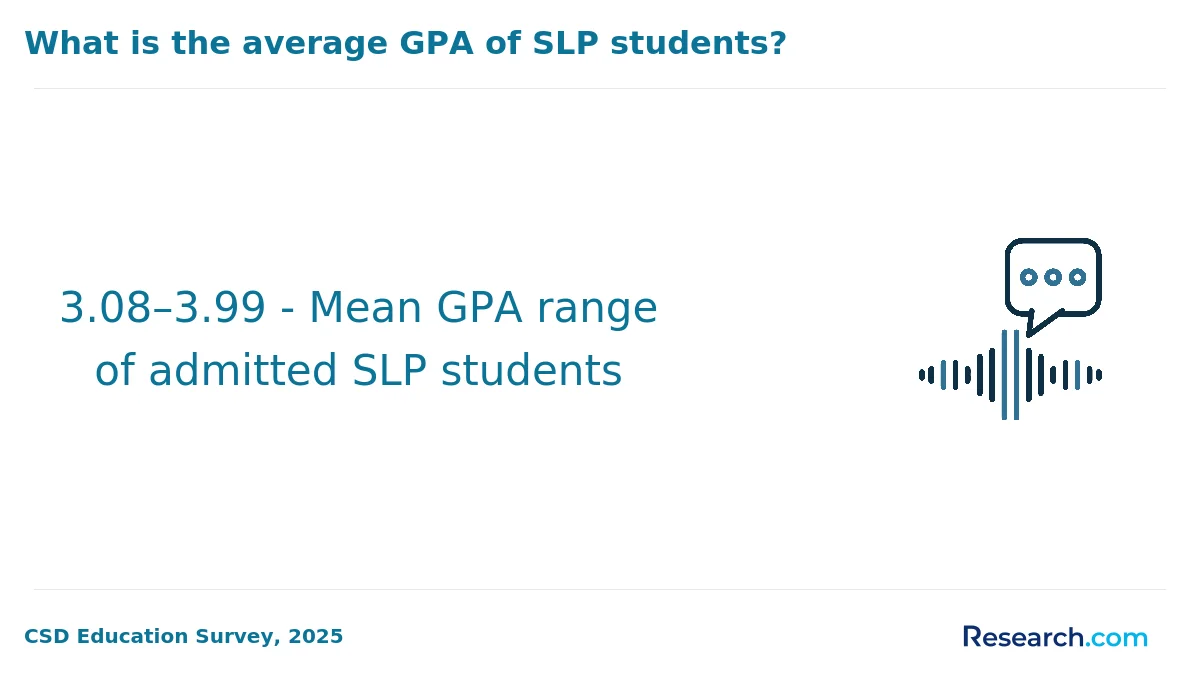
- GPA thresholds: A minimum undergraduate GPA of about 3.0 on a 4.0 scale is standard for many graduate programs, though highly selective programs may expect stronger academic records. Open-enrollment and community college programs may use more flexible standards.
- Prerequisite coursework: Applicants may need courses in anatomy and physiology of speech and hearing mechanisms, linguistics, phonetics, statistics, language development, or related areas. Career changers may need a post-baccalaureate or leveling sequence.
- Standardized tests: Many programs have moved away from requiring GRE scores, and test-optional policies are increasingly common, especially post-pandemic. Applicants should verify requirements directly with each program.
- Letters of recommendation: Two to three letters are commonly requested. Strong letters usually come from faculty, supervisors, or professionals who can speak to academic discipline, communication ability, empathy, and reliability.
- Personal statement: Applicants should explain why they are pursuing speech-language pathology, what experiences shaped that decision, and how the program fits their goals.
- Resume or experience: Prior experience in healthcare, education, disability services, research, tutoring, caregiving, or communication disorders can strengthen an application, even when it is not required.
- Interview or writing sample: Some programs use interviews, recorded responses, or writing prompts to assess professionalism and fit.
Common admissions mistakes to avoid
- Applying without confirming whether prerequisites must be completed before enrollment or can be taken conditionally.
- Assuming GRE-optional means the rest of the application can be weak.
- Choosing recommenders with impressive titles who do not know your work well.
- Writing a personal statement that is emotional but vague about readiness, goals, and fit.
- Ignoring state licensure disclosures until after admission.
Admissions policies change regularly, particularly around GPA flexibility, prerequisite sequencing, and standardized testing. Prospective students should contact admissions advisors directly and ask for current requirements in writing. Applicants exploring broader healthcare transitions may also compare requirements with direct entry MSN programs for non-nurses online.
What Career Paths and Job Titles Are Available to Online Speech Pathology Degree Graduates?
Career options depend heavily on degree level and licensure status. A bachelor’s degree in speech pathology or communication sciences can support assistant, educational, or human services roles, but independent clinical practice as a speech-language pathologist generally requires a master’s degree, supervised clinical experience, and state licensure.
- Speech-language pathology assistant: Often available to qualified bachelor’s or associate-level graduates where permitted by state rules. Assistants support licensed clinicians by preparing materials, helping with therapy activities, documenting services, and working in schools, clinics, or rehabilitation settings.
- Clinical speech-language pathologist: Usually requires a master’s degree and state licensure. These professionals assess and treat communication and swallowing disorders in hospitals, outpatient clinics, schools, private practices, skilled nursing facilities, and rehabilitation centers.
- School-based speech-language pathologist or educational speech-language specialist: Works with children and adolescents, participates in individualized education plans (IEPs), collaborates with teachers and families, and supports academic communication needs. Some states or districts may require education-specific credentials in addition to clinical licensure.
- Medical speech-language pathologist: Works in hospitals, rehabilitation centers, or long-term care settings with patients experiencing swallowing disorders, stroke-related communication changes, traumatic brain injury, neurodegenerative disease, or voice issues.
- Early intervention specialist: Supports infants, toddlers, and families, often in home-based or community settings, with a focus on developmental communication needs.
- Private practice clinician: Provides assessment and therapy services independently or as part of a practice group. This path may require business skills, payer knowledge, and careful compliance management.
- Clinical supervisor or program manager: Experienced clinicians may oversee teams, manage services, coordinate compliance, and mentor junior clinicians.
- Researcher or faculty member: Doctoral-level professionals may pursue academic research, university teaching, grant-funded projects, or advanced clinical innovation.
Career progression often moves from assistant or entry-level clinician roles into specialization, supervision, private practice, administration, or research. Common specialty areas include pediatric language, autism-related communication needs, augmentative and alternative communication, voice, fluency, dysphagia, neurogenic communication disorders, and geriatric care.
Students should verify the credential requirements for their target setting before choosing a program. School, healthcare, and private practice employers may each have different expectations for licensure, certification, background checks, and supervised experience.
What Is the Salary Outlook for Professionals with an Online Speech Pathology Degree?
Professionals with an online speech pathology degree report median earnings near $80,000 annually, but salary depends on degree level, licensure, workplace, location, experience, specialization, and whether the role is clinical, educational, administrative, or research-focused. The online format itself is usually less important than accreditation, clinical preparation, and credentials.
- Degree level: Master’s degree holders typically have stronger earning potential than bachelor’s graduates because clinical speech-language pathologist roles usually require graduate education and licensure.
- Experience: Entry-level salaries start in the high $50,000s, while clinicians with a decade or more of experience often surpass $95,000. Supervisory and specialized roles may pay more.
- Industry sector: Hospitals and healthcare systems generally offer the highest compensation. Educational settings may provide moderate salaries, predictable schedules, and benefits. Private practice income can vary based on client volume, payer mix, and business structure.
- Location: Urban centers like New York, California, and Massachusetts offer salaries above the national average due to higher living costs. Rural employers may pay less but may offer loan forgiveness or other incentives.
- Specialization: Certification or advanced experience in areas such as augmentative communication or swallowing disorders frequently adds $5,000 to $10,000 annually.
- Professional credentials: Credentials like the CCC-SLP, attainable by online graduates who meet clinical criteria, are linked to faster salary growth and broader career advancement opportunities.
- Future outlook: Job growth in speech pathology is projected to exceed average rates, supporting continued demand across healthcare and education.
Salary estimates should be treated as planning tools, not guarantees. Before enrolling, students should compare program cost with likely earnings in their target state and setting. A strong salary in a high-cost city may not produce the same financial return as a slightly lower salary in a lower-cost area with loan repayment support.
What Graduates Say About the Best Online Speech Pathology Degrees for Jobs
- : "The accreditation standards of the online speech pathology degree I completed were a game-changer for my career prospects. Knowing the program met stringent professional requirements gave me confidence employers valued my qualification. The curriculum was both challenging and engaging, pushing me to develop practical skills alongside theory, which truly prepared me for real-world practice. — Kayden"
- : "Reflecting on my experience, the cost and return on investment stood out the most. While the program had a reasonable price point, the extensive student support infrastructure made the difference. Accessible advisors and timely feedback helped me balance work and study effectively. This level of support enhanced my learning journey and ultimately improved my career outcomes post-graduation. — Cannon"
- : "The practical experience requirements of my online speech pathology degree were rigorous but immensely valuable. They provided a direct path to hands-on work that eased the transition into my professional role. Combined with a well-structured curriculum, this program ensured I was not only knowledgeable but also confident, and those career outcomes speak volumes about the program’s quality. — Nolan"
Other Things You Should Know About Speech Pathology Degrees
The top online speech pathology programs develop a combination of technical, clinical, and interpersonal skills. Graduates learn to assess and treat speech, language, and swallowing disorders across diverse populations. Programs emphasize evidence-based practice, communication techniques, and cultural competence to prepare students for real-world clinical environments.
Even in online speech pathology programs, completion of supervised practicum or clinical hours is mandatory. Schools typically partner with local healthcare facilities or schools to arrange these placements near the student's location. This direct experience is essential for professional certification and provides practical training under licensed supervisors.
Leading online programs offer comprehensive support such as academic advising, tech help, and career counseling. Many facilitate virtual study groups and professional networking events to connect students with faculty, peers, and alumni. These services help students stay engaged and build professional relationships that benefit future job searches.
Top online speech pathology programs in 2027 offer benefits like flexible scheduling and access to diverse clinical experiences. They prioritize evidence-based practice through updated curricula and connect students to strong professional networks, enhancing job market readiness and employment opportunities post-graduation.
References
- U.S. Bureau of Labor Statistics - Speech-Language Pathologists https://www.bls.gov/ooh/healthcare/speech-language-pathologists.htm
- ASHA EdFind - Accredited Speech-Language Pathology Programs https://find.asha.org/ed/
- Audiology and Speech-Language Pathology Interstate Compact https://aslpcompact.com/compact-map/
- University of Nebraska at Kearney - Speech-Language Pathology, Master of Science in Education (Online Track) https://www.unk.edu/online/degrees-programs/speech-language-pathology-online.php
- Pennsylvania Western University - Master of Science in Speech-Language Pathology https://online.pennwest.edu/programs/speech-language-pathology-grad/index.php
- Nova Southeastern University - SLP Program - Master of Science in Speech-Language Pathology https://osteopathic.nova.edu/degrees/masters/speech-language-pathology/index.html
- Pepperdine University - Master of Science in Speech-Language Pathology https://healthscience.pepperdine.edu/online-masters-in-speech-language-pathology/
- Baylor University - Master of Science in Speech-Language Pathology (Online) https://csd.robbins.baylor.edu/graduate/online-csd-graduate-program