2027 Industries Hiring Graduates With a Speech Pathology Degree

Co-Founder and Chief Data Scientist

Reviewed by Rhea Paul, PhD
SLP Education & Research Expert
A speech pathology degree can lead to more than one kind of career path. Some graduates want direct patient care, others prefer schools, research, telepractice, assistive technology, or administrative roles. The best fit depends on your education level, licensure status, preferred population, salary goals, and tolerance for paperwork, travel, or medical complexity.
Demand is broad because communication, cognition, language, voice, fluency, and swallowing support are needed across healthcare, education, community programs, and aging services. With the healthcare industry projected to grow by 17% through 2035, speech pathology graduates who understand where employers are hiring can make more strategic choices early in their careers.
This guide explains which industries hire speech pathology graduates, where the outlook is strongest, what entry-level roles are realistic, which settings tend to pay more, and how to compare industries before committing to a path.
Key Benefits of Industries Hiring Graduates With a Speech Pathology Degree
- Diverse industries hiring graduates with a speech pathology degree offer broader career opportunities and flexible employment settings, from healthcare to education and corporate sectors.
- Growing demand for speech pathology skills supports long-term career growth, with healthcare roles projected to increase by 17% through 2035.
- Experience across various industries helps graduates develop transferable skills, enhancing professional versatility and expanding future job prospects.
What Industries Have the Highest Demand for Speech Pathology Majors?
The highest demand for speech pathology majors is concentrated in healthcare, education, long-term care, and private therapy settings. These industries need professionals who can support people with speech, language, cognitive-communication, voice, fluency, and swallowing needs. However, the exact role available to a graduate depends heavily on degree level and state requirements. A bachelor’s graduate may qualify for assistant, aide, or support roles, while many speech-language pathologist positions require graduate education, supervised clinical experience, and licensure.
- Healthcare: Hospitals, outpatient clinics, rehabilitation centers, and specialty practices hire speech pathology professionals to help patients recovering from stroke, traumatic brain injury, neurological disease, cancer treatment, and other conditions that affect communication or swallowing. These roles often involve collaboration with physicians, nurses, occupational therapists, physical therapists, dietitians, and social workers.
- Education: Public schools, private schools, preschools, and special education programs need speech pathology professionals to help students with articulation, language development, social communication, fluency, and learning-related communication challenges. School-based work is often structured around individualized education programs, progress monitoring, family communication, and collaboration with teachers.
- Long-Term Care: Nursing homes, assisted living facilities, and continuing care communities rely on speech pathology services for older adults with swallowing disorders, cognitive-communication changes, aphasia, dementia-related communication needs, and post-stroke rehabilitation goals. Demand in this sector is tied closely to aging populations and chronic health conditions.
- Private Practice: Independent clinics and small group practices serve children, adults, and families seeking individualized therapy. Common areas include developmental language delays, autism spectrum disorders, fluency concerns, voice therapy, literacy-related language support, and adult rehabilitation. Graduates should not confuse speech pathology career preparation with unrelated healthcare routes such as accelerated medical assistant programs; employers in this field usually look for speech-language coursework, supervised experience, and state-specific credentials.
Which Industries Have the Strongest Job Outlook for Speech Pathology Graduates?
The strongest job outlook for speech pathology graduates is in healthcare, schools, early intervention, skilled nursing, and private outpatient therapy. According to the U.S. Bureau of Labor Statistics, employment of speech-language pathologists is expected to increase by 17% from 2025 to 2035, a rate much faster than the average for all occupations. The biggest drivers are population aging, earlier identification of developmental needs, expanded special education services, and wider acceptance of therapy delivered in outpatient and virtual formats.
- Healthcare Facilities: Hospitals, rehabilitation hospitals, outpatient care centers, and specialty clinics need speech pathology professionals for patients with complex medical, neurological, and swallowing needs. These settings can offer strong clinical learning but may also require comfort with fast-paced documentation, interdisciplinary rounds, and medically fragile patients.
- Educational Institutions: Schools from preschool through high school remain major employers because children with speech and language impairments often need ongoing services. Federal mandates and increased awareness of special education needs help support steady hiring, though caseload size and paperwork expectations can vary widely by district.
- Early Intervention and Pediatric Therapy: Early intervention programs serve infants and toddlers with developmental delays. These roles often involve family coaching, home or community visits, developmental screening, and collaboration with pediatric providers. They are a strong fit for graduates who enjoy caregiver education and prevention-focused work.
- Skilled Nursing and Long-Term Care: Skilled nursing facilities and long-term care providers need support for swallowing safety, dementia-related communication, aphasia, and post-acute rehabilitation. These roles may involve medically complex cases and productivity expectations, so graduates should ask about supervision, caseload mix, and documentation systems before accepting a job.
- Private Practice Clinics: Private clinics continue to grow as families and adults seek individualized therapy outside school or hospital systems. These jobs may provide scheduling flexibility and specialization opportunities, but compensation, benefits, mentorship, and client volume can differ substantially by employer.
What Entry-Level Jobs Are Available for Speech Pathology Graduates?
Entry-level options depend on whether the graduate holds a bachelor’s degree, master’s degree, or required state credentials. Recent figures from the American Speech-Language-Hearing Association show that about 80% of graduates secure employment within a year, often through roles that build clinical judgment, documentation habits, and experience with clients before moving into more advanced positions.
- Speech-Language Pathology Assistant: Speech-language pathology assistants work under the supervision of licensed speech-language pathologists. They may help implement therapy activities, prepare materials, track client responses, and support documentation. Scope of practice and credential requirements vary by state, so graduates should check local rules before applying.
- Therapy Aide: Therapy aides are common in hospitals, outpatient clinics, and rehabilitation centers. They support scheduling, room preparation, patient engagement, equipment organization, and basic therapy-related tasks assigned by clinicians. This role is useful for graduates who want exposure to rehabilitation workflows before committing to a specialized setting.
- Special Education Assistant: In schools, special education assistants help students during classroom activities, communication routines, social interaction, and skill practice. This path is especially relevant for graduates interested in pediatric communication, school-based services, and collaboration with teachers and families.
- Research Assistant: Research assistants work in universities, hospitals, laboratories, or clinical research programs. Tasks may include literature review, data collection, participant scheduling, transcription, coding, and study coordination. This role fits graduates considering graduate school, academic research, or evidence-based program development.
One graduate described the early job search as confusing because speech pathology skills are used in many settings. Starting as a therapy aide helped him connect academic knowledge to real client interactions: “It is different to read about a treatment technique and then use it with someone who is frustrated, tired, or nervous.” His experience reflects a common pattern: early roles may not be the final career destination, but they can clarify preferred populations, work settings, and long-term goals.
What Industries Are Easiest to Enter After Graduation?
The easiest industries to enter after graduation are usually those with steady staffing needs, assistant-level openings, predictable training structures, and large client populations. Nationwide trends reveal that around 65% of new allied health roles are occupied by recent graduates, highlighting substantial opportunities for early-career professionals. For speech pathology graduates, access is often strongest in schools, clinics, early intervention programs, hospitals, and long-term care facilities, though licensure and supervision requirements still matter.
- Healthcare Settings: Hospitals and outpatient clinics often have support roles for graduates who are still building experience. These settings can be competitive for fully clinical positions, but they are useful for learning medical terminology, patient-care routines, documentation standards, and team-based rehabilitation.
- Educational Institutions: Schools and special education programs are often accessible because they employ a large number of communication-support staff. Graduates with strong child development knowledge, patience, and classroom collaboration skills may find a smoother transition into school-based roles.
- Early Intervention Programs: Community health agencies and early childhood programs may hire graduates for support, coordination, screening, or assistant roles depending on state regulations. These jobs are a good fit for people who can communicate clearly with caregivers and work in homes, childcare settings, or community spaces.
- Long-Term Care Facilities: Nursing homes and assisted living facilities may offer accessible entry points because communication and swallowing support are recurring needs among older adults. Graduates should ask about mentorship, caseload expectations, and training in dysphagia-related care before accepting these roles.
The easiest industry is not always the best long-term choice. A role may be easy to enter because turnover is high, workloads are heavy, or pay is lower than in more competitive settings. Before accepting an offer, graduates should compare supervision, benefits, schedule, caseload size, advancement options, and whether the job supports future licensure or graduate school goals.
What Industries Offer the Best Starting Salaries for Speech Pathology Graduates?
The best starting salaries for speech pathology graduates are often found in hospitals, specialized clinics, private practice, research, government, and certain specialized school settings. Entry-level roles in revenue-intensive and technical-care fields often command 10-15% higher wages than generalist positions. Salary should still be weighed against workload, benefits, supervision quality, productivity expectations, contract length, and licensure requirements.
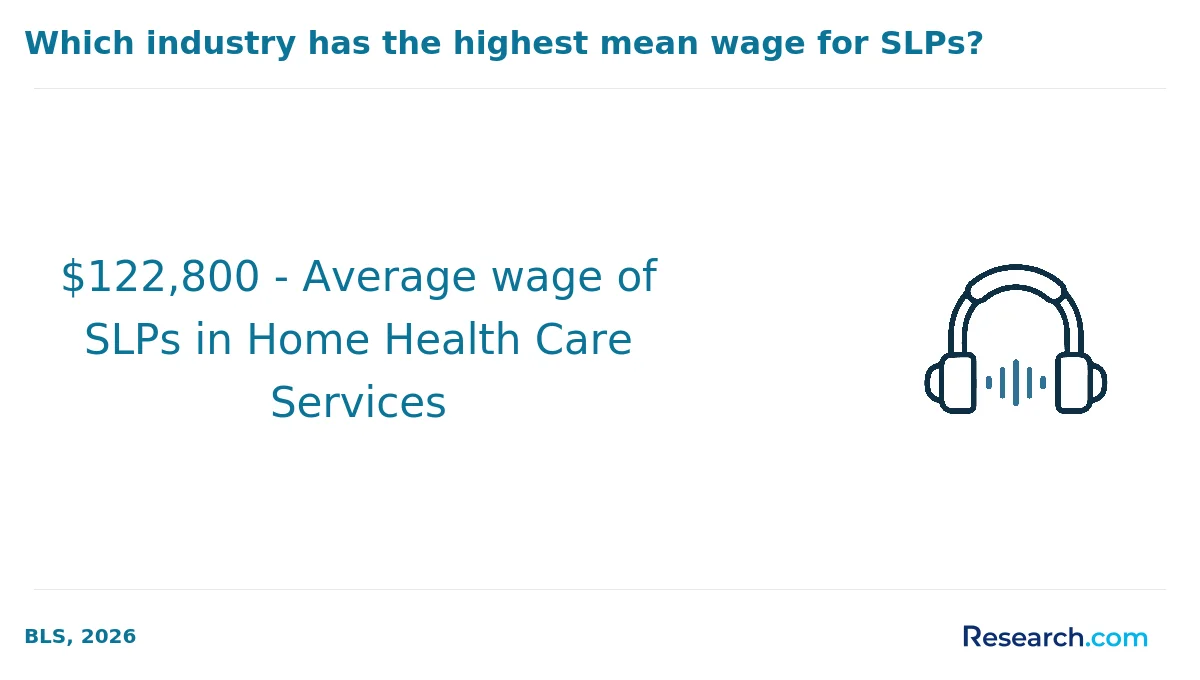
- Healthcare Sector: Hospitals and specialized clinics provide starting salaries between $65,000 and $75,000. These roles may pay more because cases can involve complex neurological, swallowing, cognitive, and rehabilitation needs. They may also require stronger medical documentation skills and comfort working with interdisciplinary teams.
- Private Practice: Independent clinics and outpatient therapy centers commonly offer entry wages from $60,000 to $70,000. Compensation may be higher when clinics serve specialized populations, maintain strong referral pipelines, or bill for premium services. Graduates should ask whether pay is salaried, hourly, per visit, or dependent on client attendance.
- Educational Institutions: Specialized schools serving children with severe communication disorders typically pay between $55,000 and $65,000. School roles may offer predictable calendars and public-sector benefits, but salary progression can be tied to district pay scales, credentials, and years of service.
- Research and Government: Positions in these sectors often start at around $60,000 or more, reflecting the need for evidence-based knowledge and technical proficiency. These roles may offer stability, strong benefits, and policy or program experience, though openings can be less frequent than in schools or clinics.
Students comparing health-related career paths should distinguish speech pathology from nursing routes such as LVN to BSN programs, because salary structures, licensure requirements, patient responsibilities, and advancement pathways differ substantially.
Which Skills Do Industries Expect From Speech Pathology Graduates?
Employers expect speech pathology graduates to combine technical knowledge with communication, organization, empathy, and sound judgment. A 2022 survey found that over three-quarters of hiring managers prioritize communication abilities and teamwork when evaluating entry-level candidates. In practice, employers look for graduates who can explain clearly, document accurately, adapt therapy activities, and collaborate without losing sight of the client’s goals.
- Communication Skills: Graduates must explain goals, strategies, progress, and concerns to clients, families, teachers, physicians, and other professionals. Clear communication is especially important when clients are anxious, families are overwhelmed, or teams disagree about priorities.
- Analytical Thinking: Speech pathology work requires interpreting assessment information, observing patterns, adjusting interventions, and noticing when a strategy is not working. Employers value graduates who can connect evidence-based practice with the specific needs of each client.
- Empathy and Interpersonal Skills: Communication disorders can affect confidence, relationships, learning, eating, and independence. Graduates need patience and respect when working with children, older adults, people with disabilities, and families under stress.
- Attention to Detail: Documentation, progress notes, treatment plans, billing records, and compliance requirements are central to the job. Small errors can affect continuity of care, reimbursement, school services, or legal compliance.
- Collaborative Teamwork: Speech pathology professionals often coordinate with teachers, psychologists, physicians, nurses, occupational therapists, physical therapists, caregivers, and administrators. Employers prefer candidates who can advocate for clients while still functioning well within a team.
One early-career professional said the hardest part was not learning therapy activities, but balancing detailed documentation with emotional support for families. Regular coordination meetings with schools and healthcare providers helped her refine her communication style and build trust. Her experience shows why clinical knowledge alone is not enough; successful graduates must also manage relationships, expectations, and follow-through.
Which Industries Require Certifications for Speech Pathology Graduates?
Certifications and licenses are most commonly required in healthcare, schools, early intervention, and government roles. Approximately 85% of employers in healthcare and education prioritize candidates with recognized credentials to meet regulatory requirements. Requirements vary by state and job title, so graduates should verify whether a role requires state licensure, school certification, assistant certification, supervised clinical experience, national credentials, or continuing education.
- Healthcare: Hospitals, rehabilitation centers, outpatient providers, and private clinics typically require appropriate state licensure for independent clinical practice. Employers may also prefer or require credentials that demonstrate clinical training, ethics knowledge, and continuing professional development.
- Education: Public schools and educational agencies often require state-issued school credentials or certifications in addition to speech-language qualifications. These requirements help ensure that practitioners can deliver services within special education rules, student privacy standards, and school documentation systems.
- Early Intervention Programs: Agencies serving infants and toddlers may require credentials related to early childhood services, family-centered practice, developmental assessment, or state early intervention systems. Graduates should confirm whether the position involves direct therapy, service coordination, screening, or assistant-level work.
- Government Agencies: Public health departments, veterans’ programs, correctional systems, and state agencies may require formal credentials because services are tied to public accountability, legal compliance, and quality assurance standards.
If your goal is to become a licensed speech-language pathologist, compare accredited graduate options carefully, including slp master's programs online, and confirm that the program aligns with the licensure requirements in the state where you plan to work.
Which Industries Offer Remote, Hybrid, or Flexible Careers for Speech Pathology Graduates?
Remote, hybrid, and flexible careers are expanding in telehealth, schools, private practice, corporate training, nonprofits, and research. Recent data shows that over 30% of professional roles now regularly include remote or hybrid work options. For speech pathology graduates, flexibility can mean teletherapy, hybrid school services, remote documentation, contract work, part-time scheduling, or research tasks that can be completed off-site.
- Healthcare: Some outpatient clinics and telehealth providers offer remote speech therapy, virtual consultations, and hybrid follow-up services. Not every client is appropriate for telepractice, especially when swallowing safety, medical instability, or hands-on support is involved, so employers may limit remote work by case type.
- Education: Schools may use hybrid models in which speech pathology professionals provide direct services on campus while completing planning, meetings, or documentation remotely. Fully remote school-based roles can also exist, but they often require strong technology skills and careful coordination with onsite staff.
- Corporate Sector: Companies may use communication specialists for presentation coaching, accent modification, executive communication, vocal health education, or employee wellness programs. These roles are often project-based and may be delivered through virtual workshops or one-on-one coaching.
- Nonprofit Organizations: Nonprofits may offer flexible roles in outreach, family education, program development, teletherapy, and community support. These jobs can be meaningful for graduates interested in access, advocacy, and underserved populations.
- Research Institutions: Universities, hospitals, and research centers may allow remote work for data analysis, writing, literature reviews, transcription, coding, grant support, and virtual team meetings. This path suits graduates who are detail-oriented and comfortable with independent work.
Graduates should evaluate flexibility carefully. A remote role can reduce commuting and improve schedule control, but it may require strong self-management, reliable technology, privacy safeguards, and comfort engaging clients through a screen. For broader healthcare research interests, some professionals compare adjacent doctoral routes such as an online PhD nursing, though this is a different academic and professional pathway from speech pathology.
What Industries Have the Strongest Promotion Opportunities?
The strongest promotion opportunities are usually found in industries with layered staffing models, formal supervision structures, specialized teams, and administrative roles. Studies show that internal promotions account for over 70% of leadership advancements in professional healthcare and education sectors. For speech pathology graduates, advancement may mean moving from assistant to licensed clinician, clinician to lead therapist, specialist to supervisor, or practitioner to program director.
- Healthcare: Hospitals and clinics may offer progression into senior clinician, lead therapist, department supervisor, rehabilitation manager, quality improvement, or interdisciplinary leadership roles. Advancement often depends on clinical specialization, documentation quality, productivity, mentorship ability, and experience with complex cases.
- Education: Schools can provide paths into lead speech-language pathologist, special education coordinator, department chair, clinical supervisor, or district-level consultant roles. Promotion may be tied to credentials, years of service, leadership training, and experience with compliance and IEP processes.
- Rehabilitation Centers: Rehabilitation facilities often reward specialization in areas such as stroke recovery, traumatic brain injury, dysphagia, cognitive-communication rehabilitation, or adult neurogenic disorders. Experienced clinicians may train staff, develop protocols, or supervise clinical teams.
- Government Agencies: Public health departments, veterans’ programs, and state agencies may offer structured advancement into program management, policy implementation, compliance, training, or service coordination. These roles can appeal to professionals who want broader systems-level impact.
- Private Practice: Private practice advancement may come through specialization, caseload growth, supervisory duties, clinic management, partnership, or business ownership. This path can offer autonomy but also requires comfort with billing, marketing, staffing, and operations.
Some professionals explore interdisciplinary healthcare education, including an online doctor of pharmacy program, but promotion in speech pathology is usually best supported by credentials, leadership experience, specialized clinical expertise, and strong outcomes within the field.
How Do You Choose the Best Industry With a Speech Pathology Degree?
To choose the best industry with a speech pathology degree, start with three questions: Who do you want to serve, what type of workday fits you, and what credentials do you have or plan to earn? Healthcare may be best for graduates drawn to medical complexity and rehabilitation. Schools may suit those who enjoy child development, educational teams, and predictable academic calendars. Private practice may appeal to graduates who want specialization or flexibility. Research, nonprofit, government, or corporate roles may fit those who prefer program development, communication training, data, or systems-level work.
Work environment matters as much as job title. Over 60% of professionals report greater job satisfaction when workplace flexibility and professional autonomy are present. Still, flexibility should be balanced against pay, benefits, mentorship, licensure support, workload, and advancement. A remote or contract role may offer control over schedule, but a hospital or school district may provide stronger supervision, benefits, and professional development.
Use the following factors before choosing an industry:
- Credential fit: Confirm whether the role matches your current degree, assistant eligibility, licensure status, or graduate training plan.
- Preferred population: Decide whether you want to work primarily with children, adults, older adults, families, students, medical patients, or organizations.
- Clinical complexity: Consider whether you are comfortable with swallowing disorders, neurological conditions, behavioral challenges, or high-acuity medical cases.
- Schedule and setting: Compare school calendars, hospital shifts, outpatient appointments, home visits, telepractice, and contract work.
- Compensation and benefits: Look beyond salary. Review health benefits, retirement plans, paid time off, continuing education support, and unpaid documentation time.
- Mentorship: Early-career graduates should prioritize supervision and feedback, especially in roles involving complex clients or licensure progression.
- Advancement: Ask whether the employer offers specialist roles, supervisory tracks, leadership training, or support for further education.
Graduates interested in movement science, rehabilitation, or adjacent wellness fields may also review online kinesiology programs, but they should compare those pathways carefully with speech pathology requirements before changing direction.
What Graduates Say About Industries Hiring Graduates With a Speech Pathology Degree
- : "Starting my career in speech pathology showed me how many industries rely on communication expertise. I chose a school-based setting because I wanted to work with children, and that choice helped me grow professionally while building practical problem-solving skills. The biggest lesson was that the setting you choose shapes both your daily work and your long-term confidence. — Kayden"
- : "My path took me through clinics, schools, and research environments, and each one required a different version of the same core skills: adaptability, empathy, and careful listening. Trying more than one setting early in my career helped me understand where I worked best and what kind of clients I wanted to serve. — Cannon"
- : "Entering rehabilitation and private practice taught me that speech pathology graduates can make an impact in very different ways. Some roles require fast clinical decisions, while others demand long-term relationship building with families and clients. The field strengthened my analytical skills and pushed me to become a more thoughtful leader. — Nolan"
Other Things You Should Know About Speech Pathology Degrees
Graduates with a speech pathology degree typically find employment in diverse settings such as hospitals, schools, rehabilitation centers, and private clinics. Each employer type offers different focuses, from acute medical care to educational support and outpatient therapy. This variety allows graduates to tailor their career paths to their interests and expertise.
Interdisciplinary collaboration is crucial for industries hiring speech pathology graduates in 2027. Graduates often work with teachers, doctors, psychologists, and other professionals to provide comprehensive care. This teamwork approach enhances client outcomes and enriches professional development for all parties involved, making it a vital aspect of the field.
Certain industries present unique challenges, such as caseload complexity in hospitals or administrative duties in educational settings. Additionally, some workplaces require navigating insurance policies and regulatory compliance. Understanding these factors can help graduates prepare for the realities of their chosen employment sector.
References
- U.S. Bureau of Labor Statistics - Speech-Language Pathologists https://www.bls.gov/ooh/healthcare/speech-language-pathologists.htm
- ASHA EdFind - Accredited Speech-Language Pathology Programs https://find.asha.org/ed/
- Audiology and Speech-Language Pathology Interstate Compact https://aslpcompact.com/compact-map/
- James Madison University - Master of Science (M.S.) in Speech-Language Pathology (Distance Education / Online) https://www.jmu.edu/chbs/csd/online_ms/index.shtml
- Delaware Valley University - Master of Science in Speech-Language Pathology (M.S.) https://delval.edu/programs/graduate-programs/speech-language-pathology
- California State University-San Marcos - Online MS in Speech-Language Pathology https://www.csusm.edu/slp/programs/mastersonline/index.html
- California State University-Northridge - Master of Science in Communicative Disorders (Online) https://tsengcollege.csun.edu/programs/CDS
- Baylor University - Master of Science in Speech-Language Pathology (Online) https://csd.robbins.baylor.edu/graduate/online-csd-graduate-program