2027 Highest-Paying Jobs You Can Get With a Speech Pathology Degree

Co-Founder and Chief Data Scientist

Reviewed by Rhea Paul, PhD
SLP Education & Research Expert
Choosing speech pathology is not just a question of interest in communication disorders; it is a credential, licensure, and salary decision. The strongest financial outcomes in this field usually require a graduate degree, supervised clinical training, state licensure, and often professional certification. Students who stop at the bachelor's level generally have fewer options and lower pay, while master's-prepared and licensed clinicians can qualify for clinical roles in schools, hospitals, rehabilitation centers, private practice, and specialized healthcare settings.
The earnings gap can be meaningful. Speech pathology professionals with a master's degree and professional licensure tend to earn about 20% higher salaries than bachelor's degree holders without certification. Pay also depends heavily on employer type, specialty, location, leadership responsibility, and whether the role is in healthcare, education, government, or private practice.
This guide explains what a speech pathology degree can qualify you to do, which roles tend to pay the most, how degree level affects salary, where the best-paying employers and geographic markets are, and how certifications, specializations, and leadership paths can influence long-term return on investment.
Key Things to Know About the Highest-Paying Jobs You Can Get With a Speech Pathology Degree
- Graduate credentials in speech pathology yield a wage premium of approximately 15% over bachelor's-level roles-advanced degrees significantly enhance earning potential in specialized clinical settings.
- Professional licensure and certification increase salaries by up to 20%-employers prioritize credentialed clinicians for higher-paying positions in healthcare and education sectors.
- The return on investment for a speech pathology degree outperforms many alternative pathways-median annual salaries exceed $80,000, surpassing comparable healthcare and social service occupations.
What Exactly Does a Speech Pathology Degree Qualify You to Do in Today's Job Market?
A speech pathology degree prepares graduates to work with people who have speech, language, voice, fluency, cognitive-communication, and swallowing difficulties. In the job market, the degree is valuable because many roles are credential-gated: employers cannot simply hire any strong communicator or healthcare worker to perform the clinical duties of a licensed speech-language pathologist.
The exact jobs you qualify for depend on degree level and licensure. A bachelor's degree may lead to assistant, aide, or related support positions. A master's degree is generally the key academic requirement for state licensure and independent clinical practice as a speech-language pathologist. Doctoral study can support advanced clinical specialization, research, university teaching, and senior leadership.
Core work speech pathology graduates are trained to perform
- Assessment and diagnosis: Evaluating communication and swallowing disorders using standardized tools, clinical observation, case history, and patient-specific data.
- Treatment planning: Creating individualized therapy plans for children, adults, older adults, and patients recovering from injury, illness, or neurological events.
- Direct therapy: Delivering evidence-based interventions for articulation, language development, fluency, voice, cognition, feeding, swallowing, and alternative communication needs.
- Collaboration: Working with families, physicians, teachers, nurses, occupational therapists, psychologists, and other professionals in schools and healthcare settings.
- Documentation and compliance: Maintaining treatment records, progress notes, billing documentation, and reports required by employers, insurers, and licensing rules.
What the degree does not automatically qualify you to do
Speech pathology is often confused with neighboring professions. A speech pathology degree does not qualify a graduate to practice audiology, psychological counseling, occupational therapy, or medicine without additional education and credentials. The degree also does not replace state licensure where licensure is required for practice.
For students comparing healthcare pathways, the main advantage of speech pathology is that it combines clinical practice, education, rehabilitation, and long-term patient relationships. The trade-off is that the highest-paying roles usually require graduate education and credential maintenance. Students comparing timelines and admissions options may also review nursing schools with high acceptance rates to understand how speech pathology stacks up against other healthcare routes.
Which Speech Pathology Jobs Command the Highest Salaries Right Now?
The highest-paying speech pathology jobs are usually found in medical, rehabilitation, specialty clinical, and leadership settings. Pay rises when a role requires advanced clinical judgment, complex patient care, supervision, specialty credentials, or responsibility for program performance.
Salary also varies by employer, location, bargaining agreements, caseload, reimbursement model, and years of experience. The figures below should be read as planning benchmarks, not guarantees for any one graduate.
- Clinical Speech-Language Pathologist: This is the core licensed role in the field. Median salaries are around $97,870 annually. The 75th percentile reaches $95,000, while top earners exceed $115,000. Higher earnings are more common among clinicians with advanced degrees, certification, specialized experience, and leadership duties.
- Medical Speech Pathologist: Medical speech pathologists often work in hospitals, rehabilitation centers, skilled nursing facilities, and specialty clinics. Median pay is near $97,870, with the upper quartile at about $100,000. The role can pay more because it often involves dysphagia, neurological disorders, acute care, and interdisciplinary treatment planning.
- School-Based Speech-Language Pathologist: School-based clinicians serve students with communication needs and may work under district contracts, state rules, and individualized education plans. Median wages sit near $75,000, with the 75th percentile close to $87,000. Pay can vary widely by state, district funding, union agreements, and calendar structure.
- Research and Academic Roles: These roles are more common for doctoral degree holders. Median incomes range from $70,000 to $105,000, influenced by tenure status, grants, publication record, institution type, and teaching or clinic responsibilities.
- Speech-Language Pathology Supervisor/Manager: Supervisors and managers oversee clinicians, caseloads, service quality, compliance, budgets, and staffing. Starting salaries are around $90,000 and can extend beyond $120,000 in large healthcare organizations.
What drives higher pay in speech pathology?
- Degree level: Master's and doctoral credentials generally open more advanced and better-paid roles than bachelor's-level preparation.
- Licensure and certification: Employers often reserve higher-responsibility positions for licensed and certified clinicians.
- Specialty: Medical speech pathology, dysphagia, neurogenic communication disorders, pediatrics, and augmentative and alternative communication can improve salary potential.
- Industry: Hospitals, rehabilitation centers, specialty clinics, and private healthcare employers often pay more than many education or community-service settings.
- Location: Urban markets and high-cost states may post higher salaries, though take-home value depends on cost of living.
- Leadership responsibility: Supervising staff, managing programs, or directing clinical operations can move earnings above standard clinical pay.
Professionals who want to remain in healthcare but move toward administrative roles may compare speech pathology advancement with masters in healthcare management programs, especially if their long-term goal is management rather than direct therapy.
How Does Degree Level-Bachelor's vs. Master's vs. Doctoral-Affect Speech Pathology Earning Potential?
Degree level is one of the clearest salary dividing lines in speech pathology because it affects legal scope of practice, job title, clinical independence, and employer eligibility. A bachelor's degree can be useful, but it usually does not lead to the same earning ceiling as a master's degree with licensure. Doctoral credentials can add value for specialized practice, research, academia, and leadership, but they are not always necessary for strong clinical earnings.
- Bachelor's Degree: Graduates with a bachelor's in speech pathology or a related field typically earn 20% to 30% less than master's-level clinicians. They are more likely to work in support roles, such as therapy assistant positions, where responsibilities and independent decision-making are more limited. These roles can be a practical way to enter the field, but they usually do not offer the full salary potential of licensed practice.
- Master's Degree: The master's degree is the main professional credential for becoming a licensed speech-language pathologist. It is the route into clinical jobs in schools, hospitals, rehabilitation settings, private practices, and community clinics. Median salaries run from about $70,000 to $90,000 annually, influenced by location and specialty. For many students, this degree level offers the most direct connection between education, licensure, and higher earnings.
- Doctoral Degrees (Professional or Research): Doctoral credentials, including the SLP-D and PhD, can support advanced clinical practice, academic appointments, research leadership, program direction, and high-level specialization. Salaries for doctoral holders often exceed $100,000, especially in universities and research institutions. However, a doctorate should be evaluated carefully against tuition, time away from work, and the specific roles the graduate wants to pursue.
How to think about return on investment
The right degree level depends on your starting point. Students who already have a related bachelor's degree may find a master's pathway to be the most efficient route to licensure. Career changers may need prerequisite coursework before graduate admission, which can increase total cost and time. Before enrolling, compare tuition, required clinical placements, licensure requirements, program accreditation, exam preparation, and expected salary in your target state or employer type.
Students who need flexibility while preparing for licensure-oriented graduate study may compare accredited online speech pathology masters programs, but they should confirm clinical placement support, state authorization, and alignment with the licensing rules where they plan to practice.
Which Industries and Employers Pay Speech Pathology Graduates the Most?
The best-paying employers for speech pathology graduates are often those that need advanced clinical skills, serve medically complex patients, operate in competitive labor markets, or manage high-volume rehabilitation services. Healthcare employers tend to offer some of the strongest salary opportunities, while education roles may offer steadier schedules, public-sector benefits, and school-year calendars but more moderate pay in many markets.
- Healthcare: Hospitals, rehabilitation centers, skilled nursing facilities, and specialty medical clinics often pay higher wages because clinicians manage complex cases, coordinate with medical teams, and support recovery from strokes, injuries, surgeries, and neurological conditions.
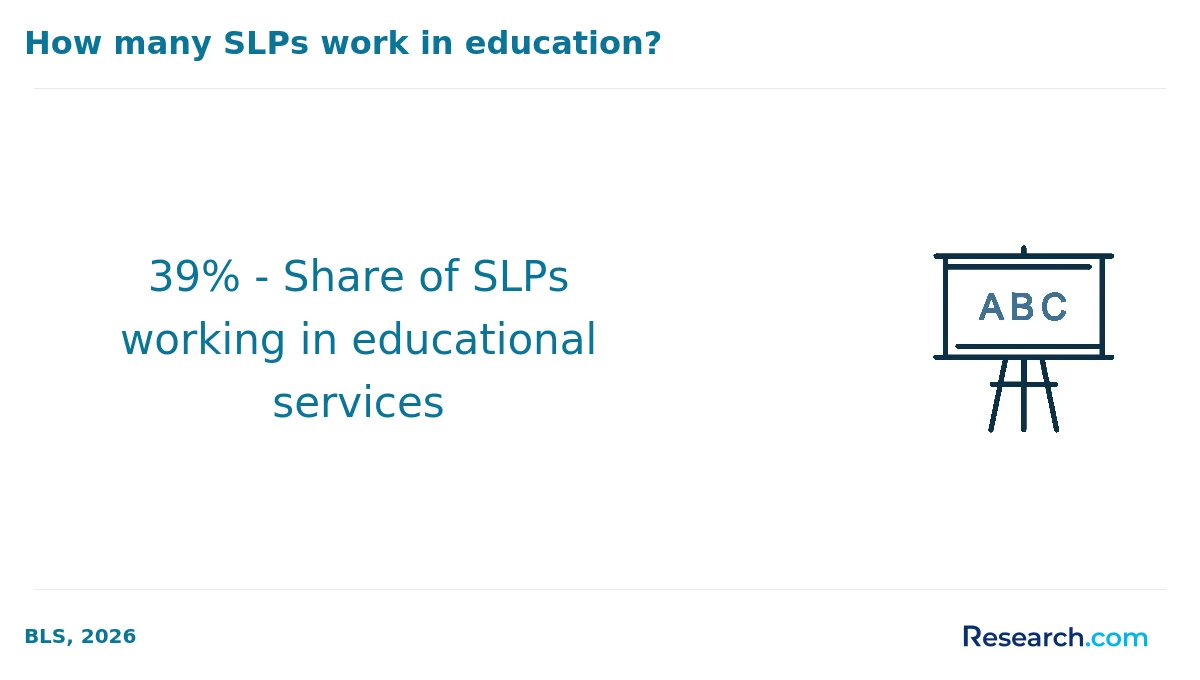
- Education: Public schools, private schools, and higher education institutions offer stable demand for speech-language pathologists. Pay is often tied to district salary schedules, union agreements, education level, and years of service. University clinics and specialized programs may offer stronger earnings for advanced-degree holders.
- Private Practice: Private clinics and self-employed speech pathologists may have a wide income range. Earnings depend on client volume, payer mix, specialty area, local demand, business costs, and referral relationships. Pediatric therapy, neurological rehabilitation, and specialized communication services may improve revenue potential.
- Government Agencies: Federal and state employers, including veterans' hospitals, can provide stable employment, structured advancement, and competitive benefits. Veterans Affairs positions may command higher wages because of specialized patient needs and clinical complexity.
- Nonprofit Sector: Nonprofit employers may offer lower base pay than some private healthcare organizations, but grant-funded programs, research organizations, and specialized community services can still provide competitive compensation in mission-driven roles.
- Large Health Systems: Larger organizations may pay more because they compete aggressively for licensed clinicians, manage multiple sites, and need supervisors, clinical educators, and program managers.
- Underserved or Rural Employers: Some rural and underserved areas may offer higher wages or incentives when qualified speech pathology professionals are difficult to recruit.
How to compare employer offers
Do not compare salary alone. A lower base salary may come with stronger benefits, loan assistance, school-year scheduling, pension eligibility, or lower caseloads. A higher salary may involve productivity targets, evening hours, travel, complex medical documentation, or limited mentorship. When reviewing offers, ask about caseload size, supervision, continuing education support, productivity expectations, benefits, licensure reimbursement, and advancement pathways.
Students who need a flexible route into prerequisite or degree coursework can review accredited self-paced online colleges, but they should verify accreditation, transfer policies, and whether courses meet graduate admissions requirements.
What Geographic Markets Offer the Best-Paying Speech Pathology Jobs?
Geography affects speech pathology salaries in two ways: nominal pay and real purchasing power. Some metro areas post high salaries because they have major hospitals, specialty clinics, dense school systems, and high demand for licensed clinicians. But a high salary in an expensive city may not go as far as a slightly lower salary in a more affordable region.
Metro areas such as San Jose, CA; Boston, MA; and Washington, D.C. consistently offer the highest median wages for speech pathology professionals. States including California, Massachusetts, and New York also rank at the top for median salaries, though high living costs can reduce the financial advantage after housing, taxes, transportation, and childcare are considered.
- High-paying metro areas: Large urban markets on the East and West coasts often have major healthcare networks, specialty clinics, research hospitals, and competitive school systems that support higher wages.
- High-paying states: California, Massachusetts, and New York can offer strong nominal salaries, but students should compare those wages with local living costs.
- Cost-of-living opportunities: Areas such as Texas and Minnesota may combine competitive wages with more affordable living, improving real income potential.
- Telepractice: Remote service delivery has expanded options for some clinicians, especially in pediatric and adult therapy contexts. However, telepractice still depends on employer policy, payer rules, patient needs, and licensure requirements.
- Location-bound roles: Hospital, acute care, school-based, and interdisciplinary roles may require in-person work because of patient safety, equipment, team collaboration, or district rules.
- Licensure portability: Clinicians considering relocation or remote work should check state licensing requirements before assuming they can practice across state lines.
Practical relocation questions
- Will the higher salary offset housing and commuting costs?
- Does the state require additional licensure steps?
- Are the best-paying employers concentrated in one metro area?
- Is the role school-year, year-round, contract, or hourly?
- Does the market offer mentorship and specialty training, not just higher pay?
How Do Professional Certifications and Licenses Boost Speech Pathology Salaries?
Licensure and certification can raise speech pathology earnings because they prove that a clinician meets professional standards for education, supervised practice, examination, and ongoing competence. In many jobs, these credentials are not optional; they are the difference between support-level work and independent clinical practice.
Initial certification fees generally range from $200 to $400, with ongoing renewal and continuing education expenses. Those costs should be included in any salary and ROI calculation, but they are often outweighed by access to higher-responsibility roles and stronger long-term mobility.
- Certificate of Clinical Competence (CCC-SLP): Issued by the American Speech-Language-Hearing Association, this credential requires a master's degree, supervised clinical training, and passing a comprehensive exam. Maintaining certification involves continuing education every three years. Holders typically earn 10-20% more than non-certified professionals according to salary data.
- State Licensure: Nearly all states mandate licensure to legally practice. Requirements commonly include graduate education, supervised clinical hours, and success on the Praxis Examination in Speech-Language Pathology. Licensure often leads to a 5-15% salary increase, varying by region and employer.
- Specialty Certifications: Credentials such as Board Certified Specialist in Fluency Disorders or Swallowing Disorders can signal advanced expertise in niche areas. These credentials may require additional clinical experience, exams, and renewal. Specialists may command up to 25% higher pay in niche settings.
How to choose credentials strategically
Do not pursue every credential available. Start with the license required in the state where you plan to work, then identify which certifications are preferred by your target employers. Hospital and rehabilitation employers may value dysphagia, neurological, or medical experience. Schools may prioritize pediatric expertise, autism-related experience, AAC knowledge, and familiarity with individualized education plans.
When evaluating any credential, confirm the issuing organization, renewal requirements, continuing education obligations, employer recognition, and whether the credential is accredited by recognized entities such as ANSI or NCCA. A credential has the most salary value when employers in your region actively reward it through hiring preference, promotion, or pay differentials.
What Is the Salary Trajectory for Speech Pathology Professionals Over a Full Career?
Speech pathology salaries typically rise with licensure, clinical experience, specialization, and leadership responsibility. Early-career clinicians build competence and complete credentialing milestones. Mid-career professionals often see stronger gains when they specialize, supervise others, or move into higher-paying settings. Senior clinicians may increase earnings through management, private practice, consulting, academic leadership, or recognized expertise.
- Early Career: Entry-level speech pathologists typically earn between $62,900 and $134,160 annually during their first five years, according to Bureau of Labor Statistics (BLS) data. This period is often focused on building clinical judgment, completing certification requirements, and learning documentation, caseload management, and interdisciplinary teamwork.
- Mid-Career: By the ten-year mark, earnings often accelerate. Clinicians may move into senior roles, earn advanced certifications, specialize in areas such as swallowing disorders or augmentative communication, or shift into higher-paying medical settings.
- Leadership: Supervisory and administrative duties can produce significant pay premiums because these roles involve staffing, compliance, training, budgeting, and quality oversight.
- Specialization: Expertise in complex disorders can increase demand and improve negotiating power, especially in healthcare, rehabilitation, and specialty clinics.
- Senior and Peak Career: Top earners often hold managerial positions, own private practices, or gain national recognition. Their income frequently exceeds $100,000 annually, supported by business development, reputation, program leadership, or scholarly contribution.
What slows salary growth?
- Remaining in the same role without pursuing certification, specialization, or supervisory responsibility.
- Working in markets with limited employer competition.
- Accepting heavy caseloads without corresponding pay, mentorship, or advancement opportunities.
- Failing to maintain licensure or continuing education requirements.
- Choosing a specialty with strong personal appeal but limited local demand.
Long-term income growth in speech pathology is rarely automatic. The strongest career trajectories usually come from combining clinical excellence with targeted credentials, a high-demand specialty, geographic flexibility, and the willingness to take on mentorship, program development, or management responsibilities.
Which Speech Pathology Specializations and Concentrations Lead to the Highest-Paying Roles?
Specialization matters because not all speech pathology work carries the same clinical complexity, staffing shortage, or reimbursement profile. Higher-paying concentrations tend to involve medically complex patients, advanced technology, neurological conditions, swallowing disorders, or specialized communication systems.
Medical speech pathology is one of the strongest salary-oriented paths. Clinicians in this area may evaluate and treat swallowing disorders, communication changes after stroke or brain injury, and speech or cognitive-communication issues linked to neurological disease. The work requires comfort with medical records, interdisciplinary care, patient safety, and high-stakes decision-making.
Augmentative and alternative communication (AAC) is another valuable concentration. AAC specialists help individuals who are nonverbal or have limited verbal communication use devices, software, symbols, or other communication systems. This specialty blends clinical knowledge with technology skills and can be especially relevant in rehabilitation, pediatric, school, and long-term care settings.
Voice therapy, fluency disorders, pediatric communication disorders, autism-related services, and dysphagia can also support strong earnings when paired with employer demand and advanced credentials. Pediatric speech-language pathology specialists often support children with developmental delays or autism spectrum disorders, though wage growth may be more moderate in some markets because the talent pool can be larger.
- Market Demand: Healthcare-focused concentrations such as medical speech pathology and AAC often command stronger labor demand and higher wages.
- Credential Impact: Advanced certifications and state licensure improve salary prospects by documenting specialized competence.
- ROI of Online Programs: Top online speech pathology programs can provide flexible skill-building pathways, but students should confirm accreditation, clinical placement structure, and state licensure alignment.
- Career Growth: Specialties involving neurological rehabilitation and aging populations are projected to grow fastest, suggesting future salary increases.
How to choose a concentration
Do not choose a specialty based only on the highest advertised salary. Compare local job postings, required credentials, clinical placement opportunities, mentorship access, and the patient populations you can realistically see yourself serving. A high-paying niche with few local openings may be less practical than a slightly lower-paying concentration with steady demand and clearer advancement.
Students comparing flexible health-related education models may also review nutrition school online options as a benchmark, while recognizing that speech pathology licensure has its own clinical and accreditation requirements.
How Does the Speech Pathology Job Market's Growth Outlook Affect Long-Term Earning Stability?
The speech pathology job market supports relatively strong long-term earning stability because demand is tied to durable needs: aging populations, stroke recovery, neurodegenerative conditions, developmental communication needs, school-based services, and broader awareness of speech and language disorders. The bureau of labor statistics projects employment for speech-language pathologists to grow roughly 17% through 2035, significantly faster than the average for all occupations.
This growth matters for salary because fields with sustained demand often provide better job security, more geographic options, and stronger bargaining power for experienced clinicians. However, growth does not guarantee high pay in every setting. School budgets, payer reimbursement, state policy, local employer competition, and credential requirements can still affect wages.
- Demand Drivers: Aging demographics increase the need for speech therapy related to strokes, dementia, Parkinson's disease, and other neurodegenerative conditions.
- Growth Areas: Pediatric and medical speech pathology show some of the strongest employment gains, which can support wage premiums in those specialties.
- Automation Risk: Speech pathology has relatively low automation risk because diagnosis, therapy planning, rapport, family education, and clinical judgment remain highly human-centered.
- Credential Impact: Advanced degrees, state licensure, and professional certification improve access to stable and better-paid roles.
- Risk Segments: Budget constraints in some school districts and outpatient clinics can limit hiring or salary growth. Credential inflation can also raise entry barriers.
- Cyclicality and Job Volume: High-paying niches may offer fewer openings, making geographic flexibility and specialty adaptability important.
For prospective students, the key question is not simply whether the field is growing. It is whether the roles you want are growing in your preferred region and whether your planned degree, clinical experience, and licensure path match those roles. Veterans, career changers, and working adults may compare flexible models such as accelerated nutrition degree online programs when thinking about time-to-completion, but speech pathology requires careful attention to clinical education and licensure rules.
What Leadership and Management Roles Are Available to High-Earning Speech Pathology Graduates?
Leadership roles are among the highest-paying options for speech pathology graduates because they combine clinical credibility with responsibility for people, budgets, compliance, service quality, and organizational outcomes. These roles are best suited for clinicians who enjoy systems, supervision, documentation standards, and operational decision-making as much as patient care.
- Clinical Director of Speech Pathology: Oversees speech-language pathology services, clinical protocols, staffing, productivity, quality improvement, and compliance across a clinic, department, or healthcare system.
- Rehabilitation Manager: Manages multidisciplinary rehabilitation teams that may include speech-language pathologists, occupational therapists, physical therapists, and support staff.
- Program Coordinator or Department Lead: Coordinates specialized programs such as dysphagia services, pediatric communication clinics, AAC services, school-based speech programs, or outpatient rehabilitation.
- Chief Speech Pathology Officer: A senior-level role in larger organizations, focused on strategy, service standards, workforce planning, and cross-site clinical leadership.
Salary and advancement considerations
- Salary Premium: Speech pathologists typically earn median wages near $80,000 annually, while those in management and executive roles, such as health services managers, command significantly higher salaries, frequently ranging from $100,000 to $120,000 or more. The premium reflects accountability for staffing, compliance, financial performance, and operational outcomes.
- Credentials and Experience: Advancement generally requires a master's in speech pathology plus additional preparation such as healthcare administration certificates or an MBA. Five to ten years of clinical experience with progressive supervisory responsibilities is common before moving into leadership.
- Career Pathway: Many leaders begin as staff clinicians, become senior clinicians or clinical supervisors, then move into department, program, or operations management.
- Skills That Matter: Budgeting, personnel management, regulatory compliance, payer documentation, quality improvement, conflict resolution, and data-informed decision-making become increasingly important.
The trade-off is that leadership often reduces time spent in direct therapy and increases responsibility for difficult staffing, budget, and compliance decisions. Clinicians who want higher pay but prefer patient care may be better served by specialty practice, consulting, or private practice rather than formal management.
Which Emerging Speech Pathology Career Paths Are Positioned to Become Tomorrow's Highest-Paying Jobs?
Emerging speech pathology roles are being shaped by telehealth, assistive technology, artificial intelligence, data tools, aging populations, and new models of early intervention. These paths may become high-paying because they combine clinical expertise with scarce technical or specialized skills. They also carry uncertainty because reimbursement, regulation, and employer adoption can change.
- Telepractice Specialists: Remote therapy providers use digital platforms to expand access to patients and schools that may lack local clinicians. Salary potential depends on reimbursement, licensure rules, employer policies, and the ability to deliver effective care remotely.
- Technology Integration Consultants: These professionals bridge clinical speech pathology, AI, machine learning, AAC systems, and therapy technology. They may advise clinics, schools, device companies, or healthcare organizations on tool selection and implementation.
- Neurological Rehabilitation Experts: Clinicians with deep expertise in brain injury, stroke recovery, neurodegenerative disorders, and complex cognitive-communication needs are positioned for demand as the population ages.
- Early Childhood Development Innovators: Specialists who use digital assessment tools, developmental psychology, family coaching, and personalized intervention strategies may find opportunities in early intervention programs, pediatric clinics, and education technology.
How to evaluate an emerging path
Early entry into a new specialty can improve visibility and earning potential, but it can also involve risk. Before investing in extra training, review job postings, reimbursement trends, licensure implications, employer demand, and whether the skill is becoming a required competency or remains a niche add-on. Labor market analytics platforms such as Lightcast, Burning Glass, and LinkedIn Economic Graph can help identify whether demand is growing in your target region.
Supplemental credentials in telehealth technology, data skills, AAC tools, and neurological rehabilitation can improve competitiveness. The strongest strategy is to pair emerging skills with a durable clinical foundation, active licensure, and experience in settings where employers already pay for specialized expertise.
What Graduates Say About the Highest-Paying Jobs You Can Get With a Speech Pathology Degree
- : "Choosing to pursue an online speech pathology degree was a game-changer for me, especially after seeing the wage premium that comes with advanced credentials. Graduate qualifications opened doors to higher-paying roles that would not have been realistic with only a bachelor's degree. — Kayden"
- : "My biggest lesson was that licensure and certification matter as much as the degree itself. In competitive markets, the right credentials can affect both hiring and salary growth. — Cannon"
- : "The return on investment became clearer once I compared settings and locations. Working in healthcare versus education, or moving to a stronger metro market, can change the salary picture significantly. — Nolan"
Other Things You Should Know About Speech Pathology Degrees
Internships and practicums play a critical role in shaping starting salaries for speech pathology graduates. Hands-on clinical experience gained during these placements makes candidates more competitive to employers and often leads to higher initial offers. Early work experience helps graduates demonstrate proficiency and build professional networks, directly influencing compensation and career trajectory.
Employer type significantly impacts speech pathology salaries. Private-sector employers often pay higher wages but may offer less job security and fewer benefits. Public institutions provide more stable employment and better benefits but sometimes at lower base salaries. Nonprofit organizations can vary widely-some provide competitive pay, while others depend on funding constraints, affecting compensation.
Effective negotiation strategies include researching regional salary data and understanding the salary ranges typical for speech pathology roles. Graduates should emphasize their specialized skills, certifications, and clinical experience during discussions. Timing the negotiation after a formal job offer is critical, and being prepared to discuss the value they bring boosts leverage for a higher starting salary.
References
- U.S. Bureau of Labor Statistics - Speech-Language Pathologists https://www.bls.gov/ooh/healthcare/speech-language-pathologists.htm
- ASHA EdFind - Accredited Speech-Language Pathology Programs https://find.asha.org/ed/
- Audiology and Speech-Language Pathology Interstate Compact https://aslpcompact.com/compact-map/
- California State University-San Marcos - Online MS in Speech-Language Pathology https://www.csusm.edu/slp/programs/mastersonline/index.html
- New York University - Online MS, Communicative Sciences and Disorders (Speech@NYU) https://steinhardt.nyu.edu/degree/online-ms-communicative-sciences-and-disorders
- Baylor University - Master of Science in Speech-Language Pathology (Online) https://csd.robbins.baylor.edu/graduate/online-csd-graduate-program
- University of Scranton - Master of Science (M.S.) in Speech-Language Pathology https://www.scranton.edu/academics/pcps/health-and-human-performance/programs/speech-language-pathology/index.shtml
- Ithaca College - Online Master of Science in Speech-Language Pathology https://slponline.ithaca.edu/programs/masters-speech-language-pathology-online