
2027 Best Online Majors With No Application Fee

Co-Founder and Chief Data Scientist
A free application makes it easier to explore online degrees, but it does not make every major, or every program at a college, equally suitable. This guide compares undergraduate and master's-level fields, then shows how to confirm that the specific online program has no application fee. The choice matters as career needs change.
The U.S. Bureau of Labor Statistics (BLS) projects 15% employment growth for software developers, quality assurance analysts, and testers from 2024 to 2034. You'll learn which fields fit different goals and how to check costs, admissions, accreditation, and career requirements before applying.
Key Things You Should Know
- Best fit depends on your goal. Compare business, technology, healthcare, and other majors by the work they prepare you to do, not by the application fee alone.
- Confirm the exact policy. A $0 application fee may apply to online undergraduate admission but not to a graduate program, a selective major, or every applicant.
- BLS reports a May 2024 median annual wage of $133,080 for software developers; that is an occupational figure, not a salary promised to computer science graduates.
Top 10 Best Online Majors With No Application Fee
Business Programs
An online business administration bachelor's degree offers broad preparation in accounting, marketing, operations, and management. At the master's level, an MBA usually emphasizes organizational decisions and leadership, while an accounting or finance master's goes deeper into a specialty.
Choose the MBA if you can use its broader coursework in your current or intended work; choose a specialized degree if a particular role calls for technical expertise. Experience still matters for management jobs. Check whether a school's free application applies to its graduate business program, not just undergraduate admission.
Healthcare Programs
Online healthcare administration and public health majors prepare students for different work: the former emphasizes healthcare operations, while the latter focuses on population health and policy. A master's in either field can suit professionals seeking more specialized responsibilities, but it does not itself confer a clinical license.
Compare prerequisites, fieldwork, and any required in-person activities. If your goal is direct patient care, identify the occupation's required clinical degree and license before choosing a general healthcare major. Verify the application-fee policy for the exact degree level.
Information Technology Programs
Information technology (IT) majors typically emphasize deploying and supporting systems, networks, cloud services, and security controls. An online IT master's may fit an experienced practitioner seeking deeper technical or management preparation; a bachelor's can provide a broader starting point.
Review labs, current tools, and opportunities to build demonstrable projects. A cybersecurity concentration is not the same as an industry certification, and senior roles commonly require experience. Confirm that any advertised free application covers the online IT program you want.
Computer Science Programs
Computer science focuses more heavily than many IT programs on programming, algorithms, data structures, and computing theory. A master's may suit applicants who already have a computing foundation; career changers should check whether prerequisite or bridge courses add time and cost.
Look for substantial coding projects and clarify whether online courses require scheduled meetings or proctored exams. A no-fee application can make it easier to compare programs, but it says nothing about the strength of the curriculum or your readiness for its mathematics requirements.
Nursing Programs
Nursing is a licensed profession, so start with your current credential. An online RN-to-BSN pathway generally serves licensed registered nurses, while many online nursing master's programs require an active RN license and may require clinical placements.
An online classroom component does not eliminate supervised, in-person clinical work. Aspiring nurses without a license need a qualifying entry-to-practice program, not an RN-to-BSN degree. Check admission eligibility, clinical-placement responsibilities, state authorization, and any program-specific application fee before applying.
Psychology Programs
An online psychology bachelor's degree introduces research methods, human behavior, and statistics; it does not qualify graduates to practice as psychologists. A master's may support research or certain counseling-related pathways, but requirements differ by occupation and state.
Students seeking therapy or psychologist licensure should work backward from their state board's degree, accreditation, supervised-practice, and examination rules. Compare research opportunities and practicum arrangements as carefully as tuition. Confirm that a free general graduate application also applies to the particular psychology or counseling program.
Education Programs
Online education majors can lead toward teaching, curriculum work, or educational leadership, but those goals require different preparation. A master's designed for already licensed teachers may not provide an initial teaching-license pathway. If you need first-time licensure, verify the program's state approval, student-teaching placement rules, and eligibility where you plan to work.
Educators pursuing advancement should compare specializations with their district's requirements. Ask whether the no-fee policy covers the licensure track and whether field placements can be completed locally.
Criminal Justice Programs
A criminal justice bachelor's or master's may cover courts, corrections, policy, and research. A master's can be useful for someone pursuing specialized analysis or advancement, but employers may value relevant experience more than an additional degree.
Law-enforcement hiring has separate agency standards and training; a criminal justice degree does not replace them. Compare internship access and coursework with your target role. Before relying on a free application, check the policy for the program and any separate admissions process for a concentration.
Engineering Programs
Online engineering master's programs often serve applicants who already hold an engineering or closely related bachelor's degree. They may focus on a discipline or on engineering management; neither is interchangeable with an entry-level engineering degree. Labs, design work, and occasional campus requirements vary.
If professional engineer licensure is your goal, check your state board's education and experience rules, including the role of ABET-accredited undergraduate study. Confirm both online delivery and the graduate application-fee policy before applying.
Social Work Programs
An online Master of Social Work (MSW) is a professional practice degree; a bachelor's in social work can support entry-level work and may qualify some applicants for advanced-standing MSW admission. Advanced standing is not automatic, and required field placements are completed in person.
For clinical practice, graduates typically must meet additional state requirements for supervised experience and examination. Check Council on Social Work Education accreditation, placement support, state eligibility, and whether a no-fee application applies to the MSW rather than only to undergraduate admission.
What Are the Best Online Majors With No Application Fee?
The best choice is a field that fits your intended work and is offered through an online program whose applicable application is free. A major itself has no application fee; the college sets that charge.
These comparisons narrow the field before you check individual schools. If you are still exploring, a guide to easy degrees to get online can provide another perspective, but perceived ease should not outweigh career fit.
This table distinguishes strong starting points from situations where a different credential may serve you better. It does not imply that every online program in these fields has a free application.
| Major or field | Good fit when you want to... | Check before choosing |
| Business | Build broad organizational or specialized commercial skills | Whether experience or a specialty credential matters more for your goal |
| IT or computer science | Work with technology systems or develop software | Hands-on projects, prerequisites, and the distinction between systems work and programming |
| Healthcare or nursing | Support health services or pursue nursing practice | Whether the program leads to the required clinical credential |
| Education or social work | Pursue teaching or social-work practice | State eligibility and in-person placement requirements |
| Psychology, criminal justice, or engineering | Develop knowledge for a defined career or advanced study | Whether your target occupation requires another degree, experience, or a license |
Start with the job or further study you want, then identify its usual credential. Only after that should a $0 application become a deciding factor between otherwise suitable programs.
Which Accredited Online Colleges Have No Application Fee?
Southern New Hampshire University (SNHU) and Colorado State University Global (CSU Global) are useful starting points: both advertise no application fee for online applicants and offer multiple online fields. SNHU is institutionally accredited by the New England Commission of Higher Education; CSU Global is institutionally accredited by the Higher Learning Commission.
These examples are not a ranking or a promise that every applicant and program uses the same admissions process. A school may have separate requirements for graduate study, clinical programs, or applicants seeking licensure.
Check the current application page for your exact credential and start term, and ask admissions to confirm that submitting your application will cost $0. Then check the program's tuition, accreditation where relevant, and required in-person work.
What Online Majors Offer the Best Career and Salary Potential?
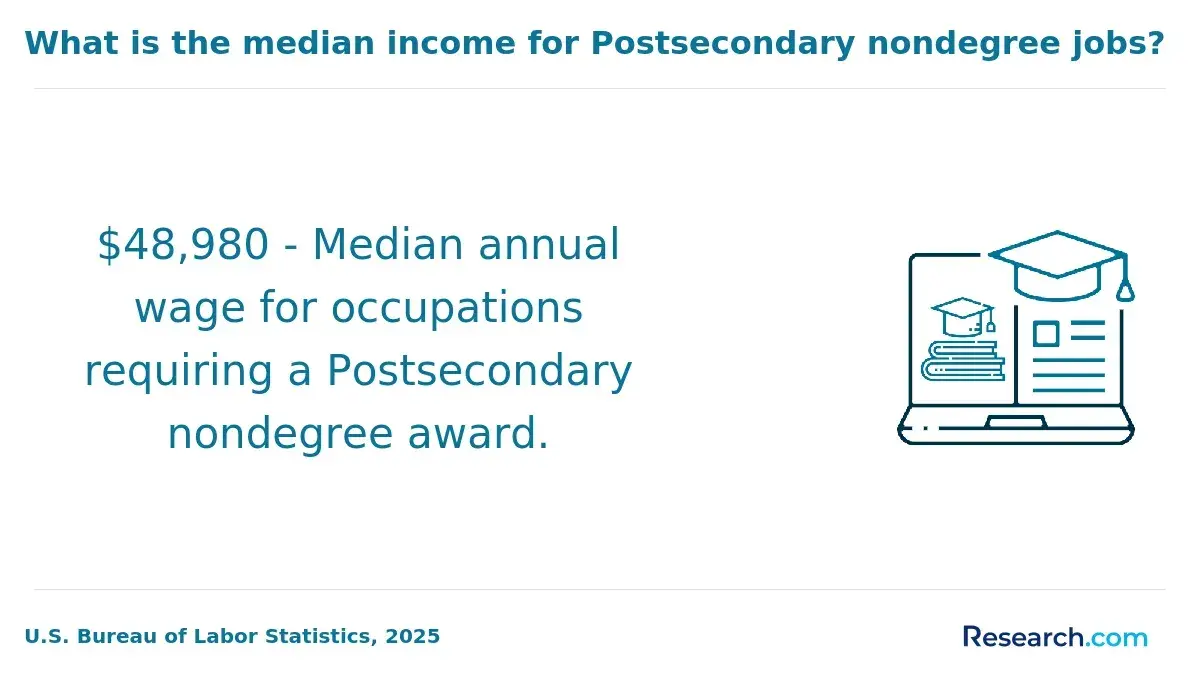
Technology, healthcare, and some business fields can connect to occupations with substantial demand or pay, but the major that offers the best potential depends on the role you can realistically enter. For example, BLS projects strong growth for the software-developer occupational group noted above; that outlook does not mean every computer science graduate will secure a developer job.
Compare occupations rather than attaching a wage to a degree. Software development usually calls for strong programming skills. Nursing requires qualifying education and licensure.
Healthcare management and many senior business roles commonly require related work experience. For each possible path, weigh the full education cost against entry requirements, local opportunities, and work you would actually want to do.
How Do You Verify Accreditation for an Online Major?
First, check the college's current institutional accreditation through the accreditor's own directory or the U.S. Department of Education's accreditation database. Accreditation applies to the institution; an online course is not separately accredited simply because it appears on the college's website.
Next, check whether your intended occupation calls for programmatic accreditation or state approval. This is especially important for nursing, social work, teacher preparation, counseling, and engineering pathways.
Ask the program which campus or online offering holds any claimed accreditation and whether it meets requirements in the state where you intend to seek licensure. Institutional accreditation alone may not answer that question.
What Admission Requirements Apply to Online Majors Without Application Fees?
A free application waives a charge; it does not waive eligibility rules. Undergraduate applicants may need a high school diploma or equivalent and prior college transcripts if transferring.
Graduate applicants generally need a completed bachelor's degree and may face field-specific prerequisites, professional experience expectations, or a minimum GPA. Nursing and other licensed-profession pathways can impose additional credential and placement requirements.
Read both the general admissions page and the program page. Ask whether transcripts, tests, a portfolio, an interview, or a separate departmental application are required, and whether any of those steps carries a charge. If you have previous credits, request an evaluation showing which courses satisfy the intended major rather than assuming all accepted credits shorten the degree.
How Much Do Online Majors Cost Beyond the Application Fee?
Usually far more than $0. Tuition is the main expense, but mandatory technology or program fees, books, equipment, proctored exams, and travel to required placements or residencies can change the total. Compare the price of remaining requirements, not just a per-credit rate: accepted transfer credits may reduce coursework, while prerequisites may add it.
Request a written estimate based on your intended enrollment pace and transfer evaluation. Ask which charges are required, whether tuition varies by residency, and what grants, employer benefits, or other aid you may qualify for.
If your goal is a discrete skill rather than a degree, compare the full cost and employer relevance of certificate programs online before committing to a major.
How Long Does It Take to Complete an Online Major?
There is no single timeline. A first bachelor's degree includes general education and major requirements; a master's concentrates on graduate work but may add prerequisites, a capstone, or field experience.
Full-time enrollment can shorten the calendar time, while part-time study may better fit work and family commitments. Transfer credit helps only when it applies to remaining requirements.
Ask for a term-by-term plan showing course availability, accepted credits, and any practicum or thesis. Do not mistake short classes for a short degree. Advertised masters in 6 months pathways deserve especially close scrutiny of prior-credit assumptions, course load, and eligibility; a brief timeline will not fit every applicant or field.
Which Online Majors Lead to Licensure or Professional Certification?
Nursing, teacher preparation, social work, and certain counseling pathways may be designed to support licensure, but completing a degree is only one step. State boards may also require an approved program, supervised experience, examinations, or a particular placement. Engineering graduates pursuing professional engineer licensure face separate board requirements.
IT and business majors can support preparation for industry certifications, but a college degree does not automatically award them. Before enrolling, identify your desired credential, consult its issuing board or organization, and obtain written clarification about how the specific online program meets educational requirements in your state. Be wary of broad "leads to licensure" claims that do not name a jurisdiction.
How Do You Choose a Reputable Online Major With No Application Fee?
Begin with career fit, then verify the program and its fee policy. Compare schools using the same intended degree and enrollment assumptions, rather than letting a free application substitute for evidence of quality. The following checks turn a shortlist into a practical decision.
- Identify the occupation or next credential you want and determine the education and licensing requirements that apply.
- Confirm online availability, institutional accreditation, relevant program approval, and any live sessions or in-person work.
- Verify in writing that the application fee is $0 for your degree level, program, applicant category, and start term.
- Request a transfer-credit evaluation and an estimate of tuition, mandatory fees, and remaining requirements.
- Compare advising, project or placement support, course scheduling, and realistic completion plans before choosing.
For scheduling flexibility, compare documented course formats rather than assuming "online" means self-paced. Resources on the best accredited self-paced online colleges can help frame that comparison, but confirm how your chosen major actually operates.
A major red flag is a school that promotes a free application while leaving total charges, accreditation, or required placements unclear.
Other Things You Should Know About the Best Online Majors
The application can be free while a later deposit or other charge still applies. Ask when each payment is due and whether it is refundable before accepting an offer.
Often, yes, subject to each school's rules. Apply only to programs you would seriously consider, and track separate transcript requests or other expenses.
No. Aid eligibility depends on factors such as the institution and program, your enrollment status, and the type of aid. Request an individual aid estimate.
Not necessarily. Online nursing, education, and social-work programs may require supervised clinical work, student teaching, or field placements in person. Confirm the location and scheduling rules before applying.
References
- Free College Application Week | Texas Higher Education Coordinating Board https://www.highered.texas.gov/free-college-application-week/
- Accreditation in the U.S. | ed.gov http://www.ed.gov/laws-and-policy/higher-education-laws-and-policy/college-accreditation/accreditation-in-the-us
- Colorado Free Application Days Instructions https://cdhe.colorado.gov/colorado-free-application-day-instructions
- Accredited Institution with Online Degree Programs | UCF Online https://www.ucf.edu/online/programs/
- Online Degree Programs | SNHU https://www.snhu.edu/online-degrees
- Online Program Exclusions | In-Person Components | Liberty University https://www.liberty.edu/online/exclusions/
- Upper Division Transfers - UF Online - University of Florida https://ufonline.ufl.edu/apply/admissions-requirements/upper-division-transfers/
- Programmatic Accreditation - The University of Kansas https://accreditation.ku.edu/programmatic-accreditation


