2027 Best College Majors With the Best ROI

Co-Founder and Chief Data Scientist
A high salary can make a college major look like a smart investment - but only if the education costs, time to qualify, and job prospects add up. The U.S. Bureau of Labor Statistics (BLS) reports a 2024 median annual wage of $133,080 for software developers, a useful benchmark but not a promise to computer science graduates.
This guide compares major fields, including when a master's degree may be worth the extra expense. You'll learn how to weigh occupational pay against total cost, licensing requirements, and realistic routes into work before choosing a program.
Key Things You Should Know
- Computer science, engineering, and nursing can offer strong ROI when an appropriately priced degree leads to work the graduate can realistically enter; software developers had a 2024 median annual wage of $133,080, according to BLS.
- Higher pay does not automatically justify more schooling. BLS reports a 2024 median annual wage of $93,600 for registered nurses, and a master's degree is not the usual requirement for entry-level RN roles.
- Compare the cost of the entire pathway, not just a major's salary potential. College Board reported average 2024-25 published tuition and fees of $11,610 for in-state students at public four-year colleges, before living expenses and aid.
Top 10 Best College Majors With the Best ROI
Business Programs
Accounting and finance can connect a bachelor's major to defined occupations, while a general business degree offers broader options but less direct evidence of a particular payoff. An MBA or specialized master's in accounting, finance, or analytics makes the most sense when a target employer values it and the expected advancement justifies tuition and time away from work.
Many management jobs require experience regardless of degree. Prospective accountants should also check their state's CPA education requirements; a master's is one possible route to meeting them, not a universal requirement.
Healthcare Programs
Healthcare majors span very different investments: public health and healthcare administration prepare students for population-health or organizational work, while clinical occupations have separate training and licensing rules. A master of public health or healthcare administration may support specialization or advancement, but neither grants a clinical license.
Before paying for graduate study, identify the job you want, its usual entry credential, and whether employers expect prior healthcare experience. For clinical paths, budget for supervised placements and confirm that the specific program meets applicable state requirements.
Information Technology Programs
IT majors can lead toward systems administration, networking, cloud operations, or cybersecurity. A bachelor's degree, relevant projects, and experience may offer a better early-career return than an immediate master's.
Graduate IT or cybersecurity programs can be useful for specialists moving into architecture, leadership, or advanced security work, but they do not replace hands-on skills. Compare programs by technical coursework, lab access, and employer relevance - not by a promised job title. Because tools change quickly, consider how you will keep learning after graduation.
Computer Science Programs
Computer science offers routes into software development and other computing occupations, but employers may assess coding ability, projects, and experience alongside a degree. A bachelor's program with strong fundamentals and manageable cost may have better ROI than an expensive graduate degree pursued without a specific goal.
A master's can be worthwhile for a career change or deeper study in areas such as machine learning or systems; research-oriented work may require further education. Compare required prerequisites, internship access, and total cost, especially if the graduate program requires foundation courses.
Nursing Programs
An accredited associate or bachelor's nursing pathway can lead toward RN eligibility after graduates meet state requirements and pass the licensing examination. A master of science in nursing serves a different purpose: advanced practice, education, or leadership.
Nurse practitioner roles generally require graduate preparation and state authorization, making clinical placement availability and state eligibility essential ROI checks. An RN-to-BSN or employer-supported graduate path may spread out costs for working nurses. Do not compare an advanced-practice occupation's pay with bachelor's tuition alone; include every required credential and supervised-training step.
Psychology Programs
A psychology bachelor's degree develops research and communication skills but usually does not qualify someone to practice independently as a psychologist. The return depends heavily on the intended occupation. A master's may prepare students for certain counseling roles if the program meets state education and supervised-practice requirements; licensed psychologist roles generally require doctoral training.
Compare psychology with more direct undergraduate routes if you need to earn sooner. Before enrolling in graduate study, check the exact license sought, required placements, examination rules, and likely debt.
Education Programs
Education majors may offer a defined route into teaching when the program includes state-approved preparation and student teaching. A master's in education can support specialization, a career change, or advancement, but salary benefits depend on the employer's pay schedule and state rules.
Some graduate programs are designed for already licensed teachers; others provide an initial-licensure route. Those are not interchangeable. Compare tuition with the likely pay difference in your intended district, and account for unpaid or schedule-intensive student teaching before choosing an accelerated program.
Criminal Justice Programs
Criminal justice can support interests in public safety, corrections, or policy, but many entry-level roles do not require a criminal justice master's. Hiring standards may instead emphasize examinations, background checks, academy training, or experience.
A graduate degree is most defensible when it meets a documented promotion requirement or develops skills for a specific research or leadership role. Compare it with less expensive options, including employer training or a complementary major such as accounting or cybersecurity, if those better match the job you want.
Engineering Programs
Engineering bachelor's degrees provide a direct academic foundation for many engineering roles, making undergraduate program quality and price central to ROI. A master's may help with specialized design, research, or advancement, but is not a universal entry requirement.
Choose the engineering discipline based on the work you want to do; the fields are not interchangeable. For roles involving professional engineer licensure, review your state board's education, examination, and experience rules. A graduate degree by itself does not award a PE license.
Social Work Programs
A bachelor of social work can prepare students for some entry-level services roles, while clinical social work generally requires a master of social work, supervised experience, and state licensure. That makes an MSW a potentially necessary investment for a specific career goal - not simply a way to seek higher pay.
Graduates of qualifying BSW programs may be eligible for advanced-standing MSW pathways, though schools set their own rules. Compare the remaining credits, placement schedule, debt, and local job opportunities before selecting a full-time or part-time route.
What Makes a College Major Have a Strong Return on Investment?
Return on investment (ROI) asks whether the financial and career benefits of a major are worth its full cost. For a useful comparison, count tuition and fees, books, living costs attributable to attendance, loan interest, and earnings you may give up while studying. Then consider net cost after grants, realistic employment prospects, and whether additional credentials are needed.
No major has one universal ROI: a low-cost engineering degree and a much more expensive degree in the same field can produce different financial outcomes. Salary data describes occupations, not what a particular graduate will earn. If you are still exploring fields, use a guide to the best college majors as a starting point, then test each option against your own cost and career target.
Which College Majors Offer the Highest Salaries After Graduation?
Computing occupations can offer high pay, but the relevant comparison is between occupations you could realistically enter, not majors with impressive-sounding salary figures. The BLS figures below are 2024 U.S. median annual wages for all workers in each occupation; they are not starting salaries or earnings attributable to a particular degree.
| Occupation | 2024 median annual wage | Education-path consideration |
| Software developer | $133,080 | Computer science is a common preparation route; demonstrable technical skills also matter. |
| Registered nurse | $93,600 | Requires an approved nursing education pathway and state licensure. |
| Accountant or auditor | $81,680 | An accounting background is relevant; CPA requirements vary by state. |
A higher occupational median may reflect experienced workers. Compare likely entry routes, regional opportunities, and additional qualification costs before treating the highest number as the best choice.
Which College Majors Have the Best Job Outlook and Demand?
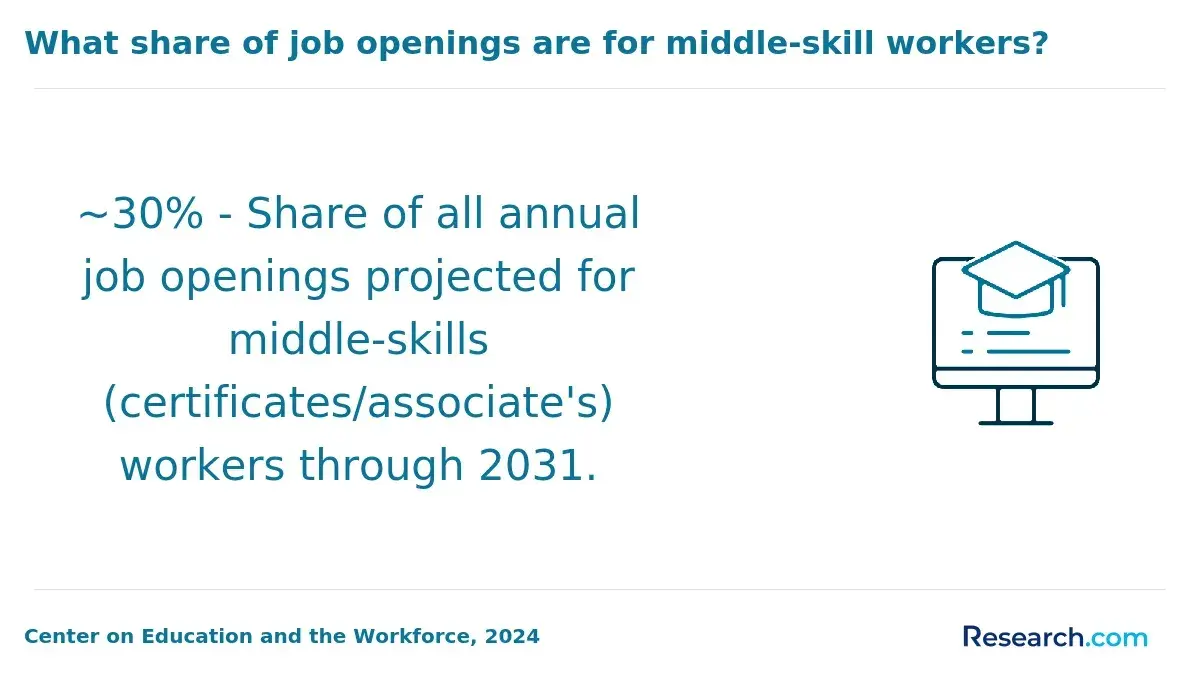
Job outlook matters because a high-paying occupation offers limited value if openings are scarce where you intend to work. Healthcare staffing needs and demand for software and security skills make nursing and computing worth investigating, but opportunities differ by specialty, location, and experience level. AI may change the tasks employers assign in computing and business; a current tool alone is a weaker investment than durable technical, analytical, and communication skills.
Use BLS occupational projections alongside local job postings: projections describe national employment trends, not your probability of being hired. Check whether postings in your area ask for a license, a bachelor's degree, experience, or graduate education. That distinction can change which major offers the better practical return.
What Degree and Training Paths Lead to High-ROI Careers?
The strongest pathway is often the least costly one that actually qualifies you for your goal. A bachelor's degree may be sufficient preparation for entry into software development or engineering, while clinical social work and advanced-practice nursing require additional graduate and licensing steps. Nursing also offers multiple starting credentials; a prospective RN should compare approved programs, clinical access, and later bridge options rather than assume a master's is necessary.
Working parents should factor predictable class times, placement hours, and part-time availability into that calculation. Resources on college programs for moms can help frame scheduling questions, but a convenient format has value only if the program meets the intended occupation's requirements.
How Much Do High-ROI College Majors Cost and How Long Do They Take?
A bachelor's degree is commonly planned around four years of full-time study; a master's adds time that varies with prerequisites, enrollment intensity, and clinical or other requirements. College Board's 2024-25 average published tuition and fees were $11,610 for in-state students at public four-year institutions. That figure excludes living expenses and does not represent an individual student's net price after aid, so it is a comparison point - not a program budget.
Request each school's estimated cost through completion, including fees, supplies, required travel, and placements. Compare aid offers and borrowing needs, not just advertised tuition. A cheapest online bachelor's degree search can surface lower-priced options, but verify the major's availability and total remaining credits. Accepted transfer credit can reduce cost; it does not automatically satisfy major requirements.
Are Online Degrees as Valuable as Campus-Based Programs?
An online degree can be valuable when its institution, curriculum, and applicable professional approvals fit the same career goal as a campus option. Delivery format alone does not establish quality or employer acceptance. Computing and business coursework may be easier to complete remotely than programs requiring laboratories, clinical placements, or student teaching.
Ask whether classes have live meetings, fixed deadlines, proctored activities, or in-person components. A self-paced bachelor's degree online may suit an unpredictable schedule, but "online" does not necessarily mean self-paced. For licensed careers, confirm placement arrangements and state eligibility before paying a deposit.
What Accreditation and Licensing Requirements Apply to High-ROI Careers?
Check institutional accreditation for any college you consider, then determine whether the intended occupation requires or benefits from programmatic accreditation. Examples include nursing program approval and accreditation relevant to RN pathways, ABET accreditation for some engineering pathways, and Council on Social Work Education accreditation for social work programs. Requirements differ by occupation and state; institutional accreditation alone may not settle licensure eligibility.
Before enrolling in a regulated field, identify the state where you expect to practice and confirm its education, examination, supervised-experience, and application rules with the relevant licensing board. This is especially important for online study across state lines and for graduate programs described broadly as "clinical" or "licensure-track."
What Coursework and Skills Do High-ROI Majors Typically Require?
High-ROI majors are not defined by easy coursework. Computer science and engineering generally demand sustained mathematics and technical problem-solving; accounting emphasizes financial analysis and rules; nursing combines science with supervised clinical work. Coursework matters most when it builds abilities that match a reachable occupation.
Graduate study should add something specific that the undergraduate path cannot: eligibility for a licensed role, meaningful specialization, or skills an employer will use. Compare prerequisites, required projects, clinical hours, internships, and capstones. If you are changing fields, foundation courses can increase both the time and price of a master's degree.
How Can You Choose a Reputable College Program With Strong ROI?
Start with a target occupation, then work backward to the minimum suitable credential. Compare several programs on complete net cost, graduation and employment information where available, required experiences, and eligibility for any license you need. Ask for a written transfer-credit evaluation if previous coursework could apply; credits accepted by a college may still count only as electives rather than toward the major.
Be wary of a program that advertises an occupation's median wage as its graduates' expected salary, leaves placement arrangements unclear, or cannot explain how it meets state licensing rules. The reputable choice is not automatically the fastest or cheapest: it is the one whose verified requirements, manageable cost, and career fit make completion worthwhile for you.
Other Things You Should Know About
There is no universal winner. Computer science, engineering, and nursing are strong candidates when you can complete an appropriate program at a manageable cost and meet the requirements of a job you want.
It may be when it qualifies you for a required license or supports a realistic, employer-valued move. Compare that benefit with tuition, borrowing, and time away from work; many entry-level jobs do not require one.
Yes. A lower-cost program, substantial grants, or a direct route to a suitable job can make it a better personal investment than a costly degree associated with a higher-paying occupation.
Identify likely jobs, confirm their actual education and licensing requirements, estimate your total net cost, and look at local opportunities. Ask the program how required placements and previous credits would affect your timeline.
References
- Research Summary: Education and Lifetime Earnings | ssa.gov https://www.ssa.gov/policy/docs/research-summaries/education-earnings.html
- Annual Earnings by Educational Attainment - COE https://nces.ed.gov/programs/coe/indicator/cba/annual-earnings
- A First Try at ROI: Ranking 4500 Colleges | CEW Georgetown https://cew.georgetown.edu/cew-reports/collegeroi/
- Trends in College Pricing Highlights | College Board Research https://research.collegeboard.org/trends/college-pricing/highlights
- Career earnings by college major - The Hamilton Project https://www.hamiltonproject.org/data/career-earnings-by-college-major/
- A College Degree Still Pays Off - But Student Choices Matter | collegeboard.org https://newsroom.collegeboard.org/college-degree-still-pays-student-choices-matter
- Is College Worth It? A Comprehensive Return on Investment Analysis - FREOPP https://freopp.org/whitepapers/is-college-worth-it-a-comprehensive-return-on-investment-analysis/