2027 Best Online Educational Psychology Doctorate Programs for Research Careers

Co-Founder and Chief Data Scientist
Choosing an online Educational Psychology doctorate is a research-career decision, not just a format decision. The right program can shape your dissertation, publications, faculty network, statistical skills, and competitiveness for academic, policy, assessment, or learning-science roles. The latest U.S. Bureau of Labor Statistics outlook projects 8% growth for postsecondary teachers from 2023 to 2033, but research-focused positions remain competitive.
This guide helps prospective doctoral students compare online and hybrid programs by research training, mentorship, accreditation, cost, flexibility, and long-term career fit.
Key Things You Should Know
- The best online Educational Psychology doctorate for a research career is usually a PhD or dissertation-based EdD with regional accreditation, advanced statistics and research-methods coursework, active faculty researchers, and clear evidence of dissertation-to-publication support.
- Fully online programs offer flexibility, but hybrid or low-residency doctorates may provide stronger access to labs, research teams, conference preparation, and faculty collaboration.
- The latest BLS outlook projects 8% growth for postsecondary teachers from 2023 to 2033, while tenure-track, policy research, testing, and learning-science roles often require publications, quantitative skills, and strong faculty references.
What Are the Best Online Educational Psychology Doctorate Programs for Research Careers?
The best online Educational Psychology doctorate programs for research careers are not always the cheapest or fastest. They are the programs that help you become a stronger researcher through rigorous methodology training, close faculty mentorship, a dissertation aligned with your interests, and opportunities to present, publish, or contribute to funded research.
Because Educational Psychology doctorates vary widely, it is more useful to compare program types than to assume every online doctorate prepares students for the same careers. A research-oriented program usually emphasizes learning theory, cognition, measurement, statistics, motivation, development, program evaluation, assessment, and empirical dissertation work.
The table below summarizes the strongest online doctorate options by research-career fit. Use it as a screening tool before comparing individual university catalogs, faculty profiles, dissertation archives, and tuition pages.
| Program type | Best fit | Research-career strength | Potential limitation |
| Online or low-residency PhD in Educational Psychology | Students targeting faculty, research scientist, psychometrics, learning-science, or policy research roles | Usually the strongest option when it includes advanced methods, a traditional dissertation, and faculty-led research | May be less common online and may require in-person residencies, comprehensive exams, or full-time study |
| Online dissertation-based EdD in Educational Psychology or related education research field | Working educators, administrators, instructional leaders, and analysts who want applied research roles | Strong when the dissertation is empirical and the curriculum includes quantitative, qualitative, and evaluation methods | Some EdD programs emphasize professional practice more than publishable research |
| Hybrid doctorate in learning sciences, cognition, assessment, or research methods | Students who can travel periodically for residencies, labs, or research intensives | Often stronger for mentorship, networking, and research collaboration than a fully asynchronous program | Less convenient for students who cannot travel or adjust work schedules |
| Online doctorate in school psychology, educational assessment, or special education research | Students focused on school-based intervention, assessment, child development, or applied educational research | Good fit when faculty publish in the student's target area and the program includes dissertation research | Licensure, practicum, internship, and accreditation requirements may limit fully online delivery |
If your goal is a research career, prioritize programs with visible research infrastructure. Look for faculty CVs, recent journal publications, grants, research labs, dissertation titles, conference presentations, and alumni roles. A program with a prestigious name but little alignment with your research topic may be a weaker choice than a less famous program with an ideal mentor.
Strong programs typically share several features that matter more than marketing language. Before applying, compare these details across at least three schools.
- Faculty members actively publish in areas such as learning sciences, human development, motivation, cognition, assessment, psychometrics, program evaluation, or educational data science.
- The curriculum includes multiple research-methods courses, not just one introductory statistics class.
- The dissertation is a substantial empirical project, systematic review with original analysis, design-based research study, or applied evaluation with defensible methodology.
- Students receive structured dissertation milestones, proposal support, data-analysis guidance, and access to research software or library resources.
- The program can show realistic outcomes, such as graduates moving into higher education, district research offices, testing organizations, policy groups, nonprofit research, or learning-technology research roles.
Should You Choose a PhD or Professional Doctorate in Educational Psychology for a Research Career?
For most research careers, the PhD is the more direct route because it is designed around original scholarship, research methodology, and preparation for academic or scientific work. A professional doctorate, usually an EdD, can still support a research career when it includes a rigorous dissertation, strong methods training, and faculty mentorship, but it is often more applied and practice-oriented.
The distinction is important because employers and faculty search committees may evaluate your research record more heavily than the degree label alone. A PhD with weak mentorship may be less useful than a research-intensive EdD, but a practice-focused EdD with a light capstone may not prepare you for competitive research positions.
The table below compares the two paths from a research-career perspective.
| Factor | PhD in Educational Psychology | EdD or professional doctorate |
| Primary purpose | Original research and scholarly preparation | Applied leadership, practice improvement, and problem-solving in educational settings |
| Best for | Faculty roles, research scientist positions, psychometrics, policy research, learning-science research | Applied research, district leadership, program evaluation, education consulting, practitioner-scholar roles |
| Dissertation expectation | Usually a traditional empirical dissertation with a strong theory and methods foundation | May be a traditional dissertation, dissertation-in-practice, or applied research project |
| Research-methods depth | Typically deeper, especially in statistics, measurement, experimental design, and theory | Varies widely; strong programs include advanced methods, while others emphasize leadership practice |
| Flexibility for working adults | Often less flexible, especially if research assistantships or labs are required | Often more flexible and more commonly offered online or in hybrid formats |
A PhD is usually the better choice if you want to publish, teach at a university, compete for postdoctoral or research scientist roles, or specialize in psychometrics, cognition, or learning analytics. An EdD may be a better fit if you want to lead research-informed change in schools, districts, nonprofits, education companies, or government agencies while continuing to work full time.
Students mainly seeking the fastest possible professional doctorate should be cautious. Some accelerated programs can be appropriate for experienced professionals, but speed should not come at the expense of research preparation.
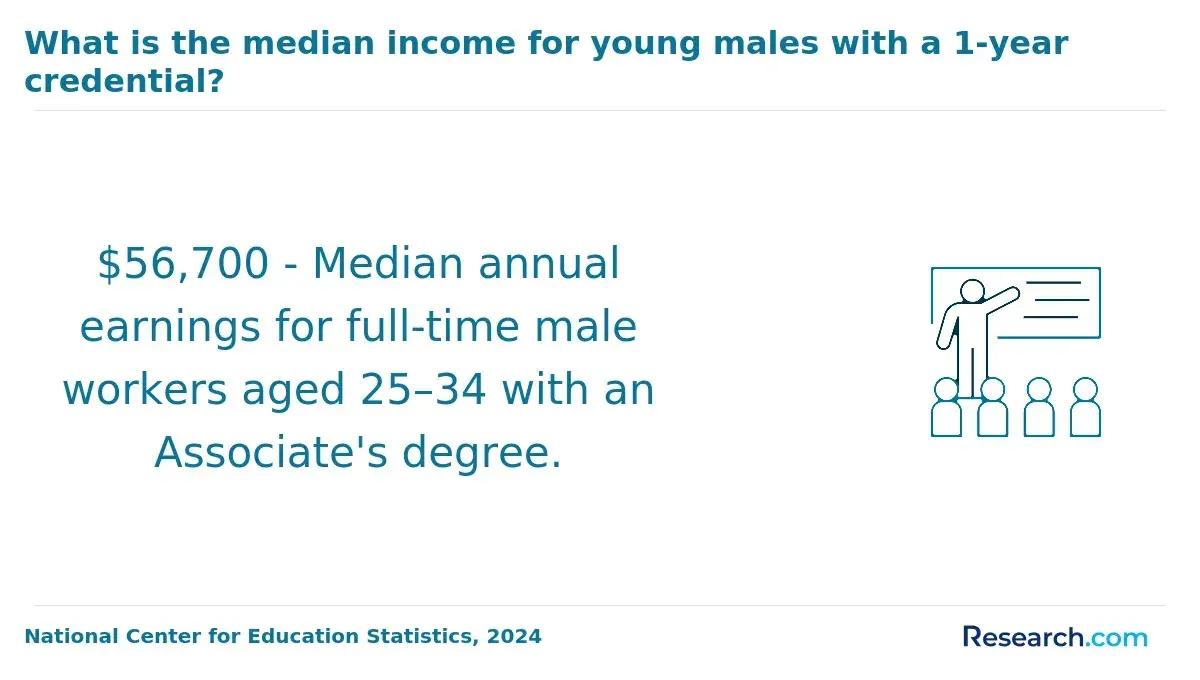
If your priority is completion time rather than research depth, compare options such as 1 year EdD programs online, but evaluate whether their research design matches your career goal.
What Accreditation and Quality Indicators Should You Look for in an Online Educational Psychology Doctorate Program?
The first quality indicator is institutional accreditation from an accreditor recognized by the U.S. Department of Education or the Council for Higher Education Accreditation. Without recognized institutional accreditation, students may face problems with federal financial aid, transferability, employer recognition, and eligibility for some academic positions.
Educational Psychology itself does not have one universal programmatic accreditor for all doctoral programs. However, related fields may have specialized accreditation or approval expectations.
For example, school psychology programs may need to meet different standards than non-licensure Educational Psychology programs, and students pursuing school-based practice should review school psychology programs online accredited by NASP when that career path is relevant.
Use the following quality indicators to separate research-ready programs from programs that are merely convenient.
- Recognized institutional accreditation and a clear state authorization statement for online students.
- Doctoral faculty with recent peer-reviewed publications, funded projects, edited books, or major conference activity in your area of interest.
- At least two advanced research-methods courses beyond introductory statistics, preferably including quantitative, qualitative, mixed-methods, measurement, or program-evaluation options.
- A transparent dissertation process with proposal defense, IRB review, committee structure, data-analysis support, and final defense expectations.
- Access to research databases, statistical software, library consultations, writing support, and dissertation coaching.
- Evidence of student research activity, such as conference presentations, coauthored papers, research assistantships, or dissertation awards.
Accreditation confirms a baseline level of institutional quality, but it does not prove a program is research-intensive. For research careers, faculty fit and dissertation infrastructure are just as important as accreditation status.
Admission requirements vary by university, but most online Educational Psychology doctorate programs expect applicants to show graduate-level readiness, academic writing ability, and a clear research direction. Competitive applicants usually connect their experience to a specific research problem rather than simply saying they want to "help students learn."
The table below shows common requirements and why each matters for research-oriented admissions review.
| Requirement | What schools commonly look for | Why it matters for research careers |
| Master's degree | A master's in education, psychology, counseling, instructional design, special education, statistics, or a related field | Shows preparation for doctoral-level theory and research coursework |
| Graduate GPA | Often a strong graduate record, with minimums varying by school | Signals ability to complete advanced seminars, statistics, and dissertation work |
| Statement of purpose | A focused explanation of research interests, career goals, and faculty fit | Helps admissions committees judge whether the program can support your dissertation topic |
| Writing sample | Academic paper, thesis excerpt, research report, literature review, or professional evaluation report | Shows whether you can synthesize literature and communicate evidence-based arguments |
| Recommendations | Letters from faculty, supervisors, researchers, or senior education leaders | Provides evidence of research potential, persistence, and professional judgment |
| Research or professional experience | Teaching, assessment, curriculum work, data analysis, program evaluation, intervention design, or policy work | Strengthens your ability to frame a meaningful dissertation problem |
Some programs require GRE scores, but many online education doctorates have made the GRE optional or removed it. If you have limited quantitative experience, a strong statistics grade, research methods course, data-analysis project, or published report can help demonstrate readiness.
Before applying, prepare a short research-fit matrix for each school. This keeps your application strategic and helps you avoid programs that cannot support your topic.
- Identify your target research area, such as motivation, reading intervention, educational assessment, learning analytics, student persistence, or teacher cognition.
- Find two or three faculty members whose publications overlap with that area.
- Review recent dissertations from the department to see whether students complete work similar to your goals.
- Ask admissions staff whether online students can join research groups, collaborate with faculty, or present at conferences.
- Use your statement of purpose to connect your background, research question, and faculty fit.
Research training is the core feature that separates a research-focused Educational Psychology doctorate from a general professional doctorate. A strong program should teach you how to ask researchable questions, design studies, collect or analyze data ethically, interpret evidence, and communicate findings to scholarly and professional audiences.
Most research-oriented programs include coursework in learning theory, human development, cognition, motivation, measurement, statistics, research design, qualitative methods, and program evaluation. More quantitative programs may add psychometrics, multivariate statistics, structural equation modeling, hierarchical linear modeling, or learning analytics.
The dissertation requirement is especially important. Some online doctorates use a traditional dissertation, while others use a dissertation-in-practice or applied capstone. Students targeting research careers should be cautious with programs that replace the dissertation with a lighter project unless the final product still demonstrates rigorous data collection, analysis, and scholarly contribution.
Students comparing alternatives can review how online EdD programs no dissertation differ from dissertation-based doctorates before deciding whether that structure fits a research-career goal.
Look for the following dissertation supports when comparing programs.
- A required proposal defense before data collection begins.
- IRB training and human-subjects research guidance.
- Access to faculty with expertise in your method, not only your topic.
- Coursework that builds toward the dissertation instead of leaving the project until the final year.
- Clear expectations for committee membership, timelines, revisions, and final defense.
- Support for statistical software, qualitative-analysis tools, survey design, data visualization, and academic writing.
- Opportunities to convert dissertation chapters into conference papers, journal articles, policy briefs, or technical reports.
A dissertation-based online doctorate can be a strong research pathway, but only if the program treats the dissertation as a mentored research apprenticeship rather than a final administrative hurdle.
Educational Psychology is broad, so specialization fit should drive your program search. Two programs with the same degree title may support very different research agendas depending on their faculty, labs, data access, and methodological strengths.
Common specializations include learning and cognition, motivation, human development, assessment and measurement, school-based intervention, gifted education, special education research, program evaluation, learning analytics, teacher education, online learning, and instructional design research.
Students interested in digital learning environments may also compare doctoral pathways with master's-level preparation such as the best online instructional design master's programs if they need stronger design experience before doctoral study.
The table below connects common Educational Psychology research areas with likely dissertation topics and career directions.
| Research area | Possible dissertation focus | Career alignment |
| Learning sciences and cognition | How students process, retain, transfer, or apply knowledge in different learning environments | Higher education research, learning technology, instructional research, cognitive science-adjacent roles |
| Motivation and self-regulated learning | Student persistence, achievement goals, feedback, engagement, or academic mindset interventions | University research, student success analytics, education nonprofits, policy research |
| Assessment, measurement, and psychometrics | Test validity, scale development, assessment fairness, or measurement of learning outcomes | Testing organizations, assessment companies, institutional research, research scientist roles |
| Program evaluation | Effectiveness of an intervention, curriculum, professional development model, or student-support program | District research offices, nonprofits, government agencies, consulting, grant-funded research |
| Human development and school-based research | Developmental, social-emotional, behavioral, or intervention questions in educational settings | School systems, applied research centers, child development research, policy organizations |
| Online learning and instructional psychology | How learners interact with digital platforms, adaptive tools, feedback systems, or multimedia instruction | EdTech research, instructional design leadership, learning analytics, corporate learning research |
Faculty mentorship can matter more than course catalog language. A good mentor helps refine your research question, recommends literature, guides methodology, opens doors to conferences, and provides references for academic or research roles.
Before enrolling, ask targeted questions about mentorship rather than relying on general assurances.
- Which faculty member could supervise my specific research topic?
- How many doctoral students does that faculty member currently advise?
- Do online students participate in research teams, reading groups, lab meetings, or grant projects?
- Can online students coauthor papers or present with faculty?
- What happens if my intended advisor leaves, retires, or cannot take new doctoral students?
- Are dissertation chairs assigned automatically, selected by students, or matched through a formal process?
Most online Educational Psychology doctorates take several years because students must complete advanced coursework, comprehensive exams or portfolios, a dissertation proposal, data collection, analysis, and final defense. Completion time depends on transfer credits, full-time or part-time enrollment, dissertation scope, faculty availability, and whether the student can maintain steady progress while working.
Fully online completion is possible in some programs, but not universal. Many doctorates include synchronous seminars, virtual residencies, campus intensives, research weekends, comprehensive exams, or in-person dissertation defenses. Programs connected to school psychology, assessment practice, or licensure-related training may require field experiences or supervised placements.
The table below compares common delivery formats and what they mean for research preparation.
| Format | Typical structure | Research-career advantage | Trade-off |
| Fully online asynchronous | Coursework can often be completed on a flexible weekly schedule | Best for working adults who need maximum flexibility | May provide fewer informal research relationships unless mentorship is intentionally structured |
| Online with synchronous seminars | Students attend live evening or weekend sessions online | Better discussion, faculty access, and cohort connection | Less schedule flexibility across time zones and work responsibilities |
| Low-residency or hybrid | Mostly online with required campus visits, intensives, or research meetings | Stronger networking, research collaboration, and dissertation planning | Travel costs, time away from work, and location constraints |
| Campus-based with online components | Primarily in person, with some online courses or remote dissertation work | Often strongest for assistantships, lab involvement, and academic research socialization | Least flexible for students who cannot relocate |
Full-time students may move faster, but part-time enrollment can be more realistic for professionals who need income and employer benefits. The key risk in part-time doctoral study is dissertation momentum.
Ask whether the program has structured checkpoints, summer writing support, and advisor availability for students who are not on campus.
The cost of an online Educational Psychology doctorate depends on tuition per credit, number of required credits, residency fees, technology fees, books, software, travel, dissertation continuation credits, and time away from work. Published tuition can be misleading if it excludes doctoral fees, required residencies, or extra terms spent completing the dissertation.
Recent NCES-published data show that average graduate tuition and required fees at public institutions remain far lower than at private nonprofit institutions. For doctoral students, this matters because a small per-credit difference can become a major total-cost difference across a multi-year program.
When comparing schools, list all required and likely costs rather than looking only at tuition.
- Per-credit tuition charged by the university
- Total credits required after transfer review
- Mandatory online, technology, library, or student-service fees
- Residency, intensive, or campus-visit travel costs
- Dissertation continuation or research registration fees
- Statistics, transcription, survey, data-storage, or qualitative-analysis software costs
- Conference travel, professional memberships, and publication-related expenses
- Lost income if the program requires reduced work hours, internships, or daytime research commitments
Funding for online doctoral students is often more limited than funding for residential PhD students, especially when programs are designed for working professionals. However, some students reduce costs through employer tuition assistance, scholarships, military benefits, federal loans, graduate assistantships, research assistantships, teaching opportunities, or dissertation fellowships.
The table below summarizes common funding options and their practical limits.
| Funding option | Best use | Important limitation |
| University scholarships | Reducing tuition for admitted doctoral students | May be competitive, small, or limited to certain terms |
| Graduate assistantships | Research training, tuition support, and faculty collaboration | Often more available to on-campus or full-time students than fully online students |
| Employer tuition assistance | Working educators, analysts, and administrators whose degree supports their job | May require continued employment or repayment if you leave the employer |
| Federal student loans | Covering tuition and approved educational expenses | Increases debt; students should compare repayment obligations with realistic career outcomes |
| Research or dissertation grants | Funding data collection, travel, participant incentives, or specialized software | Usually does not cover the full cost of the degree |
| Conference and professional association awards | Supporting presentation travel and research visibility | Typically modest and competitive |
A lower-cost program may be the better financial choice if it still has the faculty and research methods you need. However, choosing the cheapest program without dissertation support can become expensive if it delays completion or weakens your research portfolio.
A doctorate in Educational Psychology can support academic, applied research, assessment, policy, learning technology, and leadership roles. The strongest opportunities usually go to graduates who can show more than degree completion: employers often look for research design skills, statistical fluency, writing samples, publications, evaluation experience, and the ability to translate findings for decision-makers.
The latest BLS employment outlook is encouraging for some research-adjacent pathways but mixed across the broader market. Postsecondary teaching is projected to grow 8% from 2023 to 2033, while competition for full-time tenure-track roles remains strong because many institutions use adjunct and non-tenure appointments.
The table below summarizes common career paths and how a research-focused doctorate can support each one.
| Career path | Typical responsibilities | How the doctorate helps |
| Postsecondary faculty member | Teach courses, publish research, advise students, serve on committees, and pursue grants | Provides subject expertise, dissertation experience, and preparation for scholarly writing |
| Education research scientist | Design studies, analyze learning data, evaluate interventions, and publish or report findings | Builds advanced methods, theory, and research communication skills |
| Psychometrician or assessment researcher | Develop assessments, evaluate validity, analyze test data, and study fairness or reliability | Requires strong measurement, statistics, and quantitative research preparation |
| Program evaluator | Assess the effectiveness of educational programs, grants, curricula, or interventions | Uses mixed methods, data interpretation, and applied research design |
| Learning analytics or EdTech researcher | Study user behavior, learning outcomes, product effectiveness, and digital learning environments | Connects educational theory with data analysis, design, and evidence-based improvement |
| Policy or nonprofit research analyst | Analyze education systems, write reports, evaluate policy effects, and communicate evidence to stakeholders | Develops research synthesis, evaluation, and applied statistical skills |
| Institutional research or student success analyst | Analyze enrollment, persistence, graduation, and student learning outcomes | Supports data-informed decision-making in colleges and universities |
Salary varies by employer, geography, industry, publication record, methods expertise, and whether the role is academic, administrative, nonprofit, government, or private-sector.
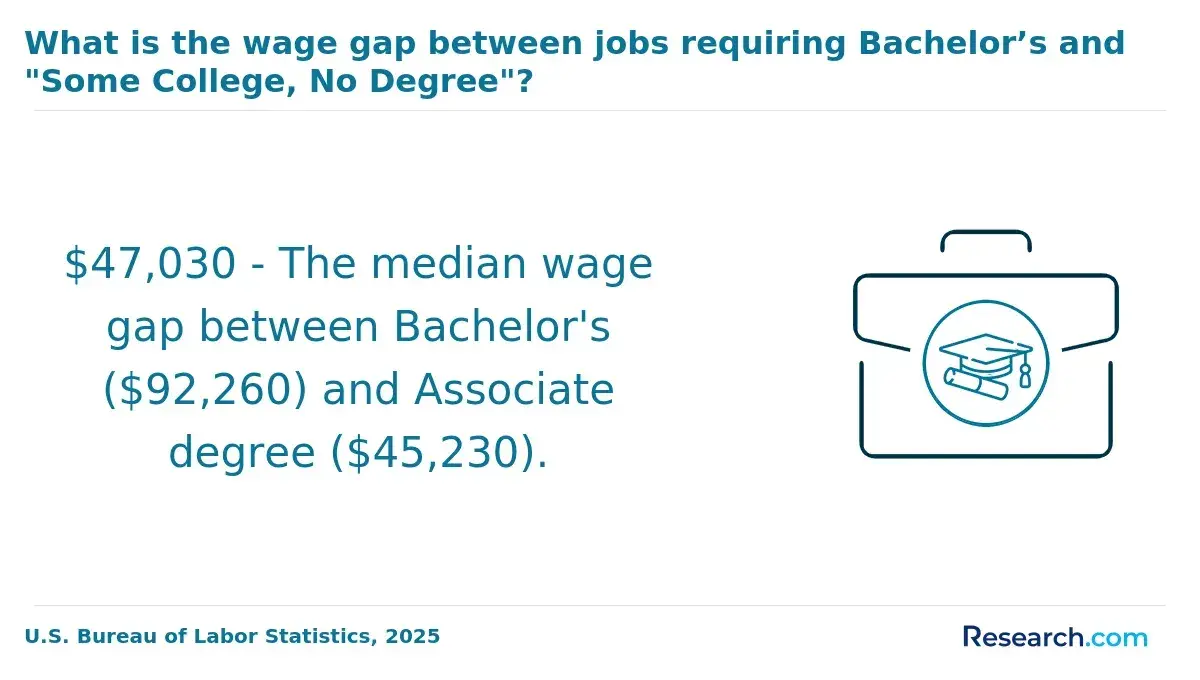
BLS May 2024 wage data place many relevant education, research, psychology, and postsecondary roles across a wide salary range, so students should compare target job postings rather than relying on a single median wage.
For research careers, the most valuable skills are often portable across sectors. Build these skills during the doctorate rather than waiting until after graduation.
- Quantitative analysis, including regression, multilevel modeling, measurement, or learning analytics when relevant.
- Qualitative and mixed-methods research design for interviews, observations, case studies, and implementation research.
- Survey design, instrument validation, and evidence-based assessment.
- Research writing for journal articles, technical reports, grant proposals, and policy briefs.
- Data visualization and communication for nontechnical audiences.
- Ethical research practice, IRB procedures, privacy protections, and responsible AI use in research workflows.
AI is also changing expectations in educational research. Researchers increasingly need to evaluate adaptive learning tools, audit algorithmic bias, use data responsibly, and understand how AI affects assessment, feedback, and student support. A strong doctoral program should help students critique these tools, not simply use them.
How Should You Choose the Best Online Educational Psychology Doctorate Program for Your Research Goals?
Start with your desired research career, then work backward to the program features that support it. A program that is excellent for a district administrator may not be ideal for a future psychometrician, and a flexible online EdD may not provide the research apprenticeship needed for a faculty career.
Use this step-by-step process to compare programs in a way that protects your time, money, and career options.
- Define your target outcome first: faculty role, policy research, assessment, learning analytics, school-based research, nonprofit evaluation, or education leadership.
- Choose the degree type that matches that goal; prioritize a PhD for academic and scientific research, and consider a dissertation-based EdD for applied research and leadership roles.
- Verify recognized institutional accreditation and, if relevant, specialized accreditation or licensure alignment.
- Identify at least one potential dissertation chair before applying, and confirm that the faculty member is active in your research area.
- Compare research-methods coursework, including statistics, measurement, qualitative methods, mixed methods, and program evaluation.
- Review dissertation titles from recent graduates to see whether the program supports rigorous empirical work.
- Ask whether online students can join research projects, coauthor papers, attend conferences, or access research assistantships.
- Calculate total cost, including fees, residencies, continuation credits, software, and lost work time.
- Compare completion structure, including synchronous requirements, residencies, comprehensive exams, proposal deadlines, and dissertation checkpoints.
- Speak with current students or alumni about advising quality, dissertation bottlenecks, faculty responsiveness, and career support.
Several red flags should make you slow down before enrolling. They do not always mean a program is poor, but they do mean you need clearer answers.
- The program cannot identify faculty who supervise your research area.
- The website emphasizes speed and convenience but says little about research methods, dissertation expectations, or faculty scholarship.
- Admissions advisors cannot explain whether online students can access research groups, software, library support, or dissertation mentoring.
- The curriculum includes minimal statistics or methodology coursework.
- Recent dissertation topics are unavailable, vague, or unrelated to your interests.
- The program's total cost is unclear after tuition, fees, residency travel, and dissertation continuation terms.
- Marketing materials imply that the doctorate will automatically lead to a faculty or research job.
The best choice is the program that offers the strongest match among research topic, faculty mentorship, methods depth, cost, flexibility, and career pathway. If you cannot find that match online, consider a hybrid or campus-based doctorate, especially if your goal is a competitive academic research career.
Other Things You Should Know About Educational Psychology Programs
Yes, many online and hybrid programs are designed for working adults. However, dissertation work, statistics courses, residencies, and research deadlines can be demanding, so ask whether the program supports part-time pacing and year-round dissertation advising.
Usually no. Research, policy, assessment, institutional research, and faculty roles often do not require clinical or school psychology licensure. Licensure may matter if you plan to provide psychological services, conduct school psychology practice, or use protected professional titles.
It can be, if the university is properly accredited and the program includes rigorous research training, a strong dissertation, and credible faculty mentorship. Employers and academic committees will usually look closely at your publications, methods skills, dissertation quality, and references.
Publication is helpful but not always required. A strong writing sample, research assistant experience, program evaluation report, master's thesis, conference presentation, or data-analysis project can also show doctoral readiness.
- Raising the Bar: The Impact of Accreditation on Psychology Training | SoMAP - The Society of Modern Applied Psychology https://thesomap.org/raising-the-bar-the-impact-of-accreditation-on-psychology-training/
- Educational Psychology Degrees and Careers https://www.onlinepsychologydegrees.com/specialty/educational-psychology/
- Applying Your Educational Psychology Degree in the Real-World https://www.appliedbehavioranalysisprograms.com/applying-educational-psychology-degree-in-real-world/
- Quantitative and Qualitative Methods Doctoral Programs https://www.apadivisions.org/division-5/resources/doctoral
- 25 Psychology Ph.D. Programs Online | GradSchoolHub.com https://www.gradschoolhub.com/best/doctoral-programs-in-psychology/
- How To Become An Educational Psychologist | Psychology.org https://www.psychology.org/careers/educational-psychologist/