
2027 Online Educational Psychology Doctorate Programs with One-on-One Faculty Mentorship

Co-Founder and Chief Data Scientist
Choosing an online educational psychology doctorate is really a choice about support: who will guide your research, challenge your ideas, and help you finish. NCES data released in 2024 show average graduate tuition and required fees were $12,596 at public institutions and $29,931 at private nonprofit institutions, so mentorship quality matters when the investment is substantial.
This guide is for educators, researchers, school professionals, and training leaders comparing online doctoral options. You will learn how faculty mentorship works, how to verify it, and when it is worth prioritizing over speed, flexibility, or lower tuition.
Key Things You Should Know
- One-on-one faculty mentorship is most valuable when it is tied to dissertation or applied research guidance, not just general academic advising or automated student support.
- Pure online educational psychology doctorates are limited, so many students compare EdD, PhD, psychology, learning sciences, school psychology, and education programs with educational psychology concentrations.
- Cost should be weighed against access: NCES graduate tuition data released in 2024 show a public/private nonprofit gap of more than $17,000 per year before aid, fees, and doctoral continuation costs.
How Does One-on-One Faculty Mentorship Work in Online Educational Psychology Doctorate Programs?
One-on-one faculty mentorship in an online educational psychology doctorate means a doctoral-level faculty member works directly with a student on academic planning, research design, professional development, and sometimes career strategy. It is different from academic advising, which usually focuses on registration, policies, degree audits, and deadlines.
In educational psychology, mentorship is especially important because students often study complex questions about learning, motivation, assessment, cognition, development, behavior, instructional design, or school-based interventions. A good mentor helps narrow broad interests into a researchable problem and makes sure the student's methods fit the question.
Most online programs use one or more of the following mentorship structures. Understanding the differences helps you avoid assuming that "faculty support" means frequent, individualized guidance.
| Mentorship feature | What it usually means | Why it matters |
| Faculty advisor | A faculty member assigned early in the program to discuss goals, course sequencing, and research fit. | Useful for planning, but may not be the same person who supervises the dissertation. |
| Dissertation chair | The primary faculty supervisor for proposal development, methodology, analysis, and final defense. | Often the most important mentor for completion and research quality. |
| Committee members | Additional faculty who review the dissertation or applied project and provide content or methods expertise. | Can strengthen the project if members bring complementary expertise. |
| Course faculty | Instructors who teach doctoral seminars, research courses, or specialization courses. | Helpful for skill-building, but course interaction may not continue after the class ends. |
| Professional mentor | A faculty member or practitioner who helps connect doctoral work to leadership, school, policy, or learning-design goals. | Best for students seeking career advancement beyond the dissertation. |
Strong mentorship is usually intentional and documented. Look for programs that explain when mentors are assigned, how often students meet with them, whether students can request a specific faculty member, and how mentor changes are handled if research interests shift.
A common mistake is treating "small classes" as proof of one-on-one mentorship. Small seminars can improve access, but they do not automatically mean a faculty member will review drafts, discuss research questions individually, or provide career guidance outside class.
Which Online Educational Psychology Doctorate Programs Offer the Strongest Faculty Mentorship?
The strongest programs are not always the ones with the biggest marketing claims. For an online educational psychology doctorate, the best mentorship fit usually comes from a clear match between your research interests and available faculty expertise, plus a formal process for dissertation or applied-project supervision.
Because fully online doctoral programs specifically named "educational psychology" are relatively uncommon, applicants often compare educational psychology specializations within education, psychology, learning sciences, school psychology, or instructional systems programs. The table below shows what to look for when evaluating programs that may offer strong individualized mentorship:
| Program type to compare | Mentorship strength to look for | Best fit | Important verification question |
| Online PhD in Education or Psychology with an educational psychology concentration | Research faculty, dissertation chair model, methods-heavy coursework, and publication-oriented guidance. | Students interested in research, assessment, cognition, motivation, learning sciences, or higher education teaching. | Can I identify at least two faculty members whose research overlaps with my intended topic? |
| Online EdD with learning, cognition, assessment, or educational psychology emphasis | Applied research mentoring, practitioner-focused dissertation or capstone support, and leadership-oriented advising. | Working educators, school leaders, training professionals, and administrators applying research to practice. | Is the final project a dissertation, capstone, dissertation-in-practice, or another applied study? |
| Online school psychology doctoral pathway | Faculty supervision connected to assessment, intervention, ethics, practicum, internship, and state credential requirements. | Students pursuing school psychology roles where licensure, internship, or credentialing rules apply. | Does the program meet the requirements in the state where I plan to practice? |
| Online instructional design or learning technology doctorate | Mentorship from faculty with expertise in learning theory, learning analytics, online learning, instructional systems, or workplace training. | Students targeting instructional leadership, corporate learning, edtech, or higher education learning-design roles. | Will faculty mentor projects involving AI, learning analytics, or digital learning environments? |
| Low-residency doctoral program | Combination of online advising and intensive in-person research seminars, writing retreats, or dissertation workshops. | Students who want online flexibility but benefit from periodic face-to-face mentoring. | How often are residencies required, and are travel costs included in the published cost estimate? |
To identify the strongest mentorship options, start with faculty pages rather than admissions pages. Review faculty publications, current projects, dissertation supervision interests, professional licenses, and whether faculty are active in educational psychology, assessment, learning sciences, school psychology, or related fields.
Use a short evaluation sequence before you apply. This helps you separate real mentorship infrastructure from broad claims about personal attention.
- List your top three research or practice interests, such as motivation, assessment, learning analytics, reading intervention, executive function, or teacher learning.
- Find faculty whose bios, publications, or projects directly connect to those interests.
- Ask admissions whether doctoral students can request a mentor or dissertation chair based on research fit.
- Ask how many doctoral students each faculty member typically advises at one time.
- Request to speak with a current student or recent graduate about mentor responsiveness and dissertation feedback.
A red flag is a program that cannot explain who mentors students after coursework ends. Doctoral attrition often happens during the independent research phase, so vague answers about dissertation support deserve careful scrutiny.
How Does Faculty Mentorship Support Dissertation or Applied Research in an Online Educational Psychology Doctorate?
Faculty mentorship becomes most visible during the dissertation, dissertation-in-practice, capstone, or applied research project. In educational psychology, this work may involve student motivation, learning outcomes, psychological assessment, instructional interventions, special education supports, teacher development, online learning behavior, or program evaluation.
A mentor's role is not to choose the topic for you. Instead, the mentor helps you turn a broad interest into a feasible study that can pass ethics review, be completed with available data, and contribute to your professional goals.
Students comparing dissertation-heavy and applied-project programs should understand what faculty support includes. The strongest models usually provide help at each stage below:
- Topic refinement: The mentor helps narrow a broad issue into a researchable problem with a clear population, setting, and purpose.
- Literature alignment: The mentor guides students toward current theory and research so the study is not disconnected from the field.
- Method selection: The mentor helps determine whether quantitative, qualitative, mixed-methods, single-case, program evaluation, or design-based research fits the question.
- Ethics and feasibility: The mentor helps students think through IRB approval, data access, participant recruitment, and practical constraints.
- Draft feedback: The mentor provides substantive comments on the proposal, analysis, interpretation, and final manuscript.
- Defense preparation: The mentor helps students anticipate committee questions and explain the study's limitations clearly.
Some students choose programs without a traditional dissertation because they want a more applied or time-bounded doctoral project. If that is your priority, compare mentorship expectations carefully when reviewing online EdD programs no dissertation, because "no dissertation" does not mean "no major research or capstone project."
AI and learning analytics are also changing doctoral research. Faculty mentors increasingly help students decide when tools such as text analysis, adaptive learning data, or AI-assisted literature organization are appropriate, ethical, and acceptable under university policy. Students should ask whether faculty are prepared to supervise research involving educational technology, data privacy, or AI-supported learning environments.
One-on-one mentorship can support doctoral progress by reducing confusion, improving research focus, and helping students recover when a dissertation or applied project stalls. It does not guarantee faster completion, but it can make the path more navigable for students balancing work, family, and independent research.
The most important benefit is timely feedback. Online doctoral students often work asynchronously, so a delayed response from a dissertation chair can slow proposal approval, data collection, analysis, or final revisions. Before enrolling, ask whether the program publishes expected faculty response times for dissertation drafts and advising questions.
Mentorship affects progress differently depending on the program's pacing model. The table below compares common structures and what they mean for completion planning:
| Program structure | How mentorship usually works | Progress advantage | Possible drawback |
| Lockstep cohort | Students move through courses together with shared milestones and faculty-led checkpoints. | Clear pacing and peer accountability. | Less flexibility if your research timeline or work schedule changes. |
| Individually paced online doctorate | Students may have more control over course load and dissertation timing, with mentor guidance varying by phase. | Better fit for working professionals who need flexibility. | Requires strong self-management and proactive communication. |
| Accelerated EdD pathway | Mentorship is often structured around fast milestone completion and applied research planning. | Can reduce time in school for students with a clear project and strong preparation. | May be too compressed for students still exploring research interests. |
| Low-residency model | Online mentoring is supplemented by intensive in-person meetings, seminars, or dissertation workshops. | Face-to-face contact may strengthen mentor relationships. | Travel, lodging, and schedule conflicts can add cost and complexity. |
Students interested in speed should compare mentorship and project expectations, not just advertised completion time. Some 1 year EdD programs online may appeal to experienced professionals, but a very fast timeline works best when the student already has a focused problem of practice, strong writing skills, and reliable access to data.
A common mistake is assuming one-on-one mentorship automatically shortens the doctorate. It can help, but students still need time for literature review, research approvals, data collection, analysis, writing, committee review, and revisions.
Mentorship models vary widely across online doctoral programs. Some assign a faculty mentor at admission, some wait until dissertation coursework begins, and others rely on course instructors until students are ready to form a committee.
The best model depends on your goals. A student pursuing academic research may need a research-active faculty mentor early, while a school district leader may benefit more from an applied mentor who understands program evaluation, intervention implementation, and organizational change.
The table below summarizes how common mentorship models compare from a student decision-making perspective:
| Mentorship model | Typical experience | Best for | What to watch for |
| Dedicated faculty mentor from enrollment | Student has an identified faculty contact for academic and research direction from the beginning. | Students with a defined research area who want early alignment. | The assigned mentor may not match the final dissertation topic. |
| Dissertation-chair model | Faculty mentorship becomes more intensive after coursework or research seminars. | Students who want strong research support during the final doctoral phase. | Early coursework may feel less individualized. |
| Committee-based mentoring | Several faculty members contribute content, methods, and professional feedback. | Interdisciplinary projects involving psychology, education, assessment, technology, or policy. | Students may need to manage conflicting feedback from multiple faculty. |
| Cohort-plus-mentor model | Students receive peer support and structured milestones plus individual faculty guidance. | Working professionals who need accountability and personal direction. | Cohort pacing may limit flexibility. |
| Practitioner-scholar mentoring | Faculty connect research methods to school, district, nonprofit, corporate learning, or higher education settings. | EdD students focused on applied leadership or systems improvement. | May be less suitable for students seeking research-intensive academic careers. |
One-on-one mentorship is not automatically superior to cohort-based support. A highly structured cohort program may be better if you need deadlines, peer accountability, and predictable milestones. Individual mentoring may be better if your research topic is specialized, your schedule is irregular, or your career goals require tailored guidance.
When comparing models, ask for specifics rather than accepting general phrases. "Faculty are accessible" is less meaningful than a policy stating that dissertation chairs respond to drafts within a defined time window or meet with students monthly during proposal development.
Faculty mentorship can support career growth when it connects doctoral learning to real professional opportunities. In educational psychology, those opportunities may include research roles, school or district leadership, instructional design, assessment development, faculty positions, program evaluation, educational consulting, policy analysis, or learning and development leadership.
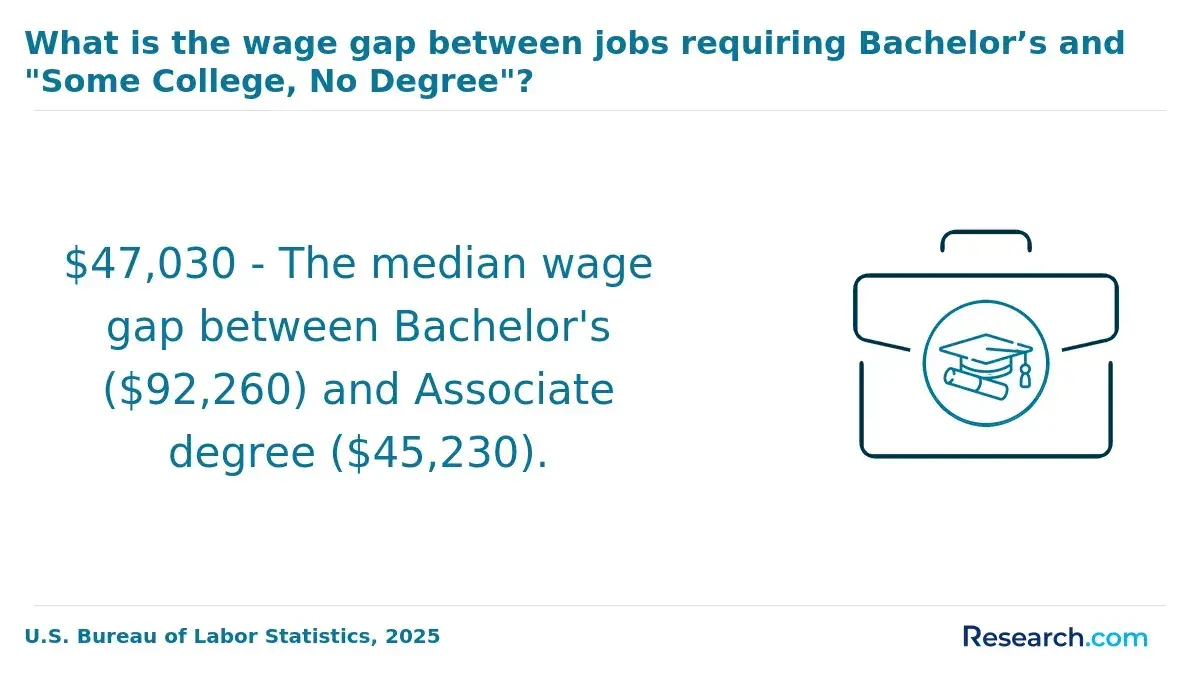
BLS May 2024 wage data show that instructional coordinators had a median annual wage of $74,720, while training and development managers had a median annual wage above $120,000. These figures do not define the payoff of a doctorate, but they show why students should connect doctoral specialization, research skills, and mentorship to specific career paths before enrolling.
A strong mentor can help students build career value in several practical ways. These benefits are most meaningful when they are built into the program rather than left to chance:
- Research visibility: Mentors may guide students toward conference proposals, journal manuscripts, poster presentations, or practitioner publications.
- Professional positioning: Mentors can help translate dissertation work into leadership, school improvement, assessment, or learning-design language employers understand.
- Network access: Faculty may introduce students to professional associations, research groups, district leaders, or alumni networks.
- Skill signaling: Mentors can help students demonstrate advanced skills in data analysis, program evaluation, assessment, intervention design, or learning technologies.
- Career strategy: Mentors may advise whether the student should pursue faculty roles, applied research, school-based positions, consulting, or organizational learning roles.
Students interested in learning design or workforce training may also compare doctoral study with shorter graduate options such as the best online instructional design master's programs. A doctorate may be valuable for advanced research, leadership, or higher education goals, but a master's degree may be more efficient for some instructional design roles.
A common red flag is assuming mentorship includes job placement. Faculty may provide guidance, references, or networking advice, but universities vary in the career services they offer to online doctoral students. Ask whether online doctoral students have access to the same career coaching, alumni networks, and research presentation opportunities as campus-based students.
An effective mentor should have expertise that matches your academic goals, research topic, and intended career setting. In educational psychology, the best mentor is not simply the most senior professor; it is the faculty member who can guide the kind of problem you want to solve.
Review faculty qualifications carefully before applying. Faculty fit is one of the strongest practical indicators of whether one-on-one mentorship will be meaningful.
- Doctoral training in a relevant field: Look for faculty with backgrounds in educational psychology, psychology, learning sciences, school psychology, assessment, research methods, special education, instructional design, or related education fields.
- Research alignment: Check whether the mentor publishes or supervises work related to your topic, population, method, or setting.
- Methodological strength: A mentor should be comfortable with the methods your project may require, such as quantitative analysis, qualitative inquiry, mixed methods, psychometrics, single-case design, or program evaluation.
- Professional credibility: For practitioner-focused students, faculty experience in schools, districts, policy, higher education, or workforce learning can be as important as publication history.
- Online mentoring experience: Faculty should know how to support remote doctoral students through video meetings, asynchronous draft feedback, online research tools, and virtual committee processes.
If your goal involves school psychology practice, credentialing rules are especially important. Students comparing school psychology programs online accredited by NASP should verify practicum, internship, supervision, and state requirements directly with the program and licensing or credentialing authority.
One common mistake is choosing a program because the department has one impressive faculty member without confirming availability. Senior faculty may be on leave, may not supervise new doctoral students, or may advise only certain types of dissertations. Ask whether your preferred faculty member is accepting mentees during your expected start term.
One-on-one mentorship can improve the value of an online educational psychology doctorate when it helps students finish efficiently, produce stronger research, and connect the degree to career goals. It can also raise the perceived value of a more expensive program if faculty access is unusually strong. However, mentorship should be evaluated alongside tuition, fees, transfer credits, employer reimbursement, timeline, and final project requirements.
NCES data released in 2024 show average graduate tuition and required fees of $12,596 at public institutions and $29,931 at private nonprofit institutions. For doctoral students, the practical cost gap can grow further because many programs charge by credit, require continuation enrollment during the dissertation, or add technology, residency, or doctoral project fees.
The table below shows cost factors that matter when comparing mentorship value. These categories help you look beyond the advertised per-credit price:
| Cost factor | Why it matters for mentorship value | What to ask |
| Tuition per credit | Higher tuition may be worth considering only if faculty access, research support, and outcomes are clearly stronger. | What is the total estimated tuition for the full degree, not just one term? |
| Dissertation continuation fees | Students who need extra time may continue paying after coursework ends. | What does enrollment cost after coursework if the dissertation is still in progress? |
| Residency or intensive fees | Low-residency programs may add travel, lodging, and time away from work. | Are residencies required, optional, virtual, or included in tuition? |
| Transfer credit policy | Accepted graduate credits can reduce cost and time but may not reduce dissertation requirements. | How many credits can transfer, and do they affect mentor assignment or program milestones? |
| Employer reimbursement | Working professionals may reduce out-of-pocket costs if the degree aligns with current job responsibilities. | Does the program provide documentation needed for tuition benefits? |
| Financial aid and borrowing | Doctoral borrowing can be significant, especially when completion takes longer than expected. | What is the typical debt range for completers in this program, if available? |
Mentorship is most likely to justify a higher cost when it is frequent, specialized, and connected to completion. A lower-cost program may be the better choice if it has adequate dissertation support, clear milestones, and faculty whose expertise fits your project.
Use this decision rule: do not pay more for "personalized support" unless the school can describe who provides it, how often it occurs, what happens when faculty are unavailable, and how students are supported during the dissertation or capstone phase.
One-on-one mentorship is most useful for students whose goals require specialized feedback, advanced research design, or individualized professional positioning. It is less essential for students who mainly want a structured leadership credential and prefer a lockstep cohort with predictable assignments.
The students below are most likely to benefit from individualized faculty mentorship. The key is whether the mentor's expertise directly supports the student's academic and career direction.
- Research-focused students: Students planning to publish, present at conferences, teach in higher education, or pursue research roles need close guidance on theory, methods, and scholarly contribution.
- Students with specialized topics: Projects involving learning disabilities, motivation, assessment, trauma-informed practice, AI in education, multilingual learners, or neurodevelopmental issues often require faculty with specific expertise.
- Working professionals using workplace data: Educators, administrators, and training leaders may need help turning school, district, nonprofit, or corporate learning problems into ethical applied research.
- Students returning after a long academic break: Individual mentoring can help rebuild research, writing, and statistical confidence.
- Students without a local doctoral network: Online learners who lack nearby research peers may rely more heavily on faculty guidance and virtual scholarly communities.
Some students may be better served by a structured cohort or lower-cost program. If you already know exactly what credential you need, do not plan to conduct specialized research, and value predictable deadlines more than individualized guidance, a cohort-based EdD may provide better practical value.
Students should also be realistic about their own availability. One-on-one mentorship works best when students prepare agendas, submit drafts on time, respond to feedback, and communicate proactively. A strong mentor cannot compensate for consistently limited student engagement.
How Should Students Evaluate Faculty Mentorship Before Choosing an Online Educational Psychology Doctorate?
The safest way to evaluate mentorship is to treat it like a program feature that must be verified, not a promise that can be assumed. Ask specific questions, compare answers across schools, and look for consistency between admissions materials, faculty pages, student handbooks, and alumni experiences.
Use the following steps before applying or enrolling. This process helps you assess whether mentorship is structured, accessible, and relevant to your goals.
- Define your goal first: Decide whether you want research preparation, school-based practice, district leadership, higher education teaching, instructional design leadership, assessment work, or applied program evaluation.
- Map your interests to faculty: Identify faculty whose publications, bios, projects, or practice background align with your intended area.
- Ask when mentors are assigned: Find out whether mentorship begins at admission, after core coursework, during research seminars, or only when the dissertation starts.
- Verify meeting expectations: Ask how often students typically meet with mentors and whether meetings are synchronous, asynchronous, or both.
- Clarify feedback timelines: Ask whether the program has expected response times for dissertation drafts, proposal reviews, and committee comments.
- Check advising loads: Ask how many doctoral students each faculty member supervises and whether there is a cap.
- Ask about mentor changes: Find out what happens if your topic changes, your mentor leaves, or the working relationship is not effective.
- Speak with students or alumni: Ask about responsiveness, draft quality, committee coordination, and whether mentorship continued after coursework.
- Review accreditation and licensure implications: Make sure institutional accreditation is recognized and, for practice-oriented fields, confirm state or professional requirements.
- Compare value, not slogans: Weigh mentorship quality against total cost, time to completion, flexibility, research fit, and career relevance.
Before making a final decision, listen for concrete answers. Strong programs can usually explain mentor assignment, dissertation support, faculty expertise, communication methods, and escalation paths. Weak answers often sound like broad reassurance without policy details.
Important red flags include no clear dissertation chair process, no faculty with expertise in your topic, no published faculty bios, no opportunity to speak with current students, heavy reliance on nonfaculty support staff for academic questions, and unclear expectations for online communication.
Other Things You Should Know About Educational Psychology
No. Educational psychology is a broader field focused on how people learn, develop, stay motivated, respond to instruction, and perform in educational settings. School psychology is a more practice-specific profession that often involves assessment, intervention, consultation, and credentialing requirements in K-12 settings.
Not always. Many educational psychology doctorates are research or education degrees and do not automatically lead to psychologist or school psychologist licensure. Licensure depends on the program, supervised experience, exams, state rules, and the specific professional role you want.
Applicants commonly need a master's degree, graduate GPA that meets the school's minimum, professional or research experience, recommendation letters, a statement of purpose, and sometimes writing samples or interview participation. Requirements vary by institution and degree type.
A PhD is usually better for research-intensive, academic, or scholarly careers. An EdD is often better for applied leadership, school improvement, program evaluation, or practitioner-focused roles. The better choice depends on your career goal, research interests, and the kind of faculty mentorship available.
- Faculty-Student Mentoring in Online Higher Education https://www.facultyfocus.com/articles/online-education/online-assessment-grading-and-feedback/faculty-student-mentoring-in-online-higher-education/
- How to Apply to Clinical Psychology PhD Programs — TAP Magazine https://tapmagazine.org/all-articles/how-to-apply-to-clinical-psychology-phd-programs
- 25 Best Online EdD Programs of 2025 https://www.eddprograms.org/schools/best-online-doctor-of-education-programs/
- 2025 Most Affordable Online Doctorates in Education https://www.onlineu.com/most-affordable-colleges/education-doctoral-degrees
- Best Online Educational Psychology Programs https://www.psychology.org/rankings/best-educational-psychology-programs/
- Educational Psychology https://www.albany.edu/education/programs/phd-educational-psychology
- 25 Psychology Ph.D. Programs Online | GradSchoolHub.com https://www.gradschoolhub.com/best/doctoral-programs-in-psychology/


