2027 Best Online Educational Psychology Doctorate Programs for Career Advancement Beyond a Master's Degree

Co-Founder and Chief Data Scientist
Advancing beyond a master's degree in education, psychology, learning design, or human development often comes down to one question: will a doctorate open roles that experience alone may not? The answer depends on your target career.
The U.S. Bureau of Labor Statistics reported a $94,310 median annual wage for psychologists in May 2024, while several education leadership roles also reward advanced expertise. This guide helps working professionals compare online educational psychology doctorate options, career outcomes, timelines, costs, and ROI before committing.
Key Things You Should Know
- An online educational psychology doctorate is most valuable when your goal requires advanced research, assessment, learning science, program evaluation, faculty work, or senior education leadership rather than a general promotion.
- Salary upside varies by role: BLS May 2024 data lists median pay of $94,310 for psychologists, $103,960 for postsecondary education administrators, and $127,090 for training and development managers.
- ROI depends heavily on debt and timeline; federal graduate Direct Unsubsidized Loans carried an 8.08% fixed interest rate for 2024-2025, so total cost should be compared against realistic promotion pathways before enrollment.
Which Online Educational Psychology Doctorate Programs Best Support Career Advancement Beyond a Master's Degree?
The online educational psychology doctorate programs that best support career advancement are not always the shortest, cheapest, or most recognizable by name. The strongest fit is usually the program whose degree type, research model, accreditation, faculty expertise, and applied learning requirements match the role you want after graduation.
Educational psychology focuses on how people learn, develop, solve problems, respond to instruction, and perform in educational or training environments. At the doctoral level, students usually study learning theory, human development, cognition, motivation, assessment, research methods, program evaluation, statistics, equity in learning, and technology-supported instruction.
Some programs are designed for school or district leaders, while others prepare researchers, faculty members, assessment specialists, learning scientists, or organizational learning leaders.
For professionals comparing accelerated options, lists of 1 year EdD programs online can be useful starting points, but speed should not be the only decision factor.
A fast program may work for someone with transferable doctoral credits, a defined applied project, and employer support; it may be a poor fit for someone who needs deep research training, licensure alignment, or time to build a new specialization.
The table below compares common online doctorate pathways for master's-prepared professionals. Use it to identify which degree type is most likely to support your intended advancement path:
| Doctorate pathway | Best fit after a master's degree | Typical career advancement value | Important limitation |
| EdD in Educational Psychology or Learning Sciences | Working educators, instructional leaders, district specialists, learning designers, and administrators | Supports applied leadership, evidence-based decision-making, program design, assessment, and organizational change roles | May not be ideal for tenure-track research faculty roles at research-intensive universities |
| PhD in Educational Psychology | Professionals seeking research, faculty, policy, measurement, or advanced evaluation roles | Builds stronger preparation in original research, statistics, publications, and academic inquiry | Can take longer and may require a dissertation with substantial independent research |
| EdD in Curriculum, Instruction, or Learning Design with educational psychology focus | Teachers, instructional coaches, curriculum directors, instructional designers, and corporate learning professionals | Connects learning theory with course design, training effectiveness, assessment, and digital learning strategy | May be less psychology-focused than a dedicated educational psychology doctorate |
| School Psychology Doctorate | Master's-level school psychology or counseling professionals pursuing advanced school-based practice or leadership | Can support eligibility for certain credentialing, supervisory, or specialized assessment roles depending on state rules | Licensure and certification requirements vary widely and may require specific accreditation, practica, internships, or residency components |
| Psychology Doctorate with education-related concentration | Professionals interested in child development, assessment, counseling-adjacent work, or research involving learners | May support specialized clinical, research, or consulting work if the program aligns with licensure or employer requirements | Not all psychology doctorates qualify graduates for licensure as psychologists |
The best online program for career advancement usually has several traits: regional institutional accreditation, a curriculum tied to your target role, faculty who publish or practice in your area of interest, transparent completion data, strong research or applied-project support, and field experiences that can be completed where you live.
If your career goal involves licensure, certification, or school-based practice, verify requirements with the state board or credentialing agency before applying.
Which Career Paths Become More Accessible With an Online Educational Psychology Doctorate?
An online educational psychology doctorate can make some roles more accessible by signaling advanced expertise in learning, assessment, research, and systems-level improvement.
However, the degree is not equally useful for every career path. In some occupations, a doctorate is required or strongly preferred; in others, experience, licensure, certifications, or a targeted master's degree may matter more.
The table below summarizes career paths where doctoral-level educational psychology training may create a stronger advancement case. Salary figures are national medians from BLS May 2024 occupational data where a close occupational category is available, so actual pay can differ by employer, region, experience, and sector.
| Career path | What the role typically does | How the doctorate may help | Relevant 2024 salary context |
| Educational psychologist or learning scientist | Studies learning behavior, motivation, assessment, cognition, and educational interventions | Doctoral research training is often expected for research design, advanced analysis, and expert consulting work | BLS reported $94,310 median annual pay for psychologists |
| Postsecondary faculty member | Teaches, researches, advises students, publishes, and contributes to academic programs | A doctorate is commonly required for full-time faculty roles, especially tenure-track positions | Pay varies by discipline and institution; BLS reported $84,380 median annual pay for postsecondary teachers |
| Postsecondary education administrator | Leads academic affairs, assessment, student success, faculty development, or institutional effectiveness | Doctoral preparation can strengthen candidacy for senior academic and institutional leadership roles | BLS reported $103,960 median annual pay for postsecondary education administrators |
| Director of assessment, research, or program evaluation | Designs evaluations, analyzes learning outcomes, interprets data, and recommends improvements | Advanced statistics, measurement, and research design can distinguish candidates from master's-level applicants | Salary depends on whether the role is housed in education, government, nonprofit, or private-sector research |
| Instructional design or learning experience leader | Builds learning systems, evaluates training outcomes, manages design teams, and applies learning science | A doctorate can support senior strategy, research-backed design authority, and executive learning roles | BLS reported $127,090 median annual pay for training and development managers |
| School psychology leader or specialist | Supports assessment, intervention, consultation, mental health services, and student learning systems | Doctoral study may support advanced practice, supervision, or specialized assessment roles, depending on state requirements | Often reported under psychologist or school-related occupational categories; local school district salary schedules matter |
Day-to-day work after a doctorate often becomes less about direct service alone and more about designing systems, leading teams, interpreting evidence, supervising specialists, publishing or presenting findings, and advising decision-makers.
That shift matters: if you want to keep doing the same practitioner role, a doctorate may not provide enough added value to justify the cost. If you want to shape policy, lead assessment strategy, teach at the doctoral level, or become an expert in learning science, the credential may be more useful.
How Does an Online Educational Psychology Doctorate Increase Earning Potential After a Master's Degree?
An online educational psychology doctorate can increase earning potential when it moves you into roles with higher pay bands, stronger authority, or eligibility requirements that exceed the master's level. It does not automatically increase pay.
The financial benefit depends on whether your employer rewards doctoral credentials, whether the degree qualifies you for a new role, and whether you can complete the program without excessive debt.
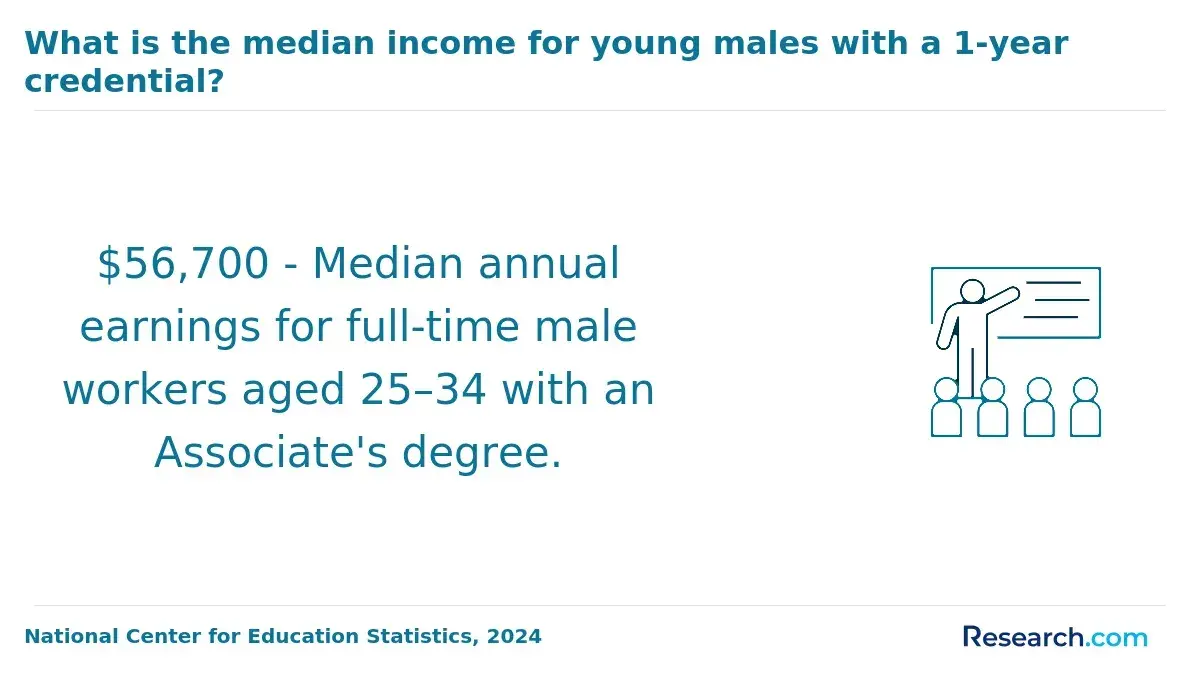
The clearest salary gains usually come from role changes rather than the letters after your name. For example, moving from classroom instruction into district research leadership, from instructional design into learning and development management, or from master's-level support work into postsecondary faculty or administrative leadership may create a stronger salary case.
BLS May 2024 data showing $127,090 median pay for training and development managers is useful because it shows that learning expertise can be highly valued outside traditional schools as well as within them.
Before assuming the doctorate will pay off, compare your current earning ceiling with the salary range of roles you can realistically pursue. Focus on employer-posted ranges in your region, not only national medians. Public school districts, universities, private education companies, government agencies, hospitals, nonprofits, and corporate learning teams may value the same doctorate differently.
These questions can help you test whether the degree is likely to improve earnings rather than simply add another credential:
- Identify three target job titles and confirm whether postings require, prefer, or rarely mention a doctorate.
- Compare posted salary ranges for those roles with your current compensation, including retirement contributions and health benefits.
- Ask your employer whether doctoral completion changes your salary lane, promotion eligibility, or leadership classification.
- Calculate total program cost, fees, books, travel for residencies, and interest if loans are needed.
- Estimate opportunity cost, including reduced consulting, overtime, adjunct teaching, or side income while enrolled.
A doctorate is most financially rational when it connects to a defined role with higher compensation, a clear promotion pathway, or a long-term consulting or academic career plan. It is less compelling when the likely outcome is the same job title, the same salary schedule, and a higher debt balance.
An online educational psychology doctorate helps professionals qualify for leadership roles by developing the evidence-based decision-making skills that senior employers often expect. Master's-level professionals may be strong practitioners; doctoral-level professionals are often expected to evaluate systems, lead change, defend decisions with data, and translate research into policy or practice.
Leadership roles tied to educational psychology usually require a blend of technical and interpersonal strengths. The most important competencies are not limited to theory; they involve using theory to improve outcomes for real learners, employees, schools, or organizations:
- Research leadership: Designing studies, evaluating interventions, reading evidence critically, and explaining findings to non-research audiences.
- Assessment and measurement: Selecting valid instruments, interpreting learning data, and identifying whether programs are producing meaningful results.
- Program evaluation: Determining whether a curriculum, training model, student support program, or intervention is effective enough to continue, revise, or scale.
- Change management: Helping faculty, teachers, administrators, or employees adopt new practices without treating implementation as a simple compliance task.
- Technology and AI literacy: Evaluating adaptive learning tools, analytics platforms, automated assessment systems, and AI-supported instructional design with attention to ethics and bias.
- Equity-focused decision-making: Examining whether learning systems produce different outcomes for different student or employee populations and recommending practical improvements.
AI is especially relevant because schools, colleges, and employers are adopting analytics tools, tutoring systems, generative AI, and automated feedback platforms.
Doctoral training can help professionals ask better questions: Does the tool measure what it claims to measure? Does it improve learning, or only engagement? Is the algorithm producing biased recommendations? Can educators explain the results to students, parents, faculty, or executives?
The common mistake is assuming leadership follows automatically from earning the doctorate. In reality, candidates also need management experience, communication skills, a record of completed projects, and evidence that they can influence decisions across departments.
The strongest specialization depends on your career target. Educational psychology is broad, so choosing a concentration that repeats your master's coursework may reduce the value of the doctorate.
The best specialization should add a capability employers can clearly recognize, such as advanced assessment, learning analytics, research design, or school-based psychological services.
If your goal is school-based practice, credentialing, or advanced work with student assessment and intervention, compare requirements carefully because school psychology programs online accredited by NASP may be viewed differently from broader educational psychology doctorates. NASP approval is not the same as state licensure, but it can be important for certain school psychology pathways.
The table below compares common specializations by advancement potential. Use it to narrow your search before speaking with admissions advisors:
| Specialization | Best for | Career advancement potential | Watch for |
| Learning sciences | Professionals interested in cognition, motivation, instructional systems, and evidence-based learning design | Strong fit for learning scientist, faculty, research, education technology, and learning strategy roles | Programs vary in how much quantitative research and technology training they include |
| Assessment, measurement, and evaluation | Educators, analysts, institutional research staff, and program evaluators | Strong fit for assessment director, research analyst, evaluation consultant, and institutional effectiveness roles | Look closely at statistics, psychometrics, and applied evaluation coursework |
| School psychology | School-based practitioners seeking advanced assessment, intervention, or supervisory roles | Can support specialized school roles when aligned with state credentialing rules | Licensure, internship, practicum, and accreditation requirements are highly specific |
| Instructional design and technology | Instructional designers, training leaders, curriculum developers, and edtech professionals | Strong fit for learning experience leadership, corporate learning strategy, and digital learning roles | Doctoral value is strongest when paired with a portfolio and measurable design outcomes |
| Human development and lifespan learning | Professionals working with children, adolescents, adults, or special populations | Useful for research, policy, student support, and program design roles | May need additional licensure or clinical training for counseling or therapeutic work |
| Educational leadership with psychology focus | Administrators, district leaders, higher education staff, and organizational change professionals | Useful for promotion into senior academic, district, or institutional leadership | May be less research-intensive than a PhD-style educational psychology program |
A strong specialization should help you answer a simple employer question: what can you now do that you could not credibly do with only your master's degree? If the answer is unclear, keep comparing programs.
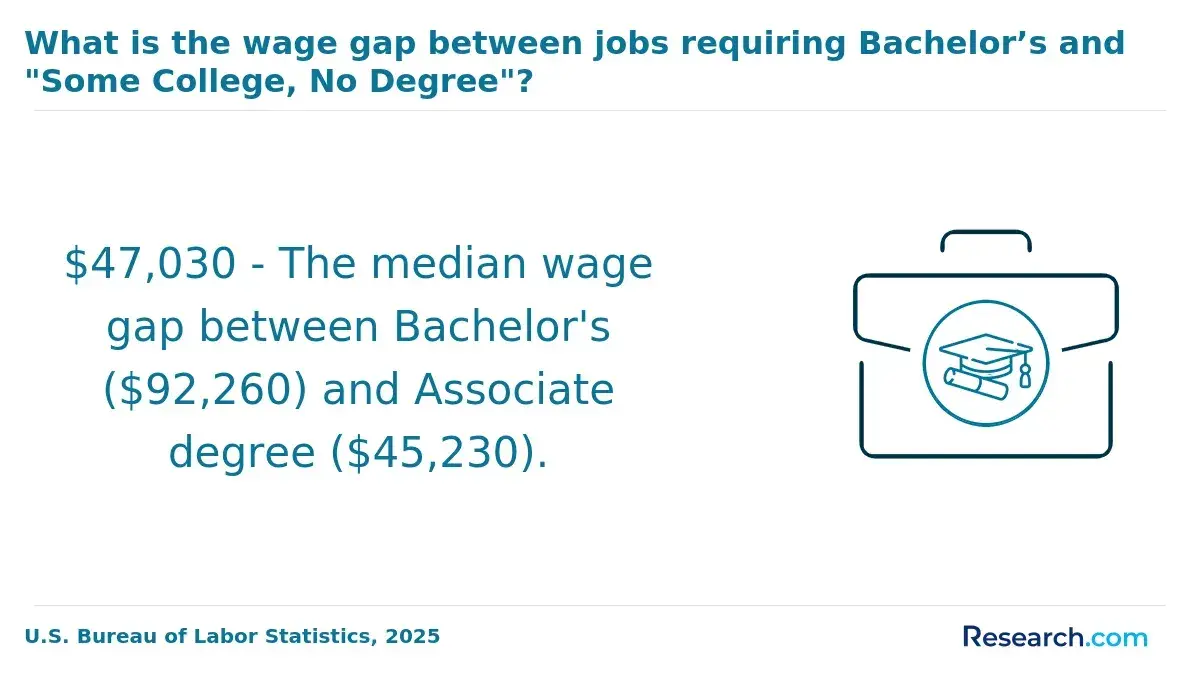
Employers generally value an online educational psychology doctorate when it comes from an accredited institution, aligns with the job's responsibilities, and produces evidence of advanced skill.
The online format itself is usually less important than program quality, accreditation, field experience, research rigor, and whether the graduate can apply learning science to real problems.
Employer acceptance varies by sector. Universities may care about research output, dissertation quality, publications, and faculty mentorship.
School districts may care about licensure, salary schedules, leadership experience, and state-approved preparation. Corporate employers may care less about the degree title and more about whether you can improve training outcomes, lead teams, measure learning transfer, and use data to support business goals.
When evaluating employer value, pay attention to these signals in job descriptions and promotion policies:
- Required vs. preferred language: "Doctorate required" signals a stronger credential barrier than "doctorate preferred."
- Recognized degree fields: Some roles specify educational psychology, psychology, school psychology, learning sciences, education, or a related field.
- Licensure wording: School and psychology roles may require state credentials beyond the degree itself.
- Research expectations: Faculty and research roles may require publications, dissertation alignment, grant experience, or advanced methods training.
- Leadership expectations: Senior roles often require supervision, budgeting, policy implementation, and cross-functional influence in addition to doctoral education.
A common red flag is a program that advertises broad career outcomes without explaining how graduates meet employer expectations. Ask for examples of dissertation or capstone topics, practicum structures, graduate job titles, and faculty expertise. If the program cannot connect its curriculum to your target role, employer recognition may be limited.
Most master's-prepared professionals should expect an online educational psychology doctorate to take several years, especially if they work full time. Accelerated programs exist, but completion speed depends on transfer credits, enrollment intensity, dissertation or capstone progress, research approvals, and whether the program has residencies, internships, or fieldwork.
Some working professionals prefer applied doctorate formats because they replace the traditional dissertation with a capstone, doctoral project, or problem-of-practice study.
Comparing online EdD programs no dissertation can be helpful if your goal is applied leadership rather than a research faculty career, but "no dissertation" does not mean "low workload." Applied projects still require evidence, data collection, writing, revision, and faculty approval.
The table below gives a practical timeline framework. Actual duration depends on school policy and individual progress:
| Enrollment pattern | Typical fit | Timeline expectation | Career trade-off |
| Accelerated full-time | Professionals with strong transfer credit, flexible work schedules, or employer support | Often designed for the shortest completion window allowed by the program | Can reduce time to credential but may increase weekly workload and stress |
| Part-time online | Full-time educators, school psychologists, administrators, and learning professionals | Commonly spreads coursework and research over a longer period | More manageable while working, but delays promotion or salary benefits |
| Cohort-based EdD | Professionals who want structured pacing and peer support | Usually follows a fixed course sequence | Good accountability, but less flexibility if work or family obligations change |
| Research-intensive PhD | Students pursuing faculty, research, or advanced methodology roles | Often longer because of dissertation research expectations | Stronger research preparation, but slower path to completion |
To shorten the path without sacrificing quality, ask whether master's credits transfer, whether statistics or research prerequisites can be waived, whether dissertation planning begins early, and whether the program allows you to use workplace-based problems for applied research. The biggest timeline mistake is waiting until coursework ends to define a research topic.
The ROI of an online educational psychology doctorate depends on whether the degree changes your career trajectory enough to justify tuition, fees, time, and interest. A doctorate can be a strong investment for professionals moving into higher-paying leadership, research, faculty, consulting, or specialized assessment roles.
It can be a weak investment when the target job does not require a doctorate or when the added credential produces little salary movement.
Debt cost matters more than many applicants expect. For 2024-2025, federal graduate Direct Unsubsidized Loans carried an 8.08% fixed interest rate, while Grad PLUS Loans carried a 9.08% fixed interest rate. That means a program's sticker price is only part of the ROI picture; borrowed tuition can become substantially more expensive over time if repayment is extended.
Use the following ROI framework before applying. It is more reliable than asking whether the degree is "worth it" in general:
- Define the exact role you want within three to seven years of graduation.
- Collect current salary ranges from job postings in your state or preferred remote-work market.
- Confirm whether the doctorate is required, preferred, or merely optional for those roles.
- Calculate total attendance cost, including fees, residencies, technology, books, travel, and interest.
- Estimate the time you can realistically work, consult, publish, or build a portfolio while enrolled.
- Compare the doctorate against lower-cost alternatives such as certificates, licensure upgrades, leadership training, or a targeted second master's degree.
The table below shows how ROI conditions differ by career goal. It is not a prediction of individual outcomes; it is a decision guide for weighing likely value:
| Career goal | ROI outlook | Why | Risk to manage |
| Tenure-track or full-time faculty role | Potentially strong if the program supports research output | Doctorates are commonly expected for full-time faculty roles | Academic hiring is competitive and may depend on publications, fit, and location |
| District or higher education leadership | Potentially strong when the employer rewards doctoral preparation | Doctoral work can strengthen credibility for policy, assessment, and institutional improvement | Promotion may still require administrative experience and internal openings |
| Corporate learning or talent development leadership | Moderate to strong if paired with management and measurable business results | Learning science expertise can support senior strategy and evaluation roles | Employers may prioritize portfolio, leadership experience, and industry knowledge over the degree alone |
| Same master's-level practitioner role | Often limited unless a salary schedule rewards the doctorate | The job duties may not change enough to justify cost | Debt can outweigh incremental salary gains |
| Independent consulting | Variable | The doctorate may improve credibility and pricing power in specialized niches | Consulting income depends on client acquisition, reputation, and business skills |
Staying at the master's level can be the smarter decision if your target employers do not reward doctorates, if you would need heavy borrowing, or if a certificate or leadership role would produce similar advancement faster. The doctorate is most defensible when it is part of a specific career strategy, not a reaction to feeling stuck.
The professionals who benefit most from an online educational psychology doctorate are usually those who already have a master's degree, relevant work experience, and a clear reason to move from practice into research, leadership, advanced assessment, policy, faculty work, or learning strategy. The degree is less suitable for people who want a quick credential without a defined career use.
Strong candidates often fall into several groups:
- Experienced teachers or instructional coaches who want to lead curriculum, assessment, intervention, or district learning initiatives.
- School psychologists, counselors, or student support professionals who need advanced preparation for specialized assessment, supervision, or systems-level roles.
- Instructional designers and learning experience professionals who want to move into learning science, evaluation, or executive learning strategy.
- Higher education staff who want to advance into faculty development, institutional effectiveness, assessment, student success, or academic administration.
- Researchers, analysts, or nonprofit professionals who evaluate education programs and need stronger methodological credibility.
- Corporate training professionals who want to connect learning theory, analytics, and performance improvement at a leadership level.
Some professionals are better served by a narrower or lower-cost credential. For example, someone whose main goal is to build stronger course design, e-learning, or training development skills may find that the best online instructional design master's programs offer a more direct and affordable path than a doctorate.
This is especially true if the target role values a portfolio and software fluency more than doctoral research.
You may want to postpone or avoid a doctorate if you cannot name the roles you want, need a near-term salary increase, dislike research and academic writing, or plan to enter a field where licensure rules require a different degree.
The biggest mistake is using a doctorate to explore career direction. At this level, the degree should support a decision you have already tested through job postings, employer conversations, and professional experience.
How Should Professionals Choose an Online Educational Psychology Doctorate for Career Advancement?
Choosing an online educational psychology doctorate for career advancement should start with your target role, not the program brochure. The right program is the one that closes the gap between your current master's-level qualifications and the expectations of the role you want next.
Use this step-by-step process to compare programs with less guesswork:
- Write a one-sentence career goal, such as "I want to become a district director of assessment" or "I want to teach educational psychology full time at a university."
- Collect at least 10 job postings for that goal and note required degrees, preferred specializations, licenses, technical skills, and experience.
- Choose the degree type that matches the role: EdD for applied leadership, PhD for research-intensive academic or policy work, or a school psychology doctorate for credential-specific school practice.
- Verify institutional accreditation and, when relevant, programmatic approval, state authorization, licensure alignment, internship rules, and residency requirements.
- Compare curriculum depth in statistics, research methods, learning theory, assessment, technology, and applied practice.
- Ask whether master's credits transfer and whether prior graduate coursework can reduce cost or time.
- Review faculty profiles to see whether professors specialize in your intended area, not just education broadly.
- Ask for transparent information on completion support, dissertation or capstone advising, time-to-degree patterns, and graduate career outcomes.
- Calculate total cost and repayment scenarios before accepting admission.
- Choose the program that best supports your career evidence: publications, portfolio, applied project, licensure readiness, leadership experience, or research competence.
Red flags include vague career claims, unclear accreditation, pressure-heavy admissions calls, no faculty match, limited research support, hidden residency costs, and a curriculum that duplicates your master's degree. Also be cautious if a program promises fast completion without explaining how doctoral-level research or applied scholarship will be supervised.
The final decision should balance ambition with evidence. If the doctorate helps you meet a known requirement, build a scarce specialization, or compete for senior roles, it may be a smart next step. If it only adds prestige without changing your qualifications for target jobs, a different credential, leadership move, or portfolio-building strategy may produce better value.
Other Things You Should Know About Educational Psychology
No. Educational psychology is a broad field focused on learning, motivation, development, assessment, and educational systems. School psychology is a professional practice field tied more directly to student assessment, intervention, mental health support, and school-based credentialing.
Some do, but many online doctoral programs have made the GRE optional or removed it. Applicants should still expect to submit graduate transcripts, a statement of purpose, recommendations, a resume, writing samples, and sometimes an interview.
Many students do, especially in part-time EdD programs. The challenge is workload: doctoral reading, research, writing, group work, and dissertation or capstone milestones can affect evenings, weekends, and peak work seasons.
Policies vary by institution, but many universities do not list the delivery format on the diploma. Employers are more likely to evaluate the school's accreditation, reputation, curriculum relevance, and your ability to apply doctoral-level skills.
- Best Online Educational Psychology Programs https://www.psychology.org/rankings/best-educational-psychology-programs/
- Interested in a career in Educational Psychology? https://www.aep.org.uk/interested-career-educational-psychology
- Applying Your Educational Psychology Degree in the Real-World https://www.appliedbehavioranalysisprograms.com/applying-educational-psychology-degree-in-real-world/
- Online Ph.D. in Educational Psychology | AcademicEarth.org https://academicearth.org/ph-d-in-educational-psychology/
- How does a college degree improve graduates’ employment and earnings potential? - APLU https://www.aplu.org/our-work/4-policy-and-advocacy/publicuvalues/employment-earnings/
- Educational Psychology Degrees and Careers https://www.onlinepsychologydegrees.com/specialty/educational-psychology/
- Doctor of Philosophy (Educational Psychology) https://www.ualberta.ca/en/graduate-programs/doctor-of-philosophy-educational-psychology.html
- How to Become an Educational Psychologist - Graduate Programs for Educators https://www.graduateprogram.org/blog/how-to-become-an-educational-psychologist/
- The Graduation Issue https://iei.asiacareersgroup.com/blogs/monthly-article/the-graduation-issue
- Online and Hybrid PhD & PsyD Programs in Psychology https://www.psychologist-license.com/phd/