2027 Online Educational Psychology Doctorate vs Master's Degree: Cost, Salary, Career Outcomes, and ROI

Co-Founder and Chief Data Scientist
Choosing between an online educational psychology doctorate and a master's degree is really a question of payback: How much more time, tuition, and debt are justified by the career you want? NCES data released in 2024 shows average graduate tuition and required fees were about $12,600 at public institutions and $29,900 at private nonprofit institutions, before living costs and interest.
This guide is for educators, school professionals, trainers, and career changers comparing cost, salary potential, career access, and long-term ROI.
Key Things You Should Know
- A master's degree is usually the faster and lower-cost path, often fitting roles in learning design, assessment, school support, training, and research assistance. A doctorate usually makes sense only when your target role requires advanced research, leadership, faculty eligibility, or psychologist-level credentials.
- BLS data released in 2024 lists median pay of $74,620 for instructional coordinators, $84,380 for postsecondary teachers, and $92,740 for psychologists, but your role, license, employer, and experience matter more than the degree title alone.
- ROI depends on total cost, completion time, funding, and opportunity cost. Federal graduate loan rates for 2024-25 were 8.08% for Direct Unsubsidized Loans and 9.08% for Graduate PLUS Loans, so borrowing heavily for a doctorate can erase much of the earnings advantage.
What Are the Key Differences Between an Online Educational Psychology Doctorate and Master's Degree?
An online master's in educational psychology is typically a graduate degree focused on how people learn, develop, stay motivated, are assessed, and respond to instruction or intervention. It can support careers in education, learning analytics, instructional support, assessment, training, research coordination, or preparation for more specialized credentials.
An online doctorate in educational psychology goes deeper. Depending on the program, it may prepare students for applied leadership, advanced evaluation work, university teaching, research design, policy analysis, or, in some cases, pathways related to psychology licensure.
The key difference is not simply "higher degree equals better job." The doctorate is a longer, more specialized investment that should match a career requiring doctoral-level authority.
The table below summarizes the practical differences that matter most when comparing degree value. Use it as a first filter before looking at individual programs.
| Comparison point | Online master's in educational psychology | Online doctorate in educational psychology |
| Primary purpose | Build advanced knowledge for applied education, learning, assessment, training, or research-support roles. | Build doctoral-level expertise for research, leadership, faculty, evaluation, advanced practice, or specialized professional roles. |
| Typical applicant | Teacher, school staff member, trainer, recent graduate, or professional moving into learning and assessment work. | Experienced educator, administrator, researcher, counselor, school professional, or master's-prepared practitioner. |
| Admissions profile | Bachelor's degree, transcripts, recommendations, statement of purpose, and sometimes teaching or education experience. | Often a master's degree, professional experience, writing sample, research interests, interview, and evidence of readiness for dissertation or capstone work. |
| Academic depth | Advanced coursework in learning theory, cognition, motivation, measurement, child or adolescent development, and research methods. | Advanced statistics, research design, program evaluation, policy, leadership, doctoral seminars, and dissertation or applied doctoral project. |
| Career ceiling | Strong for many applied roles, but may not qualify for tenure-track faculty, independent psychologist licensure, or high-level research leadership. | Broader access to doctoral-level research, senior leadership, postsecondary teaching, consulting, and some licensure-linked pathways when the program meets requirements. |
| Best financial fit | Readers seeking faster career movement with lower tuition exposure. | Readers whose desired role clearly requires or strongly rewards a doctorate. |
A major decision point is licensure. Educational psychology is not regulated the same way in every state or every job category.
School psychology, licensed psychologist practice, counseling, and special education-related roles may have distinct accreditation, internship, supervised-hour, exam, and state-board requirements. Before enrolling, confirm whether the program's curriculum and field experiences align with the credential you actually need.
How Much Does an Online Educational Psychology Doctorate Cost Compared With a Master's Degree?
The master's degree usually costs less because it requires fewer credits, fewer semesters, and less time away from full earning capacity. The doctorate may cost substantially more even when the per-credit tuition is similar, because doctoral programs often include more credits, residencies, comprehensive exams, dissertation or capstone fees, and longer enrollment.
NCES data released in 2024 gives a useful benchmark: average graduate tuition and required fees were about $12,600 at public institutions and $29,900 at private nonprofit institutions for the 2022-23 academic year. That figure is not a program-specific price, but it helps readers understand why institutional type and enrollment length can matter as much as the degree name.
When comparing costs, do not stop at tuition. The real price is the total cost to finish, including required fees and the cost of borrowing.
- Tuition per credit multiplied by total required credits
- Technology, online learning, graduation, dissertation, capstone, and residency fees
- Books, assessment tools, statistical software, and research materials
- Travel costs for required campus residencies, internships, conferences, or clinical experiences
- Loan origination fees and accumulated interest while enrolled
- Lost income if the program reduces your work hours or delays promotion
The table below shows how the two degrees tend to differ financially. It avoids assuming one universal price because online programs vary widely by public or private status, residency rules, credit requirements, and funding policies.
| Cost factor | Master's degree impact | Doctorate impact | What it means for ROI |
| Credits required | Usually fewer credits, which lowers total tuition exposure. | Usually more credits beyond the master's level, especially with research sequences. | A doctorate needs a stronger career payoff to overcome the larger upfront cost. |
| Time enrolled | Shorter enrollment reduces fees and loan interest accumulation. | Longer enrollment increases the risk of fee increases, delayed earnings, and interest growth. | The longer the program, the more important funding and completion support become. |
| Residency or fieldwork | May be minimal unless tied to school psychology, counseling, or certification pathways. | May include campus residencies, internships, practica, or dissertation research travel. | Online does not always mean fully remote or low-cost. |
| Funding availability | Employer tuition assistance may be more common for job-related master's programs. | Research assistantships may be limited in online professional doctorates. | A funded doctorate can have stronger ROI than an unfunded one; an unfunded doctorate can be financially risky. |
| Debt risk | Lower total borrowing is easier to manage if the career salary is moderate. | Higher borrowing may require a large salary increase or loan forgiveness strategy. | Debt at graduate interest rates can materially change the break-even timeline. |
A common mistake is comparing only advertised tuition. A better approach is to ask each school for a written total-cost estimate through graduation based on your transfer credits, enrollment pace, residency requirements, and expected fees.
How Long Does a Educational Psychology Doctorate Take Compared With a Master's Degree?
A master's degree usually wins on speed. Many students can finish while working, and the shorter timeline can make it easier to use the credential for promotion or career change sooner. A doctorate takes longer because it requires advanced coursework, research preparation, comprehensive exams, and either a dissertation or an applied doctoral project.
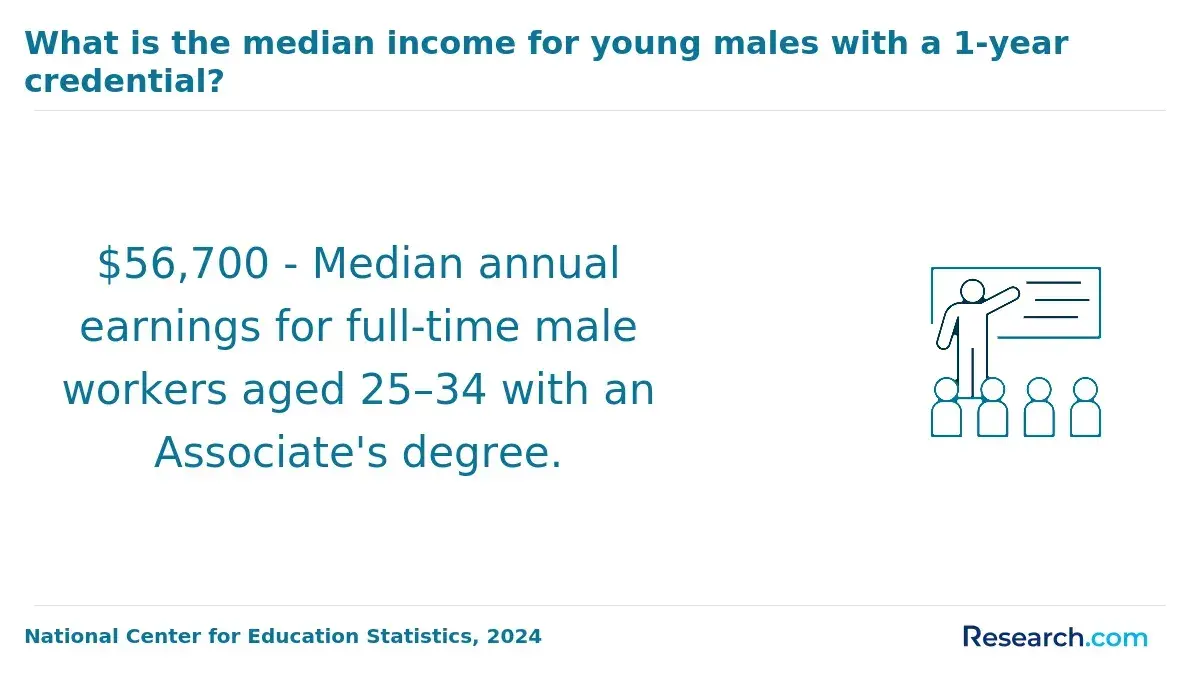
Some accelerated doctoral options exist, but speed should be evaluated carefully. Programs marketed as 1 year EdD programs online may be attractive to experienced professionals with transfer credits or a completed specialist degree, but readers should verify accreditation, workload, dissertation or capstone expectations, and whether the timeline is realistic for working adults.
The table below compares typical time commitments and why they matter financially.
| Timeline issue | Online master's degree | Online doctorate |
| Typical completion pattern | Often structured for working adults over a shorter period. | Often multi-year, especially if the student completes original research or a major applied project. |
| Part-time feasibility | Usually manageable for full-time workers if courses are asynchronous or evening-based. | Possible, but long part-time enrollment can increase fees, interest, and dropout risk. |
| Research burden | May include a thesis, capstone, or research methods courses. | Usually includes a dissertation, doctoral project, or advanced evaluation study. |
| Career payoff timing | Benefits can arrive sooner if the degree qualifies you for a raise, new role, or credential. | Benefits may arrive later, so the salary premium must be evaluated over a longer horizon. |
Before choosing based on speed, map the degree timeline against your career timeline. A shorter master's may be better if you need a credential for an immediate role, while a doctorate may be better if your target job is several years away and explicitly favors doctoral training.
Educational psychology salary comparisons are complicated because "educational psychologist" is not always a single standardized job title in federal wage data.
Graduates may work as instructional coordinators, school psychologists, learning scientists, program evaluators, assessment specialists, training leaders, researchers, or faculty members. Degree level matters, but job title, license, sector, and leadership responsibility often matter more.
BLS wage data released in 2024 provides a practical salary context. Instructional coordinators had median annual pay of $74,620, postsecondary teachers had median annual pay of $84,380, psychologists had median annual pay of $92,740, and training and development managers had median annual pay of $125,040.
These figures do not promise outcomes for any graduate, but they show why a doctorate may pay off in some roles and not in others.
The table below connects common career areas with the degree level that is often sufficient or preferred. Use it to avoid paying for a doctorate when your target role typically rewards a master's enough.
| Career area | Master's degree value | Doctorate value | Salary interpretation |
| Instructional coordination and curriculum support | Often enough for school district or education organization roles, especially with teaching experience. | May help for senior district leadership, research-heavy roles, or policy positions. | A doctorate may not produce a large raise unless the employer's pay scale rewards it. |
| Learning design and corporate training | Can be strong when paired with portfolio, technology skills, and adult learning expertise. | Useful for senior learning strategy, research, consulting, or executive-level roles. | Management responsibility can affect pay more than degree level alone. |
| School psychology-related roles | May support related work, but many school psychologist roles require specialist-level preparation, supervised practice, and state credentialing. | May be required for psychologist licensure or advanced clinical/research roles, depending on the state and program. | Licensure alignment is more important than the degree label. |
| Program evaluation and assessment | Can qualify graduates for analyst or coordinator roles. | Stronger for principal investigator, senior evaluator, research director, or grant-funded leadership roles. | The doctorate can improve access to higher-responsibility roles when research methods are central. |
| Higher education teaching and research | May qualify for adjunct, staff, or support roles in some settings. | Often expected for tenure-track faculty and independent research leadership. | The doctorate is more likely to be necessary when faculty status is the goal. |
The salary question should be framed this way: "What jobs will this degree make me eligible for, and do those jobs pay enough more than my current or master's-level alternatives to justify the extra cost?" That question is more useful than asking whether doctorates generally earn more.
A doctorate can unlock roles that require advanced research judgment, leadership authority, or doctoral-level credibility. However, many valuable educational psychology-adjacent careers remain accessible with a master's degree, especially when the candidate has teaching experience, assessment skills, technology fluency, and a strong work portfolio.
Licensure-sensitive pathways deserve extra caution. Students considering school psychology should look closely at program accreditation and state credential alignment. Researching school psychology programs online accredited by NASP can help clarify how specialized preparation differs from a general educational psychology degree.
The table below shows how career access tends to change as degree level increases.
| Career outcome | Master's-level access | Doctorate-level access |
| Education research assistant or coordinator | Strong fit, especially with statistics and evaluation coursework. | May be more than necessary unless moving toward research leadership. |
| Program evaluator | Possible for applied evaluation, survey work, and reporting roles. | Stronger for senior evaluator, principal investigator, grant leadership, or consulting authority. |
| Instructional designer or learning experience designer | Often sufficient when paired with design software, portfolio projects, and adult learning knowledge. | Useful for research-based design leadership or university-level instructional innovation. |
| School district assessment or data role | Often viable with assessment, measurement, and data skills. | Helpful for director-level roles or advanced psychometrics work. |
| Postsecondary faculty | May qualify for adjunct or staff teaching roles depending on institution and subject. | Often expected for tenure-track, research faculty, or doctoral committee roles. |
| Licensed psychologist pathway | Usually not enough by itself. | May be required, but only if the program, internship, supervision, and state-board rules align. |
Current hiring trends also matter. AI-supported learning platforms, learning analytics, online assessment tools, and adaptive instruction are increasing demand for professionals who can interpret learning data ethically and translate research into usable interventions.
A master's degree may be enough for applied implementation roles, while a doctorate may be more valuable for designing research, validating interventions, or leading institutional strategy.
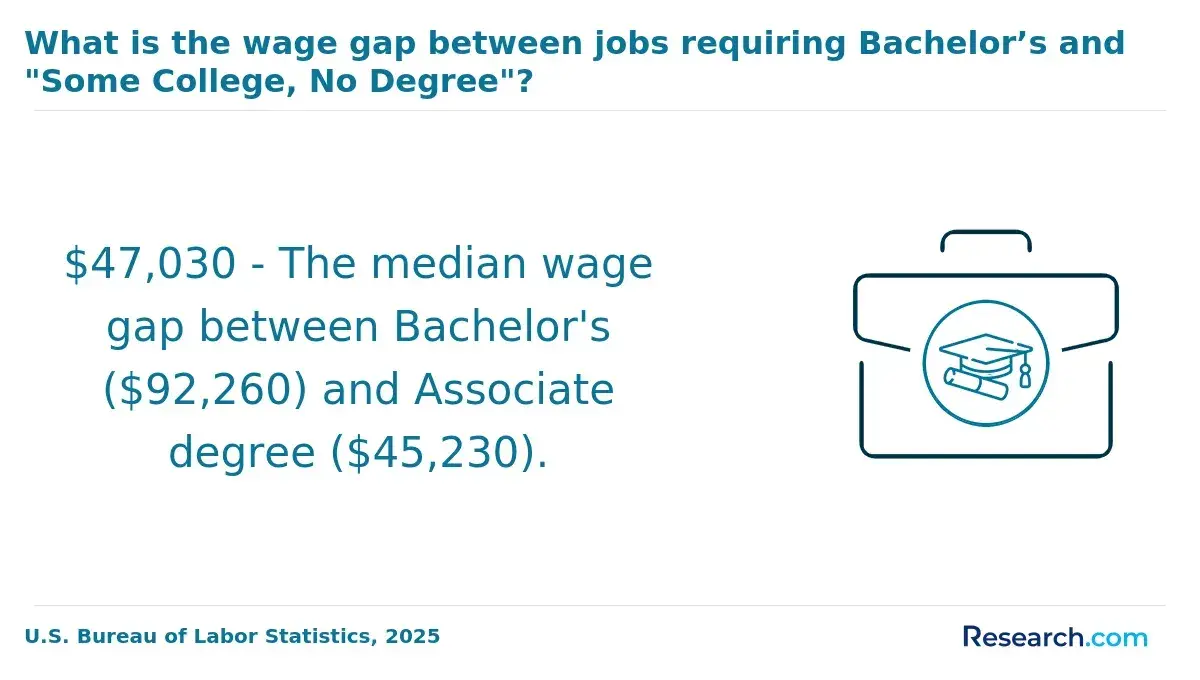
The better ROI depends on whether the doctorate changes your career options enough to justify its added cost and time. For many working educators and training professionals, the master's degree may produce a faster return because it requires less time and debt.
For people targeting faculty, senior research, licensed psychologist pathways, or executive evaluation roles, the doctorate may deliver stronger long-term value.
A simple ROI calculation should include both direct cost and delayed earnings. Use the following sequence before enrolling.
- Identify the exact job titles you want, not just the subject you enjoy.
- Confirm whether those roles require a master's, specialist credential, doctorate, license, or specific accreditation.
- Request the full cost to graduate from each program, including fees, residencies, and expected loan interest.
- Compare realistic salary ranges for your target role, geographic market, employer type, and experience level.
- Estimate how many years it would take for the added income from the doctorate to exceed the doctorate's added cost and opportunity cost.
- Adjust the calculation for risk, including completion time, dissertation delays, family obligations, and whether your employer rewards the credential.
The table below summarizes when each degree tends to have the stronger financial case.
| Scenario | Likely better ROI | Why |
| You need a credential for district advancement, training roles, or applied learning design. | Master's degree | The lower cost and faster completion can produce earlier career mobility. |
| You want tenure-track faculty work or research leadership. | Doctorate | The doctorate may be an entry requirement rather than an optional salary booster. |
| You already have a master's and employer funding for doctoral study. | Doctorate | Reduced out-of-pocket cost improves the break-even timeline. |
| You would borrow most doctoral costs at graduate loan rates. | Often master's degree | Interest can make the doctorate's salary premium harder to realize. |
| Your target role does not require a doctorate and pays on a fixed salary schedule. | Master's degree | The doctorate may not change compensation enough to justify the cost. |
The most important rule is to calculate ROI by career path, not by degree level. A low-cost, funded doctorate tied to a doctoral-level job can be a strong investment. A high-cost doctorate used for a role that pays the same as a master's-level position can be a weak one.
Opportunity cost is the value of what you give up while pursuing the degree. It includes lost wages, delayed promotions, reduced retirement contributions, less time for paid consulting, and the personal cost of adding graduate work to an already full schedule.
Opportunity cost often affects doctoral students more because the time horizon is longer. Even if an online doctorate lets you keep working, dissertation research, residencies, internships, and heavier writing demands can reduce your availability for career-building opportunities.
The table below explains the most common opportunity-cost differences between the two paths.
| Opportunity cost | Master's degree | Doctorate | Decision impact |
| Delayed career change | Usually shorter delay before applying for new roles. | Longer delay if employers want completed doctoral status. | A master's may be better if you need near-term mobility. |
| Work-hour reduction | May be avoidable with part-time study. | May become necessary during dissertation, practicum, or research phases. | Lost earnings should be included in ROI. |
| Promotion timing | Credential may support earlier step increases or role changes. | Promotion may be delayed until degree completion. | Ask employers when the degree actually affects pay. |
| Professional visibility | Shorter program leaves more time for networking and portfolio-building. | Doctoral work can build visibility through research, publishing, and conferences. | The value depends on whether your field rewards research reputation. |
| Completion risk | Lower time exposure may reduce stop-out risk. | Longer programs carry greater risk of interruption. | A doctorate's ROI depends heavily on finishing. |
A practical way to evaluate opportunity cost is to compare two timelines: "master's plus work experience" versus "doctorate plus delayed doctoral payoff." In some careers, three years of strong experience after a master's can be more valuable than spending those years in a doctorate that is not required for advancement.
Financial aid can change the ROI comparison dramatically. A master's degree funded by an employer may outperform an unfunded doctorate. A low-cost or partially funded doctorate may outperform a private master's degree if it leads to a required doctoral career. The degree level alone does not determine the financial outcome.
Federal Student Aid set 2024-25 interest rates at 8.08% for Direct Unsubsidized Loans for graduate students and 9.08% for Graduate PLUS Loans. That matters because graduate students can often borrow large amounts, and interest can accumulate while enrolled, making a longer doctorate more expensive than the tuition bill suggests.
Before committing, compare funding sources in a structured way. These questions will help you avoid taking on debt that your target career may not support.
- Does the program offer scholarships, fellowships, assistantships, tuition discounts, or research funding for online students?
- Will your employer reimburse tuition, and does reimbursement require staying with the employer for a set period?
- Are dissertation, capstone, residency, internship, or comprehensive exam fees included in the published price?
- Will you need Graduate PLUS Loans beyond the annual Direct Unsubsidized Loan limit?
- Does your likely employer qualify for Public Service Loan Forgiveness, and are you comfortable relying on that path?
- What is the school's completion support for doctoral students, especially during the dissertation or applied project phase?
Debt is not automatically bad if it funds a credential that opens a required career path. The risk is borrowing doctoral-level amounts for a career that would have been available with a lower-cost master's degree. Readers should ask financial aid offices for repayment estimates and then compare those monthly payments with realistic target salaries.
Not all doctorates in educational psychology serve the same purpose. A professional doctorate, such as an EdD, often emphasizes applied leadership, program improvement, organizational change, and practice-based research. A research doctorate, such as a PhD, typically emphasizes theory, methodology, original research, and preparation for scholarly or faculty careers.
Some online professional doctorates use an applied capstone or doctoral project instead of a traditional dissertation. Readers comparing online EdD programs no dissertation should still evaluate rigor carefully because a "no dissertation" format may still require a substantial research-based project, data analysis, and committee review.
The table below compares professional doctorates, research doctorates, and master's degrees by purpose rather than prestige.
| Degree type | Best fit | Less ideal if | ROI logic |
| Master's in educational psychology | Applied education, training, assessment, learning design, research support, or preparation for specialized credentials. | You need doctoral-level licensure, tenure-track faculty eligibility, or research leadership authority. | Often strongest when the target role does not require a doctorate. |
| Professional doctorate | Experienced professionals seeking leadership, applied research, district or organizational change, consulting, or executive education roles. | You want a highly research-intensive academic career and the program has limited methodology depth. | Strongest when employer advancement, leadership pay, or funded study offsets the cost. |
| Research doctorate | Students seeking faculty roles, research positions, advanced methodology, publishing, and principal investigator responsibilities. | You mainly want a faster applied credential for promotion. | Strongest when doctoral training is essential to the role and funding is available. |
Choosing between a professional and research doctorate should start with your desired workday. If you want to lead improvement initiatives, an applied doctorate may fit. If you want to design studies, publish research, teach future scholars, or compete for research grants, a research doctorate may be the better match.
When Is a Educational Psychology Doctorate Worth It Instead of a Master's Degree?
An educational psychology doctorate is worth it instead of a master's degree when it is tied to a clear career requirement, a credible salary or authority increase, and a funding plan that limits debt. It is less likely to be worth it when the student is unsure of the target role, the employer does not reward doctoral credentials, or the master's degree already qualifies the student for the desired job.
Some students comparing educational psychology pathways may discover that a more specialized master's is the better match. For example, readers focused on learning technology, corporate training, or course design may want to compare educational psychology programs with the best online instructional design master's programs before committing to a doctorate.
A doctorate is more likely to make sense if several of the following are true.
- Your target role explicitly requires a doctorate, such as many faculty, research leadership, or psychologist-level pathways.
- You already have a master's degree and can transfer appropriate credits or enter an advanced-standing pathway.
- Your employer, fellowship, assistantship, or military education benefit will cover a meaningful share of the cost.
- You need advanced research, measurement, evaluation, or leadership skills that a master's program will not provide.
- You are comfortable with multi-year independent writing, data analysis, committee feedback, and a major doctoral project.
- You have confirmed that the program's accreditation, fieldwork, and curriculum align with state or employer requirements.
A master's degree is usually the better choice if these conditions apply.
- Your goal is a faster move into education support, instructional design, training, assessment, or applied research coordination.
- Your target employers list a master's as sufficient or preferred rather than requiring a doctorate.
- You would need to borrow heavily for the doctorate without a clear salary increase.
- You are still exploring whether educational psychology, school psychology, learning design, or counseling is the best fit.
- You value flexibility and want to test the field before committing to doctoral-level specialization.
Common red flags include choosing a doctorate for prestige alone, ignoring licensure rules, assuming online means low-cost, overlooking dissertation completion support, and comparing salaries without factoring in loan interest.
The safer decision is to begin with the job you want, verify the credential required, calculate the total cost to finish, and choose the lowest-cost degree that credibly gets you there.
Other Things You Should Know About Educational Psychology Programs
It depends on the state and the specific license. Some school-based or specialist credentials may require a specialist-level program, supervised fieldwork, exams, or state-approved preparation. Independent psychologist licensure typically requires doctoral-level education and additional supervised experience, so always check your state board before enrolling.
Many employers focus more on institutional accreditation, program reputation, field experience, licensure alignment, and demonstrated skills than on whether courses were online. However, some roles may require in-person practica, internships, residencies, or supervised hours, so the delivery format should not be the only factor you evaluate.
Sometimes. Doctoral programs may allow transfer credits or advanced standing for relevant graduate coursework, but limits vary by school, age of credits, grades, accreditation, and course match. Ask for a written transfer evaluation before assuming your master's will shorten the doctorate.
No. Educational psychology is a broad field focused on learning, development, motivation, assessment, and research. School psychology is a regulated professional pathway tied to school-based services, assessment, intervention, and state credentialing. Some coursework overlaps, but the career and licensure requirements can be very different.
- Interested in a career in Educational Psychology? https://www.aep.org.uk/interested-career-educational-psychology
- Psychology Ph.D. & Psy.D.: Costs, Requirements, And Careers https://www.psychology.org/degrees/phd/
- Average Cost of a Master's Degree: 2025 Analysis https://educationdata.org/average-cost-of-a-masters-degree
- Should I Get a Master's Or Doctorate Degree in Sports Psychology? https://www.sportspsychology.org/articles/masters-or-doctorate-degree/
- What Jobs Can You Do with a Master's Degree of Education https://creditsforteachers.com/what-types-of-jobs-you-can-do-with-a-masters-degree-of-education/
- Master’s in Psychology - Is it Worth it? https://onlinecounselingprograms.com/online-counseling-degrees/online-masters-in-psychology/reasons-get-masters-in-psychology/
- Is Grad School Worth It? A Comprehensive Return on Investment Analysis - FREOPP https://freopp.org/whitepapers/is-grad-school-worth-it-a-comprehensive-return-on-investment-analysis