2027 Best College Degrees With 2.0 GPA Admission

Co-Founder and Chief Data Scientist
A 2.0 GPA can limit your choices, but it does not automatically rule out a college degree. The important question is whether a school's published GPA policy applies to your applicant type and your intended major. Cost matters, too: the College Board reported average published in-district tuition and fees of $4,050 at public two-year colleges for 2024-25. This guide helps prospective and returning students compare degree fields, identify selective programs, and choose a realistic route from admission to a career goal.
Key Things You Should Know
- A published 2.0 GPA minimum may qualify you for general undergraduate admission without qualifying you for a selective major such as nursing, engineering, or social work.
- An associate degree commonly requires about 60 credits and a bachelor's about 120; accepted transfer credits, prerequisites, and clinical placements can change your remaining time.
- Public two-year colleges averaged $4,050 in published in-district tuition and fees for 2024-25, according to the College Board; compare total costs and transfer outcomes before choosing the lowest sticker price.
Top 10 Best College Degrees With 2.0 GPA Admission
Business Programs
An associate or bachelor's degree in business administration can be a starting point for students interested in operations, sales, or accounting support. General business admission may be more accessible than admission to a particular concentration, so check both GPA policies. Compare required quantitative courses, internship access, and transfer agreements if you plan to start at a community college. An MBA or other business master's degree is a separate, later option: graduate admission may require a substantially stronger academic record, work experience, or prerequisite coursework.
Healthcare Programs
Health administration and health information degree paths may interest students who want to work in healthcare without providing direct clinical care. A college may admit an applicant with a 2.0 GPA while imposing different standards for clinical or limited-enrollment majors. Check whether the curriculum includes coding, data management, or supervised experience relevant to your goal. Healthcare administration master's programs generally have separate graduate requirements; an accessible undergraduate pathway does not establish eligibility for a master's program.
Information Technology Programs
Associate and bachelor's IT programs typically emphasize networks, systems, cybersecurity, or technical support. They can suit students who want applied coursework and opportunities to build a portfolio, but a 2.0 GPA must satisfy the specific school's admissions policy. Ask whether major courses have prerequisites and whether prior technical certifications earn evaluated credit. A master's in IT or cybersecurity is a distinct advancement option, usually requiring a completed bachelor's degree and separate admission review.
Computer Science Programs
Computer science focuses more heavily on programming, algorithms, and mathematics than many applied IT degrees. Students admitted to a college with a 2.0 GPA should confirm whether they can enter the CS major immediately or must first meet calculus or major-entry standards. Review course sequencing before estimating graduation time. A computer science master's can support specialization, but graduate programs may expect substantial undergraduate preparation; it is not an alternative that bypasses bachelor's-level admission requirements.
Nursing Programs
Nursing is an important example of the difference between college admission and program admission. A school may accept a student with a 2.0 GPA yet require higher grades in science prerequisites, an entrance assessment, or a separate competitive application for its nursing program. An associate or bachelor's nursing pathway also includes clinical training. Master's nursing programs typically require an existing nursing credential and additional eligibility; none of these degrees alone grants a nursing license.
Psychology Programs
A psychology associate or bachelor's degree introduces research methods, statistics, and human behavior. It may fit students exploring human services or further study, provided the institution's applicable admissions policy accepts their GPA. Check whether a planned career actually requires graduate education: a bachelor's in psychology does not qualify someone to practice independently as a psychologist. Psychology master's programs have their own admissions standards, and professional practice requirements vary by role and state.
Education Programs
Education degrees can lead toward teaching, but entry to a teacher-preparation track may be more selective than admission to the college. Ask about minimum grades, field placements, student teaching, and whether the program meets the licensing rules where you intend to work. A general education studies major may not provide the same licensure route. Education master's degrees serve different purposes - including advanced practice or an alternative preparation pathway - and have separate admissions and state-approval considerations.
Criminal Justice Programs
Criminal justice associate and bachelor's degrees cover topics such as courts, corrections, and public policy. A 2.0 GPA applicant should confirm admission to the intended degree and compare internship opportunities with the entry requirements of a specific employer. Police and other public-safety jobs may require academy training, background checks, and physical standards independently of a degree. A criminal justice master's is usually intended for advanced study or career development, with its own graduate admissions criteria.
Engineering Programs
Engineering bachelor's degrees generally involve sequenced calculus, science, laboratories, and design work. Even where a college accepts a 2.0 GPA, direct admission to engineering or progression into the major may have additional requirements. An associate transfer pathway can help, but verify course equivalencies before enrolling. Check program-specific accreditation if professional engineering licensure is a long-term goal. Engineering master's programs typically require relevant undergraduate preparation and should not be confused with accessible first-year admission.
Social Work Programs
A bachelor of social work combines social-work coursework with supervised field education and may be a practical choice for students seeking human-services training. Confirm whether field placement has separate GPA or eligibility rules and whether the degree has Council on Social Work Education accreditation. A master of social work is a later pathway to roles with greater clinical responsibilities; advanced standing generally depends on an eligible accredited bachelor's in social work. Licensure additionally depends on state requirements.
What college degrees accept students with a 2.0 GPA?
Business, IT, criminal justice, psychology, and other undergraduate fields may be available to an applicant with a 2.0 GPA. The field name does not establish eligibility: schools set admissions policies, and departments can impose additional requirements. Among the options above, nursing, engineering, teacher preparation, and social work especially warrant a separate program-admission check.
A 2.0 high school GPA and a 2.0 college GPA can be reviewed under different policies. Before treating any degree as an option, find the official admissions page for your applicant category - first-year, transfer, or returning student - and then the catalog requirements for the major. If you are comparing workload as well as eligibility, an easiest degree to get comparison can inform your questions, but it cannot verify a school's GPA rule.
What are the admission requirements for low-GPA degree programs?
There is no universal low-GPA admissions checklist. A college may request transcripts and proof of high school completion, while a transfer applicant may face separate college-credit and GPA rules. Some programs also assess prerequisite grades, placement results, a portfolio, or an entrance exam. Test-optional general admission does not necessarily waive a program-specific assessment.
When you contact admissions, identify your intended credential and ask for the published requirement that applies to your applicant type. Also ask whether admission is direct, conditional, or limited to a pre-major; what grades you must earn to continue; and whether you may repeat prerequisites. A missing GPA minimum on a webpage is not proof that grades will not be considered.
Are online colleges with 2.0 GPA admission requirements legitimate?
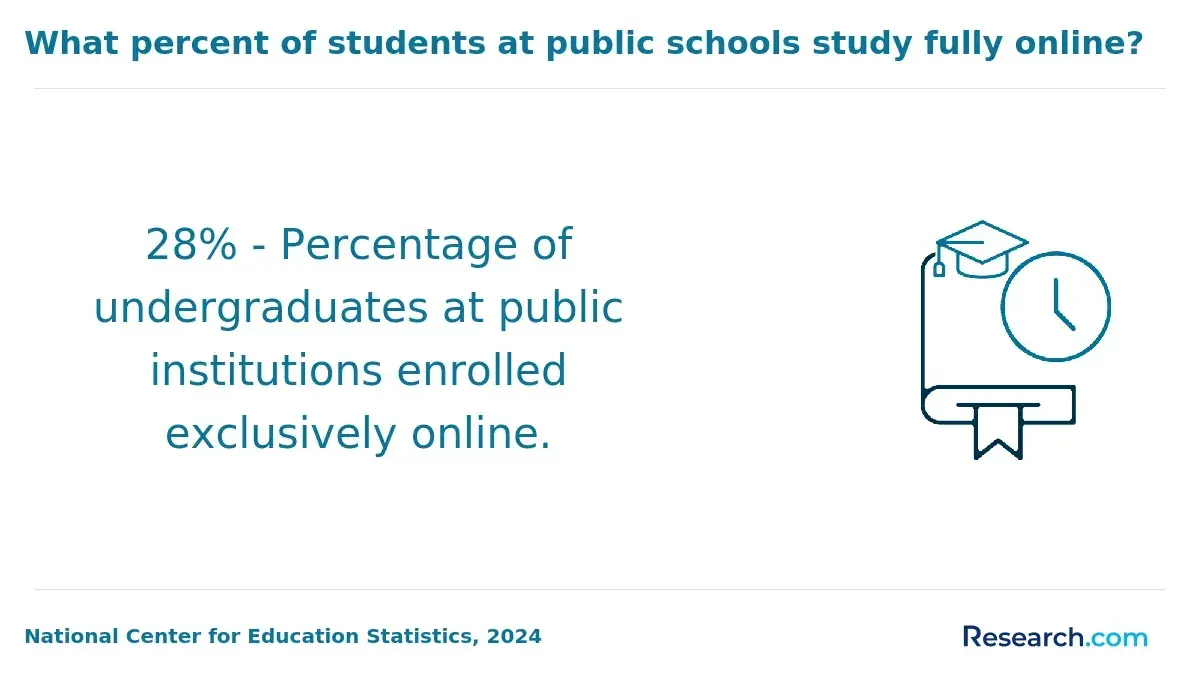
Yes, an online college with an applicable 2.0 GPA admissions policy can be legitimate. GPA accessibility and educational quality are separate questions. Verify the institution's accreditation through the U.S. Department of Education's accreditation database, then check whether your intended program needs additional accreditation or state approval.
Do not mistake "online" for "available anywhere without in-person work." Nursing clinicals, education placements, social-work fieldwork, laboratories, and some exams may require a location or scheduled attendance. If you plan to seek a license, obtain written confirmation that the program satisfies the educational requirements of your intended state; institutional accreditation alone does not establish licensure eligibility.
Which associate and bachelor's degrees offer the strongest career pathways?
The strongest pathway depends on the job you want and the point at which you can enter the major. The comparison below shows how degree choices differ in purpose; it does not imply that every institution admits 2.0 GPA applicants to these programs.
| Degree path | Potential advantage | Admission or career constraint to check |
| Business or IT associate degree | Earlier workforce entry or a possible transfer foundation | Whether credits apply to the intended bachelor's major |
| Business, IT, or computer science bachelor's degree | Broader preparation for field-related roles | Major-entry prerequisites and evidence of practical skills |
| Nursing or education degree | A structured route toward a regulated profession | Selective admission, placements, and state licensure rules |
| Psychology or criminal justice degree | Flexible study of behavior, institutions, or policy | Whether a specific target job requires further training |
Ask schools to evaluate transfer credits against the degree audit, not merely to confirm that credits are accepted. For longer-term planning, a most valuable masters degrees comparison may help you assess graduate options after you have established an undergraduate record; it does not change current admissions eligibility.
How do online and campus degree programs compare for low-GPA students?
Online and campus formats can both work for a student rebuilding academic momentum. The useful distinction is how each program delivers instruction, support, and required practice - not the label alone.
| Format | Potential fit | Constraint to verify |
| Online | Students who need to study away from campus | Live meetings, fixed deadlines, proctored exams, and local placements |
| Hybrid | Students who want some in-person instruction | Required campus days and travel costs |
| Campus | Students who prefer in-person classes and services | Commute, class times, and course availability |
If you need scheduling flexibility, ask for sample course calendars and whether part-time enrollment changes the sequence of required classes. An easiest online degree is not necessarily the best fit if its deadlines, prerequisites, or career outcomes conflict with your needs.
What do 2.0 GPA degree programs cost and how long do they take?
Associate degrees commonly require about 60 credits and bachelor's degrees about 120, but the time you have left depends on accepted credits, enrollment pace, course sequencing, and any required clinical or field experience. A student entering a selective major after prerequisite study may take longer than the degree's standard timeline suggests.
For a cost benchmark, the College Board reported average published tuition and fees of $4,050 for in-district public two-year students and $11,610 for in-state public four-year students in 2024-25. These are annual sector averages, not total degree prices. Compare each school's tuition and mandatory fees with books, transportation, technology, placement-related expenses, and the number of credits you still need. Complete the Free Application for Federal Student Aid (FAFSA) to learn what aid may be available; admission does not guarantee a particular award.
Which careers can you pursue with these degrees, and what salaries are typical?
A degree can support a career path, but salary data describes occupations, not what graduates of a particular major will earn. These U.S. Bureau of Labor Statistics 2024 median annual wages illustrate the difference between potential destinations and an admission decision.
| Occupation | 2024 U.S. median annual wage | Important qualification |
| Registered nurse | $93,600 | Requires an approved nursing education pathway and a license |
| Accountant or auditor | $81,680 | Typically requires a bachelor's degree; some roles require a CPA license |
| Software developer | $133,080 | Typically requires a bachelor's degree and demonstrated technical skills |
These medians include workers at different career stages and do not predict an entry-level offer. Before selecting a major, compare local job postings with the curriculum and any credential requirements. For example, a business degree is broader than an accounting degree, and an IT degree is not automatically equivalent to computer science preparation for software-development roles.
Do these degree pathways require professional licenses or certifications?
Some pathways require credentials beyond the degree. Registered nurses must meet state licensing requirements and pass the applicable licensing examination. Public-school teachers generally need state certification or licensure. Social-work licensing rules vary by state and role, while professional engineering licensure involves requirements beyond simply earning an engineering degree. Other jobs may value certifications without legally requiring them.
Check the relevant state board before enrolling, especially if you expect to study online across state lines. Graduate study is a separate decision: a search for the easiest PhD to get does not establish eligibility with a 2.0 undergraduate GPA or replace a profession's licensing requirements.
How can you choose an accredited college that accepts a 2.0 GPA?
Choose a school by verifying both the admissions opportunity and the path that follows it. An accessible application is useful only if the degree can take you toward your intended credential or job.
Use this sequence to avoid the most costly assumptions:
- Confirm institutional accreditation and, where relevant, program accreditation or state approval using the accreditor's and regulator's official records.
- Read the published GPA policy for your applicant category, then confirm direct admission or progression rules for your intended major.
- Request a written transfer-credit evaluation showing which credits satisfy general education, major, and elective requirements.
- Compare the remaining credits, required placements, course schedule, tuition, fees, and estimated aid before calculating your likely completion cost.
- Check the education and licensing requirements of your target occupation, then ask the program how its curriculum addresses them.
Be wary of claims that "everyone with a 2.0 gets in" when the school has not identified the specific program and applicant policy. Likewise, a low per-credit price is not a bargain if few of your previous credits apply or required courses are offered infrequently.
Other Things You Should Know About
No. It may meet a published minimum for a particular applicant category, but a college can consider other requirements, and an intended major may have a separate admissions process.
You might qualify for general college admission, but nursing programs commonly review prerequisites and use separate selection criteria. Check the specific program's published rules before applying.
It can provide an associate or transfer pathway and an opportunity to earn new grades. Confirm the destination school's transfer GPA, course equivalencies, and major-entry requirements first.
It may help you meet a program's progression or transfer standards, but policies differ. Ask how repeated courses are counted and which GPA - overall, transferable, or prerequisite - the program uses.
References
- Transfers | wa.gov https://wsac.wa.gov/transfers
- Field of degree: Occupational Outlook Handbook | bls.gov https://www.bls.gov/ooh/field-of-degree/
- Your financial path to graduation | consumerfinance.gov https://www.consumerfinance.gov/paying-for-college/your-financial-path-to-graduation/
- Types of Financial Aid: Grants, Work-Study, and Loans | studentaid.gov https://studentaid.gov/understand-aid/types
- Admissions Eligibility | Colorado Department of Higher Education Home https://cdhe.colorado.gov/admissions-eligibility
- Admissions Policies and Procedures | University of South Carolina https://academicbulletins.sc.edu/undergraduate/policies-regulations/admissions-policies-procedures/
- Bridge to Bachelors Degree - Community College of Aurora https://ccaurora.edu/apply/transfer-students/bridge-to-bachelors-degree/
- Physician Assistant Studies Hybrid Program Admissions | Pitt SHRS https://www.shrs.pitt.edu/academics/pas/pashybrid/admissions/
- Bridge to Bachelor's | Colorado Community College System https://cccs.edu/our-colleges/colleges/transfer-programs/bridge-to-bachelors/
- Colleges for a 2.0 GPA | Appily https://www.appily.com/colleges/gpa/2-0