2027 Best College Degrees for Career Changers

Co-Founder and Chief Data Scientist
Changing careers can make a master's degree appealing - but the wrong one may add debt without opening the job you want. The stakes are real: the U.S. Bureau of Labor Statistics (BLS) projects employment of information security analysts to grow 33% from 2023 to 2033, yet a technology degree alone does not meet every employer's experience requirements.
This guide compares master's degree fields for career changers, including who can enter them, what they cost in time and money, and when licensure or hands-on training matters more than the degree's name.
Key Things You Should Know
- Start with the target job, not the degree title. An MBA may support a business pivot, while nursing, teaching, and clinical social work require more specific preparation and, often, a license.
- Check eligibility before comparing prices. Previous coursework can make some master's programs accessible; missing science, mathematics, or professional prerequisites can add substantial time and expense.
- Use labor-market figures as context, not a promise. BLS reports 2024 median annual pay of $93,600 for registered nurses, but an applicant without an RN license needs an eligible entry pathway - not simply any nursing master's program.
Top 10 Best College Degrees for Career Changers
Business Programs
An MBA can help career changers move into operations, marketing, or general management, especially when they can build on previous industry experience. A Master of Accountancy is a more targeted choice for accounting, although prerequisite courses and state CPA requirements may apply. MBA admissions may consider work history, and some programs require foundation courses or standardized tests. Neither degree guarantees a management job: compare internships, recruiting access, and the experience employers request. If you need a first business role rather than graduate-level specialization, an entry-level job or focused certificate may be a less expensive start.
Healthcare Programs
A Master of Public Health (MPH) prepares students for population health, epidemiology, and program work; a Master of Health Administration (MHA) focuses on healthcare organizations and operations. Both can suit applicants from nonclinical backgrounds, though quantitative prerequisites and healthcare experience vary. Neither degree makes its holder a physician, nurse, or other licensed clinician. Look for an MPH practicum or MHA internship that connects to your target role, and ask whether career support serves students entering healthcare for the first time. Consider a clinical training pathway instead if direct patient care is the goal.
Information Technology Programs
A master's in information technology or information systems often emphasizes networks, cloud systems, cybersecurity, and organizational technology. Some programs admit applicants without a computing degree but assign programming or networking foundations. The best fit is usually a defined role - such as systems analyst - rather than a general hope of "working in tech." Review labs, projects, and internship access alongside course titles. Cybersecurity positions may require prior IT experience or certifications, so a support or systems role can be a more realistic first step than an advanced security position.
Computer Science Programs
A computer science master's can support a move toward software development or specialized computing, but it usually demands more mathematics and programming than a general IT degree. Conversion programs may offer bridge courses; others expect undergraduate algorithms and data structures before admission. Compare the complete prerequisite sequence, not just the advertised master's length. Projects and internships can help demonstrate ability, but the degree alone does not secure a developer role. Applicants seeking faster entry into technical support or systems work may find an IT-focused path more appropriate.
Nursing Programs
Nursing pathways depend heavily on the applicant's starting point. An RN-to-MSN program is for licensed nurses; certain direct-entry master's programs accept non-nurses with a prior bachelor's degree and required sciences. Verify whether the program prepares graduates for initial RN licensure, an advanced practice role, or both - and which examinations and additional requirements follow. Clinical placements require in-person time even when lectures are online. For someone without a bachelor's degree, an associate or bachelor's nursing pathway may be the more suitable route into practice.
Psychology Programs
A psychology master's can support research, behavioral-health administration, or further study, but a general psychology degree typically does not qualify someone to practice independently as a psychologist. Career changers seeking counseling should compare state-eligible counseling or clinical programs instead of relying on the word "psychology" in a title. Check supervised-practice requirements, program accreditation where relevant, and whether the curriculum meets the intended state's licensing rules. A research-oriented program makes more sense for applicants planning doctoral study than for those seeking immediate clinical practice.
Education Programs
A Master of Arts in Teaching (MAT) may provide an initial teacher-licensure pathway for bachelor's degree holders. A Master of Education (MEd) often serves existing educators and may not lead to first-time licensure. Confirm the distinction before applying, along with subject prerequisites, state approval, examinations, and student-teaching arrangements. Online coursework does not eliminate school-based placements. If you want to teach without leaving your current job immediately, ask how placements are scheduled; if you want education policy or training work instead, a nonlicensure program may fit better.
Criminal Justice Programs
A criminal justice master's commonly examines policy, criminology, leadership, and the justice system. It may suit professionals moving into research, administration, or policy, particularly if they already have relevant experience. It is not ordinarily an entry requirement for police work and does not replace an agency's hiring or academy process. Compare methods coursework and access to applied projects against your intended role. Career changers seeking an initial public-safety job should check employer requirements before committing to graduate tuition.
Engineering Programs
An engineering master's usually builds on substantial undergraduate mathematics, physics, and engineering coursework. Applicants from another field may need a formal bridge program or extensive prerequisites, making this a potentially long career change. Distinguish engineering disciplines carefully: an engineering-management degree does not provide the same technical preparation as a discipline-specific engineering degree. If professional engineer licensure is your goal, check your state board's education and experience rules before enrolling. Applicants with little technical preparation should compare the full bridge cost with a second bachelor's degree.
Social Work Programs
A Master of Social Work (MSW) is a direct route toward many professional social-work roles. Traditional MSW programs may accept bachelor's graduates from other fields; advanced-standing programs generally require a qualifying social-work bachelor's degree. Field placements are a major scheduling commitment and often must be completed in person. Clinical social work requires state licensure and supervised experience beyond graduation. Compare placement support and your state's requirements before choosing an online program. Applicants primarily interested in research or policy should also consider whether an MPH better matches their goals.
What Are the Best College Degrees for Career Changers?
The best degree for a career changer is the one that meets the entry requirements of a specific occupation without making you repeat preparation you already have. These master's fields differ most in how accessible they are to newcomers and whether graduation leads directly toward a regulated profession. Readers comparing education levels as well as fields can also explore other best degrees before committing to graduate study.
This comparison summarizes the main decision point for each field. "Accessible" does not mean prerequisite-free: individual programs set their own admissions and completion requirements.
| Master's field | Potential fit for a career changer | Check before applying |
| Business | Builds on experience for an industry or function change | Whether the target job values an MBA or specialized degree |
| Healthcare | Opens nonclinical public-health or administration paths | Quantitative prerequisites and applied experience |
| Information technology | Can bridge into systems-focused work | Foundations and experience expected for target roles |
| Computer science | Offers deeper software and computing preparation | Programming and mathematics prerequisites |
| Nursing | Provides a defined clinical pathway when entry-eligible | Initial RN licensure eligibility and clinical placements |
| Psychology | Fits research or further study | Whether a separate clinical degree is needed |
| Education | Can lead to teaching through an initial-licensure program | State approval and student teaching |
| Criminal justice | Supports policy or administration goals | Whether graduate study is needed for the first job |
| Engineering | Fits applicants with substantial technical preparation | Bridge coursework and licensing rules |
| Social work | Offers a defined route into professional social work | Field placements and state licensure steps |
Which Career-Change Degrees Offer the Best Job Prospects?
Job prospects are strongest when a degree connects to an occupation you can actually enter. Healthcare and social-work paths have defined professional requirements; computing can offer opportunities but may demand a portfolio and prior experience. BLS reports 2024 median annual pay of $133,080 for software developers. That is an occupational figure - not the expected pay of a new computer science graduate - and applicants should weigh it against entry-level hiring requirements and total study cost. Lists of highest paying careers can provide context, but salary alone is a poor way to choose a master's program.
For each target job, read several current postings in your intended location. Note whether employers ask for a particular degree, license, technical skill, or years of experience; then choose a program that closes the gaps you can realistically close through education.
How Much Do Career-Change Degrees Cost and How Long Do They Take?
Master's programs vary in credits, tuition, prerequisites, and required placements, so there is no reliable single price or timeline for all career changers. A program advertised as short may assume that students already hold a relevant degree or professional license. Full-time study may reduce elapsed time but also reduce earnings; part-time study can preserve income while extending tuition exposure and delaying a career move.
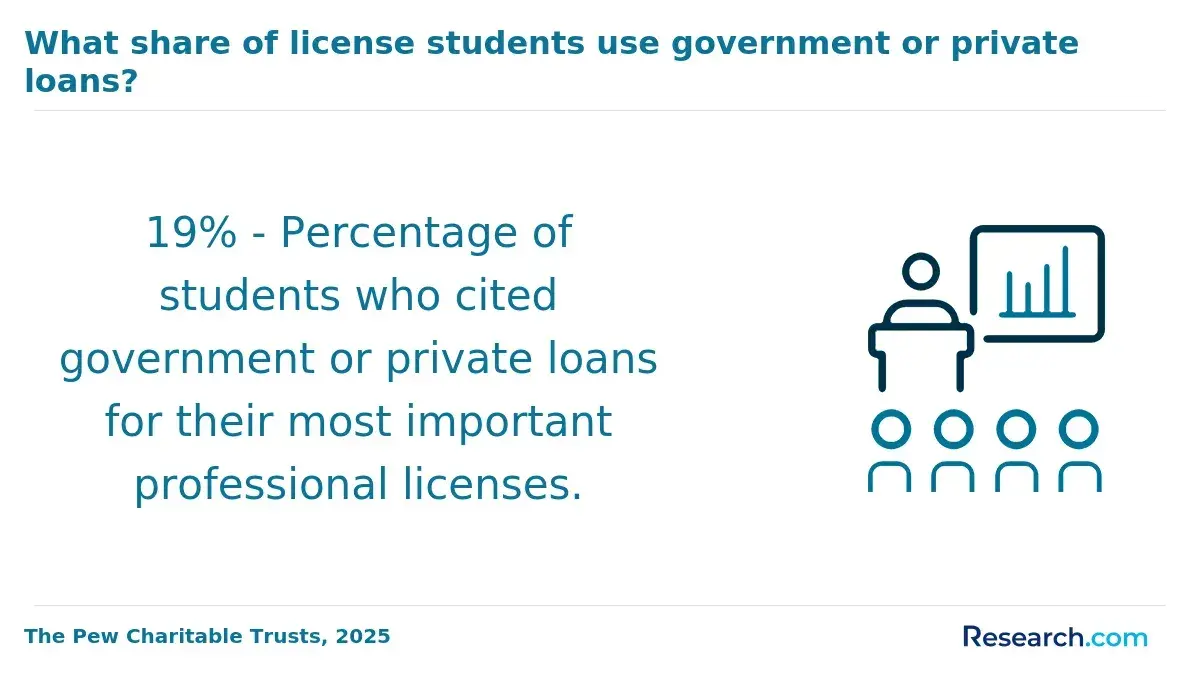
Request a written estimate covering tuition for all remaining courses, mandatory and program fees, books or equipment, travel, and any unpaid clinical or field hours. Ask for a separate estimate if you need foundation courses, since they may not count toward the graduate degree. Compare the likely total after grants or employer tuition assistance, not merely the per-credit rate. Confirm federal financial-aid eligibility and borrowing terms with the school's aid office before relying on loans.
Which Career-Change Degrees Are Available Online?
Business, IT, computer science, public health, and some criminal justice master's programs may be available online. Education, nursing, and social work programs can also deliver coursework online while requiring local student teaching, clinical work, or field placements. Engineering availability depends on the discipline and its laboratory requirements.
Online does not necessarily mean self-paced or location-independent. Ask about live classes, deadlines, campus visits, placement approval, and whether the school can enroll students in your state. Service members and veterans weighing scheduling and benefits may find comparisons of military friendly universities online useful, but should still verify the requirements of the specific master's program.
What Accreditation Should Career Changers Look For?
First confirm that the institution holds accreditation recognized by the U.S. Department of Education or the Council for Higher Education Accreditation. Then check whether your intended profession expects or requires specialized program accreditation or state approval. For example, social work, nursing, public health, counseling, engineering, and teacher-preparation pathways can have field-specific expectations that matter for employment or licensure.
Do not assume an accredited university makes every graduate program eligible for every license. Ask the program to identify its applicable programmatic accreditation and provide written information about eligibility in the state where you plan to work. Check that information against the relevant licensing board before paying a deposit.
What Are the Admission Requirements for Career-Change Programs?
Most master's programs require a bachelor's degree, transcripts, and an application; recommendations, a statement of purpose, interviews, tests, or work experience depend on the program. The critical question for career changers is whether the prior degree must be in a related field. Computer science and engineering may require substantial technical coursework, while direct-entry nursing commonly requires specified sciences. Some business, public-health, and social-work programs admit applicants from a wider range of majors.
Ask admissions to evaluate your transcript against both admission and graduation requirements. A waiver of a prerequisite is different from graduate credit toward the degree, and an acceptance offer does not necessarily mean you can begin advanced courses immediately.
Which Degrees Require Professional Licensure or Certification?
Teaching and nursing require state credentials for professional practice. Clinical social work and many counseling roles require licensure plus examinations and supervised experience; a general psychology master's is not a substitute. Some engineering roles involve professional engineer licensure, with rules set by state boards. Accounting graduates pursuing the CPA credential must also satisfy their state's education, examination, and experience requirements.
Business, IT, public health, and criminal justice degrees do not generally confer an occupational license by themselves. Certifications can still matter to particular employers. Before enrolling, work backward from your desired job's state and employer requirements, especially if you expect to study online in one state and work in another.
What Coursework Do Career Changers Complete in These Degrees?
Coursework should match the work you want to do. Business programs may cover finance and operations; MPH programs, epidemiology and biostatistics; IT and computer science, systems and programming; and education, instructional methods. Social work and nursing combine academic work with supervised practice. Engineering usually adds advanced technical study, while research-oriented psychology may emphasize statistics and research methods.
Compare the required courses and culminating experience - not just electives. A capstone built around a real employer problem may help a career pivot differently from a thesis, while a clinical placement may be nonnegotiable for licensure. Ask when required courses run and whether placement hours can fit around your job.
How Should You Compare Career-Change Degree Programs?
Begin with one target occupation and compare programs against the barriers to entering it. This keeps an attractive curriculum or low advertised tuition from overshadowing a missing license pathway, unaffordable prerequisite sequence, or impractical placement schedule.
Use these checks before applying or accepting an offer:
- Confirm the job's typical degree, experience, and state credential requirements using employer postings and the relevant licensing board.
- Get a transcript review showing missing prerequisites, applicable graduate credit, and the courses you would still need to complete.
- Compare total estimated cost and a realistic schedule that includes placements, course availability, and time away from paid work.
- Verify accreditation, state eligibility, and any required in-person activities directly with the program.
- Ask what internships, projects, placement assistance, and career services are available to students entering the field - not only to experienced professionals.
If your goal ultimately requires doctoral study, compare that route before paying for a master's that may not apply toward it. Even a doctorate without dissertation can have substantial research or capstone requirements. The best next step is a program-specific evaluation of your background, costs, and target job - not a ranking alone.
Other Things You Should Know About
Often, yes. Business, public health, and traditional MSW programs may accept varied majors. Technical and clinical programs are more likely to require specific prerequisite courses or an entry pathway.
The fastest useful path depends on your existing credits and the job's requirements. A shorter degree is not a shortcut if you must first complete prerequisites or gain a license; an entry-level job or certificate may sometimes be quicker.
It can, if the specific program meets the relevant state's requirements. Coursework may be online while clinicals, fieldwork, or student teaching take place in person. Confirm eligibility with the licensing board.
It may be when the occupation requires graduate preparation or the program provides a credible entry pathway. If employers prioritize experience instead, compare the degree's full cost with internships, certificates, or an entry-level role.
References
- Your financial path to graduation | consumerfinance.gov https://www.consumerfinance.gov/paying-for-college/your-financial-path-to-graduation/
- Education pays: U.S. Bureau of Labor Statistics https://www.bls.gov/emp/chart-unemployment-earnings-education.htm
- Annual Earnings by Educational Attainment - COE https://nces.ed.gov/programs/coe/indicator/cba/annual-earnings
- What to Know for Changing Your Career After 30 | Drexel University Online https://www.online.drexel.edu/news/changing-careers-after-30.aspx
- How Can You Change Careers with an Online Degree? | study.com https://study.com/college/online-degrees/how-can-you-change-careers-with-an-online-degree.html
- Master's Degree Ideas For Career Changers | Get On The Path To A New Career | LearnHowToBecome.org https://www.learnhowtobecome.org/career-resource-center/best-masters-degrees-for-career-change/
- A College Degree Still Pays Off - But Student Choices Matter | collegeboard.org https://newsroom.collegeboard.org/college-degree-still-pays-student-choices-matter
- Career earnings by college major - The Hamilton Project https://www.hamiltonproject.org/data/career-earnings-by-college-major/