
2027 Best Online College Majors for Military Spouses

Co-Founder and Chief Data Scientist
A military move can interrupt a career just as an in-person degree becomes difficult to finish. Online study can help, but the best major depends on whether its courses, required placements, and eventual job can move with you.
The U.S. Bureau of Labor Statistics reports that registered nurses earned a median $93,600 in 2024 - an attractive career benchmark, but one that requires nursing licensure, not simply an online credential. This guide compares graduate fields and shorter alternatives so military spouses can choose a path that fits their qualifications, budget, and likely relocations.
Key Things You Should Know
- For spouses prioritizing geographic flexibility, business, information technology, and computer science are strong starting points; compare actual program schedules and employer requirements before choosing.
- The 2024 median wage for software developers was $133,080, according to the Bureau of Labor Statistics. That is an occupational figure, not a promised salary for computer science graduates or remote workers.
- Nursing, teaching, social work, and many counseling roles can travel across states, but an online degree does not eliminate local placements, examinations, or state licensing rules.
Top 10 Best Online College Majors for Military Spouses
Business Programs
An online MBA or master's in accounting, human resources, or supply chain management can suit spouses seeking roles across industries. These programs generally require a bachelor's degree; an MBA may also value professional experience. Look for part-time scheduling and a curriculum with practical projects.
Accounting is less location-dependent than many clinical fields, but a CPA license has separate state requirements. An MBA is most useful when it builds on relevant experience; it does not by itself qualify someone for a management job.
Healthcare Programs
A master's in healthcare administration, health informatics, or public health prepares students for different kinds of work: organizational management, health-data systems, or population health. These are not substitutes for clinical licenses. An online health informatics program may be easier to continue through a move than a degree with a site-based internship, although employers may still expect healthcare or technical experience. Ask whether required projects or fieldwork can be completed near a new duty station.
Information Technology Programs
A master's in information technology, cybersecurity, or information systems can build on technical or nontechnical bachelor's study, depending on the program's prerequisites. Compare hands-on labs, cloud and networking coursework, and whether classes meet live. Some cybersecurity jobs require a security clearance or on-site access, so the degree does not necessarily lead to remote work. A graduate certificate and relevant work experience may be a better first step for a spouse testing a new technical field.
Computer Science Programs
An online master's in computer science can deepen skills in software, data systems, or artificial intelligence. It is a strong fit for students who enjoy programming and mathematics, but programs vary in how much prior computer science coursework they require. Some offer foundation courses that add time and cost. Projects and technical interviews matter in hiring; a master's is not required for every software role. Check whether the curriculum builds the skills needed for the jobs you want.
Nursing Programs
Online master of science in nursing programs commonly serve licensed registered nurses pursuing advanced practice, education, or leadership. They often require an active RN license and clinical experience. Online classes do not remove supervised clinical hours, and placement approval may become complicated after a move.
Nurse practitioner pathways also involve certification and state licensure beyond the degree. Spouses who are not already nurses should compare prelicensure nursing routes instead of assuming an online MSN provides RN entry.
Psychology Programs
An online master's in psychology may support research, behavioral-health administration, or preparation for further study. It generally does not qualify graduates to practice as licensed psychologists, a role that typically requires doctoral education and state licensure.
Spouses seeking to provide therapy should compare clinical mental health counseling, marriage and family therapy, or social work programs against the rules of states where they may live. Supervised placements and licensure requirements can limit portability.
Education Programs
An online master of education can help an existing teacher develop expertise in curriculum, special education, or educational leadership. Some programs are for licensed educators; others provide a route toward initial teaching credentials. The distinction matters because student teaching and state certification rules can complicate relocation.
Before enrolling, confirm which state's requirements the program addresses and whether a placement near your duty station is possible. A nonlicensure education master's will not automatically qualify you to teach.
Criminal Justice Programs
An online master's in criminal justice can support work in policy, analysis, corrections administration, or related public-service settings. It may fit spouses with relevant experience who want to advance, but many law-enforcement and federal roles have separate hiring, training, citizenship, background, or location requirements.
Compare the degree with a targeted certificate if your goal is a specific analytical skill. Do not assume graduate study replaces academy training or makes a duty-station transfer possible.
Engineering Programs
An online master of engineering can deepen existing expertise in areas such as systems, electrical, or industrial engineering. Most programs expect substantial undergraduate preparation, and laboratory or team-project requirements differ.
Engineering skills can be useful across employers, but site-based work and defense-related clearance rules may reduce remote options. If professional engineer licensure is your goal, check the relevant state board's education, experience, and examination requirements; a master's alone is not a license.
Social Work Programs
An online master of social work can prepare graduates for social-service and, with additional requirements, clinical practice. Admission rules and program length may differ for applicants with a qualifying bachelor of social work versus those entering from another field.
Field education requires approved local placements even when coursework is online. For a spouse expecting moves, ask how the school handles placement changes and check state licensure rules. A CSWE-accredited MSW is an important consideration for many licensing paths.
What are the best online majors for military spouses?
The strongest choice is a field that matches your starting qualifications and career goal while remaining workable through moves. Business, information technology, and computer science often offer fewer mandatory local placements. Healthcare administration can be similarly workable, while nursing, education, and social work require closer planning around practice sites or licenses.
This comparison highlights the relocation-related trade-off behind each broad option. It compares fields, not individual colleges or guarantees of remote employment.
| Major or field | Why consider it | Main portability question |
| Business | Applicable across many industries | Does your target role require local clients or a state license? |
| IT or computer science | Skills can apply across locations | Are the jobs you want actually remote or available near likely duty stations? |
| Healthcare administration | Healthcare organizations employ nonclinical staff | Does the program require a local internship? |
| Nursing, education, or social work | Clear professional pathways | Can placements and licensing plans survive a move? |
Use those questions to narrow your list, then compare the specific online program - not just the major. A guide to finding an online school for military spouses can help frame the separate choice of institution.
Which online degrees offer the most portable career opportunities?
Degrees in accounting, information systems, computer science, and health informatics can prepare students for skills used by employers in many locations. Portability still depends on the position: an accounting role may be office-based, and a technology job may require on-site systems or a clearance.
If you want direct service work, nursing, teaching, and social work may offer opportunities in multiple states, but you must plan for credential rules and available jobs after each move. Compare postings in several likely locations rather than equating a nationally taught degree with nationwide eligibility.
How can military spouses pay for online college programs?
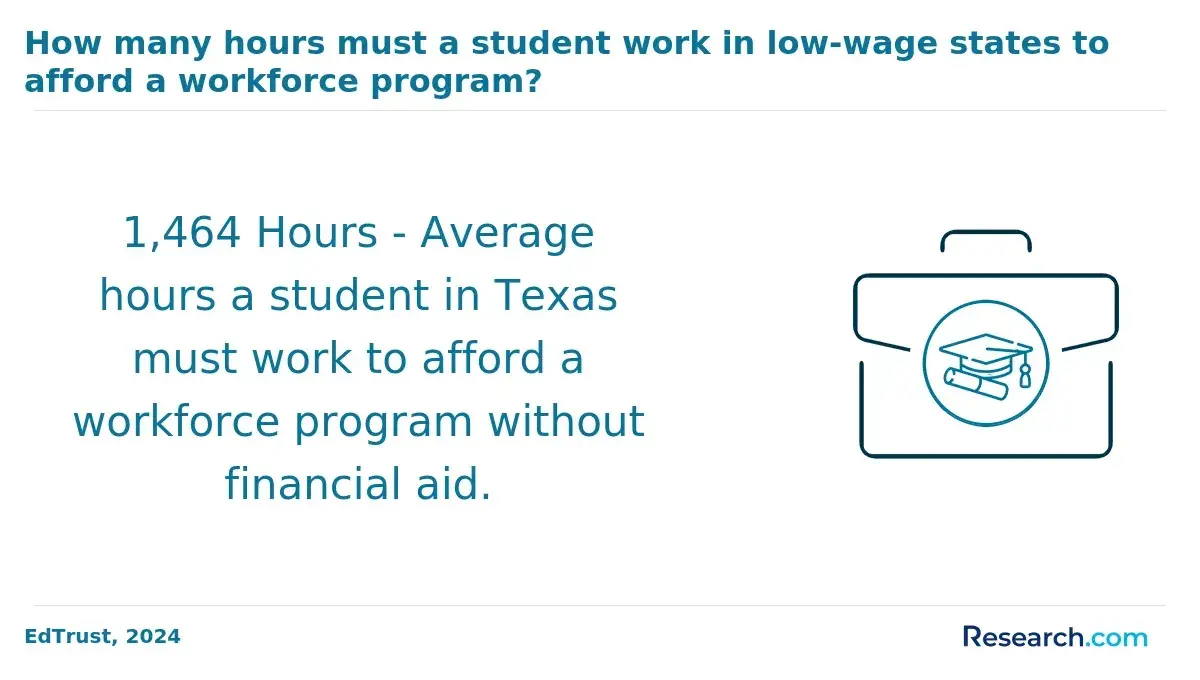
Start with the program's total remaining cost: tuition, mandatory and technology fees, books, required travel, placements, and any courses needed before admission. Then ask how accepted transfer credit changes both cost and eligibility for aid.
Eligible spouses may be able to use My Career Advancement Account (MyCAA) assistance for approved, career-focused training; verify current eligibility, approved credentials, and funding rules before applying. The FAFSA can determine eligibility for federal student aid.
Pell Grants generally apply to eligible undergraduate study, not a typical master's degree; graduate students may have federal loan options. Also check school scholarships, employer assistance, and whether transferred GI Bill benefits are available to you. Do not assume every benefit can cover the same charge or that military affiliation guarantees funding.
Which online colleges are accredited and military-friendly?
No single college is best for every spouse or major. First verify the institution's accreditation through the U.S. Department of Education's accreditation database or the accreditor. For a regulated career, also check the relevant programmatic accreditation and the licensing board's requirements.
Next, ask the program for written answers about part-time enrollment, live sessions, deployment-related interruptions affecting your household, transfer evaluations, placement support after a move, and total charges. A list of top online universities can generate possibilities, but a school's general reputation cannot confirm that your particular major is online, affordable, or license-eligible.
What are the best certificate and associate degree pathways?
A certificate may be the more economical test of a new field if it teaches a specific skill, has employer relevance, and can count toward a later degree. An associate degree can provide broader preparation or a transfer route in business, IT, or healthcare support; its value depends on the intended occupation and whether another school will apply the credits to your chosen bachelor's major.
Compare the credential's required courses with entry-level job postings before committing. If speed is the main concern, research the easiest associate degree to get, but do not mistake ease of completion for career fit. Nursing and other licensed healthcare paths have separate accreditation, clinical, examination, and state requirements regardless of credential length.
How do online programs compare with on-campus options?
Online coursework can preserve continuity when a spouse relocates, but it may still include scheduled meetings, fixed deadlines, exams, or local placements. Campus study can offer easier access to labs and in-person networks, yet a move may interrupt course sequences. Hybrid study can combine both benefits if required visits are feasible.
For graduate study, compare a program's full sequence and location requirements - not only its advertised course format. An overview of online master's programs may suggest formats to investigate, but a short advertised timeline may depend on prerequisites, transfer policies, and full-time enrollment. Ask what happens to your schedule if you move midterm.
What admission requirements apply to online college majors?
Undergraduate applicants commonly need a high school diploma or equivalent and may need transcripts or placement information. Graduate applicants generally need a bachelor's degree; individual majors can add prerequisites, work experience, a minimum GPA, or a professional license. MSN applicants, for example, commonly need RN preparation, while technical master's programs may require programming or mathematics foundations.
Request a program-specific review before paying an enrollment deposit. Ask which previous courses will satisfy prerequisites, which credits will apply to the degree, and how many requirements remain. Acceptance of a transfer course as an elective does not mean it replaces a major requirement, and an admission policy advertised by a university may not apply to a selective program.
What careers, salaries, and job outlooks follow these majors?
Majors provide preparation, not job placement or a fixed salary. The Bureau of Labor Statistics' 2024 median pay of $133,080 for software developers describes workers in that occupation - not graduates of a particular computer science program. It is useful as career context, but experience, location, employer, and job duties matter when judging the return on a degree.
Technology occupations offer potential across industries, though employers may expect portfolios and current skills as tools change. Healthcare and social-service roles can offer work in many communities but may require licensure and in-person service. Before choosing a major, compare current local and remote job postings, their credential requirements, and the full cost of reaching an entry-level role. Be especially cautious about paying for a graduate degree when the target job does not require one.
Which licenses and certifications do these careers require?
Requirements follow the occupation and the state, not simply the major. Registered nurses need state authorization to practice and must meet examination requirements. Teachers need the applicable state credential for public-school teaching. Clinical social workers and counselors generally need qualifying education, supervised practice, an examination, and a state license; requirements differ by profession and jurisdiction.
Business and technology jobs often have no blanket state license, although a CPA license, certain engineering roles, and employer-requested technical certifications are separate cases. Before enrolling in a licensure-oriented online program, contact the relevant board for your current and likely future states. Confirm the program's eligibility disclosures, required placement locations, and whether a move would delay supervised hours. A school's statement that its classes are online is not proof of interstate license eligibility.
Other Things You Should Know About
Often, yes, if the school permits continued enrollment. Confirm state-based enrollment rules and whether a required clinical, internship, or student-teaching placement can be arranged at the new location.
Both can support work across locations. Choose based on the work you want to do and postings you can realistically pursue; neither degree guarantees a remote job.
It depends on the benefit. MyCAA funding has restrictions and should not be assumed to cover a graduate degree. Check your eligibility and approved program with the benefit administrator, and ask the school about other aid.
No. Licensure depends on the occupation and state, and may require approved coursework, local practice hours, examinations, or other conditions. Check the relevant board before enrolling.
References
- Transferring Your Professional License | militaryonesource.mil https://www.militaryonesource.mil/benefits/transferring-your-professional-license/
- What Financial Aid Offers Don't Tell You About the Cost of College | U.S. GAO https://www.gao.gov/blog/what-financial-aid-offers-dont-tell-you-about-cost-college
- Cost of Attendance (Budget) | 2025-2026 Federal Student Aid Handbook https://fsapartners.ed.gov/knowledge-center/fsa-handbook/2025-2026/vol3/ch2-cost-attendance-budget
- Programmatic Accrediting Agencies | U.S. Department of Education http://www.ed.gov/laws-and-policy/higher-education-laws-and-policy/college-accreditation/programmatic-accrediting-agencies
- Understanding College Costs | studentaid.gov https://studentaid.gov/resources/prepare-for-college/students/choosing-schools/consider-costs
- Professional License Portability | justice.gov https://www.justice.gov/servicemembers/professional-license-portability
- Education And Career Benefits For Family Members | Veterans Affairs https://www.va.gov/family-and-caregiver-benefits/education-and-careers/
- Military Spouse Education | Soldier for Life https://soldierforlife.army.mil/Employment-Education-and-Health/Education-and-Career-Training/Military-Spouse-Education
- Credit for Prior Learning | UMass Global https://www.umassglobal.edu/admissions/transfer-center/credit-prior-learning
- How to Transfer Credits to an Online College Program | NMSU Global Campus https://global.nmsu.edu/blog/general/how-to-transfer-credits-to-an-online-college/


