2027 Best Online Career Programs for Transfer Students

Co-Founder and Chief Data Scientist
Already have college credit and want a career-focused online master's degree? The key question is not simply whether a school accepts transfer credit, but whether that credit replaces requirements in the program you want. Career outcomes matter, too: the U.S. Bureau of Labor Statistics (BLS) reported a $133,080 median annual wage for software developers in 2024, though a master's degree is not generally required for that occupation. This guide compares ten program families and shows transfer students how to check remaining coursework, total cost, online requirements, and professional eligibility before enrolling.
Key Things You Should Know
- The best transfer option is the program that applies eligible graduate credit to required coursework - not merely one that accepts it as elective credit.
- Career fit can outweigh speed: BLS reported a $120,360 median annual wage for information security analysts in 2023, but that occupational figure is not a salary prediction for program graduates.
- Check in-person requirements before choosing an online program. Nursing, teaching, counseling, and social work pathways may require supervised placements or other location-specific work.
Top 10 Best Online Career Programs for Transfer Students
Business Programs
Online MBA and specialized master's programs in accounting, finance, analytics, or management suit students seeking advancement or a career change. An MBA often emphasizes leadership and broad business decisions; a specialized degree goes deeper into one function. Previous graduate business courses may replace comparable requirements, but undergraduate courses generally serve as preparation, not graduate transfer credit. Compare accreditation, prerequisite rules, team-project schedules, and the number of credits left after evaluation. Choose accounting coursework with particular care if you need to meet a state's CPA education rules.
Healthcare Programs
Online master's programs in healthcare administration, public health, and health informatics prepare students for different work: organizational management, population health, and health-data systems, respectively. Applicants commonly need a bachelor's degree; some concentrations expect healthcare experience or quantitative preparation. A comparable graduate course might transfer, while internships and capstones may still need to be completed through the new school. Check whether a program requires live meetings or a local placement. These degrees do not, by themselves, grant clinical licenses.
Information Technology Programs
Online master's programs in cybersecurity, information systems, and IT management can fit transfer students who already have technical coursework or professional experience. Compare hands-on labs, cloud or security projects, and whether earlier graduate courses satisfy current technical requirements; rapidly changing subject matter may face recency rules. An IT degree can support technical or leadership goals, but a management-oriented curriculum may be a poor fit if you need intensive programming. Verify any required proctored assessments and whether professional certifications are included or separate.
Computer Science Programs
An online computer science master's typically builds advanced programming, algorithms, systems, or artificial intelligence skills. It can suit graduates in computing and some career changers, but applicants without foundational coursework may need bridge classes that add time and cost. Prior graduate computing courses may transfer if their content and level match; professional coding experience alone does not automatically earn credit. Compare project-based and research-oriented curricula, especially if you want a portfolio for industry work rather than preparation for doctoral study.
Nursing Programs
Online MSN programs may focus on leadership, education, informatics, or advanced practice. Most require an active RN license and specified prior nursing education; RN-to-MSN routes have separate eligibility rules. Didactic courses may be online, but clinical tracks generally involve supervised in-person experiences and state-specific placement approval. Transfer students should ask which previous graduate nursing courses meet the chosen specialty's requirements. An MSN alone does not confer advanced practice licensure: certification, examination, clinical-hour, and state board rules also apply.
Psychology Programs
Online master's programs in psychology may emphasize applied research, organizational behavior, or preparation for further study. A general psychology master's does not ordinarily qualify someone to practice as a licensed psychologist. If your goal is counseling, compare programs specifically designed around that license and verify state rules for coursework and supervised practice. Research methods and statistics courses may be candidates for graduate transfer credit, but schools may require students to complete their own thesis, capstone, or practicum.
Education Programs
Online master's programs in curriculum, instructional design, educational leadership, and teaching serve different goals. Some are intended for licensed teachers seeking advancement; initial-licensure programs have distinct admission and fieldwork requirements. Previous graduate education courses may satisfy electives or core requirements if approved, but student teaching and supervised experiences are less readily replaced. Ask whether the program accepts applicants in your state, who arranges local placements, and whether completion meets your state's specific credential requirements.
Criminal Justice Programs
Online criminal justice master's programs commonly cover policy, research, leadership, and justice systems. They may appeal to working professionals seeking administrative or analytical roles, but a graduate degree is not normally required for every law-enforcement job. Compare applied projects with research-heavy tracks and check whether previous graduate coursework in policy or statistics can fill degree requirements. A program's career relevance depends on your target employer's hiring standards, not just its title; law-enforcement eligibility and training requirements are separate.
Engineering Programs
Online engineering master's programs can be research-focused or practice-oriented, including Master of Science and Master of Engineering options. Admission may require an engineering or closely related bachelor's degree and discipline-specific prerequisites. Graduate technical courses sometimes transfer, but lab, design, thesis, and capstone rules vary. Confirm whether remote labs or campus visits are required. If professional engineer licensure is a goal, review your state board's education and experience rules rather than assuming an online master's resolves them.
Social Work Programs
An online Master of Social Work (MSW) is a professional pathway involving supervised field education, even when academic classes are online. Applicants with a qualifying accredited bachelor's in social work may be eligible for a separate advanced-standing route; that is not the same as transferring arbitrary undergraduate credits into an MSW. Standard-track and advanced-standing applicants should confirm field-placement support, accreditation, and state licensure alignment. Becoming a clinical social worker typically requires additional supervised experience and an examination after graduation.
What Are the Best Online Career Programs for Transfer Students?
For a transfer student, the best online career program is one that matches a specific job goal, applies eligible prior graduate work to required courses, and leaves a feasible path to completion. "Best" is not a universal ranking: a program with fewer accepted credits may be preferable if it provides necessary licensure preparation or stronger practical training. If you are still choosing a field, compare best degrees against the occupation you actually want.
The comparison below shows where each master's program family can make sense. It also identifies the transfer or delivery issue most likely to change your decision.
| Program family | Potential fit | Transfer or delivery question |
| Business | Management or a specialized business function | Will prior graduate courses replace core or concentration requirements? |
| Healthcare | Administration, public health, or informatics | Are internships or placements required? |
| Information technology | Security, systems, or IT leadership | Do technical courses meet content and recency rules? |
| Computer science | Advanced computing or a technical career change | Are prerequisite or bridge courses needed? |
| Nursing | RN advancement or an eligible specialty pathway | Can clinical requirements be completed locally? |
| Psychology | Research, applied work, or further study | Does the curriculum actually serve the intended profession? |
| Education | Teaching, instructional design, or school leadership | Does it meet applicable state credential rules? |
| Criminal justice | Justice policy, analysis, or administration | Do employers value the chosen specialization? |
| Engineering | Advanced technical or design work | Are labs, a thesis, or campus visits required? |
| Social work | Professional social work practice | Is advanced standing available, and how is fieldwork arranged? |
How Do Transfer Credits Work for Online Career Programs?
Transfer credit is previous coursework a new institution accepts toward its credential. For a master's student, the crucial distinction is between credit accepted by the university and credit applied to the particular degree. Schools evaluate transcripts for graduate level, grades, course content, accreditation, age, and fit with the curriculum. They may cap transferable credit and require a minimum amount of study at the awarding institution. Undergraduate courses usually meet admission prerequisites, not master's credit requirements, unless an approved combined pathway explicitly says otherwise.
Request a written, program-level evaluation before committing. It should identify each accepted course, the requirement it satisfies, remaining prerequisites, residency-credit rules, and whether a capstone, thesis, clinical, or practicum must be completed at the new school. Ask separately about professional certificates, military education, or portfolio assessment: prior experience is not automatically academic credit. If the school evaluates credit only after enrollment, factor that uncertainty into your decision.
Are Online Career Programs Accredited and Transfer-Friendly?
Yes, reputable online career programs can be accredited and transfer-friendly, but those are separate characteristics. Check the institution's current accreditation through its recognized accreditor or the U.S. Department of Education's accreditation database. Then check programmatic accreditation where it matters to your goal, such as social work, nursing, business, engineering, or a state-regulated education pathway.
Accreditation does not oblige another school to accept every course, and transfer-friendly marketing does not establish licensure eligibility. Obtain the applicable graduate catalog policy and a degree audit. Red flags include an unverifiable accreditor, promises that all credits will count without reviewing transcripts, or an inability to explain required in-person training.
Which Online Career Programs Offer the Fastest Career Pathways?
The fastest pathway is usually the one with the fewest remaining applicable requirements, not the shortest advertised course terms. A student with approved graduate courses may move through a business or IT program more quickly than a student who still needs foundation classes. An eligible bachelor's-level social work graduate may qualify for an advanced-standing MSW, while clinical nursing and licensure-oriented education programs remain constrained by placement and state requirements.
Ask each school for a personalized sequence showing available courses, expected enrollment load, transfer decisions, and required projects or placements. Treat a completion estimate cautiously if it assumes credits, a professional credential, or full-time study you do not have. If you still need an undergraduate credential before applying, online classes may offer an earlier step, but associate-level credit does not automatically become master's credit.
What Do You Learn in an Online Career Program?
Career-focused master's programs combine advanced subject knowledge with applied work, but the balance differs by field. Business students may analyze organizational decisions; computer science students may build software; healthcare students may evaluate operations or population-health problems. Programs can also require a portfolio, capstone, thesis, laboratory, internship, clinical placement, or supervised fieldwork.
Read the required-course list rather than relying on a concentration name. Transfer credit can remove a course from that list only if the program approves an equivalent or permits an elective substitution. If your goal is practice rather than research, compare the time spent on applied projects with thesis requirements; neither format is inherently better for every career.
What Are the Admission Requirements for Transfer Students?
Transfer applicants to a master's program generally submit evidence of a completed bachelor's degree and transcripts from every applicable institution. A program may additionally require prerequisites, recommendations, a statement of purpose, relevant experience, a portfolio, or a professional license. GPA and standardized-test policies vary by program; a university's general graduate admission policy may not govern a selective nursing, engineering, or clinical pathway.
Before applying, confirm both admission eligibility and transfer eligibility. Ask whether prerequisite courses must be finished before enrollment, whether conditional admission is possible, and whether official syllabi are needed to review previous graduate work. A student changing fields should pay particular attention to bridge coursework: admission does not necessarily mean every foundation requirement has been waived.
How Much Do Online Career Programs Cost and Take to Complete?
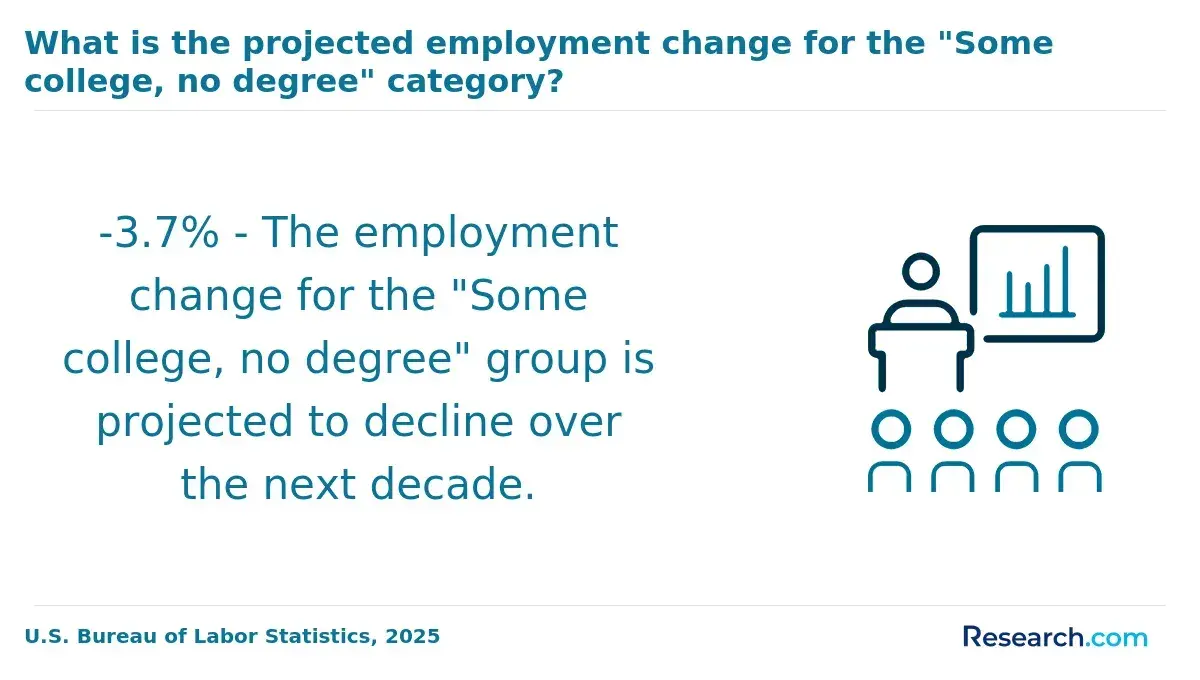
There is no reliable single price or completion time for these program families. Required credits, accepted transfer work, prerequisites, enrollment pace, course availability, and field placements all affect the finish date. Compare each school's estimated remaining cost, not just its advertised per-credit tuition: include mandatory and program fees, books or software, travel, placement-related expenses, and any residency visits. Confirm whether the specific program and your enrollment level qualify for federal financial aid, and ask about employer tuition assistance.
Online delivery also does not guarantee a manageable schedule. Request a term-by-term plan showing live sessions, deadlines, and part-time availability. Students coordinating study with caregiving may find additional scheduling ideas in degrees for moms, but should verify the requirements of the particular master's program they choose.
What Careers, Salaries, and Job Outlooks Follow These Programs?
These programs can support different careers, but an occupation's wage is not a graduate earnings estimate. For example, BLS reported a $93,600 median annual wage for registered nurses in 2024; that figure covers the occupation, not MSN graduates specifically. Nursing also requires an RN license, and an MSN is not the standard entry requirement for RN work. Likewise, software development commonly has entry routes that do not require a master's degree.
For a realistic return-on-investment check, compare the remaining program cost and time away from work with job postings for your target role. Look for required licenses, experience, and technical skills before treating a degree as the answer. If location flexibility matters, research best degrees for remote work alongside actual employer requirements; an online degree does not make its resulting occupation remote.
How Can Students Verify Licensure and Choose a Reputable Program?
Verify professional eligibility before paying an enrollment deposit. Requirements can depend on your state of residence, the program's specific track, and where you intend to work - not just the institution's accreditation. This is especially important for nursing, social work, teaching, counseling-related study, and engineering.
The following checks turn a promising program description into a decision you can substantiate:
- Identify the exact occupation and state credential you want, then check the responsible licensing board's current education, examination, and supervised-practice rules.
- Confirm institutional and relevant programmatic accreditation directly with the accrediting organizations.
- Get written confirmation that the online track admits students in your state and can support required local placements or campus components.
- Request a program-level transfer evaluation and a remaining-course plan, including residency requirements, total estimated cost, and the expected schedule.
Be wary of a school that describes a program as "fully online" but cannot explain its fieldwork, or promises professional eligibility without naming the state and credential. Those omissions matter more than a favorable ranking or an attractive tuition headline.
Other Things You Should Know About
Usually they serve as prerequisites rather than graduate degree credit. An institution may have a specifically approved combined-degree or bridge pathway; ask how that pathway applies each course.
No. The receiving program decides whether each eligible course meets its degree requirements, subject to its transfer limits and residency rules.
Online coursework may be available, but clinicals, field placements, student teaching, labs, or other supervised work can require in-person attendance. Confirm state eligibility and placement arrangements first.
Ask for a written credit evaluation, a list of remaining requirements, a term-by-term completion plan, an estimated total remaining cost, and confirmation of any applicable licensure requirements.
References
- College Credit for Military Training & Experiences | dantes.mil https://www.dantes.mil/credit4training/
- Accreditation in the U.S. | ed.gov http://www.ed.gov/laws-and-policy/higher-education-laws-and-policy/college-accreditation/accreditation-in-the-us
- Transfer Students and Remaining Eligibility | ed.gov https://fsapartners.ed.gov/knowledge-center/fsa-handbook/2025-2026/vol7/ch6-transfer-students-and-remaining-eligibility
- Transfer credit policies - Office of Admissions https://admit.washington.edu/apply/transfer/policies/
- Out-of-State Licensure and Certification Disclosure | Lamar.edu https://www.lamar.edu/data-analytics-reporting-analysis/out-of-state-licensure-and-certification-disclosure.html
- Graduate Credit Transfer Policy - Campus Offices https://campus.collegeforcreativestudies.edu/policy/transfer-credits-graduate/
- Understanding State Licensure Requirements | Relay GSE https://support.relay.edu/kb/article/953-understanding-state-licensure-requirements/
- Transfer Credit Policy - Kettering College https://kc.edu/campus-resources/registrar/transfer-credit-information/transfer-credit-policy/
- What is Accreditation, and Why Does It Matter to You? | Boundless Learning Online Learning Services https://engineeringonline.ucr.edu/blog/what-is-accreditation-and-why-does-it-matter-to-you/
- Professional Licensure & Location | College of St. Scholastica https://services.css.edu/TDClient/354/Portal/KB/Article/11783/Professional-Licensure-Location