
2027 Best College Programs for Students With Low GPA

Co-Founder and Chief Data Scientist
A low GPA can narrow your choices, but it does not end your college plans. The right path depends on whether you are applying with a high school transcript or seeking a master's degree after college.
Career fit matters, too: the U.S. Bureau of Labor Statistics (BLS) projects 15% employment growth for software developers, quality assurance analysts, and testers from 2024 to 2034, yet preparation and admission requirements vary widely. This guide compares program families, explains ways to strengthen an application, and helps you check costs and requirements before enrolling.
Key Things You Should Know
- A low GPA does not have one universal cutoff: undergraduate, graduate, and selective professional programs may evaluate the same transcript differently.
- For bachelor's applicants, community college and transfer pathways can provide a way to establish a stronger college record; master's applicants should ask about conditional admission, prerequisite courses, and GPA calculations.
- Compare the full credential - not admission alone. A typical bachelor's degree requires about 120 credits, while clinical, licensing, and graduate requirements can add time and cost.
Top 10 Best College Programs for Students With Low GPA
Business Programs
Master's programs in business administration, management, and related fields may suit applicants who can demonstrate professional progress despite a weak undergraduate GPA. Some schools consider work experience, recommendations, essays, or recent coursework; others enforce a minimum GPA or offer conditional admission.
An MBA may require foundation courses if you lack business preparation. Compare the specific program's published policy, total cost, and career relevance rather than assuming a university's general graduate policy applies to its business school.
Healthcare Programs
Healthcare administration and health informatics master's programs can be worth exploring if you want nonclinical leadership or data-focused work. Relevant experience and recent academic performance may help an application, but prerequisites and GPA rules vary.
Clinical fields are different: admission to a university does not establish eligibility for a selective clinical program. Check whether the curriculum fits your intended role, whether fieldwork is required, and whether the occupation needs a separate license.
Information Technology Programs
Master's programs in information technology, cybersecurity, or systems management may consider applicants with professional experience, even when their earlier grades were uneven. Some require programming, networking, or quantitative prerequisites; others provide foundation courses that increase cost and time.
If your goal is a specific technical role rather than a graduate credential, compare the degree with targeted certifications and hands-on projects. Ask how the program evaluates a low GPA before paying an application fee.
Computer Science Programs
A computer science master's degree can support advanced technical study, but admission may depend heavily on prior computing and mathematics coursework. A low overall GPA accompanied by strong grades in relevant courses may tell a different story from weak preparation in those subjects.
Bridge or prerequisite courses can create a path for some applicants, but they are not automatic admission. Compare a research-oriented degree with an applied program, and confirm whether missing prerequisites count toward graduate-degree requirements.
Nursing Programs
Nursing master's programs commonly require an active RN license and previous nursing education; some also require clinical experience and a stronger GPA in nursing courses. A low undergraduate GPA may limit options, especially in competitive specialties. Ask whether the school evaluates the cumulative GPA, nursing GPA, or recent credits, and whether conditional entry is possible.
Verify clinical placement arrangements and state licensure eligibility before enrolling. A nursing master's degree alone does not authorize practice in an advanced-practice role.
Psychology Programs
Applied psychology or general psychology master's programs may offer different admissions routes from clinical or counseling programs. Relevant research, work experience, and recent coursework can strengthen an application, but a low GPA may remain a barrier.
Start with the intended occupation: a general psychology master's degree does not automatically qualify someone to practice as a licensed psychologist or counselor. Check the exact curriculum, supervised-training requirements, and state licensing rules before choosing a program.
Education Programs
Education master's programs serve different audiences: licensed teachers seeking advancement, career changers seeking initial certification, and students studying policy or curriculum. Admissions rules and GPA expectations can differ among those tracks. If your goal is teaching, confirm that the particular pathway meets your state's certification requirements and includes any required student teaching.
Applicants with a low GPA should ask whether recent coursework, classroom experience, or conditional admission can address the program's published criteria.
Criminal Justice Programs
Criminal justice master's programs may emphasize administration, policy, research, or public safety rather than preparation for a specific licensed occupation. Professional experience can provide useful context for an uneven transcript, although each program sets its own admissions standards.
Compare coursework and employer expectations with the job you want: many entry-level justice roles do not require a master's degree, while advancement depends on experience and agency rules. Check whether an internship or capstone affects scheduling.
Engineering Programs
Engineering master's programs typically expect substantial preparation in mathematics and the relevant engineering discipline. Strong technical-course grades or professional achievements may help contextualize a low overall GPA, but missing prerequisites can be a larger obstacle.
Compare practice-focused and research-focused tracks, including thesis and laboratory requirements. If professional engineer licensure is your goal, check your state board's education and experience rules; admission to a master's program does not itself establish licensing eligibility.
Social Work Programs
A master of social work (MSW) is a common educational route toward clinical social work, but admission, field placements, and licensing remain separate hurdles. Programs may consider human-service experience and an explanation of earlier grades; verify the actual GPA policy.
Advanced standing generally requires an eligible bachelor of social work and separate approval - not simply a low-GPA workaround. Confirm program accreditation, placement logistics, and your state's supervised-practice and examination requirements before committing.
What college programs accept students with a low GPA?
The most realistic starting point depends on your existing credential. If you have a low high school GPA, consider an associate degree or certificate with accessible admission, then investigate transfer to a bachelor's program. If you already have a bachelor's degree, look for graduate programs that publish conditional-admission options or review recent and major-specific coursework. Neither route guarantees entry to a selective major.
Use career fit to narrow the field. Business, IT, healthcare administration, and criminal justice offer multiple credential levels; nursing, engineering, teaching, and clinical social work demand more specific preparation. A guide to good degrees to get can help you compare fields, but verify admission separately for each program.
What admission requirements apply to low-GPA college applicants?
A low GPA is evaluated under the policy for the exact program and applicant type. A college's undergraduate admission standard may not apply to its master's programs, and a university's graduate standard may not apply to nursing or another selective field. Listings of colleges that accept 2.0 GPA are a starting point, not proof that a particular major or graduate program will admit you.
Before applying, ask admissions which GPA it calculates, whether it has a firm minimum, and whether conditional admission is available. Also check prerequisite grades, test requirements, references, essays, professional experience, and deadlines. An upward grade trend or completed prerequisite can strengthen your case, but do not assume an unpublished GPA minimum means there is none. If your record falls short, ask what coursework would make a future application competitive.
Are certificate programs a good option for students with low GPA?
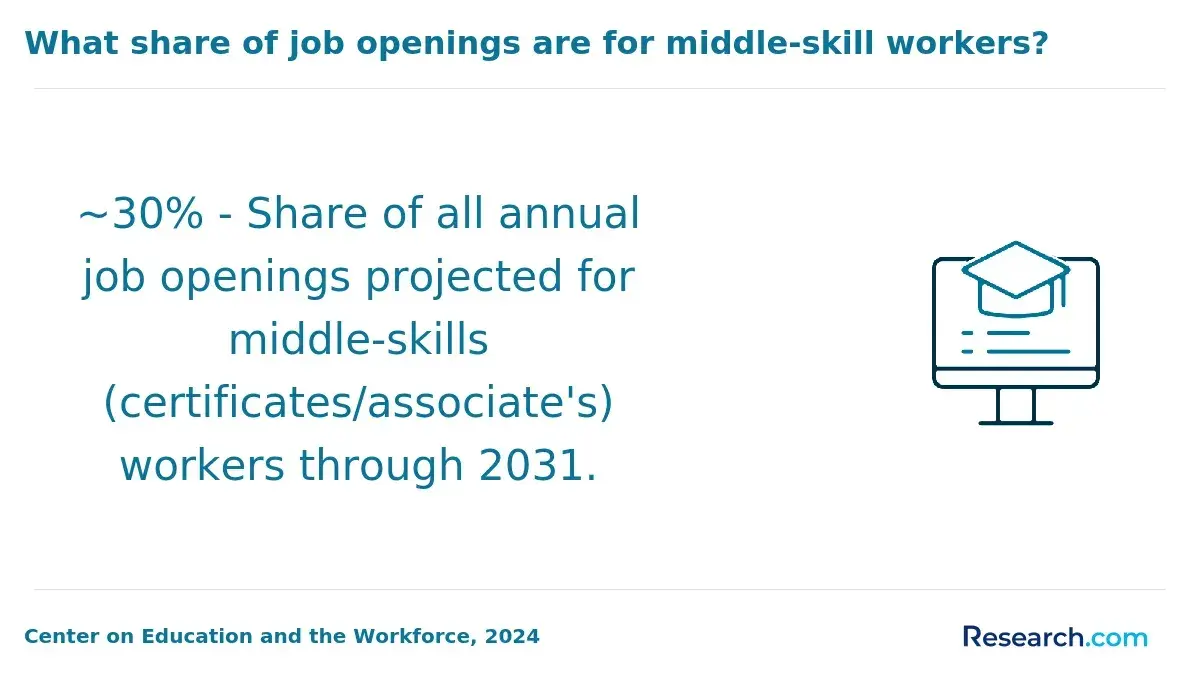
Certificates can be a good option when they teach a skill tied to a specific job or help you rebuild an academic record. They are not interchangeable with a degree, professional certification, or license. Compare program content with job postings and ask whether the courses carry college credit that will apply to a later degree.
Shorter study can reduce time away from work, but a short certificate is not necessarily cheap or sufficient for employment. Research on 6-month certificate programs that pay well can help generate ideas; confirm the actual schedule, total charges, and employer-recognized credential. Financial aid eligibility also depends on the school and specific program.
Which online and campus programs offer flexible pathways?
Flexible pathways include part-time community college study, transfer agreements, evening campus classes, and online or hybrid programs. The best format is the one whose required activities you can reliably complete - not simply the one advertised as online. Some online colleges offer accessible starting points, but program admissions and academic demands still need separate review.
Ask whether classes meet live, whether required courses run every term, and where exams or placements take place. For an online nursing, teaching, social work, or other practice-based program, confirm local clinical or fieldwork arrangements before enrolling. Transfer students should obtain an evaluation showing which prior credits satisfy the intended degree, not merely how many credits the institution accepts.
What subjects and coursework do these college programs cover?
Coursework differs by credential and goal. An associate degree often combines general education with introductory major courses; a bachelor's degree adds more advanced work; a master's degree usually focuses on a specialized field. A business student might study accounting and operations, while an IT student may study networks and security. Nursing and social work add supervised practice, and engineering may require laboratories or a thesis.
Check the catalog for prerequisites, course sequence, electives, and culminating requirements. For low-GPA applicants, a foundation course can be valuable evidence of current ability, but it may add credits without replacing any degree requirement.
How long do low-GPA college programs take and cost?
Time and cost depend on the credits you still need - not just the credential's advertised length. A typical associate degree requires about 60 credits and a bachelor's about 120; master's requirements vary by field and program. Part-time enrollment, unavailable courses, prerequisites, clinical placements, and thesis work can extend completion. Accepted transfer credit may shorten an undergraduate path, but graduate programs decide separately whether previous graduate coursework applies.
Request a personalized estimate of remaining credits and total charges. Compare tuition with mandatory fees, materials, technology charges, travel, and any placement-related costs. Ask for a written transfer evaluation and review financial aid eligibility before borrowing. A low per-credit price may not be the lowest-cost choice if the school applies fewer of your existing credits.
Which careers can students enter after completing these programs?
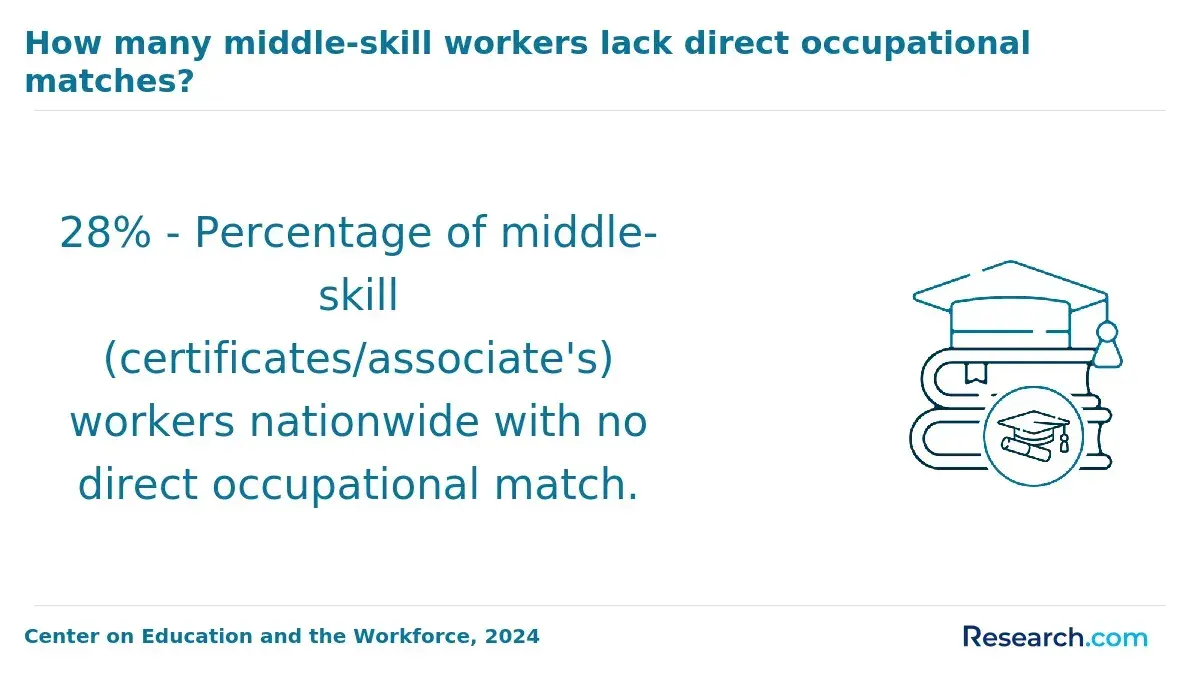
Match the credential to an occupation before choosing a program. A business or IT credential may support entry into a range of roles, but employers can also weigh projects and experience. Healthcare administration and criminal justice degrees do not, by themselves, qualify someone for every clinical or public-safety job. Teaching, nursing, clinical social work, and some counseling paths involve separate state requirements.
For each target role, compare entry-level job postings with the program's required courses and experiential training. If the occupation does not require a master's degree, weigh its potential advancement value against its cost and the option of gaining experience first.
What salaries and job outlooks can graduates expect?
Occupational wages are useful context, not a forecast of what program graduates will earn. BLS reports a 2024 median annual wage of $93,600 for registered nurses. That figure covers people working in the occupation; it is not the expected salary from earning a nursing master's degree, and RN licensure has separate requirements.
Outlook also varies by occupation rather than degree title. BLS projects 15% growth for software developers, quality assurance analysts, and testers from 2024 to 2034, but a computer science or IT credential alone does not secure one of those roles. Compare local openings, required skills, licensing, and likely borrowing before treating a higher-cost program as an investment.
How can students verify accreditation, licensing, and program quality?
Check institutional accreditation, any field-specific accreditation, and state requirements separately. Institutional accreditation concerns the school; programmatic accreditation may matter for professional preparation; a license is issued under state rules. One cannot substitute for another.
Use the U.S. Department of Education's accreditation database to check the institution, then confirm any relevant program accreditation with the accreditor. For a regulated occupation, ask the state licensing board whether the exact program and delivery format meet its education rules. Get admissions policies, placement arrangements, transfer decisions, and a full cost estimate in writing. Treat promises of guaranteed admission, licensure, or employment as red flags.
Other Things You Should Know About
Possibly. Admission standards vary, and community college can provide a starting point. Check placement rules and the requirements for any selective major you eventually want.
Possibly, but the specific graduate program decides. Ask about its minimum GPA, conditional admission, prerequisites, and whether recent coursework or experience is considered.
It may improve your record, but schools calculate GPAs differently. Ask the target program whether it replaces earlier grades or includes every attempt before paying to retake a course.
Not necessarily. Online delivery describes how you study, not the admission standard. Check the program's published criteria and any in-person requirements.
References
- Cost of Attendance (Budget) | 2025-2026 Federal Student Aid Handbook https://fsapartners.ed.gov/knowledge-center/fsa-handbook/2025-2026/vol3/ch2-cost-attendance-budget
- Federal Pell Grants | studentaid.gov https://studentaid.gov/understand-aid/types/grants/pell
- COE - Postsecondary Outcomes for Nontraditional and Traditional Undergraduate Students https://nces.ed.gov/programs/coe/indicator/ctu
- Accreditation in the U.S. | ed.gov http://www.ed.gov/laws-and-policy/higher-education-laws-and-policy/college-accreditation/accreditation-in-the-us
- Financial Aid Terms | PA State System of Higher Education https://www.passhe.edu/students/financial-aid-terms.html
- Frequently Asked Questions about Transfer | ccsf.edu https://www.ccsf.edu/student-services/counseling/transfer-center/frequently-asked-questions-about-transfer
- Advancing Broad-Based Admissions in Higher Education | ASU University Design Institute https://udi.asu.edu/co-lab/report/reimagining-access/advancing-broad-based-admissions-in-higher-education
- Why Is Accreditation Important? | ACE Blog https://ace.edu/blog/why-is-accreditation-important/
- Undergraduate Admission Requirements - UNI Catalog https://catalog.uni.edu/ugadmissionrequirements/
- How to Get Into Graduate School With a Low GPA | usnews.com https://www.usnews.com/education/best-graduate-schools/articles/how-to-get-into-graduate-school-with-a-low-gpa


