2027 Best Colleges With Year-Round Enrollment

Co-Founder and Chief Data Scientist
Missing a fall application deadline should not mean waiting another year to start college. Some accredited U.S. colleges offer multiple starts or terms throughout the year, but the schedule that matters is the one available for your intended program. That distinction is especially important for career changers and working adults: the U.S. Bureau of Labor Statistics reports a May 2024 median wage of $93,600 for registered nurses, yet nursing pathways often have clinical and admission schedules that cannot be accelerated simply by starting sooner. This guide compares year-round options and shows what to verify before enrolling.
Key Things You Should Know
- Western Governors University offers monthly starts for eligible programs and uses six-month terms; other colleges use multiple scheduled sessions rather than monthly admission.
- A year-round institutional calendar does not mean every major, graduate program, clinical placement, or required course starts in every term.
- Compare the next available program start, required course sequence, total cost, accreditation, and any in-person requirements - not just the number of annual start dates.
Top 10 Best Colleges With Year-Round Enrollment
Business Programs
Year-round business options may include an MBA, a Master of Science in Management, or a specialized accounting or analytics degree. An MBA often suits applicants seeking broad management preparation; a specialized master's may better serve a specific technical goal. Graduate admission, experience expectations, course sequencing, and capstone requirements vary. Check whether the concentration you want admits students at every advertised start: a college may open general business courses frequently but offer specialized courses less often.
Healthcare Programs
Healthcare master's programs include public health, health administration, and health informatics. These degrees prepare students for different work: population health, organizational operations, or health-data systems. A flexible online course calendar may help employed students, but internships, practica, and prerequisite courses can constrain completion. A healthcare administration degree does not itself confer a clinical license. Ask when required experiential courses run and whether your employer offers tuition assistance before choosing a start date.
Information Technology Programs
A master's in information technology commonly emphasizes enterprise systems, cybersecurity, cloud infrastructure, or technology management. It can fit experienced practitioners seeking deeper technical or leadership preparation. Frequent starts are useful only if prerequisite and concentration courses remain available when needed. Compare hands-on labs, vendor-certification alignment, and capstone expectations; a degree is not a substitute for the specific certifications or experience an employer requires.
Computer Science Programs
Computer science master's degrees typically go deeper into algorithms, software systems, artificial intelligence, or research than general IT programs. Applicants from other majors may need foundation coursework, which can extend the timeline despite frequent starts. Check whether the program offers a thesis, project, or coursework-only route and whether advanced electives run in every term. Someone seeking a quick introduction to coding may find a shorter certificate more suitable than a graduate degree.
Nursing Programs
Master of Science in Nursing pathways may prepare registered nurses for education, leadership, or advanced practice. Most require an active nursing license, and advanced-practice tracks may require supervised clinical hours and eligibility for separate certification and state licensure. Online classes and frequent academic starts do not remove local placement requirements. Confirm that your intended track admits students on the advertised schedule and meets the rules of the state where you plan to practice.
Psychology Programs
A general master's in psychology may support research, organizational work, or further study; it does not automatically qualify a graduate to practice as a psychologist or counselor. Licensure-oriented counseling and school psychology pathways have distinct accreditation, supervised-practice, and state requirements. Before valuing a flexible start date, identify the occupation you want and verify that the particular program - not merely the university - meets its educational requirements.
Education Programs
Education master's degrees may focus on curriculum, instructional design, educational leadership, or teacher preparation. Programs for licensed educators can have different entry requirements from initial-licensure pathways. Student teaching, fieldwork, or school partnerships may follow the K-12 calendar even when online classes run year-round. If licensure is your goal, check state approval and placement arrangements before applying; a frequently starting degree may be intended only for professional advancement.
Criminal Justice Programs
A criminal justice master's may cover policy, administration, criminology, or investigative methods. It can suit professionals seeking specialized study, but hiring and promotion depend on the role, agency, and experience; the degree alone does not confer law-enforcement authority. Compare research and applied capstone options, and ask whether required courses are offered throughout the year. For a narrowly defined job, an employer-recognized credential or agency training may be a better investment.
Engineering Programs
Engineering master's programs often specialize in a discipline such as electrical, mechanical, or systems engineering. Graduate prerequisites, laboratory access, and project or thesis supervision can matter more to completion time than term frequency. Online availability differs by specialty. For professional engineering licensure, review your state board's education and experience rules; a master's degree alone does not grant a license. Compare faculty expertise and course rotation alongside start dates.
Social Work Programs
A Master of Social Work is a professional pathway with supervised field education. Advanced-standing routes may be available to eligible applicants with a qualifying social work bachelor's degree, but they have separate admission and curriculum rules. A school's frequent online starts may not apply to every MSW track or placement location. Verify Council on Social Work Education accreditation, field-placement support, state licensing requirements, and the actual start date for your track.
What Is Year-Round College Enrollment?
Year-round enrollment means a college offers opportunities to begin or continue study across more of the calendar than a conventional fall-and-spring schedule. It can describe monthly entry, several fixed online terms, or a summer term. It does not necessarily mean open admission, self-paced coursework, continuous availability of every class, or a faster degree.
The distinction is between an institutional start and a program start. A university may enroll new online undergraduates frequently while admitting students to a nursing cohort only at selected times. Even after admission, prerequisites and course rotations determine how steadily you can progress.
Which Accredited Colleges Offer Year-Round Enrollment?
These accredited U.S. institutions are useful starting points because their published academic models provide recurring opportunities to begin or take courses. They are not ranked: the best choice depends on whether your specific credential, location, and intended start match the current program calendar. When comparing online accredited colleges, verify institutional accreditation and any program-specific approval separately.
The comparison shows how different year-round models work. Confirm dates and eligibility on the current official program calendar before applying.
| College | Year-round model to investigate | Most important limitation to check |
| Western Governors University | Monthly starts for eligible programs; six-month terms | Admission readiness, program eligibility, and required fieldwork |
| Southern New Hampshire University | Multiple scheduled online undergraduate and graduate terms each year | Different calendars and course schedules by education level |
| University of Maryland Global Campus | Multiple sessions across fall, spring, and summer | Whether required courses run in the session you need |
| Arizona State University Online | Online sessions across fall, spring, and summer | Program-specific admission dates and course availability |
| Purdue Global | Multiple scheduled starts during the year | Program calendar, prerequisites, and experiential requirements |
None of these models establishes that every degree starts year-round. Use the college's current catalog and program page to confirm the exact credential, delivery format, next admission date, and required sequence.
How Does Year-Round Enrollment Compare With Traditional Academic Calendars?
Traditional colleges commonly organize courses around fall and spring semesters, often with a separate summer session. Year-round colleges may add more entry points or shorter terms. The practical advantage is potentially less waiting - not automatic acceleration.
This comparison separates start-date flexibility from workload, which helps prevent a common scheduling mistake.
| Calendar feature | Traditional fall-and-spring model | Year-round model |
| New-student entry | Often centered on fall, with other starts depending on the program | May include several fixed starts or monthly starts |
| Course availability | Required classes may follow an annual sequence | More sessions may be available, but required classes can still rotate |
| Summer | Often optional or more limited | May be part of a planned continuous schedule |
| Time to completion | Depends on credits, load, and sequencing | Depends on those same factors; shorter terms do not reduce required work |
Choose more frequent starts if waiting for the next conventional term would delay you and the courses you need will actually be offered. If controlling your weekly pace matters more than the start date, investigate a self paced bachelor's degree separately: scheduled year-round terms and self-paced study are different features.
What Degree and Certificate Programs Use Year-Round Enrollment?
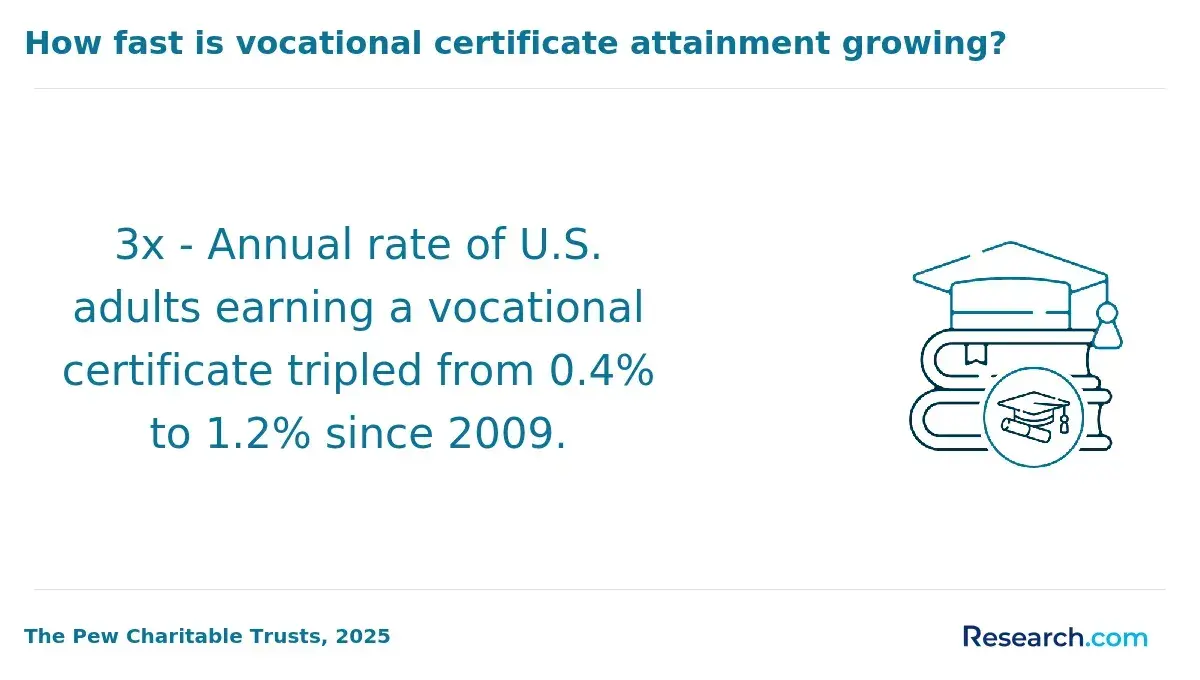
Year-round calendars can support certificates, associate degrees, bachelor's degrees, and graduate degrees. They are especially relevant to programs whose required courses can be scheduled repeatedly online, such as some business, IT, and general studies options. Cohort-based teaching programs, nursing pathways, and degrees with labs or field placements may offer fewer practical entry points.
Credential choice should come before calendar choice. A certificate may address a narrow skills gap, while a degree may provide broader preparation and require substantially more coursework. If you are comparing bachelor's fields as well as schedules, an easiest online bachelor's degree list can suggest fields to investigate, but perceived ease is not evidence that a major is available at every start or fits your career goal.
Ask an advisor for a term-by-term plan showing prerequisites, major courses, electives, and any capstone. That plan is more informative than an advertisement for frequent starts.
Are Year-Round College Programs Available Online and On Campus?
Year-round study is available online and, at some colleges, through campus or hybrid sessions. Online delivery makes repeated starts easier to offer, but it does not establish that classes are asynchronous or that the program has no location requirements. Campus labs, scheduled video meetings, proctored assessments, internships, clinical placements, and student teaching can still apply.
For working adults, compare the weekly schedule as carefully as the start date. A fixed eight-week course may let you begin sooner but compress assignments into a shorter period; a longer term may be easier to balance with work. Request the attendance and placement requirements for the exact program and your state before enrolling.
What Are the Admission Requirements for Year-Round Colleges?
Year-round admission usually requires the same academic preparation as admission at any other time. Undergraduate applicants may need a high school credential and prior-college transcripts; graduate applicants generally need a bachelor's degree. Individual programs may add prerequisite courses, a minimum GPA, professional experience, an interview, a license, or a portfolio. Test policies and application deadlines also vary.
Do not interpret "monthly start" as "apply at any moment and begin immediately." Transcript review, financial-aid processing, orientation, and program-specific deadlines can determine the first start for which you qualify. Transfer applicants should request an evaluation showing not only accepted credits but which credits fulfill the intended degree's requirements.
How Much Do Year-Round College Programs Cost?
There is no single price for a year-round college. Some institutions charge per credit; others charge by term. To compare them fairly, estimate the cost to finish your particular credential, including remaining credits or terms, mandatory and program fees, books or technology, and any travel or placement expenses. A term-based price can be attractive when you can complete substantial coursework each term, but less so if work or clinical obligations limit your pace.
Federal aid eligibility depends on the institution, eligible program, enrollment, and applicable aid rules - not on the phrase "year-round." Ask the financial-aid office how summer enrollment affects your aid and whether an employer benefit applies. Readers considering doctoral study after a master's can compare cheap online PhD programs, but doctoral funding and dissertation costs require a separate calculation.
Avoid comparing one college's per-credit tuition with another's term price without estimating how many credits or terms you would actually need. An official degree audit and itemized cost estimate make that comparison possible.
What Careers and Salaries Follow Year-Round College Programs?
Year-round enrollment changes when you can study, not the occupation's entry requirements or pay. For context, the Bureau of Labor Statistics reports a May 2024 median wage of $133,080 for software developers. That is an occupational median - not the expected salary of a computer science or IT graduate - and employers may weigh demonstrable skills and experience alongside education.
The right career comparison starts with the role you want. Business graduates may pursue analyst or operations work; healthcare graduates may seek administration or clinical advancement; education and social work pathways may involve state-regulated practice. Check whether your target job requires a license, supervised hours, certification, or experience beyond the degree. Then compare likely career value with total education cost and time away from work, rather than assuming an earlier start produces a higher salary.
How Can You Choose a Reputable Year-Round College?
Start with an institution whose accreditation is recognized by the U.S. Department of Education or the Council for Higher Education Accreditation. For regulated careers, also verify the applicable program approval and your state's licensing rules. A college's general accreditation does not establish that a particular program meets professional requirements.
Use these questions to turn a promising college into a workable enrollment plan:
- What is the next confirmed start for my exact program and applicant category, and when is the complete application due?
- Which required courses run in each term, and what graduation date is realistic at my intended course load?
- Which previous credits apply to degree requirements, and how many credits must I complete at this college?
- What will I pay through completion, including fees, and which activities require live attendance or an in-person placement?
A red flag is an answer based only on the university-wide calendar or a quoted tuition rate without a program plan. Request written confirmation from admissions or advising, particularly for licensure pathways and transfer-credit decisions.
Other Things You Should Know About
Not necessarily. Some eligible programs have monthly starts, while others offer several fixed dates. Application processing and program deadlines still apply.
It can reduce time spent waiting between available courses, but graduation still depends on required credits, transfer evaluation, course load, sequencing, and practical requirements.
No. Colleges may offer online, hybrid, or campus sessions. Confirm the format and any live meetings, labs, or placements for your program.
Potentially. Eligibility and available amounts depend on your aid, enrollment, and program. Ask the college's financial-aid office for a term-by-term estimate before committing.
References
- Cost of Attendance (Budget) | 2025-2026 Federal Student Aid Handbook https://fsapartners.ed.gov/knowledge-center/fsa-handbook/2025-2026/vol3/ch2-cost-attendance-budget
- What Financial Aid Offers Don't Tell You About the Cost of College | U.S. GAO https://www.gao.gov/blog/what-financial-aid-offers-dont-tell-you-about-cost-college
- Use The Data - National Center for Education Statistics (NCES) https://nces.ed.gov/ipeds/use-the-data
- Accreditation in the U.S. | ed.gov http://www.ed.gov/laws-and-policy/higher-education-laws-and-policy/college-accreditation/accreditation-in-the-us
- Transfer Students | Admissions - The University of Utah https://admissions.utah.edu/apply/transfer-students/
- Missed Deadlines? Late College Application Options | About the University of Cincinnati https://www.uc.edu/blog/late-college-applications.html
- Academic Year Calendars - Registrar | The University of Memphis https://www.memphis.edu/registrar/calendars/
- Dates and Deadlines | cf.edu https://www.cf.edu/admissions/getting-started-at-cf/dates-and-deadlines/
- Transfer credit policies - Office of Admissions https://admit.washington.edu/apply/transfer/policies/
- Transfer Student Requirements | University of Oregon https://www.uoregon.edu/admissions/undergraduate/find-your-path/transfer-students/