2027 Bedside RN to Clinical Risk Management Nurse: Transferable Skills, Experience Gaps, and Education Options
Audited and Verified:
Our Editorial and Data Verification Process
Research.com uses government datasets, official education statistics and primary institutional information to support its career and degree guides. Our review process checks factual accuracy, occupational definitions, source dates and the requirements associated with the credentials discussed.
How This Article Was Fact-Checked
Our editorial team verifies salary estimates, employment projections, education requirements and program information against original data providers and official organizations. Salary figures are checked against the relevant occupational definitions and reporting periods. Information about licensure, accreditation and required in-person training is reviewed separately.
Fact-checked and verified on:

Co-Founder and Chief Data Scientist
A bedside RN may recognize a medication near miss immediately but have little experience investigating why it occurred across a health system. Clinical risk management builds on that frontline judgment while requiring new skills in event analysis, documentation, privacy, and organizational response. This guide is for licensed RNs considering that transition. It explains what employers may expect, which experience gaps to close first, and when coursework, an RN-to-BSN, or graduate study is worth the investment - so you can pursue the role without assuming another degree is the only way in.
Key Things You Should Know
- There is no universal US degree or certification requirement for a clinical risk management nurse; employers set role-specific qualifications, and an active RN license is commonly expected for nurse-designated positions.
- The largest transition is from managing an individual patient's immediate risk to investigating events and improving processes across a unit or organization.
- Before paying for another degree, compare at least three local job postings and seek direct exposure to event review, quality improvement, or patient-safety work.
What does a clinical risk management nurse do, and how does the role differ from bedside nursing?
A clinical risk management nurse helps an organization identify, investigate, and reduce risks to patients and the organization. Depending on the employer, the work can include reviewing reported events, gathering records and timelines, interviewing staff, identifying contributing system factors, tracking corrective actions, and coordinating with patient safety, quality, compliance, claims, and legal teams. A risk manager does not independently decide legal liability or replace the clinicians responsible for a patient's care.
Bedside nursing centers on assessment, intervention, and escalation for patients on a shift. Risk management usually involves retrospective review and prevention across multiple cases, departments, or sites. The schedule may be more predictable, but serious events, deadlines, and difficult conversations can create different pressures. An RN's clinical background helps interpret what happened; it does not, by itself, teach investigation or organizational decision-making.
This is a postlicensure career transition, not an entry-to-nursing route. Prelicensure degree options for future nurses address a different starting point: becoming eligible to seek an initial RN license.
Which bedside RN skills transfer to clinical risk management nursing?
The strongest transferable skills are those that help a risk team understand both clinical decisions and the conditions surrounding them. For example, an RN who can explain how an unclear order, an EHR display, and a handoff interacted offers more than a description of the final error.
Bedside experience supports clinical timeline reconstruction through chart review and understanding of workflow; nonjudgmental communication with clinicians and patients; escalation and prioritization when an issue needs prompt attention; and precise documentation that separates observed facts from assumptions. Familiarity with medication administration, deterioration, falls, or infection prevention can also help an RN spot questions an investigator should ask.
Make those skills visible through appropriately approved quality or safety work rather than claiming expertise based only on years at the bedside. Some RN-to-BSN pathways using applied projects may offer a structured way to practice improvement methods; verify the actual project requirements and obtain employer permission before using workplace information.
What experience gaps must bedside RNs address before entering risk management?
The common gap is not clinical credibility; it is experience working beyond a single patient assignment. Employers may want evidence that an RN can review an event without assigning blame prematurely, distinguish a reported concern from a confirmed finding, and follow an action through implementation and evaluation.
Four areas deserve particular attention: event-reporting and investigation workflows; systems-based analysis and improvement measurement; privacy, record preservation, and the boundaries of legal or claims work; and communication with leaders and staff when facts remain uncertain. Policies and reporting obligations vary by employer and jurisdiction, so learn them through the organization's risk and compliance teams rather than relying on a course alone.
A practical entry route is to request an approved role on a patient-safety committee, participate in a supervised improvement project, or seek a quality or safety position with mentorship. For an ADN-prepared RN considering broader leadership study, associate-to-master's nursing pathways are an option - but a bridge should address a demonstrated hiring requirement, not substitute for risk-management experience.
There is no single required academic pathway. The right choice depends on your current degree, the positions available locally, and whether you want an investigator role or eventual department leadership. This comparison shows what each option can add - and what it cannot establish on its own.
| Pathway | Best fit | Main limitation |
| Employer training and targeted continuing education | RNs who can gain supervised safety or quality experience | May not meet a posting's degree preference |
| RN-to-BSN | ADN- or diploma-prepared RNs seeking a bachelor's credential and broader improvement coursework | Does not guarantee a risk-management position |
| Focused certificate in risk, safety, quality, or healthcare administration | RNs with a specific knowledge gap and relevant work experience | Program certificates are not professional certification |
| Non-APRN MSN or related graduate degree | RNs targeting leadership, complex systems work, or roles that prefer graduate preparation | Greater cost and time commitment; not generally required for entry |
Compare tuition and fees with time away from work, employer assistance, and the qualifications in actual postings. A DNP may fit a later systems-leadership goal, but planning an accelerated DNP pathway is usually a less direct first step than gaining risk-team experience.
Not universally. A nurse-designated risk role commonly calls for an RN license, but degree preferences differ by employer and responsibility. An ADN-prepared RN with substantial safety or quality experience may be competitive for some positions; another employer may require a BSN or prefer a master's degree. Read "required" and "preferred" separately in job postings.
An RN-to-BSN makes the most sense when the bachelor's degree is a hiring barrier or when its coursework fills a genuine improvement or leadership gap. Consider graduate study when the roles you want consistently call for it and the curriculum offers relevant systems, analytics, or management preparation. A non-APRN MSN or DNP does not confer nurse practitioner authority, and a higher degree does not replace workplace onboarding.
If a doctorate is a longer-term goal, review program-specific prerequisites before committing to it; understanding barriers to DNP admission is more useful than assuming every RN can enter the same track directly.
Choose courses by the work you need to perform, not by the breadth of a degree title. Useful subjects include patient-safety science, human factors, event investigation, quality-improvement methods, basic statistics, healthcare law and regulation, ethics, health informatics, and organizational communication. Coursework should teach you to assess evidence, recognize uncertainty, and evaluate whether a proposed change was carried out - not merely memorize event categories.
Ask a provider whether students analyze realistic de-identified scenarios, receive feedback on written findings, and learn applicable privacy and data-governance practices. Training in an employer's reporting system and policies will still be necessary. If comparing education costs across nursing paths, keep the objective clear: online NP tuition and fee considerations concern advanced clinical practice, not a qualification needed for risk management.
Yes, online postlicensure study can be suitable when its assignments develop relevant analytical skills and its schedule fits your shifts. Check for live sessions, group work, proctored assessments, campus visits, and any workplace-based project requirements before treating "online" as fully asynchronous.
An online course cannot give you access to confidential event reviews or validate your ability to conduct an investigation at work. Pair study with approved, supervised exposure through your employer, and confirm who arranges any required project site. Program labels can also obscure different career outcomes: comparing accelerated psychiatric nursing master's programs serves an APRN goal, not a faster route into risk management.
Risk-management credentials are distinct from RN licensure, school-issued certificates, and employer competency checks. The American Society for Health Care Risk Management's Certified Professional in Healthcare Risk Management (CPHRM) is a relevant credential to investigate. Check the credentialing organization's current eligibility routes, examination information, fees, and renewal rules before planning an application; certification is not a universal condition of employment or permission to practice nursing.
Patient-safety and healthcare-quality credentials may also be relevant when they match a job's duties. Their value depends on the posting and your experience. Professional work should follow the employer's event-reporting, confidentiality, and record-handling policies, alongside applicable nursing obligations. An APRN specialty credential is different: budget-conscious PMHNP study options do not replace risk-management training or certification.
Hospitals and health systems employ clinical risk staff, as do some ambulatory organizations, insurers, and other healthcare employers. Titles and duties vary: a position called "risk manager" may emphasize event investigation, claims coordination, enterprise risk, or department leadership. Ask which function dominates before comparing offers.
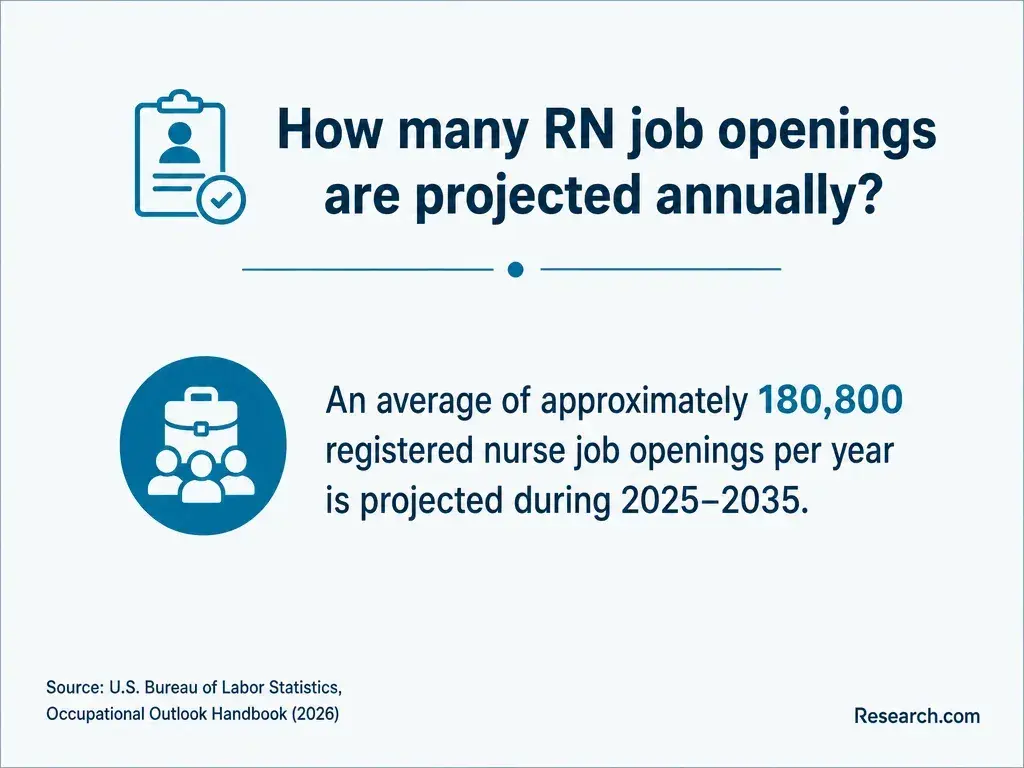
The US Bureau of Labor Statistics does not publish a separate wage series for "clinical risk management nurse." Its registered-nurse wage and employment projections describe the broader RN occupation, not earnings or growth for this specialty. Use current local postings and offers to compare base pay, bonus eligibility, on-call expectations, benefits, and any loss of shift differentials or overtime. Likewise, exploring 12-month FNP study pathways would not provide a valid salary comparison: family nurse practitioner is a different occupation and educational goal.
How can RNs choose an accredited clinical risk management program?
First decide whether you need a degree, a focused course, or supervised experience. Then compare programs against the requirements of positions you would actually apply for. The checks below help prevent paying for a credential that does not close your main gap.
- Collect several relevant postings and identify their required license, degree, experience, and preferred credentials.
- Confirm the institution's accreditation and, for a nursing degree, the nursing program's applicable accreditation and your enrollment eligibility; do not assume every certificate has nursing-program accreditation.
- Request course descriptions, project or fieldwork requirements, total tuition and fees, attendance commitments, and rules for using workplace data.
- Ask who evaluates applied work, what support working RNs receive, and whether employer tuition assistance applies.
Match the program to your existing license: shorter prelicensure MSN pathways are designed around initial nursing preparation, not the needs of an already-licensed bedside RN entering risk management. If the postings emphasize investigations and collaboration over a new degree, seek a risk-team mentor or internal project before enrolling.
Other Things You Should Know About Nursing
Possibly, if your employer permits it and your RN license and bedside competencies remain current. Ask about scheduling, conflicts of interest, and whether you could review events involving your own unit.
Disclose the relationship to your supervisor and follow the employer's conflict-of-interest process. Do not independently promise confidentiality or an outcome to anyone involved.
Do not share patient information, identifiable event details, or confidential employer materials without authorization. Describe your responsibilities and methods at an appropriate level instead.
Ask a risk-management or patient-safety leader about a permitted informational interview or shadowing opportunity. Discuss typical investigations, support during serious events, performance expectations, and onboarding before accepting a position.
- Clinical risk management and patient safety education for nurses: a critique. | PSNet https://psnet.ahrq.gov/issue/clinical-risk-management-and-patient-safety-education-nurses-critique
- Lifelong learning and nurses' continuing professional... - PMC https://pmc.ncbi.nlm.nih.gov/articles/PMC8045269/
- Nursing Practice FAQ - Texas Board of Nursing - Texas.gov https://www.bon.texas.gov/faq_nursing_practice.asp
- A framework of nurses' responsibilities for quality healthcare | sciencedirect.com https://www.sciencedirect.com/science/article/pii/S1322769619301180
- Creating a Culture of Safety in Nursing | ANA https://www.nursingworld.org/content-hub/resources/nursing-leadership/safety-in-nursing/
- Risk Management in Nursing | Nursing CE Central https://nursingcecentral.com/lessons/risk-management-in-nursing/