2027 Are There Any One-Year Online Construction Management Degree Programs Worth Considering?

Co-Founder and Chief Data Scientist
Accelerated online construction management programs are attractive because they promise a faster route to project leadership, higher-level technical skills, or a stronger credential without leaving the workforce. The key question is not only whether a one-year option exists, but whether it is the right kind of program for your background, career goal, and available time.
Construction management is a practical field that blends scheduling, budgeting, safety, contracts, codes, materials, technology, and team coordination. Because of that breadth, true one-year degree options are limited, especially at the undergraduate level. Some students can move quickly by using transfer credits, prior learning, year-round enrollment, or a graduate program designed for full-time study. Others may be better served by a longer online bachelor's, certificate, or part-time pathway that leaves room for work experience.
This guide explains what is realistic in 2026: whether a construction management degree can be completed in one year, what online options are available, what trade-offs come with accelerated study, how admissions and costs work, and what to look for before enrolling.
Key Points About One-Year Online Construction Management Degree Programs
- One-year online degrees in Construction Management focus on accelerated, practical skills for project coordination, differing from traditional two-to-four-year programs that cover broader theoretical foundations.
- These programs often appeal to working professionals seeking flexible schedules, with many offering asynchronous coursework tailored to industry trends like sustainable building and technology integration.
- Students should expect limited program availability, emphasizing certifications and real-world applications over extensive research or internship opportunities typical in standard degrees.
Is it feasible to finish a construction management degree in one year?
Finishing a construction management degree online in one year is feasible in limited cases, most often for master's students who already have a relevant undergraduate background and can study full time. Many master's programs require 30-36 credit hours, so a one-year schedule may be possible when courses are offered year-round and the student does not need extensive prerequisites. Transfer credits, prior graduate coursework, and a non-thesis format can also shorten the timeline.
At the bachelor's level, a true one-year completion plan is much less common. Online bachelor's degrees usually require substantial general education, business, technical, and construction management coursework. Students who enter with many transferable credits may be able to finish faster than first-time students, but many bachelor's programs still take 18 to 36 months depending on credits transferred, course availability, and enrollment intensity.
Associate degrees are also difficult to compress into one year. They usually span at least two years because students need time to complete foundational courses, technical requirements, and applied assignments. Even when a school offers accelerated terms, course sequencing can limit how quickly students move through the program.
When a one-year path is most realistic
- You already hold a related bachelor's degree: This is especially important for master's-level options in construction management, engineering, architecture, or a closely related field.
- You can enroll full time: A one-year schedule often requires taking multiple courses at once with limited breaks between terms.
- You have transferable credits: Prior college coursework can reduce the number of remaining requirements for undergraduate programs.
- The program has flexible starts: Multiple start dates, short terms, or year-round scheduling can make acceleration more practical.
- No major prerequisites are missing: Students who need math, statistics, construction methods, or business prerequisites may need extra time.
The main risk is moving too quickly through a field that depends on applied judgment. Cost estimating, scheduling, safety planning, contract administration, surveying, and site coordination are not skills students should rush through only to earn a credential faster. A shorter program is worthwhile when it preserves academic quality and practical preparation; it is a poor choice when speed replaces competence.
Are there available one-year online construction management degree programs?
Fully accredited one-year online construction management bachelor's degree programs are not currently available in the United States as of 2027. Most online bachelor's degrees in Construction Management require between 120 and 125 credits, which typically takes two to four years to complete. Students may find accelerated formats, but those formats usually shorten the timeline rather than guarantee completion in one year.
The clearest one-year online options are usually graduate programs or shorter credentials, not bachelor's degrees. If you are comparing undergraduate pathways, look closely at transfer credit limits, prior learning assessment, term length, and whether courses are available every term. A flexible online construction management degree may be faster than a traditional format, but the final timeline depends on your starting credits and course load.
Students who want an accelerated bachelor's format can also compare broader online accelerated bachelor's programs to understand how schools structure shortened terms, transfer policies, and year-round enrollment.
- Purdue Global - Bachelor of Science in Business Administration (Construction Management Concentration): This fully online program is accredited by the ACBSP and requires 180 quarter credits. Coursework includes project management, cost estimating, and risk analysis, with online access available 24/7. Students with transfer credits or prior learning may accelerate their progress, though standard completion is four years.
- National University - Bachelor of Science in Construction Management: This program uses a four-week course format with year-round enrollment, which can help motivated students progress faster than in a traditional semester calendar. It includes 19 major courses plus a senior project totaling 82.5 quarter units. It is not designed as a one-year degree, but its structure may support faster completion for eligible students.
- University of Southern Mississippi - Online Bachelor of Science in Construction Management: This 120-credit program includes topics such as structural design and building modeling developed by industry experts. Completion typically takes two to four years, and scholarships are available for online students. Finishing in one year is uncommon even with full-time enrollment.
Students who already hold an undergraduate degree may find more realistic one-year options at the graduate level. For example, accelerated master's options like Florida International University's online MS in Construction Management can be completed in one year. These programs are not substitutes for an associate or bachelor's degree, but they may be appropriate for professionals who already meet graduate admission requirements and want advanced preparation for management roles.
Why consider taking up one-year online construction management programs?
A one-year online construction management program can make sense for students who need targeted career advancement and already have the academic or professional foundation to handle an accelerated pace. The strongest candidates are often working professionals, career changers with related technical experience, or degree holders who want a construction-focused credential without spending several more years in school.
The value of a one-year format is not simply speed. It is the ability to build job-relevant knowledge in scheduling, estimating, safety, contracts, risk assessment, and sustainable building practices while continuing to work. For students who already understand the industry, this can be an efficient way to formalize skills and qualify for broader responsibilities.
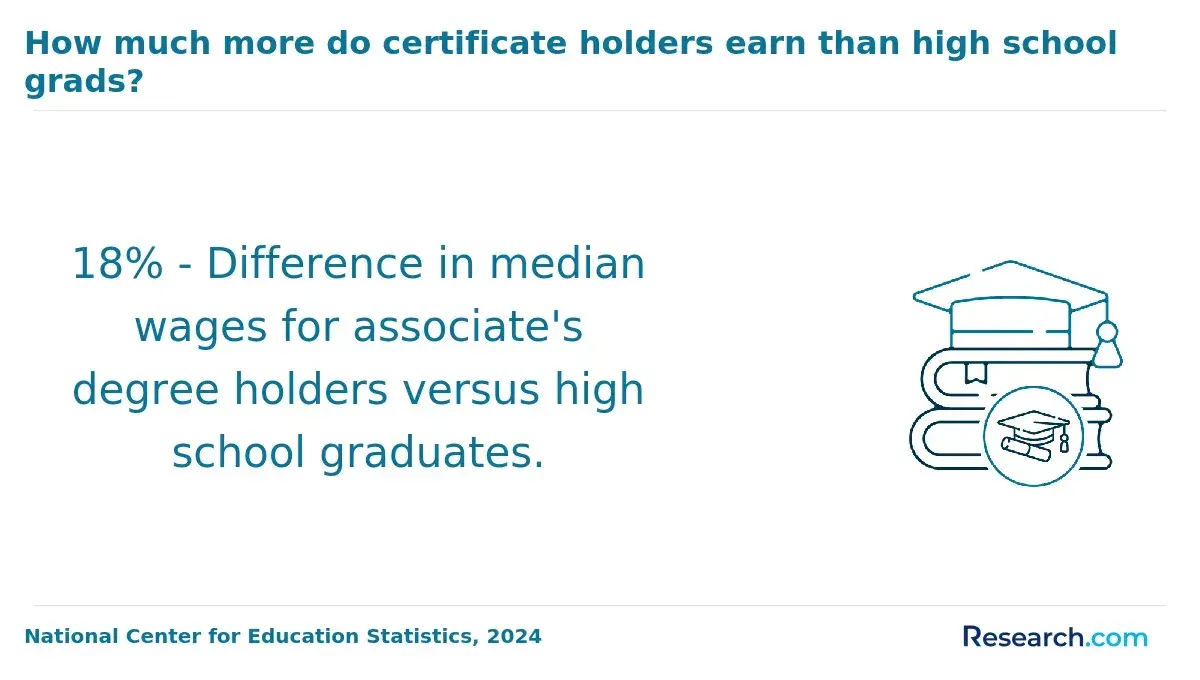
- Flexibility and speed: Online delivery can reduce commuting time and allow students to study around job and family obligations. Accelerated terms can also help students finish faster, which may matter in a field where job growth is expected to be faster than average.
- Career advancement: A focused program can help field employees, assistant project managers, estimators, or supervisors strengthen their management vocabulary and prepare for more responsibility.
- Skill modernization: Construction employers increasingly rely on digital project delivery, building modeling, cost controls, safety systems, and data-informed decision-making. A current curriculum can help students update older training or informal experience.
- Cost-effectiveness: Shorter programs may reduce tuition exposure, lost work time, and indirect costs. This is especially helpful for students who are using employer tuition assistance or paying out of pocket.
- Credential clarity: For professionals already doing construction management work, a recognized credential can help document knowledge that may otherwise be difficult to show on a resume.
That said, speed should not be the only reason to enroll. If you are still deciding whether a bachelor's path is the right level of study, comparing manageable undergraduate options such as easier bachelor's degree programs can help you think through workload, fit, and long-term value.
What are the drawbacks of pursuing one-year online construction management programs?
The biggest drawback of a one-year online construction management program is compression. A curriculum that normally unfolds over several years gives students more time to absorb technical concepts, complete applied projects, build professional relationships, and connect coursework to jobsite realities. When that material is condensed, students must be prepared for a demanding pace.
- Intense workload: Accelerated study can mean heavy weekly reading, calculations, discussion posts, projects, exams, and team assignments. Students working full time may find the schedule difficult to sustain.
- Less time for applied learning: Construction management is best learned through examples, site exposure, case studies, estimating exercises, scheduling practice, and feedback. A fast format may leave less room for repetition and reflection.
- Limited networking: Online programs can provide discussion boards, group work, and virtual events, but a compressed calendar may reduce time to build relationships with classmates, faculty, alumni, and employers.
- Internship challenges: Students who need entry-level experience may struggle to fit internships, site visits, or part-time construction work into a one-year academic schedule.
- Risk of weak program quality: Because fully accredited one-year online Construction Management degrees remain relatively rare, students may encounter programs that advertise speed more aggressively than academic depth.
- Transfer and prerequisite limits: Students may assume they can finish in one year only to discover that credits do not transfer, required courses are not offered every term, or prerequisites add extra time.
Before choosing an accelerated program, estimate the weekly time commitment and compare it with your work schedule. If you are new to construction, need hands-on experience, or want more networking, a longer online program or part-time format may offer better preparation. If you already have field experience and clear goals, a fast program may be useful, but only if it is properly accredited and respected by employers.
What are the eligibility requirements for one-year online construction management programs?
Eligibility requirements depend on the degree level. Undergraduate programs usually focus on high school completion, transfer credits, placement readiness, and prerequisites. Graduate programs typically expect a relevant bachelor's degree, a minimum GPA, and evidence that the applicant can succeed in advanced technical and management coursework.
Because one-year formats move quickly, schools may be more selective about academic preparation. Applicants should review admissions requirements carefully before assuming they can start immediately or finish within an accelerated timeline.
- High school diploma or GED: Most associate and bachelor's degree programs require this basic entry credential.
- Relevant undergraduate degree: Master's programs generally expect applicants to hold a degree in construction management, engineering, or a closely related field.
- Prior professional experience: Some accelerated master's tracks may require applicants without a directly related undergraduate degree to have relevant work experience in construction or allied industries.
- Minimum GPA and prerequisite coursework: Bachelor's degree candidates may need to show satisfactory academic performance and completed coursework in mathematics and science.
- Transfer credits: Students transferring from other institutions can often use prior credits to shorten the time to degree completion.
- Placement exams: Some schools require exams to assess readiness for upper-level technical coursework, particularly in math.
- Background checks and interviews: Master's programs sometimes include these steps to evaluate professional fit and verify credentials.
- Industry certifications and work experience: Preference may be given to applicants who bring documented skills and certifications relevant to construction management.
Questions to ask before applying
- How many of my credits will transfer, and will they apply to major requirements or only electives?
- Are all required courses offered often enough to finish on an accelerated timeline?
- Will I need prerequisite math, statistics, business, construction, or technical courses?
- Does the school require a capstone, internship, practicum, or senior project?
- Is the one-year timeline guaranteed, estimated, or possible only for students with advanced standing?
Applicants comparing fields should also consider long-term earnings and career fit rather than speed alone. Reviewing programs connected to the highest-paying bachelor's degrees can provide useful context, but admissions decisions should still be based on accreditation, curriculum quality, and professional goals.
What should I look for in one-year online construction management degree programs?
When evaluating one-year or accelerated online construction management programs, start with credibility. A fast program is only useful if employers, licensing-related bodies where applicable, graduate schools, and financial aid offices recognize the credential. Accreditation, curriculum depth, faculty background, and student support matter more than a short advertised timeline.
| Factor | What to check | Why it matters |
| Accreditation | Confirm institutional accreditation from a recognized regional or national agency. | Accreditation affects academic quality, transferability, employer recognition, and eligibility for federal financial aid. |
| Curriculum | Look for cost estimating, scheduling, safety planning, construction law, contracts, project controls, materials, and emerging technologies. | Construction managers need both technical fluency and leadership skills; a thin curriculum can limit job readiness. |
| Faculty expertise | Review instructors' academic credentials and construction industry experience. | Faculty with current field knowledge can connect theory to real project decisions. |
| Delivery format | Check whether courses are asynchronous, synchronous, or blended with required meeting times. | The format determines whether the program is realistic for working students. |
| Credit transfer policies | Ask how prior coursework, military training, certifications, or professional learning are evaluated. | Transfer credit may be the difference between a faster path and a standard timeline. |
| Total cost | Compare tuition, fees, textbooks, technology costs, and any residency or proctored exam expenses. | The cheapest tuition rate is not always the lowest total cost. |
| Student support | Look for advising, tutoring, library access, technical help, career services, and employer connections. | Accelerated online students need fast access to help when problems arise. |
Also look for transparency. A strong program should clearly explain required credits, expected completion time, course rotation, admissions requirements, technology requirements, and graduation outcomes. Be cautious if a school emphasizes speed but provides little information about accreditation, faculty, curriculum, or student support.
Students comparing institutions can use a list of reputable online colleges as a starting point, then verify each construction management program directly with the school.
How much do one-year online construction management degree programs typically cost?
One-year online Construction Management programs in the U.S. generally range from $5,000 to $15,000 in total tuition, depending on the credential and school. For example, Texas State University charges about $14,970 for a master's, while certificate programs such as UC Davis's cost near $5,250 for a year of study.
Cost varies because not all one-year options award the same credential. A certificate, associate's, bachelor's completion pathway, or master's degree can have very different tuition structures, fee policies, and financial aid rules. Public or private status, residency rules, included materials, technology fees, and course load can also change the final amount a student pays.
Online study may reduce some indirect expenses, such as commuting and campus-based fees, but it does not automatically make a program inexpensive. Students should calculate total program cost, not just per-credit tuition. Ask whether textbooks, software, proctoring, portfolio assessment, graduation fees, or exam fees are separate.
Compared to four-year bachelor's degrees in Construction Management, which average over $15,000 per year and total over $60,000, one-year online credentials can be a more cost-effective option for targeted training or career advancement. However, a shorter credential may not replace the broader value of a full bachelor's degree if your target jobs require one.
Cost questions to ask the school
- Is the quoted price tuition only, or does it include fees and materials?
- Will transfer credits reduce tuition, or only shorten time?
- Are online students charged different rates from campus students?
- Can employer tuition assistance be billed directly?
- What happens to financial aid eligibility if I take accelerated or overlapping terms?
What can I expect from one-year online construction management degree programs?
Students in a one-year online construction management program should expect a structured, deadline-driven experience. The format may be online and flexible, but accelerated courses usually require consistent weekly participation, frequent assignments, and careful planning. Students who fall behind may have little time to recover before the next module or course begins.
Coursework commonly covers materials, surveying, cost estimating, safety, contracts, and project scheduling. Depending on the program level, students may also study construction law, project controls, risk management, sustainable building practices, building modeling, leadership, procurement, and communication with owners, subcontractors, architects, engineers, and field teams.
Applied work is especially important. Quality programs use case studies, estimating exercises, schedule development, contract scenarios, safety plans, simulations, group projects, virtual labs, or capstones to help students practice decision-making. The goal is not only to understand construction terminology, but to make sound choices under budget, schedule, safety, and quality constraints.
Typical student experience
- Fast course rhythm: Assignments, discussions, quizzes, and projects may be due every week.
- Independent time management: Students must plan around work, family, and fixed academic deadlines.
- Technology use: Programs may use learning platforms, collaboration tools, scheduling software, estimating tools, or virtual project environments.
- Team-based work: Construction management depends on coordination, so online group projects may be part of the curriculum.
- Career-focused outcomes: Graduates should be better prepared to help manage budgets, schedules, safety compliance, documentation, and team coordination.
Students exploring the broader construction and skilled labor landscape can also review high-value skilled trades careers to compare management education with hands-on trade pathways.
Are there financial aid options for one-year online construction management degree programs?
Yes, financial aid may be available for one-year online construction management programs, but eligibility depends heavily on the school, credential type, accreditation status, enrollment level, and student circumstances. Degree programs at accredited institutions are more likely to qualify for federal aid than stand-alone noncredit training or some certificate options.
The Free Application for Federal Student Aid (FAFSA) is the starting point for federal grants, loans, and work-study eligibility. Students should complete it early and confirm that the program is eligible for aid before enrolling. Accelerated calendars can affect disbursement timing, so ask the financial aid office how funds are released across short terms or multiple start dates.
- Federal Aid: Includes grants, low-interest loans, and work-study opportunities after FAFSA completion. Eligibility generally requires enrollment in an accredited program and depends on financial need and other criteria.
- Employer Tuition Assistance: Construction companies may help pay tuition for employees who are preparing for supervisory, estimating, project management, or operations roles. Ask whether repayment is required if you leave the employer.
- Scholarships and Grants: These non-repayable funds may come from schools, professional associations, foundations, or industry groups. They can be especially important when undergraduate credit costs range between $337 and $438.
- State Aid: State-based programs may supplement federal aid depending on residency, institution, and enrollment status.
- Payment Plans: Some schools allow students to divide tuition across terms, which can help reduce reliance on loans.
Before committing, request a written cost estimate and aid package. Confirm whether aid applies to the full program, whether summer or accelerated terms are covered, and whether dropping a course could affect satisfactory academic progress or repayment obligations.
What Construction Management Graduates Say About Their Online Degree
- : "Completing the one-year online construction management degree was a game-changer for me. The accelerated pace allowed me to gain the skills I needed without sacrificing my full-time job, and the competency-based approach ensured I mastered every key aspect of the field. Considering the average cost of attendance was reasonable, it was a worthwhile investment in my career. — Otis"
- : "Enrolling in the construction management program gave me a fresh perspective on project coordination and resource management. The online format made it accessible from anywhere, and though the program was intensive, finishing within a year felt incredibly rewarding. This degree has opened doors I didn't expect, proving the value of focused, fast-track learning. — Ronan"
- : "The comprehensive curriculum and flexible structure of the one-year construction management degree exceeded my expectations. I appreciated how the program emphasized real-world applications, enabling me to immediately apply knowledge on the job. The overall cost aligned well with the quality of education, and the efficiency of completing it online made all the difference. — Brooks"
Other Things You Should Know About Pursuing One-Year Construction Management Degrees
Most programs expect college-level algebra, basic geometry, and reading construction drawings. Students also need comfort with scheduling software, spreadsheets, and estimating tools. Some schools require prerequisite coursework in math, English, or drafting before enrollment, especially for accelerated one-year degree tracks.
In 2027, one-year online construction management degree programs often include internship or practical experience components to ensure students gain real-world skills. These opportunities bridge theoretical knowledge and industry practices, making graduates more competitive in the job market.
Accreditation ensures that the one-year online construction management degree programs meet quality educational standards, making the credentials more credible to employers and enhancing job prospects. It is crucial to verify a program’s accreditation status to ensure it is recognized by industry standards in 2027.
References
- Online Bachelor's Degree in Construction Management | Rowan University https://www.rowan.edu/online/academic-programs/bachelors/ba-in-construction-management.html
- Top Ranked | Online Master of Construction Management https://online.lsu.edu/online-degree-programs/graduate/construction-management/
- Online Construction Management Degree https://www.ashworthcollege.edu/associate-degrees/construction-management/
- BA in Construction Management https://online.ou.edu/program/ba-in-construction-management/
- How to choose a bachelor's in construction management | edX https://www.edx.org/resources/how-to-choose-a-bachelors-in-construction-management
- 5 Pros and Cons for Studying a Distance Learning Degree in 2025 | Distancelearningportal https://www.distancelearningportal.com/articles/174/why-study-distance-learning-degree.html
- Pros And Cons of a Construction Management Degree https://www.europeanbusinessreview.com/pros-and-cons-of-a-construction-management-degree/
- How to Get an Online Construction Management Degree https://www.evergladesuniversity.edu/blog/how-to-get-an-online-construction-management-degree/