2027 Easiest Online Construction Management Degree Programs That Pay Well: High-Salary Degrees with Simple Admissions

Co-Founder and Chief Data Scientist
Choosing an online construction management degree is usually a three-part decision: Can you get admitted, can you finish without disrupting work, and will the credential support a better-paying role? That balance matters because construction management programs can vary widely in admission standards, transfer-credit rules, tuition, accreditation, and career support.
The demand signal is strong. According to the U.S. Bureau of Labor Statistics, employment in construction management is projected to grow 11% from 2022 to 2032, faster than average for all occupations. Still, an “easy” program should not mean low quality. For most students, the best option is a legitimate, accredited program with flexible admissions, clear graduation requirements, practical coursework, and a realistic path to roles such as construction manager, estimator, site supervisor, or contract administrator.
This guide explains how to evaluate online construction management degrees with accessible admissions and strong salary potential. It covers GPA flexibility, transfer credits, accelerated formats, accreditation, tuition, student support, and the career outcomes that matter most when comparing programs.
Key Benefits of the Easiest Online Construction Management Degree Programs That Pay Well
- Many of the easiest online construction management degree programs feature simplified admissions, often requiring only a high school diploma and standardized test waivers, reducing barriers for non-traditional students.
- Flexible online course formats accommodate working adults, with asynchronous classes growing by 25% annually, allowing learners to balance education and employment effectively.
- Graduates in construction management see strong demand, with a 10% job growth forecast through 2030 and median salaries exceeding $95,000, highlighting solid returns on educational investment.
How to Tell If Online Construction Management Programs Have Easy Admission Requirements?
An online construction management program has easy admission requirements when it removes unnecessary barriers without lowering academic expectations. The strongest low-barrier programs make it simple to apply, but they still verify that students can handle college-level work, technical concepts, project documentation, and deadline-driven assignments.
For working adults, military students, transfer students, and career changers, the admissions process can be just as important as the curriculum. A program that requires months of testing, extensive prerequisites, or rigid start dates may delay enrollment even when the student is otherwise ready.
Signs of a more accessible admissions process
- Minimal prerequisite coursework: Many accessible programs allow students to begin without previous construction-specific college courses. This is helpful for applicants coming from trades, business, military logistics, engineering technology, or project coordination roles.
- No entrance exams required: Programs that do not require GRE or SAT scores reduce cost, preparation time, and application delays. This is especially useful for adult learners who have been out of school for several years.
- Holistic application review: Strong programs may consider job history, field experience, certifications, military training, leadership responsibilities, and recommendations in addition to transcripts.
- Provisional acceptance options: Some schools offer conditional or provisional enrollment, allowing students to begin while completing placement steps, submitting final records, or proving academic readiness through early coursework.
- Multiple start dates: Rolling admissions or several entry points each year can make a program easier to begin without waiting for a traditional fall semester.
Students should not judge admissions ease by acceptance alone. A program that is easy to enter but lacks advising, accreditation, or career relevance may not produce a strong return. Instead, look for programs that combine simple acceptance criteria with transparent requirements, published tuition, transfer policies, and evidence that graduates can compete for construction management roles.
Admissions flexibility is common in other adult-focused online fields as well. For example, comparing an online MSW program can show how schools structure streamlined applications for learners balancing work, family, and career advancement.
Accessible online construction management programs can be valuable because construction management careers currently report median annual salaries exceeding $95,000. The key is to choose a program that lowers the enrollment barrier while still building the planning, estimating, scheduling, safety, contract, and leadership skills employers expect.
What High-Paying Jobs Can You Get With an Easy Online Construction Management Degree?
An easy online construction management degree can lead to high-paying roles when the program teaches applied project controls, budgeting, scheduling, safety management, construction law, and leadership. The degree itself does not guarantee a salary, but it can help workers move from field or support roles into supervisory, estimating, project coordination, and management positions.
The U.S. Bureau of Labor Statistics (BLS) predicts a 7% growth in construction management jobs from 2022 to 2032, signaling steady demand and competitive salaries. Graduates with prior construction experience, strong communication skills, and familiarity with project software may be better positioned for advancement.
Common career paths for graduates
- Construction Manager: Oversees projects from planning through closeout, coordinating budgets, schedules, subcontractors, safety practices, and client expectations. Salaries typically range from $70,000 to over $110,000 annually.
- Project Estimator: Reviews plans, labor needs, materials, equipment, and subcontractor costs to support bids and budgets. Earnings usually fall between $60,000 and $90,000 per year.
- Cost Engineer: Focuses on cost control, forecasting, risk analysis, and budget performance. This role often earns more than $80,000, particularly on complex commercial, infrastructure, or industrial projects.
- Site Supervisor: Manages daily site operations, coordinates crews, monitors safety, and helps keep work aligned with drawings, schedules, and quality standards. Salaries vary widely but can exceed $75,000.
- Contract Administrator: Tracks contracts, procurement documents, change orders, compliance requirements, payment terms, and project records. Annual pay generally ranges from $60,000 to $85,000.
What affects pay after graduation?
- Experience level: A graduate with several years of field experience may qualify for higher-level roles faster than someone entering construction for the first time.
- Project type: Commercial, industrial, infrastructure, and large residential projects may offer different pay levels and advancement paths.
- Location: Construction salaries can vary by region, cost of living, union presence, and local building activity.
- Technical skills: Employers often value graduates who can use scheduling, estimating, document-control, and project management tools.
- Credential quality: Accreditation, employer recognition, and practical curriculum can influence how useful the degree is in the job market.
Students comparing construction management with adjacent technical fields may also review online engineering degrees, especially if they are interested in design, infrastructure, or engineering management pathways.
Can You Get Into an Online Construction Management Program With a Low GPA?
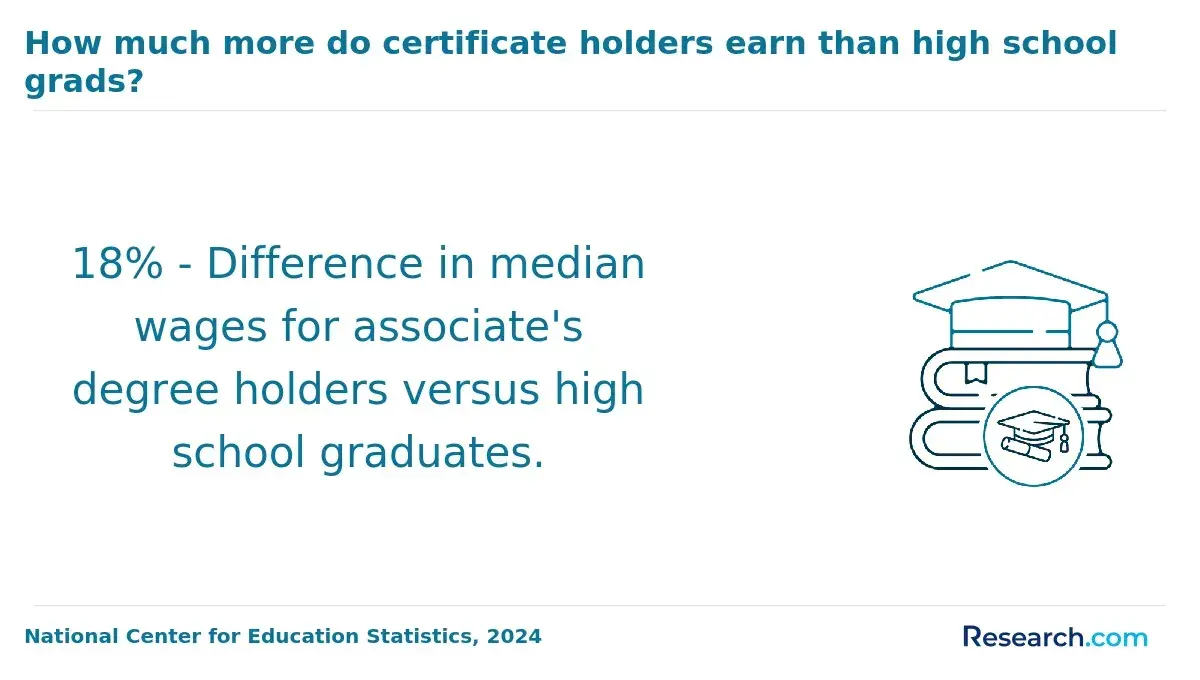
Yes, some online construction management programs admit students with a low GPA, especially when applicants can show work experience, recent academic improvement, military training, certifications, or strong professional references. GPA still matters because it helps schools assess academic readiness, but it is not always the only deciding factor.
According to the National Center for Education Statistics, roughly 35% of students admitted to online bachelor's programs have GPAs under the traditional 3.0 cutoff. For construction management applicants, practical experience can be especially relevant because many core skills—coordination, scheduling, safety awareness, budgeting, and communication—are developed on job sites as well as in classrooms.
How to strengthen an application with a low GPA
- Use work experience strategically: Explain how your field, trade, supervisory, logistics, estimating, safety, or project coordination experience prepares you for construction management coursework.
- Request strong recommendations: Letters from supervisors, project managers, instructors, or clients can document reliability, leadership, problem-solving, and readiness for college-level study.
- Complete prerequisite or refresher coursework: Recent success in math, business, construction technology, blueprint reading, or project management courses can show that your current academic ability is stronger than your old transcript suggests.
- Earn relevant certifications: Safety, project management, scheduling, estimating, or trade-related credentials may strengthen your case, especially when the program uses holistic review.
- Write a focused personal statement: Avoid excuses. Briefly explain the circumstances behind the GPA, describe what changed, and connect your career goals to the program’s curriculum.
- Contact admissions before applying: Ask whether the school offers provisional admission, academic probation entry, transfer pathways, or a lower-credit certificate that can lead into the degree.
One graduate of an easy online construction management program said she applied with a GPA below 2.8 and expected an automatic rejection. Instead, the school asked for more context about her work background and career goals.
“They really looked at my experience and how much I wanted this career,” she said. She also noted that speaking directly with admissions counselors helped her understand which documents mattered most. Her experience shows why low-GPA applicants should not self-reject before asking about conditional admission, transfer evaluation, or evidence of professional readiness.
Can Easy Online Construction Management Degrees Be Completed in Under a Year?
Some online construction management credentials may be completed in under a year, but a full bachelor’s degree usually depends on how many credits a student already has. Programs that advertise fast completion often assume substantial transfer credit, prior learning credit, year-round enrollment, or an accelerated course format.
Students should read the fine print carefully. “Under a year” may refer to a certificate, degree-completion track, concentration, or final phase of a bachelor’s program—not the entire degree from zero credits.
What can make completion faster?
- Accelerated courses: Shorter terms can help students complete more classes in a year, but the weekly workload is usually heavier.
- Full-time enrollment: Taking a full course load each term can shorten the calendar time to graduation, though it may be difficult for students working full time.
- Recognition of prior learning and transfer credits: Prior college courses, military training, industry credentials, or documented professional learning may reduce remaining requirements if the school accepts them.
- Flexible scheduling: Asynchronous online courses can help students study around work shifts, family responsibilities, and project deadlines.
- Year-round terms: Programs with summer, winter, or multiple start dates may make faster completion more realistic.
Questions to ask before choosing an accelerated program
- How many credits are required for the degree?
- How many transfer credits will the school accept?
- Are construction management courses available every term, or only once per year?
- Does the program require internships, labs, fieldwork, or proctored exams?
- Will accelerated pacing affect eligibility for financial aid or employer tuition reimbursement?
Fast online construction management programs with simple admission processes can work well for disciplined students who already have credits or professional experience. However, speed should not come at the expense of accreditation, employer recognition, or mastery of core topics such as estimating, scheduling, contracts, safety, and project controls.
Students exploring other flexible online academic options may also compare a library science degree online to see how online programs structure pacing, transfer policies, and adult-learner support.
Are Online Construction Management Programs Easier Than On-Campus Ones?
Online construction management programs are often easier logistically, but not necessarily easier academically. Students save commuting time, gain scheduling flexibility, and can review recorded materials, but they still must complete technical assignments, group projects, exams, cost estimates, schedules, and construction documentation.
Data from recent surveys show about 75% of students taking online courses report satisfaction with their experience, reflecting the growing acceptance of remote learning in this field. Satisfaction, however, does not mean the workload is lighter. It usually means students value the flexibility.
Where online programs may feel easier
- Self-paced access to materials: Recorded lectures, readings, and online modules allow students to revisit complex topics such as cost control, scheduling logic, or contract procedures.
- No commuting: Eliminating travel can save hours each week and reduce stress for students with jobs, families, or long workdays.
- Digital resource availability: Online libraries, discussion boards, simulations, and document-sharing tools give students multiple ways to study and collaborate.
- Flexible study blocks: Students can often complete coursework during evenings, weekends, or off-hours instead of attending fixed daytime classes.
Where online programs may feel harder
- Self-discipline is essential: Without in-person reminders, students must manage deadlines, readings, projects, and exams independently.
- Networking requires more effort: Online learners may need to be proactive about connecting with classmates, instructors, alumni, and employers.
- Hands-on learning can be limited: Construction is an applied field, so students should look for programs that use case studies, site-based assignments, simulations, internships, or employer-connected projects.
- Technology issues can interfere: Students need reliable internet access and comfort using learning platforms, spreadsheets, scheduling tools, and document systems.
A recent online construction management graduate said the format was easier in terms of logistics and pacing, especially while juggling full-time work and family life. He appreciated being able to replay recorded lectures when topics were difficult and said not commuting saved hours every week.
He also emphasized that the academic expectations remained demanding. In his view, the online format reduced friction, not rigor. Students considering this path should be honest about whether they can stay organized without a traditional classroom schedule.
Are Easy Online Construction Management Programs Accredited?
Many easy online construction management programs are accredited, but students should verify accreditation before applying. Easy admission does not automatically mean poor quality; the more important question is whether the institution and, when applicable, the program meet recognized academic and industry standards.
Accreditation matters because it can affect credit transfer, financial aid eligibility, employer confidence, graduate school admission, and, in some cases, professional certification or licensure-related requirements. Currently, about 70% of online technical degree programs, including those in construction management, hold regional or specialized accreditation, highlighting growing acceptance of online learning's legitimacy.
Two accreditation types to understand
- Regional accreditation: This institutional accreditation evaluates the college or university as a whole. It is widely recognized in the U.S. and can be important for transfer credits, graduate admissions, and employer acceptance.
- Programmatic accreditation: This focuses on a specific academic program or discipline. In construction management, accreditation from organizations such as the American Council for Construction Education (ACCE) can signal that the curriculum aligns with industry expectations.
When reviewing a flexible or low-barrier program, confirm accreditation on the school’s website and, when possible, through the accreditor’s own database. Students comparing formats may also want to review an accredited online construction management degree to understand how accelerated options present accreditation, pacing, and program requirements.
Accreditation red flags
- The school describes itself as “licensed” or “approved” but does not name a recognized accreditor.
- The accreditor is difficult to verify through an official directory.
- The program promises unusually fast completion without explaining credit requirements.
- The school avoids clear answers about transferability, financial aid, or employer recognition.
- Tuition and fees are unclear until late in the enrollment process.
Prospective students should prioritize regional accreditation and then consider whether programmatic accreditation adds value for their career goals. A program with simple admissions can still be a strong choice if it is transparent, properly accredited, and aligned with construction industry skill needs.
What Is the Average Tuition for Easy Online Construction Management Programs?
The average cost of affordable construction management programs online usually falls between $10,000 and $30,000 for a bachelor's degree. The final price depends on the school, credit requirements, transfer credits, residency status, course fees, and whether the program is fully online or hybrid.
Tuition should be evaluated by total program cost, not just the per-credit rate. A lower per-credit price can still be expensive if the program requires more credits, includes repeated fees, or accepts few transfer credits.
Major cost factors to compare
- Tuition range: Students should expect wide variation, with affordable online bachelor’s options commonly falling between $10,000 and $30,000 depending on program structure and institutional pricing.
- Fully online vs. hybrid programs: Fully online programs often charge $300 to $600 per credit hour and may avoid some campus-based costs. Hybrid programs can add travel, parking, housing, lab, or residency expenses.
- Program length and credit hours: Accelerated courses may cost more per credit but shorten the overall timeline. Longer programs may appear cheaper per course but cost more if they require additional credits.
- Transfer-credit acceptance: A generous transfer policy can reduce the number of credits you pay for, making the degree easier and cheaper to complete.
- Additional fees: Technology charges, digital materials, proctoring, software, lab simulations, graduation fees, and course materials can increase the total cost.
- Financial aid and employer benefits: Federal aid, scholarships, grants, military education benefits, and employer tuition assistance can change the real out-of-pocket price.
How to estimate the real cost
- Ask for the total number of credits required after transfer evaluation.
- Multiply remaining credits by the per-credit tuition rate.
- Add mandatory fees, materials, and technology costs.
- Subtract confirmed grants, scholarships, employer reimbursement, or military benefits.
- Compare the result with likely salary gains, not just starting pay.
As more institutions compete for nontraditional students, there are more affordable online options. Students comparing total cost across fields and schools can review the most affordable online colleges to see how tuition, flexibility, and degree format affect value.
Can Transfer Credits Make an Online Construction Management Degree Easier to Complete?
Yes. Transfer credits can make an online construction management degree easier to complete by reducing the number of courses, lowering tuition, and shortening the time to graduation. This is especially important for students who already completed general education classes, an associate degree, military training, trade-related coursework, or previous college credits.
According to the National Center for Education Statistics, nearly 38% of undergraduates in online programs transfer credits, reflecting a growing trend of leveraging prior academic work to accelerate degree progress in this field.
How transfer credits help
- Faster degree completion: Students can skip courses they have already completed and move more quickly into construction management topics such as estimating, scheduling, contracts, safety, and project administration.
- Reduced tuition costs: Fewer required credits usually mean fewer tuition charges and fees, which can improve the return on investment.
- Less redundant coursework: Transfer credit helps students avoid retaking general education or introductory classes that repeat prior learning.
- More flexible scheduling: With fewer remaining credits, students may be able to choose a lighter term load while still graduating on a reasonable timeline.
- Better fit for working adults: Students with prior college or career experience can focus on the courses most relevant to advancement.
What to ask about transfer policies
- What is the maximum number of credits the program accepts?
- Are technical, trade, military, or certification credits eligible?
- Is there a minimum grade required for transfer courses?
- Do construction management major courses transfer, or only general education courses?
- Will old credits expire after a certain number of years?
- Can students receive a preliminary transfer evaluation before committing?
Transfer credits are one of the most practical ways to make an online construction management degree more manageable. Students seeking additional credentials for advancement may also compare online certificate programs that build targeted skills alongside or after a degree.
What Kind of Academic Support Do Online Construction Management Students Receive?
Online construction management students typically receive academic advising, tutoring, technical support, career services, library access, and sometimes field-based or project-based learning support. These services matter because online learners often balance coursework with jobs, family responsibilities, and unpredictable work schedules.
The best support systems are proactive, easy to access, and designed for adult learners. Students should not wait until they are struggling to use them.
Common support services
- Academic advising: Advisors help students choose courses, understand degree requirements, plan transfer credits, and stay on track for graduation.
- Tutoring and writing help: Tutoring can support challenging subjects such as estimating, scheduling, construction law, safety management, and technical writing. Writing centers can help students produce clear reports, proposals, and project documentation.
- Career services: Resume reviews, interview preparation, job boards, internship guidance, and employer connections can help students move toward supervisory or management roles.
- Technical support: Reliable IT help is essential for online platforms, video lectures, exams, file submissions, and construction-related software tools.
- Library and research support: Online access to codes, standards, journals, databases, and research assistance can improve assignment quality.
- Faculty access: Strong online programs make instructors available through email, office hours, discussion boards, or scheduled virtual meetings.
How to judge support before enrolling
- Ask whether tutoring is included in tuition or billed separately.
- Check whether advising is available during evenings or weekends.
- Look for career services specific to construction, engineering technology, project management, or built-environment employers.
- Ask how online students complete group projects, presentations, simulations, or site-based assignments.
- Review student complaint processes and academic probation support policies.
Research shows that engaging with academic support increases completion rates and promotes mastery of both theoretical concepts and practical skills. For construction management students, support is most valuable when it connects coursework to real job tasks: reading plans, coordinating stakeholders, managing budgets, documenting changes, and leading teams safely.
How Do You Choose the Easiest Online Construction Management Degree That Pays Well?
Choose the easiest online construction management degree that pays well by looking for the strongest combination of accessibility, accreditation, affordability, transfer flexibility, career relevance, and graduate support. The right program should be easy enough to enter and complete, but rigorous enough to be respected by employers.
Key factors to compare
- Accreditation: Confirm regional accreditation first. Then check whether programmatic accreditation, such as ACCE or ABET where relevant, adds value for your goals.
- Admission Flexibility: Look for programs with no standardized testing, reasonable GPA policies, provisional admission options, and recognition of professional experience.
- Cost and Financial Aid: Compare total program cost, not just tuition per credit. Include fees, materials, transfer credits, scholarships, grants, employer reimbursement, and loan impact.
- Program Length: Accelerated terms, year-round enrollment, and credit for prior learning can shorten completion time, but only if the workload is realistic for your schedule.
- Career Support Services: Prioritize programs with construction-specific advising, internship connections, resume support, employer networks, and help translating field experience into management opportunities.
- Job Market Alignment: Consider whether the curriculum matches local or regional demand in commercial building, infrastructure, residential development, industrial construction, or specialty contracting.
- Curriculum Practicality: Review whether courses cover estimating, scheduling, safety, contracts, project controls, construction documents, leadership, and technology tools.
- Transfer Policy: A generous and transparent transfer-credit process can make the degree easier, faster, and less expensive.
Common mistakes to avoid
- Choosing the easiest admission process without checking accreditation.
- Assuming an accelerated program is cheaper without calculating total cost.
- Ignoring whether major courses are offered often enough to graduate on time.
- Overlooking required labs, internships, residencies, or proctored exams.
- Relying only on advertised salary outcomes instead of researching roles in your region.
- Not asking how many transfer credits will actually apply before enrolling.
A strong choice is usually the program that fits your current obligations while still improving your long-term career options. If you already work in construction, prioritize transfer credit, flexible scheduling, and management-focused coursework. If you are new to the field, prioritize student support, practical projects, and career services that can help you build experience.
What Graduates Say About Their Easy Online Construction Management Degrees That Pay Well
- : "I was looking for a program that wouldn't overwhelm my work schedule, and the easiest online construction management degree I found fit perfectly into my daily life. The tuition was surprisingly affordable $15,000 total, which made advancing my career without drowning in debt possible. Since graduating, I've landed a project supervisor role with a noticeable salary bump, which really validates the investment. — Fletcher"
- : "Choosing an accessible online construction management degree was a conscious decision after researching many options. The low cost of attendance, averaging just under $20,000, made it attainable even while balancing family commitments. Reflecting on my journey, this degree has been the key to transitioning into higher-paying positions in the construction industry where practical knowledge is valued as much as credentials. — Ronan"
- : "From a professional standpoint, enrolling in a straightforward online construction management degree was a strategic move. The programs I targeted typically charged less than $18,000, a reasonable figure considering the return on investment. Since earning my degree, I've been entrusted with more complex projects and managerial duties, which directly improved my compensation and job satisfaction. — Jo"
Other Things You Should Know About Construction Management Degrees
Most programs expect college algebra and basic spreadsheet skills before admission or in the first term. Many also require familiarity with scheduling software such as Microsoft Project or Primavera P6, plus reading plans and estimating quantities. Some schools offer placement testing or bridge modules for students who need review.
Certifications such as the Certified Construction Manager (CCM) and LEED Accredited Professional can significantly enhance credentials for graduates of online construction management programs in 2027, helping them access higher-paying roles and demonstrate expertise in sustainable and efficient building practices.
Internship requirements vary by program, but many online construction management degrees encourage or require them to provide hands-on industry experience. Internships help students apply classroom knowledge to real projects and build professional networks. However, some programs offer alternative options such as project-based learning for students unable to complete traditional internships.
In 2027, many online construction management degree programs offer flexible scheduling, allowing students to complete coursework asynchronously. Some programs may include optional synchronous sessions for interactive learning, but they primarily accommodate varying schedules and learning paces of students.
References
- Construction Management Assignment Help in the University of Salford https://www.locusassignments.com/blog/construction-management-assignment-help-university-of-salford
- CourseCareers https://coursecareers.com/course/construction-management
- How to choose a bachelor's in construction management | edX https://www.edx.org/resources/how-to-choose-a-bachelors-in-construction-management
- FAQs - Construction Management Degrees Online https://www.constructionmanagementdegreeonline.com/construction-management-degree-faqs/
- BSc (Hons) Construction Management https://www.ube.ac.uk/undergraduate/construction-management/
- Online Construction Management tutors - TeacherOn https://www.teacheron.com/tutors/online-construction_management-tutors
- Construction Management Course Online https://vdci.edu/courses/construction-management-course
- Construction Management How to apply https://online.missouri.edu/degrees-programs/mu/engineering/construction-management/grad-cert/admissions
- LATEST NEWS https://www.acce-hq.org/
- Online Construction Management Bachelor Degree Program https://www.national.edu/degreecert/construction-management-bs/