2027 An MHA After a Bachelor's in Communications

Co-Founder and Chief Data Scientist
A communications degree can prepare you to explain complex information and work with diverse audiences, but it does not automatically prepare you to manage a healthcare organization. A Master of Health Administration (MHA) can help bridge that gap.
This guide is for communications graduates considering that move. It explains whether you can apply, which knowledge you may need to build, and how to judge an MHA's cost and career value before enrolling.
Key Things You Should Know
- A communications bachelor's degree does not generally rule out MHA admission, though each program sets its own requirements.
- Communications skills transfer well, but healthcare finance, operations, data, and regulation may be new.
- The $126,520 median annual wage reported for all U.S. management occupations in May 2025 is not an MHA graduate salary or a healthcare administration starting salary.
Can you earn an MHA after a bachelor's degree in communications?
Yes. An MHA is a graduate degree focused on managing healthcare organizations, not practicing clinical medicine. Programs may admit applicants from a range of undergraduate majors. A communications graduate can bring strengths in writing, presentations, stakeholder engagement, and explaining information to patients or the public.
The bigger question is how you will gain healthcare-specific knowledge and experience. Work in patient services, provider communications, community outreach, or a health insurer can provide a useful starting point. If you have no exposure to the sector, compare programs' introductory coursework and practical projects before applying. A second bachelor's degree is usually not the first step to consider; even healthcare administration bachelor's pathways with flexible entry dates may involve more coursework than you need to qualify for graduate study.
What are the admission requirements for an MHA program?
Requirements vary by school. Expect to check for an accredited bachelor's degree, transcripts, a résumé, a statement of purpose, recommendations, and any stated GPA, testing, or work-experience policy. Some programs welcome applicants new to healthcare; others are designed for professionals already working in the field. Do not assume that a GMAT or GRE score - or a particular undergraduate major - is universally required.
For a communications applicant, the statement of purpose should connect specific experience to a realistic goal, such as moving from hospital outreach into service-line operations. Ask admissions staff whether the curriculum assumes prior accounting, statistics, or healthcare experience and whether foundation courses are available. If undergraduate preparation is required, compare the price of individual prerequisite courses with broader affordable college options for aspiring healthcare administrators; do not enroll in another full degree without confirming it is necessary.
Is an MHA worth it for a career in healthcare administration?
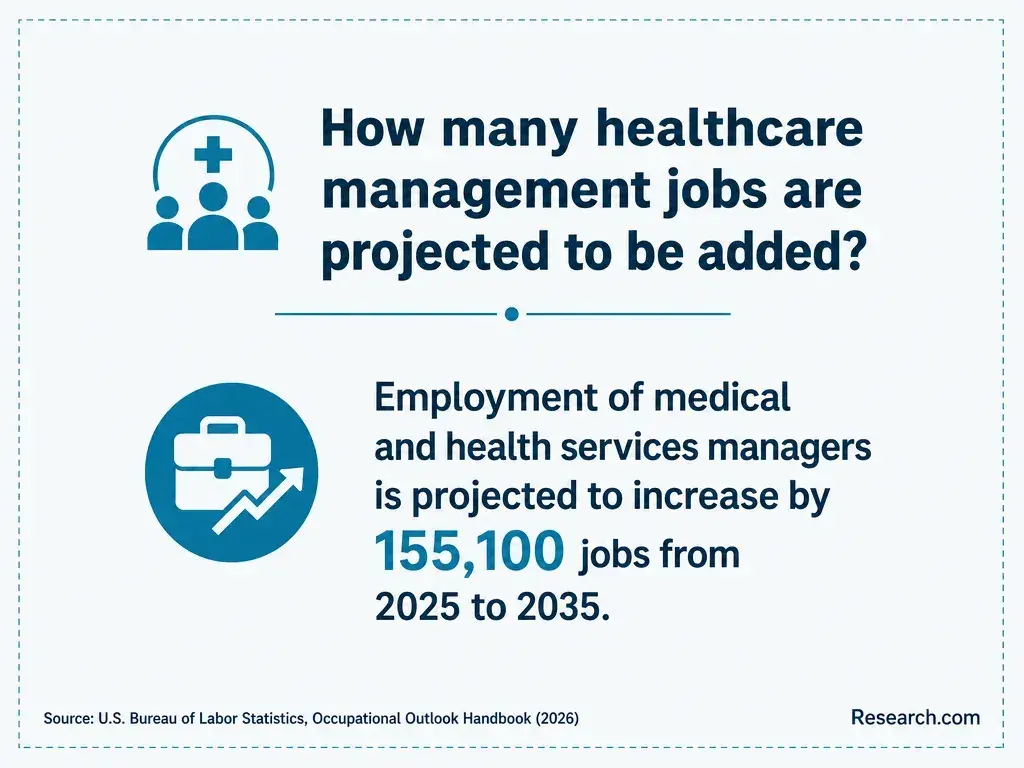
An MHA is most compelling when you want to move beyond communications into decisions about healthcare budgets, staffing, operations, quality, or organizational strategy. It can also strengthen an application for advancement when you already have relevant healthcare experience. It is less certain as a first step into the industry: a degree alone cannot replace experience with healthcare workflows or a record of managing projects and people.
Compare the MHA with your actual goal. A healthcare-focused MBA offers broader business training that may travel more easily across industries; budgeting for an MBA in healthcare management can help clarify that financial trade-off. If your goal is a first healthcare role rather than management, targeted coursework and relevant employment may be a more direct route. Similarly, healthcare administration degree completion through accelerated study is mainly an undergraduate option, not an automatic improvement over the bachelor's degree you already hold.
Before committing, compare the total amount you would pay and the time you would give up with advancement opportunities you can identify - not a hoped-for executive salary. Employer tuition assistance, a relevant practicum, and access to healthcare employers can change the calculation substantially.
MHA curricula commonly address healthcare finance, organizational leadership, operations, policy, law and ethics, quality improvement, and the use of data in management decisions. Course titles and depth differ by program. Some include a capstone, internship, or administrative residency; these experiences can be particularly valuable if your communications work has not taken you inside healthcare operations.
Your existing skills may help with change-management plans and presentations to stakeholders. Give closer attention to courses that require you to interpret budgets, evaluate service performance, and work within healthcare regulations. If your interest is primarily medical records, coding, or health data systems, comparing online HIM degrees and accreditation status may reveal a more direct path. Health information management (HIM) and healthcare administration overlap, but they are not the same field or credential.
Completion time depends on the program's credit requirements, course schedule, enrollment pace, and any fieldwork. Some schools advertise one-year options, while part-time routes take longer; comparing one-year healthcare administration master's programs can help you check whether an accelerated schedule leaves room for work and practical experience.
There is no reliable single price for an MHA. To compare offers, request the full required credit count and tuition rate, then add mandatory fees, materials, travel for any campus visits, and the cost of reduced work hours if applicable. Confirm whether a quoted price covers the entire degree or only tuition. Ask when employer reimbursement is paid and whether changing your course load affects eligibility. A shorter program is not necessarily cheaper if its per-credit price or required travel is higher.
An online MHA can be credible when it comes from an appropriately accredited institution and offers rigorous coursework and meaningful opportunities to apply it. Delivery mode alone does not establish quality or make two programs equivalent. When reviewing MHA degree choices through online universities, check whether courses have scheduled live sessions, whether fieldwork can be completed near you, and what access online students have to faculty and career support.
Ask how online students complete group projects and connect with healthcare employers. A program suited to an experienced hospital employee may be less helpful to a communications graduate seeking a first operational role if it offers little structured field experience. "Online" also does not necessarily mean self-paced or free of campus visits.
Start by verifying the institution's accreditation through its accreditor and the U.S. Department of Education's accreditation records. Then check whether the specific MHA program holds accreditation from the Commission on Accreditation of Healthcare Management Education (CAHME), if that distinction matters to your target employers. Institutional accreditation and CAHME program accreditation are different checks; a school's accredited business program does not automatically make its MHA CAHME-accredited.
Compare programs on more than accreditation: look at healthcare-focused coursework, admissions fit, practical experience, online scheduling, career services, and total cost. Use healthcare administration master's tuition planning to identify lower-cost candidates, then verify current prices and requirements directly with each school. Ask how the program supports students entering healthcare from another field, rather than relying on rankings alone.
Your most realistic next role depends on what you have already done. A communications professional at a hospital may be able to pursue patient-experience, community engagement, or service-line project roles that connect directly to existing relationships. Someone entering healthcare for the first time may need a coordinator or analyst role before competing for department management positions.
Possible destinations include patient-experience manager, healthcare program manager, clinic operations manager, and community relations leader. These jobs differ: operations roles may require staffing and budget responsibility, while patient-experience roles may emphasize service improvement and cross-department coordination. Explore potential career destinations for healthcare administration students, but read individual job postings for experience requirements rather than treating an MHA as automatic eligibility.
To make the transition credible, seek projects with measurable operational responsibilities - for example, improving an appointment process or coordinating a patient-access initiative - and document your contribution alongside your communications work.
There is no single MHA salary. Pay varies by role, location, employer, responsibility, and prior experience. The U.S. Bureau of Labor Statistics reports a $126,520 median annual wage for all management occupations in May 2025. That broad figure includes managers outside healthcare and is not an estimate of what a new MHA graduate - or a communications graduate changing fields - will earn.
For a useful personal estimate, compare local postings for roles you could plausibly obtain now with postings for your intended next role. Check whether the higher-paid jobs require healthcare operations experience or supervision you have not yet gained. If you are weighing an MHA against an MBA, compare those realistic earnings possibilities with the full cost of each; budgeting for an MBA in healthcare management is relevant to that comparison, but neither degree guarantees a pay increase.
Do healthcare administrators need licenses or professional certifications?
Many general healthcare administration positions do not require a professional license. Specific roles can be different: nursing home administrators, for example, are subject to state licensing requirements. Clinical positions require the credentials applicable to that profession; an MHA does not authorize clinical practice. Check the requirements for your intended job and state before choosing coursework.
Voluntary management certifications may help experienced professionals demonstrate particular skills, but eligibility and employer recognition vary. A doctorate is not a routine licensing step for healthcare administration. Consider healthcare administration doctorate fees and completion costs only if advanced research, teaching, or a specific leadership path makes that additional degree relevant.
Other Things You Should Know About Healthcare Administration
Graduate programs generally do not treat undergraduate credits as substitutes for MHA courses. Ask the school whether prior study can satisfy a prerequisite without reducing the graduate credits required.
Some employers offer tuition assistance, but eligibility, annual limits, approved schools, and repayment obligations vary. Get the policy in writing before enrolling.
An MHA centers on managing healthcare organizations. A Master of Public Health (MPH) generally emphasizes population health and public health practice. Compare actual curricula if your goal sits between the two.
Yes, if it shows relevant work. Select examples that demonstrate stakeholder coordination, project results, or clear communication about complex health topics, and explain your specific contribution.
- What is a Master of Healthcare Administration (MHA) Degree? | University of Minnesota School of Public Health https://www.sph.umn.edu/academics/graduate/mha/degree-information/
- Two options: The UW MHA and the UW Executive MHA https://hspop.uw.edu/mha/two-mha-options/
- Is the Executive Master of Health Administration a CAHME accredited program? | Ohio State Online https://online.osu.edu/content-hub/blogs/is-the-executive-master-of-health-administration-a-cahme-accredited-program/
- MHA vs. MBA: Which Master's Degree Is Right for Healthcare Leaders? https://healthcareadministration.uic.edu/news-stories/mha-vs-mba/
- Master of Health Administration: IU Indianapolis Bulletin https://bulletins.iu.edu/iuin/2026-2027/schools/public-health/graduate/degrees/mha.shtml
- What Can You Do With an MHA? | SMU Moody https://publicadministrationdegrees.smu.edu/articles/careers-with-an-mha/
- MPH vs. MHA vs. MBA: Choosing the Right Path for Your Career in Healthcare - Purdue Online https://www.purdue.edu/online/mph-vs-mha-vs-mba-choosing-the-right-path-for-your-career-in-healthcare/
- Master of Health Administration (MHA) | College of Public Health UGA https://publichealth.uga.edu/degree/master-of-health-administration-mha/
- MHA in Health Administration | University of Missouri Academic Catalog https://catalog.missouri.edu/collegeofhealthsciences/healthadministration/mha-health-administration/
- Health Administration (MHA) - Residential Track | UCF Online https://www.ucf.edu/degree/health-administration-mha/health-services-administration/