2027 Accredited Online Engineering Management Bachelor's Degree Programs: How to Verify Quality

Co-Founder and Chief Data Scientist
Prospective students often struggle to identify accredited online engineering management bachelor's degree programs that meet rigorous academic and industry standards. Without clear verification methods, they risk enrolling in programs lacking proper accreditation or employer recognition. Studies reveal that 42% of employers prefer candidates from accredited online programs in technical fields, highlighting the importance of accreditation in hiring decisions.
Navigating accreditation nuances-such as regional versus programmatic recognition-adds complexity to the decision. This article will outline crucial steps to verify program quality, helping readers confidently select accredited online engineering management degrees that enhance career prospects and ensure educational value.
Key Benefits of Knowing How to Verify the Quality of Accredited Online Engineering Management Bachelor's Degree Programs
- Verifying accreditation helps students avoid diploma mills-one-fifth of applicants in engineering fields report credentials from unaccredited sources, risking wasted time and money.
- Recognizing legitimate credentials ensures program credits transfer and degrees meet employer standards, critical for career advancement and licensure eligibility.
- Screening out poor-value or fraudulent programs protects students from financial loss and guarantees a regionally accredited engineering management degree with real workforce recognition.
What Accreditation Bodies Are Authorized to Certify Online Engineering Management Bachelor's Degree Programs in the United States?
Accreditation is a formal evaluation process that ensures educational institutions and their programs meet established standards of quality and rigor. For prospective students of online engineering management bachelor's degree programs, understanding this process is crucial to avoid diploma mills and unrecognized credentials.
Two main types of accreditation exist: institutional and programmatic.
Institutional Accreditation: This covers colleges or universities as a whole, confirming they meet broad quality standards. The U.S. Department of Education recognizes several regional accreditation agencies that oversee United States accredited engineering management programs, including:
- HLC (Higher Learning Commission): Supervises institutions mainly in the central U.S., ensuring quality in academics, governance, and student services, including fully online programs.
- SACSCOC (Southern Association of Colleges and Schools Commission on Colleges): Accredits schools in the southern U.S., supporting online delivery and maintaining degree program integrity.
- NECHE (New England Commission of Higher Education): Oversees institutions in New England, equally approving online and traditional formats.
- WSCUC (WASC Senior College and University Commission): Accredits California and Pacific region schools, comprehensively reviewing online education offerings.
- MSCHE (Middle States Commission on Higher Education): Covers mid-Atlantic institutions, including online engineering management programs.
- NWCCU (Northwest Commission on Colleges and Universities): Accredits institutions in the northwest U.S., confirming online degree quality.
Beyond institutional status, some engineering management programs earn specialized accreditation from bodies like ABET (Accreditation Board for Engineering and Technology). ABET accreditation certifies that a program meets demanding standards specific to engineering and technology fields, enhancing employer recognition and licensure eligibility.
Institutional accreditation ensures that credits from United States accredited engineering management programs are more likely to transfer between schools and that employers recognize the degree's validity. Programmatic accreditation adds a crucial quality layer preferred by licensing boards and top employers in the field.
To verify the legitimacy of online engineering management bachelor's degree programs and avoid poor-value credentials, students should use the U.S. Department of Education's Database of Accredited Postsecondary Institutions and Programs (DAPIP). For those starting their higher education journey or considering transfer options, exploring affordable paths like an associates degree online can also provide a solid foundation.
How Can Prospective Students Verify Whether an Online Engineering Management Bachelor's Program Holds Valid, Current Accreditation?
To verify a program's accreditation, start by consulting the U.S. Department of Education's Database of Accredited Postsecondary Institutions and Programs (DAPIP) and the Council for Higher Education Accreditation (CHEA) website. These databases list recognized accrediting bodies and their accredited institutions, providing a reliable foundation for confirming a valid online engineering management program accreditation.
- Start With Official Databases: Use DAPIP and CHEA to identify recognized accreditors and verify if the school offering the degree appears in their current records.
- Cross-Reference Accreditation Claims: Visit the accrediting agency's official website to check the institution's accreditation status. Look for details like:
- Effective dates of accreditation-confirm it is currently active, not expired.
- Scope of accreditation-verify that the engineering management program or related fields are included.
- Any sanctions or warnings that might affect the institution's standing.
- Recognize Legitimate Accreditors: Focus on accreditors recognized by the U.S. Department of Education or CHEA. Beware of schools claiming accreditation from unrecognized or fake agencies, as these indicate diploma mills or low-quality programs.
- Be Aware of Red Flags: Look out for vague accreditation claims such as "pending" status or agencies lacking clear recognition. Also be cautious if the institution's website provides inconsistent or missing accreditation information when compared to official sources.
- Contact Accrediting Agencies Directly: If there is conflicting or unclear information, reach out to the accreditor using contact details from their official website to confirm the program's accreditation.
- Understand Accreditation Levels: Regional or national accreditation usually affects credit transfer and employer recognition. Additionally, programmatic accreditation in engineering or management fields adds credibility within the technical community.
For career changers or first-generation students concerned about cost, examining accredited options thoroughly will help avoid unrecognized credentials and poor-value programs. Relatedly, for those also interested in affordable graduate pathways, exploring a master's in library science online cost may provide useful insights.
What Is the Difference Between Regional and National Accreditation for Online Engineering Management Bachelor's Programs, and Which Matters More?
The historical distinction between regional and national accreditation has shaped perceptions of bachelor's degree programs in engineering management. Regional accreditation traditionally applied to academically focused, nonprofit institutions, while national accreditation was aimed at vocational and for-profit schools.
Although the U.S. Department of Education no longer officially uses these terms, the legacy difference remains relevant in assessing program quality and acceptance.
- Credit Transfer: Programs with regional accreditation typically offer greater flexibility for transferring credits between colleges. In contrast, credits from nationally accredited schools may face limitations or rejection when students try to move to regionally accredited institutions, restricting their academic options.
- Employer Preference: Many hiring professionals and engineering organizations favor graduates from regionally accredited programs, believing these degrees represent more comprehensive and rigorous training. Nationally accredited degrees may hold value within particular technical careers but often carry less influence in wider engineering management roles.
- Graduate Studies: Completing a degree at a regionally accredited school generally facilitates admission to advanced degree programs. By comparison, credits and qualifications from nationally accredited programs might not satisfy prerequisites for master's or doctoral studies in engineering management or related fields.
- Institution Types: National accreditation is common among fast-track, technical, and for-profit colleges focused on career-specific education. Regional accreditation tends to characterize public and private nonprofit universities that emphasize academic depth and research integration, enhancing the overall quality of their engineering management offerings.
A professional who pursued an online engineering management bachelor's degree after thoroughly confirming the program's accreditation shared, "Choosing the right accreditation wasn't just a formality for me-it shaped my entire academic and career path." He described feeling overwhelmed by conflicting information early on but found clarity by consulting official databases and institutions' accrediting bodies.
"I needed assurance that my credits would transfer and that employers would recognize my degree. Once I confirmed regional accreditation, I felt confident and motivated throughout the program." This careful verification provided peace of mind that his investment would lead to meaningful opportunities and continued education if he chose to pursue it later.
Are There Programmatic Accreditation Standards Specific to Online Engineering Management Bachelor's Degrees That Students Should Look For?
Accreditation plays a critical role in ensuring an online bachelor’s degree meets established academic and professional quality standards. Students should understand which programmatic accreditation benchmarks apply to their field, as these standards can influence curriculum quality, licensure eligibility, and career opportunities after graduation.
ABET Accreditation: The Accreditation Board for Engineering and Technology (ABET) governs programmatic accreditation most recognized in engineering and technology education. While primarily focused on engineering and applied sciences, online engineering management bachelor's degree accreditation standards sometimes include ABET if the program features enough engineering content. Holding ABET accreditation assures students that curriculum quality, faculty qualifications, and outcomes meet industry benchmarks.
Licensure and Certification: Although programmatic accreditation is not universally required for professional engineer (PE) licensure, certain licensing boards and certification programs may mandate or prefer degrees from ABET-accredited institutions. This can directly influence career advancement and eligibility for credentials within engineering management fields.
Employer Recognition: Graduates from programs with specialized accreditation often benefit from enhanced credibility with employers. In competitive markets, degrees lacking recognized programmatic accreditation may face skepticism regarding practical relevance and graduate readiness, affecting job prospects.
Professional Association Guidance: Consulting organizations like the American Society for Engineering Management helps prospective students discern which programmatic accreditation holds the most value in their specific career paths. Such bodies offer resources that clarify the significance of various accreditations for engineering management roles.
Prospective students seeking affordable, quality degrees should verify programmatic accreditation alongside broader institutional credentials to ensure smoother credit transfer and valid qualifications. For more information on navigating credentials in related fields, consider exploring paralegal online programs as a comparative example.
How Do Online Engineering Management Bachelor's Programs Demonstrate Curriculum Quality and Academic Rigor Comparable to On-Campus Peers?
Online bachelor’s programs are designed to maintain the same academic standards as traditional campus-based options through structured coursework, qualified faculty, and measurable learning outcomes. Understanding how institutions demonstrate curriculum quality and academic rigor can help students confidently evaluate whether an online program delivers a comparable educational experience.
Accreditor Reviews: Regional and national bodies evaluate online engineering management programs by analyzing learning outcomes, faculty credentials, and course design. This ensures online curricula match the academic rigor found in traditional settings by emphasizing measurable student competencies.
Faculty Credentials: Accreditation requires instructors to hold relevant advanced degrees and possess professional experience, guaranteeing qualified teaching of complex engineering management material online.
Assessment of Learning Outcomes: Programs demonstrate student achievement through projects, exams, and applied assignments designed to reflect the same standards expected on campus.
Curriculum Transparency: Prospective students can independently verify rigor by examining course catalogs, detailed syllabi, and faculty biographies publicly available on institutional websites.
Student-to-Faculty Ratios: Published data from sources like IPEDS help measure access to personalized guidance-lower ratios suggest stronger academic support.
Graduation Metrics: Third-party indicators such as graduation rates and retention statistics from IPEDS and the College Scorecard offer objective insight into program effectiveness and student success.
Direct Verification: Contacting schools to request sample syllabi or speaking with enrolled students provides firsthand insights into workload and instructional quality before committing.
A professional who built her career after completing an online engineering management bachelor's degree shared that the program's rigor was evident from the start. She recalled feeling challenged by the demanding coursework and deadlines, but appreciated the structured feedback and real-world project applications.
"It wasn't just theory," she explained, "the courses pushed me to apply concepts immediately, which made the learning experience intense but incredibly relevant." She recommended future students seek out current learner perspectives to better anticipate the program's demands and rewards.
What Faculty Credentials and Qualifications Should an Accredited Online Engineering Management Bachelor's Program Require?
Regional accreditation bodies typically require faculty teaching online engineering management bachelor's degrees to hold terminal degrees, such as a PhD or professional doctorate, in engineering management or related disciplines like industrial engineering or business administration with an engineering focus. Beyond academic qualifications, relevant work experience in the industry is essential to help connect classroom theory with real-world practice.
Prospective students should review faculty credentials by exploring faculty biographies provided by the institution, which often detail education, certifications, and professional achievements. Examining LinkedIn profiles can offer insight into current employment and ongoing development, while published articles, patents, or portfolios highlight active engagement in engineering management research and professional communities.
The balance between full-time and adjunct faculty impacts the level of student support and mentoring available. Programs employing more full-time faculty tend to offer greater continuity in course delivery and more opportunities for personalized academic guidance. Adjunct professors generally bring practical experience but may have less availability to students.
Contacting admissions offices to inquire about the proportion of courses taught by full-time credentialed faculty in the engineering management program provides useful information on instructional quality and access to committed educators.
- Terminal Degree Requirement: Faculty are expected to hold doctoral degrees in engineering management or a closely related field to satisfy accreditation standards and uphold rigorous academic quality.
- Industry Experience: Practical professional backgrounds complement academic knowledge, enriching course instruction with applicable insights.
- Faculty Credentials Verification: Institutional bios, LinkedIn accounts, and published research help verify faculty qualifications and ongoing professional involvement.
- Faculty Composition: A higher share of full-time faculty correlates with enhanced mentoring and reduced reliance on part-time instructors who may have limited student availability.
- Admissions Consultation: Asking admissions about faculty ratios clarifies the extent of student access to dedicated, credentialed professors in the engineering management department.
How Are Student Learning Outcomes Measured and Reported in Accredited Online Engineering Management Bachelor's Programs?
Student learning outcomes (SLOs) identify the specific skills, knowledge, and abilities that students are expected to attain after completing an online engineering management bachelor's program. Accrediting bodies mandate that programs clearly define, assess, and publicly report these outcomes to uphold academic quality and maintain accreditation status.
This requirement ensures that graduates meet the competencies essential to the engineering management profession, providing assurance to both students and employers.
Common assessment methods in accredited online engineering management programs include capstone projects, which require students to apply their learning in practical, real-world situations. Standardized exams evaluate core theoretical knowledge, while internship evaluations offer insight into workplace readiness.
Programs may also report licensure exam pass rates when relevant, offering additional evidence of graduate proficiency. Together, these assessments create a comprehensive picture of student achievement that extends beyond traditional grading metrics.
Prospective students should review institutional websites for published SLO data and accreditation self-study reports, which detail how outcomes are measured and highlight program strengths and weaknesses. Publicly accessible databases like IPEDS provide graduation rates, giving an objective gauge of program effectiveness in supporting student completion.
Programs that perform above national benchmarks in graduation and licensure pass rates signal high quality, while those falling below may warrant caution.
- Clear Outcome Definitions: Programs must specify measurable competencies aligned with engineering management skills, fostering consistent academic standards and employer confidence.
- Diverse Assessment Methods: Using capstone projects, exams, internships, and licensure rates delivers a well-rounded evaluation of student success in both theory and practice.
- Transparency and Reporting: Publicly available outcome data and accreditation documents enable students to independently verify program quality and legitimacy.
- Benchmark Comparisons: Evaluating graduation and licensure pass rates against national averages helps identify programs that excel or underperform.
What Role Does the U.S. Department of Education Play in Overseeing the Accreditation of Online Engineering Management Bachelor's Programs?
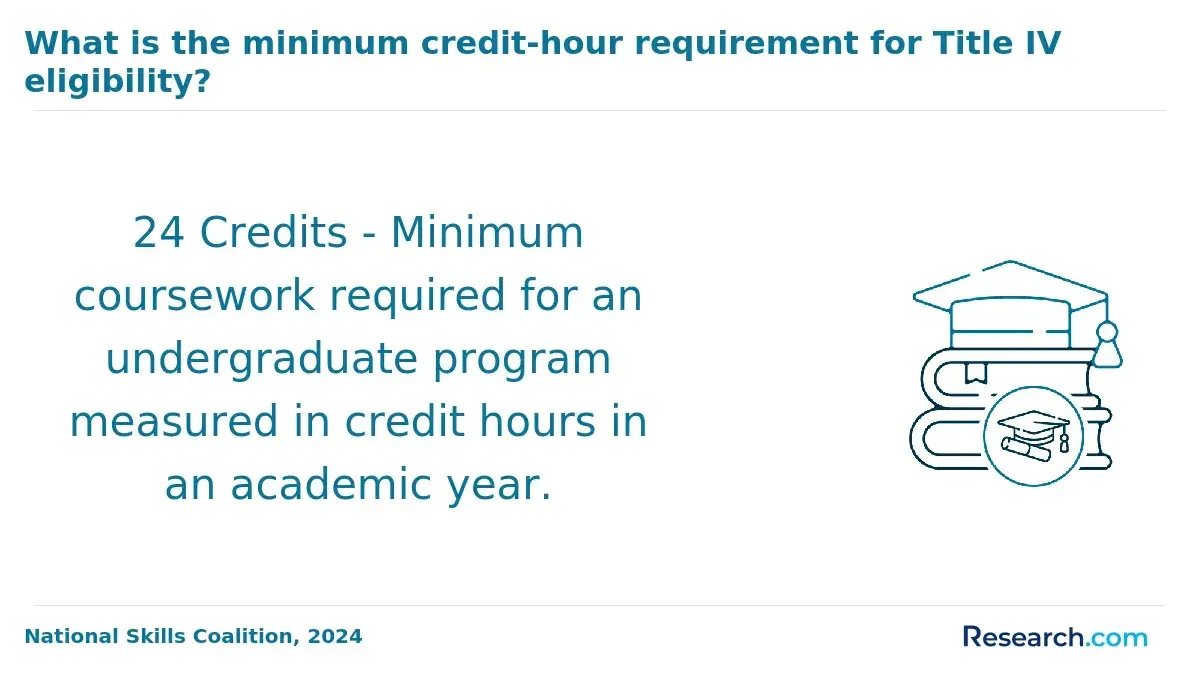
The U.S. Department of Education plays an essential role in the accreditation process for online engineering management bachelor's programs in the United States by formally recognizing accrediting agencies that meet federal standards. This recognition enables programs accredited by these agencies to qualify for Title IV federal financial aid.
Access to such aid-including grants and loans-greatly impacts many students' ability to enroll and complete online engineering management degrees affordably.
To ensure the integrity of this system, the department depends on the National Advisory Committee on Institutional Quality and Integrity (NACIQI) to thoroughly evaluate accrediting bodies. NACIQI assesses their effectiveness in maintaining academic quality and institutional oversight. When an accreditor loses federal recognition, programs accredited by that agency lose eligibility for federal aid, making them less financially accessible and possibly less credible.
Recent policy changes reflect a heightened federal focus on distance education quality. They include stricter requirements for verifying student identity and reporting learning outcomes to ensure online programs meet standards comparable to on-campus offerings.
These steps protect students from diploma mills and low-value credentials, reinforcing the value of legitimate online engineering management degrees.
While federal recognition establishes a baseline quality assurance, it does not guarantee a program's overall excellence or fit for individual goals. Students should investigate regional versus national accreditation differences and look for programmatic accreditation specific to engineering management.
This comprehensive research is essential for verifying credit transferability, employer acceptance, and licensure eligibility. For those considering broader options, resources on counseling masters programs online can provide guidance on comparing affordable and quality remote educational paths.
- Federal Recognition: The U.S. Department of Education recognizes accreditors that comply with rigorous standards, making their accredited programs eligible for federal financial aid-an important factor for online engineering management students' affordability.
- NACIQI Evaluation: This committee conducts detailed reviews of accrediting agencies to sustain quality control, determining which remain authorized to accredit online programs.
- Financial Aid Eligibility: Loss of federal recognition by an accrediting agency results in immediate loss of Title IV aid for students, reducing the program's financial accessibility and reputation.
- Distance Education Oversight: New regulations require verification of student identity and rigorous outcome reporting to ensure online learning quality matches that of traditional campuses.
- Baseline Quality Assurance: Federal oversight guarantees minimum academic standards and protects against diploma mills but should be supplemented by further research into accreditation types and engineering management program specifics.
How Can Students Use the College Scorecard and IPEDS to Evaluate the Quality of Affordable Online Engineering Management Bachelor's Programs?
Students seeking affordable online engineering management bachelor's programs can utilize the U.S. Department of Education's College Scorecard and IPEDS Data Center to access crucial data points that reveal program quality. By filtering College Scorecard results by the field of study code specific to engineering management, students avoid misleading institution-wide averages and obtain program-specific completion rates, average student debt, median earnings after graduation, and loan repayment statistics.
This targeted approach sharpens the focus on outcomes for engineering management graduates, an essential step when evaluating affordable online engineering management bachelor's programs using College Scorecard data.
IPEDS complements this by providing metrics predictive of academic success and program value. Key indicators include retention rates, graduation rates calculated within 150% of the standard time to degree, and detailed outcomes for Pell Grant recipients, critical measures of accessibility and support for low-income students.
These data provide a clearer picture of program effectiveness and student support, essential when using IPEDS metrics to compare quality of online engineering management bachelor's degree programs.
Prospective students should leverage both platforms in tandem to conduct side-by-side comparisons of multiple programs. This thorough data-driven analysis helps avoid low-value degrees and select accredited online engineering management programs recognized by employers and licensing bodies.
For comprehensive insights on recognized pathways, students may also consult accredited online electrical engineering programs as a related field with robust accreditation standards.
- Field-of-Study Filtering: Use College Scorecard's filtering options to isolate engineering management program data, ensuring completion and earnings figures reflect specific program outcomes rather than general institutional averages.
- Completion and Retention Rates: Review IPEDS retention and graduation rates within 150% of normal time to gauge program efficiency and student success.
- Financial Outcomes: Analyze average student debt and loan repayment trends to assess affordability and long-term financial impact of the degree.
- Pell Grant Recipient Success: Evaluate outcomes for Pell Grant recipients to understand how well programs support students from lower-income backgrounds.
- Side-by-Side Program Comparison: Combine data from both tools to compare quality, affordability, and student outcomes across multiple programs before enrolling.
What Are the Warning Signs That an Online Engineering Management Bachelor's Program May Be a Diploma Mill or Lack Legitimate Accreditation?
A diploma mill is an organization that awards degrees with little to no academic effort, primarily aiming to collect tuition fees. These entities often pose as legitimate schools by claiming accreditation from bogus or unrecognized agencies. For students seeking an online engineering management bachelor's degree, such deception can result in worthless qualifications that employers, licensing authorities, and graduate programs do not accept.
True accreditation-from agencies recognized by the Council for Higher Education Accreditation (CHEA) or the U.S. Department of Education's Database of Accredited Postsecondary Institutions and Programs (DAPIP)-ensures the program meets rigorous quality standards and that the degree holds real value.
Common warning signs include promises of instant or guaranteed degrees without any academic prerequisites, absence of required coursework or exams, and claims of accreditation by unrecognized agencies. Additionally, aggressive recruitment tactics pressuring students to enroll quickly without adequate research often indicate a diploma mill.
Before paying tuition, students should always verify accrediting bodies by checking official CHEA and DAPIP listings. This step is critical since employers and licensing boards routinely reject credentials from diploma mills or unaccredited institutions.
According to recent Department of Education data, over 70% of online students rank accreditation status as a key factor when selecting a program, underscoring the importance of thorough verification.
- Instant or Guaranteed Degrees: Offers that dispense degrees quickly without academic work usually signal a diploma mill lacking educational rigor.
- Fake or Unrecognized Accreditation: Legitimate credentials require accreditation from CHEA- or Department of Education-recognized agencies; other accreditors may be scams.
- No Required Coursework: Authentic engineering management programs include structured classes and assessments, so none suggests a lack of standards.
- High-Pressure Recruitment: Tactics that rush enrollment and discourage research often indicate a diploma mill.
- Verification Importance: Confirm any accreditor's status through CHEA and DAPIP to avoid wasting time and money on worthless degrees.
How Does Accreditation Status Affect Credit Transferability for Students in Online Engineering Management Bachelor's Programs?
Credits earned at regionally accredited institutions are typically accepted by other regionally accredited schools because these accreditors enforce strict evaluation standards and maintain mutual recognition agreements. This consistent quality assurance promotes smoother credit transfers.
In contrast, credits from nationally accredited or unaccredited engineering management programs are often denied, creating obstacles for students who wish to continue their education elsewhere. This issue is particularly relevant for those starting at community colleges and planning to transfer to a four-year online engineering management bachelor's degree program. Prospective students must verify accreditation compatibility before enrollment to avoid credit loss and extra expenses.
The State Authorization Reciprocity Agreement (SARA) helps simplify cross-state credit recognition by providing a standardized framework, while articulation agreement databases offer detailed records of credit transfer agreements between community colleges and four-year engineering management programs.
Even completing a single semester at a non-accredited institution can result in credit rejection and increased costs, underscoring the importance of careful accreditation checks.
Recent data indicates nearly 40% of community college students transferring to four-year schools encounter difficulties with credit recognition, highlighting the vital role of accreditation in academic progress.
- Regional Accreditation Reliability: Regionally accredited institutions meet rigorous standards, so credits are widely accepted and ensure academic credibility.
- National and Non-Accredited Limitations: Credits from these programs often face rejection, limiting transfer options and causing potential delays.
- Essential Verification Tools: Students can use SARA and articulation agreement databases to confirm credit transfer pathways in engineering management programs.
- Consequences of Poor Choices: Starting at non-accredited schools risks credit loss and increased costs due to repeated coursework requirements.
- Transfer Credit Challenges: Nearly 40% of community college transfers report problems with credit acceptance, reflecting accreditation's direct impact on educational continuity.
What Graduates Say About How to Verify the Quality of Accredited Online Engineering Management Bachelor's Degree Programs
- Apollo: "I chose the online engineering management bachelor's degree program because it was fully accredited, which was a crucial factor for me-it assured me the education met high standards. The cost was surprisingly affordable compared to traditional programs, making it manageable alongside my work commitments. Since completing the degree, I've noticed a significant boost in my career opportunities, including leadership roles I wouldn't have qualified for before."
- Aldo: "Reflecting on my decision, selecting an accreditation-verified online engineering management program was essential to maintaining credibility in my field. The investment was reasonable, especially given the flexibility of weekly start dates that accommodated my busy schedule. This program truly enhanced my understanding of project coordination and strategic planning, which has helped me excel in my current position."
- Micah: "My enthusiasm for pursuing an accredited online engineering management bachelor's degree came from wanting a reputable program that fit my lifestyle. Affordability was another key point-I didn't want to burden myself financially while studying full-time remotely. The degree has already opened doors for promotions and increased responsibility in my company, confirming it was the right choice for advancing my career."
Other Things You Should Know About Engineering Management Degrees
Prospective students should ask whether the program is accredited by a recognized regional or national accrediting agency and if it holds any programmatic accreditation specific to engineering or management. They should inquire about faculty qualifications, especially if instructors have relevant industry experience or advanced degrees in engineering management. Asking about graduation rates, job placement statistics, and support services for online learners can provide insight into the program's effectiveness and student satisfaction.
State licensing boards and employers typically verify accreditation by checking the U.S. Department of Education's Database of Accredited Postsecondary Institutions and Programs (DAPIP) or the Council for Higher Education Accreditation's recognized agencies list. They look for regional accreditation or nationally recognized accreditors that ensure the degree meets educational standards. Employers often prefer degrees from programs accredited by agencies respected in engineering and management fields to confirm the curriculum's relevance and rigor.
Accreditation quality is crucial because only accredited programs can access federal financial aid. Accredited programs meet stringent criteria, ensuring educational standards, which in turn qualifies them for such financial help, ultimately lowering education costs for students.
Accredited online engineering management programs generally undergo re-evaluation every five to ten years to ensure they continue meeting quality standards. This process includes reviewing curriculum, faculty, facilities, and student outcomes. If a program's accreditation is revoked, its degrees may lose value with employers and licensing boards, and students could lose eligibility for federal financial aid. Institutions usually provide notice and a timeframe for corrective actions before revocation occurs.
References
- Understanding the Difference Between Regional and National Accreditation https://www.qahe.org/article/understanding-the-difference-between-regional-and-national-accreditation/
- Diploma Mill Warning Signs and Verification https://www.c4lacademy.com/diploma-mill-warning-signs-and-verification
- Analysis of Factors Affecting Online Learning Outcomes for Engineering Management Study Program at Institut Teknologi Del https://www.atlantis-press.com/proceedings/icliqe-22/125994829
- Nces - Ipeds https://nces.ed.gov/ipeds/
- BSc (Hons)Engineering Management BSc (Hons)Engineering Management https://www.lincoln.ac.uk/course/engmdlub/
- Regional vs National Accreditation: What This Means for You https://www.uopeople.edu/blog/regional-vs-national-accreditation-whats-the-difference/
- Reforming Accreditation to Strengthen Higher Education https://www.whitehouse.gov/presidential-actions/2025/04/reforming-accreditation-to-strengthen-higher-education/
- Understanding Diploma Mills and Recognising Legitimate Online Learning https://www.diploma-msc.com/blog/learna-news/understanding-diploma-mills-and-recognising-legitimate-online-learning