2027 Need-Based Scholarships Explained

Co-Founder and Chief Data Scientist
College affordability often comes down to one question: how much aid can reduce the bill you cannot reasonably pay? The College Board reported 2024-25 average published tuition, fees, housing, and food of $24,920 for in-state public four-year students and $58,600 at private nonprofit four-year colleges. Need-based scholarships matter because they can lower out-of-pocket costs without adding debt.
This guide is for students, parents, adult learners, and online students who want to understand eligibility, applications, aid packages, and smarter ways to compare college options.
Key Things You Should Know
- Need-based scholarships are awarded primarily because your calculated financial need shows a gap between college costs and what your household can reasonably contribute; the FAFSA now uses the Student Aid Index rather than the old Expected Family Contribution.
- The federal Pell Grant maximum is $7,395 for the 2025-26 award year, giving eligible low-income undergraduates a major benchmark for comparing federal, state, institutional, and private need-based aid.
- The best strategy is to file financial aid forms early, compare net price rather than sticker price, and ask each school whether outside scholarships will reduce loans, work-study, unmet need, or existing grants.
What is a need-based scholarship and how does it differ from merit-based aid?
A need-based scholarship is gift aid awarded because a student's financial circumstances show that college costs would be difficult to cover without assistance. Unlike loans, scholarships generally do not need to be repaid if you meet the award's conditions. Unlike work-study, they do not require you to earn the aid through an assigned job.
The main difference between need-based and merit-based aid is the reason for the award. Need-based aid focuses on affordability; merit-based aid focuses on achievement, talent, leadership, grades, test scores, artistic ability, athletic performance, or another accomplishment. Many awards blend both. For example, a college may require both financial need and a minimum GPA.
This distinction matters when choosing where to apply. A student with strong grades but limited income may benefit most from colleges with generous institutional need-based aid, while a student from a higher-income household may need to target merit scholarships or lower-cost programs. Students exploring career-focused online options can also compare online degrees for remote jobs if the goal is to reduce living costs, commute costs, and time away from work.
The table below shows how common aid types differ. Use it to understand what an award is actually doing in your aid package before you accept it.
| Aid type | Main basis for award | Repayment required? | What to check before accepting |
| Need-based scholarship | Financial need, sometimes combined with academic or program criteria | No, if requirements are met | Renewal rules, enrollment level, GPA, and whether outside awards reduce other aid |
| Merit scholarship | Grades, test scores, talent, leadership, service, or other achievement | No, if requirements are met | Minimum GPA, major restrictions, renewal limits, and stackability |
| Grant | Usually financial need, government program rules, or institutional policy | No, in most cases | Eligibility changes if income, enrollment, or dependency status changes |
| Loan | Eligibility to borrow under federal or private lending rules | Yes | Interest rate, fees, repayment terms, and whether you need the full amount |
| Work-study | Financial need and availability of campus-approved jobs | No, but funds are earned through work | Whether jobs are available, schedule fit, and hourly earnings |
How do colleges and scholarship providers calculate financial need for these awards?
Colleges and scholarship providers calculate financial need by comparing the cost of attendance with a measure of the student's available resources. The basic formula is straightforward: cost of attendance minus Student Aid Index and other resources equals financial need. The hard part is that each provider may define costs, assets, family situation, and award limits differently.
For federal aid, the FAFSA collects income, asset, household, tax, and dependency information and produces a Student Aid Index. A lower or negative Student Aid Index generally signals higher financial need, but it does not automatically mean every cost will be covered. Colleges then use that result, along with their own aid budgets and policies, to build an offer.
Cost of attendance is broader than tuition. It can include fees, housing, food, books, supplies, transportation, personal expenses, and sometimes dependent care or required equipment. This is why two colleges with similar tuition can lead to very different aid outcomes.
The table below explains the inputs that most often affect need calculations. It is useful when reviewing why your aid offer changed from one school to another.
| Calculation factor | What it means | Why it affects need-based scholarships |
| Cost of attendance | The school's estimated full annual cost for a student in a specific enrollment situation | A higher cost can create more demonstrated need, but aid depends on available funding |
| Student Aid Index | The FAFSA-generated measure used to determine federal aid eligibility | A lower number can increase eligibility for need-based aid |
| Income and tax data | Student and parent income for dependent students, or student and spouse income for independent students | Higher available income can reduce calculated need |
| Assets | Reportable savings, investments, and other required asset categories | Some assets may increase the amount a formula expects the household to contribute |
| Enrollment intensity | Full-time, part-time, half-time, or less-than-half-time status | Some awards are reduced or unavailable below a required credit load |
| Institutional policy | The school's own rules for awarding limited scholarship funds | Two schools can use the same FAFSA result but award different scholarship amounts |
A key trend is the FAFSA simplification rollout, which changed terminology and formulas beginning with the 2024-25 aid cycle. For students, the practical takeaway is to avoid relying on old Expected Family Contribution estimates and instead review each college's current net price calculator and financial aid instructions.
Who qualifies for need-based scholarships and what eligibility requirements are most common?
Students who qualify for need-based scholarships usually show financial need under a provider's formula and meet basic academic, enrollment, citizenship, residency, or program requirements. Need alone is not always enough because many scholarships have limited funds and additional conditions.
Eligibility varies, but most providers review several common criteria. Before applying, check whether the scholarship is designed for your student profile rather than assuming that all need-based awards work the same way.
- Financial need shown through the FAFSA, CSS Profile, institutional aid form, tax documents, or a provider-specific application
- Enrollment in an eligible certificate, associate, bachelor's, or graduate program at an approved institution
- Minimum GPA or satisfactory academic progress after enrollment
- Residency in a specific state, county, city, school district, or service area
- Citizenship, eligible noncitizen status, DACA-related eligibility, or other status rules defined by the provider
- Major, career goal, community service, first-generation status, military affiliation, disability status, or membership in an underrepresented group
- Demonstrated unmet need after federal, state, institutional, and family resources are considered
Need-based scholarships are not only for traditional full-time freshmen. Adult learners, transfer students, part-time students, parents returning to school, and online students may qualify, although some awards restrict eligibility to first-time or full-time students.
If a shorter credential fits your goals, compare whether an associate degree in 6 months online free search leads to accredited, aid-eligible options or only promotional claims that need closer review.
One common mistake is self-rejecting because your family income feels "too high." Financial need depends on family size, assets, cost of attendance, number of eligible costs, and institutional policy. A household may not qualify for a Pell Grant but may still receive institutional or state need-based aid at a high-cost college.
How do you use the FAFSA and other financial aid forms to apply for need-based scholarships?
The FAFSA is the primary gateway for federal need-based aid and is also used by many states, colleges, and scholarship programs. Completing it does not obligate you to borrow; it simply allows schools to determine what grants, scholarships, loans, and work-study you may be offered.
Some private colleges and scholarship providers require additional forms, such as the CSS Profile or an institutional aid application. These forms may ask for more detail about home equity, noncustodial parent finances, business value, medical expenses, or unusual household circumstances.
Use this sequence to apply efficiently and reduce errors that can delay awards.
- Create the required Federal Student Aid account for the student and any required parent or spouse contributor.
- Gather Social Security numbers, tax information, records of untaxed income, bank balances, investment details, and school lists before starting.
- Submit the FAFSA as early as possible after it opens because some state and institutional funds are limited.
- Complete any college-specific forms, CSS Profile requirements, or scholarship portals listed by each school.
- Review the FAFSA Submission Summary and correct errors quickly, especially dependency, contributor, income, and school-code issues.
- Respond to verification requests by the school's deadline if the financial aid office asks for tax transcripts, identity documents, or clarification.
- Compare official aid offers only after each college has included direct costs, indirect costs, grants, scholarships, loans, and work-study clearly.
Students should also use each college's net price calculator before applying or committing. Net price is the estimated cost after grants and scholarships, and it is more useful than sticker price for determining whether a school is financially realistic.
If your finances changed because of job loss, divorce, medical bills, death of a parent, housing instability, or another hardship, ask about a professional judgment or special circumstances review. Financial aid offices can sometimes adjust data used in the need analysis, but you must document the situation and follow the school's process.
What types of need-based scholarships exist from federal, state, institutional, and private sources?
Need-based scholarships can come from several sources, and the source affects eligibility, deadlines, renewal rules, and how the award appears in your aid package. The strongest plan usually combines federal and state grants with institutional scholarships and carefully screened private awards.
The 2025-26 maximum Pell Grant is $7,395, which makes federal need-based aid an important starting point for many undergraduate students. However, Pell alone rarely covers the full cost of attendance, so students should also search for state, college, and private need-based scholarships.
The table below compares common funding sources. It can help you decide where to focus your time when scholarship deadlines overlap.
| Source | Common examples | Best fit | Main limitation |
| Federal | Pell Grant, Federal Supplemental Educational Opportunity Grant, federal work-study eligibility | Undergraduates with significant financial need at eligible schools | Federal funds may not cover the full net cost |
| State | State grants, promise programs, workforce scholarships, resident tuition aid | Students attending eligible in-state or approved institutions | Deadlines and residency rules can be strict |
| Institutional | College-funded need grants, tuition scholarships, emergency aid, endowed awards | Students applying to schools with strong aid budgets or mission-based support | Awards can vary widely by college and may change if outside scholarships are added |
| Private nonprofit | Community foundations, civic groups, religious organizations, professional associations | Students who match local, identity-based, service, or career criteria | Applications may require essays, recommendations, and separate deadlines |
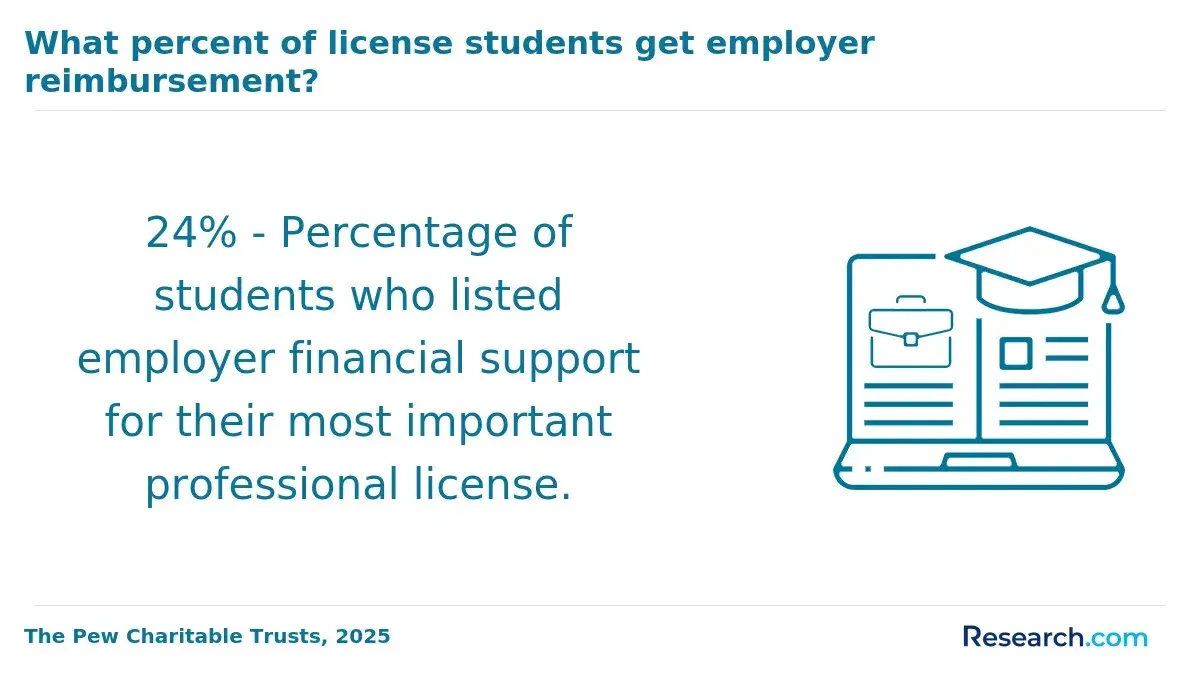
| Employer or workforce | Tuition assistance, industry scholarships, apprenticeships, retraining funds | Working adults and students pursuing high-demand career paths | May require continued employment, service commitments, or approved majors |
Need-based aid can also support career-oriented programs if the school and program are eligible. Students trying to balance affordability with earnings potential may find it useful to compare easy degrees to get online that pay well while still checking accreditation, financial aid eligibility, transfer value, and employer recognition.
What documents, deadlines, and steps are required to complete a strong need-based scholarship application?
A strong need-based scholarship application is organized, complete, and submitted before the priority deadline. Many missed awards happen not because the student was ineligible, but because a document was late, an essay was generic, or a renewal rule was overlooked.
Most scholarship applications ask for proof that you meet both financial and nonfinancial criteria. Prepare these materials early so you can adapt them for multiple awards instead of rushing at the deadline.
- FAFSA Submission Summary or confirmation that the FAFSA was filed
- Tax return, W-2, or income documentation if requested by the provider
- Transcript showing GPA, completed credits, or class standing
- Enrollment verification or admission letter from an eligible college
- Short essay explaining financial need, educational goals, career plans, or personal circumstances
- Recommendation letter from a teacher, counselor, supervisor, mentor, or community leader
- Resume or activity list showing work, caregiving, service, leadership, military service, or community involvement
- Documentation for special eligibility categories, such as residency, first-generation status, disability, foster care experience, or veteran affiliation
Use a step-by-step process so you do not lose track of requirements across different providers.
- Build a scholarship calendar with FAFSA, state, college, and private deadlines listed separately.
- Prioritize awards with the strongest fit before spending time on broad national competitions.
- Customize each essay by connecting your financial need to your academic plan and realistic career goal.
- Ask for recommendations at least several weeks before the deadline and give recommenders the scholarship criteria.
- Upload documents in the required format and confirm that every file is readable before submitting.
- Save confirmation emails, copies of applications, award letters, renewal rules, and contact information.
- Follow up politely if the provider's timeline passes and you have not received an update.
Graduate students should be especially careful because need-based aid is often less generous at the graduate level than at the undergraduate level. If speed is a major factor, compare the shortest master's degree programs online with total cost, employer tuition benefits, assistantships, and borrowing limits before enrolling.
How do need-based scholarships interact with grants, loans, and work-study in a financial aid package?
Need-based scholarships are one part of a financial aid package. A typical offer may include grants, scholarships, loans, and work-study. The order in which a school applies awards matters because a new scholarship can reduce your bill, reduce loans, or, in some cases, replace other aid.
This is where students need to understand scholarship displacement. Some colleges reduce unmet need or loans first when an outside scholarship arrives, which benefits the student. Others may reduce institutional grants after total aid exceeds a limit. The policy should be published or explained by the financial aid office.
Before accepting an aid package, ask the college these questions so you know the real value of each scholarship.
- If I receive an outside need-based scholarship, will it reduce my loans, work-study, unmet need, or institutional grants first?
- Is this scholarship renewable, and what GPA, credit load, major, or financial need level is required?
- Will the award change if I move off campus, enroll part time, study online, or change my major?
- Does the package include Parent PLUS loans or private loans in a way that makes the offer look more affordable than it is?
- What amount will I owe directly to the school each term after grants and scholarships are applied?
- What indirect costs, such as transportation, books, technology, and living expenses, are not billed by the school but still need a plan?
Loans can fill gaps, but they should not be treated like free aid. For dependent first-year undergraduates, the federal direct loan annual limit is generally $5,500, with only a portion possibly subsidized.
If a school's net price requires borrowing far above federal student loan limits, compare lower-cost colleges, part-time enrollment, transfer pathways, employer benefits, or community college options before committing.
How can students compare online and campus programs when using need-based scholarships to fund college?
Need-based scholarships can apply to online, hybrid, and campus programs if the institution and program meet eligibility rules. The right format depends on your schedule, learning style, program requirements, and total cost after aid.
Online programs may reduce transportation, relocation, and campus housing costs, which can make the net price easier to manage. However, some online programs charge technology fees, require proctored exams, limit state authorization, or offer fewer campus-based scholarship opportunities.
Campus programs may cost more to attend but can provide stronger access to labs, clinical placements, advising, research, housing-based aid, and in-person networks.
The table below summarizes decision factors for students using need-based scholarships. It focuses on cost and fit rather than assuming one format is always better.
| Factor | Online program | Campus program | Decision point |
| Total cost | May reduce housing, commute, and relocation costs | May include higher living costs but more campus resources | Compare net price after aid, not tuition alone |
| Schedule | Often better for working adults and caregivers | Often better for students who want a structured weekly routine | Choose the format you can complete consistently |
| Program requirements | Works well for many lecture-based majors | May be necessary for labs, studios, clinicals, or fieldwork | Check whether required in-person components add travel costs |
| Aid eligibility | Available when the school and program are aid-eligible | Available when enrollment meets award rules | Confirm that online status does not change scholarship eligibility |
| Career services | Can be strong, but varies by institution | May offer more in-person recruiting and networking | Ask for job placement support specific to your program and location |
Accreditation and institutional quality are especially important for online students because scholarship eligibility, transfer credits, graduate admission, and employer recognition can depend on them. A practical starting point is comparing the top 10 online colleges while also checking the specific program's accreditation, outcomes, and net price.
A common mistake is choosing the cheapest online option without confirming whether credits transfer or whether the program meets licensure requirements in your state. For fields such as nursing, teaching, counseling, social work, and accounting, verify state requirements before enrolling.
How do need-based scholarships affect total college costs, student debt, and long-term financial outcomes?
Need-based scholarships can improve college affordability by lowering net price, reducing borrowing, and making it easier to stay enrolled. The long-term value depends on how much aid is renewable, how much debt remains, whether the student completes the program, and whether the credential supports realistic career goals.
The sticker price can be misleading. The College Board's 2024 data shows that average published tuition and fees were $11,610 for in-state students at public four-year colleges and $43,350 at private nonprofit four-year colleges in 2024-25. That difference matters, but it does not prove that one option is always cheaper after aid because some private institutions offer substantial institutional scholarships.
To evaluate financial outcomes, calculate four numbers for every school: annual net price, total program cost, likely borrowing, and expected monthly payment after graduation. Then compare those numbers with the career path you are pursuing.
Students focused on affordability and workforce entry can also review easy degrees to get online that pay well as one input, while remembering that salary outcomes vary by location, experience, employer, and field.
Use this framework to decide whether a need-based scholarship offer is financially strong.
- A strong offer lowers direct costs without replacing grants with loans or requiring unrealistic work hours.
- A moderate offer helps but still leaves a gap that can be covered through savings, federal loans, part-time work, or a payment plan without excessive strain.
- A risky offer depends heavily on private loans, Parent PLUS loans, credit cards, or uncertain future scholarships.
- A weak offer has a high net price, unclear renewal rules, or a large gap between billed costs and available resources.
Completion risk is part of cost, too. A scholarship that requires full-time enrollment may be valuable only if your work, caregiving, health, and transportation situation make full-time study realistic. If not, a lower-cost part-time pathway may lead to better financial results even if it takes longer.
How can you spot legitimate need-based scholarships and avoid scams or predatory offers?
Legitimate need-based scholarships do not require you to pay a fee to receive an award, guarantee approval, or pressure you to provide sensitive information outside a secure process. Scams often target students who are anxious about affordability, first-generation families unfamiliar with aid forms, and adult learners returning to school.
Before submitting an application, look for signs that the offer is credible. A legitimate provider should clearly explain eligibility, award amount or range, deadline, selection process, contact information, and how funds are paid.
- Be cautious if a scholarship asks for an application fee, processing fee, redemption fee, or banking password.
- Avoid offers that guarantee you will win or claim you were selected for an award you never applied for.
- Verify the provider's name, physical presence, nonprofit or institutional affiliation, and contact information.
- Use secure portals for tax or identity documents, and do not send sensitive records through unprotected channels unless the provider gives a verified process.
- Read renewal and repayment conditions carefully, especially if the award is tied to employment, service, or a specific major.
- Ask your high school counselor, college financial aid office, state grant agency, or community foundation if you are unsure whether an award is legitimate.
Predatory offers may also appear as "scholarship matching" services that charge for information students can access for free. Some paid college planning services are legitimate, but they should be transparent about fees and should not imply special access to federal aid. You never need to pay a company to file the FAFSA.
Artificial intelligence has made scholarship scams easier to scale through realistic emails, fake award letters, and copied websites. Treat unsolicited messages with caution, verify the sender independently, and never click a link in a suspicious message just because it includes your school name.
Other Things You Should Know About
Usually no. Need-based scholarships are gift aid, but you may have to repay some funds if you withdraw, drop below the required enrollment level, fail to meet renewal rules, or receive an award that has specific service conditions.
Yes. Eligibility depends on cost of attendance, household size, assets, income, school policy, and available funds. A student who does not qualify for the maximum federal grant may still qualify for state or institutional need-based aid.
Do both as early as possible. The FAFSA is required for many need-based awards, but private scholarships may have separate deadlines. Filing early helps you meet priority deadlines and gives colleges time to build a complete aid offer.
Yes, if the school and program are eligible and the scholarship rules allow online enrollment. Always confirm accreditation, state authorization, enrollment requirements, and whether online students receive the same institutional aid consideration as campus students.
References
- Types of Financial Aid https://www.fandm.edu/financial-aid/types.html
- Documents Required For Fully Funded Scholarships 2027: Complete Scholarship Documents Checklist https://scholarshipinfocenter.com/documents-required-for-fully-funded-scholarships-2027/
- How Do Colleges Determine Your Financial Aid? https://www.mefa.org/article/how-do-colleges-determine-your-financial-aid/
- What You Need to Know About Financial Need https://www.collegedata.com/resources/pay-your-way/what-you-need-to-know-about-financial-need
- How to Assess the Financial Need of Applicants https://www.mykaleidoscope.com/insights/how-to-assess-financial-need/
- How To Avoid Scholarship and Financial Aid Scams https://consumer.ftc.gov/articles/how-avoid-scholarship-and-financial-aid-scams
- Need-Based Scholarships: What You Need to Know https://www.fastweb.com/college-scholarships/articles/need-based-scholarship-guide
- How to qualify for need-based financial aid | Mark Mariani https://markmarianigrant.com/financial-grants/how-to-qualify-for-need-based-financial-aid/
- The Ultimate Guide to Need-Based and Merit-Based Aid https://www.communityforce.com/the-ultimate-guide-to-need-based-and-merit-based-aid/
- How to Complete a Scholarship Application Form Successfully: Scholarship Application Tips https://www.exportmentor.com/post/how-to-complete-a-scholarship-application-form-successfully-scholarship-application-tips