Most Affordable Trade School & Training Programs - Leading Certification Courses in Bronx for 2026

Co-Founder and Chief Data Scientist
Choosing the right trade school in the Bronx can be challenging, especially when you want quality education without breaking the bank. This article introduces a helpful trade school programs ranking created by the Research.com team of data scientists to guide you in making informed decisions.
By exploring affordable options, you’ll discover programs that offer practical skills and valuable certifications. Earning a trade school diploma can open doors to rewarding careers and a brighter future. This guide is designed to support your journey toward success with confidence and clarity.
Key benefits of finishing trade school programs trade school in Bronx
- Great earning potential: Trade school graduates in the Bronx can expect average annual salaries around $69,953, with some careers like licensed practical nurses, electricians, and HVAC technicians earning even more based on experience.
- Popular career paths: Many students choose to train in healthcare, construction, automotive technology, cosmetology, and information technology, all offering strong job opportunities and growth in the Bronx.
- Flexible online options: Getting a trade school diploma or certification online allows graduates to learn at their own pace, balance work and life, and enter the job market faster compared to traditional on-campus education.
- Most Affordable Trade School & Training Programs - Leading Certification Courses in Bronx for 2026
- What can I expect from trade school programs trade schools in Bronx?
- Where can I work after finishing trade school programs trade schools in Bronx?
What can I expect from trade school programs trade schools in Bronx?
The average cost of a trade school program in the Bronx varies widely depending on the length and type of course, but many students find affordable or even tuition-free options available. For instance, programs at the Educational Opportunity Centers (EOCs) often provide tuition-free training for eligible students, relieving financial pressure while offering valuable skills.
Graduates from the Industry Trade Academy at Monroe University appreciate the fast, focused approach of their 80-hour courses, which fit into busy schedules without long-term financial commitment. Meanwhile, those enrolling in longer certifications like the 500-hour Master Barber program at the SUNY Bronx Educational Opportunity Center report that flexible payment plans and sometimes grants make the cost manageable.
Many students say the combination of flexible financing options, including scholarships and payment plans, alongside career support like job placement and counseling, creates a rewarding experience without overwhelming expenses. This structure helps students feel confident investing in their futures while balancing real-life responsibilities.
Where can I work after finishing trade school programs trade schools in Bronx?
After finishing a trade school program in the Bronx, graduates find a wide range of job opportunities suited to their skills. Graduates often start work as electricians, HVAC technicians, plumbers, or carpenters, quickly moving from apprenticeships to reliable careers. For example, many graduates from popular Bronx trade schools share how they landed roles as apprentice plumbers or residential service technicians, gaining hands-on experience in busy, real-world settings.
Health care programs train students for positions as medical assistants or certified nursing assistants, placing them in local hospitals and clinics that highly value Bronx-trained professionals. Culinary arts graduates find rewarding roles as bakers or cooks in the borough's vibrant restaurant scene, often feeling proud to contribute to their communities' diverse food culture.
Programs in building maintenance and energy efficiency prepare students for growing fields like weatherization technician roles, crucial for NYC's housing improvements. Local organizations such as BronxWorks support graduates by connecting them with employers across unions, small businesses, and city agencies, turning training into steady employment.
After finishing a trade school program in the Bronx, graduates typically earn between $69,953 and $73,463 annually as of August 2025. This means a paycheck roughly between $5,829 and $6,121 per month, or an hourly wage of about $33.63 to $35.32. Many new professionals find this range reflects both their entry-level role and growing experience in the fast-paced Bronx job market.
Trade school alumni from popular Bronx programs often land jobs where salaries range more broadly-from $55,200 at the 25th percentile to $89,200 at the 75th percentile-showing real opportunity to advance with skill development. For example, graduates entering electrical or HVAC trades may see higher wages than those starting in maintenance roles.
Some roles stand out: Security Officers earn around $23.15 per hour, Residential Advisors about $45,889 yearly, and Instructors approximately $23.28 per hour. These figures demonstrate the financial benefits of specialized training and certifications obtained right here in the Bronx.
- Applicants must be New York State residents and provide a valid photo ID and proof of education such as a high school diploma or equivalency certificate.
- Many programs require passing the Test of Adult Basic Education (TABE) to assess reading and math skills before registration.
- Tuition varies, with some programs like SUNY Bronx EOC offering tuition-free education, while others, like Monroe University's plumbing course, cost around $1,500.
- Graduates commonly enter trades such as plumbing, electrical work, construction, and HVAC, with starting salaries between $35,000 and $50,000 annually.
- Trade schools provide certifications (e.g., OSHA-10), internships, and job placement services to support career advancement.
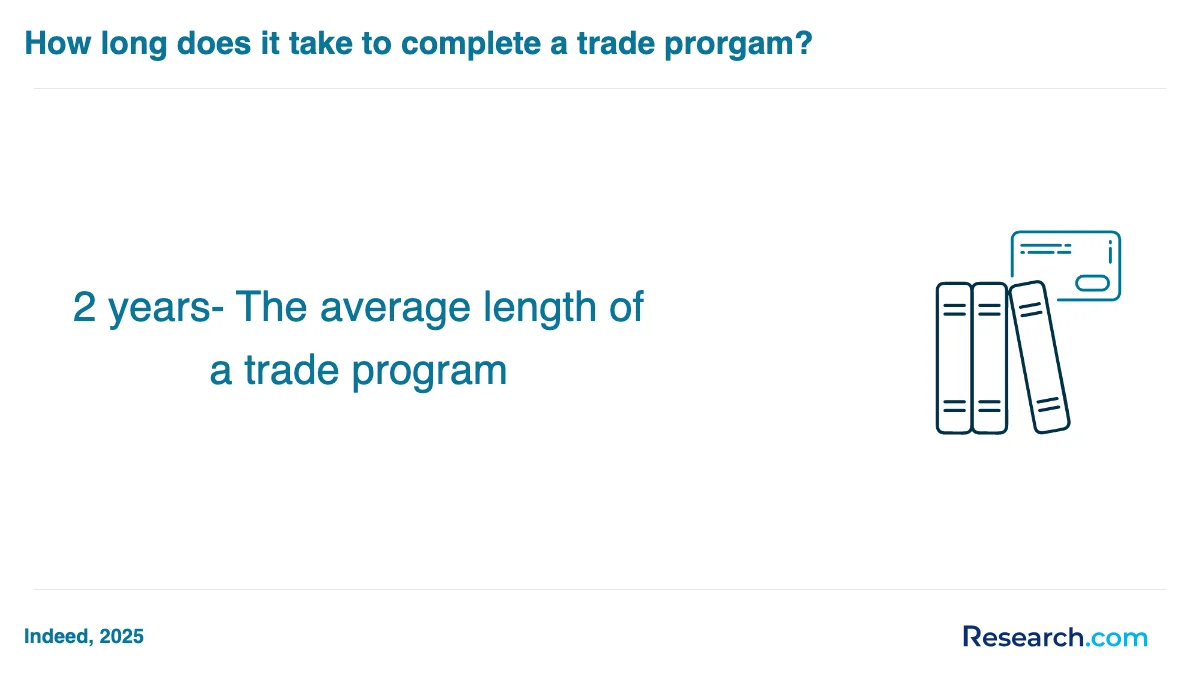
Completing a trade school program in the Bronx can be surprisingly quick, depending on your chosen field. For instance, graduates from SUNY Bronx Educational Opportunity Center find that short-term certificates like the Security Guard Registration wrap up in just one week, perfect for those eager to start working fast. Others who pursued programs like Direct Support Professional or Medical Assistant benefited from courses lasting between 7 and 16 weeks, balancing focused study with real-world readiness.
Some students opt for more specialized training, such as the Master Barber course, which takes about 20 weeks of daytime classes. Meanwhile, Monroe University's Industry Trade Academy offers intensive 80-hour certifications completed in just three weeks, ideal for motivated students seeking fast-track options with structured schedules including Saturdays.
For careers requiring more depth, HVAC programs at the Center for Adult & Community Services offer flexible full- or part-time formats, letting students progress at their own pace. Carpentry courses that build skills step-by-step in modules of 45 to 60 hours also fit well with busy lifestyles. Graduates often appreciate how these varied timelines let them tailor education to life's demands.
The key difference between online and on-campus trade school programs in the Bronx lies in how students engage with their training. On-campus programs, like those at Monroe University's Industry Trade Academy or Apex Technical School, immerse students in hands-on learning with real equipment and close instructor guidance. Graduates often share how these in-person sessions helped them quickly build confidence and skills, especially in trades like plumbing where working directly with tools and materials is essential.
In contrast, online programs such as the SUNY Bronx EOC ATTAIN Lab offer flexibility for students balancing work or family commitments. While remote learning relies on video demonstrations and virtual assignments, many students appreciate the ability to study at their own pace. However, some note missing the tactile experience of using tools, which on-campus labs provide. Hybrid options help bridge this gap by mixing online coursework with practical labs on site.
For Bronx students, the choice depends on whether hands-on practice or flexible scheduling better suits their lifestyle and career goals.
The average cost of trade school in Bronx usually ranges between $4,800 and $15,000 for tuition, depending on the program and institution. For instance, graduates from Bronx Community College often share how the in-state tuition of $4,800 made it possible to gain valuable skills without overwhelming debt. Out-of-state tuition is higher, about $7,680, but still more affordable than private alternatives. This tuition covers classes only, so students should budget additionally for books, fees, and daily expenses.
When comparing Bronx trade school tuition and fees, many successful graduates mention that certificate programs tend to be less costly and shorter, typically falling near the $5,000 mark, while associate degrees can approach or exceed $15,000. Some private trade schools in the area charge much higher total costs-up to $31,000 to $44,000-including accommodation and materials. Yet, many local students find public community colleges provide quality training and a more manageable price point, which creates a positive balance between cost and career prospects.
Students in Bronx often take advantage of federal financial aid programs such as Pell Grants and student loans, which help reduce financial barriers. Several programs also connect students with scholarships targeting in-demand fields, which can be a game-changer for affordability. Exploring options carefully and consulting a trade careers list can guide prospective students toward programs that best fit their budget and goals.
Trade school students in the Bronx can access a range of financial aid options that make technical education affordable and even tuition-free in some cases. Many start by filing the Free Application for Federal Student Aid (FAFSA), unlocking federal grants, work-study, and scholarships. For example, a graduate from a popular Bronx trade school shared how FAFSA funding helped cover essential costs while balancing evening classes.
The New York State Tuition Assistance Program (TAP) offers up to $5,665 annually for eligible New York residents, including Bronx students in accredited trade programs. This relief significantly eased the financial burden for a recent HVAC technician who relied on TAP to complete certification without debt.
Programs like the SUNY Bronx Educational Opportunity Center provide tuition-free training, making trade education accessible without loans. Many graduates appreciate this opportunity, emphasizing how it allowed them to focus fully on skill-building rather than worrying about bills.
Other aids include STEM incentives and scholarships from local foundations, such as the From a Butterfly Scholarship Foundation and the Cathay Bank Foundation Scholarship, which support tuition and materials. These options create a supportive financial environment for Bronx students pursuing careers in trades.
To enroll in a trade school program in the Bronx, most students first need to show proof of high school completion, such as a diploma, GED, or official transcript. Graduates often share how this requirement felt like an important milestone that gave them confidence moving forward.
Residency is another key prerequisite, especially for publicly funded programs like those at SUNY Bronx Educational Opportunity Center (EOC). Applicants must provide a valid New York State photo ID to prove residency, ensuring access to local opportunities.
Placement testing is common; for example, many students recall taking the TABE test at SUNY Bronx EOC, where their reading, math, and language skills were assessed. Some programs demand specific scores, such as a 7.0 in reading or 5.5 in math, while those who need extra help can take prep courses designed to boost their chances.
Other essentials include:
- A Social Security Number for identification and background checks
- Meeting income eligibility for some tuition-free programs
- Providing a U.S. government-issued photo ID
Certain specialized fields may also request age minimums, immunization records, or detailed background checks, reflecting the responsibility students will take in those careers.
Students often describe navigating these steps as rewarding challenges that prepared them well for their new vocational paths in Bronx trade schools.
Trade school programs in the Bronx usually include hands-on courses designed to get you job-ready quickly. Graduates from popular schools often share how practical skills learned made a big difference in landing work fast. Typical courses cover essential trades like:
- Basic Plumbing: Students practice installing toilets, sinks, and piping systems. At Industry Trade Academy at Monroe University, the intensive 80-hour plumbing class, costing $1,500, combines theory with real tools-perfect for those eager to start working immediately.
- Basic Carpentry: You'll learn framing, door and window installation, and safe tool handling, preparing for construction jobs with confidence.
- Basic Electrical: This course teaches wiring, circuit design, and reading blueprints, helping students tackle residential and commercial electrical tasks.
- OSHA Construction & Safety: Safety training with recognized certifications like the 10- or 30-hour Construction Safety courses equip students to work safely on-site.
- Work Zone Flagger: Training to control traffic at construction zones opens job options in public infrastructure projects.
Many Bronx programs also offer allied health, IT, and business courses, with flexible monthly start dates and small classes to ensure personalized attention. For example, some graduates appreciate the hands-on experience in allied health fields like medical assisting and phlebotomy, meeting growing local healthcare demands.
Trade school programs in the Bronx offer a variety of practical specializations tailored to meet local job market demands. Graduates from popular schools like Monroe University's Industry Trade Academy often highlight the value of hands-on training in building and construction trades, including plumbing, electrical work, carpentry, and welding. For instance, the intensive 80-hour plumbing course teaches real-world skills such as installing fixtures and soldering pipes, preparing students for immediate employment.
Healthcare is another prominent field, with programs like Certified Nurses' Aide (CNA) and Patient Care Technician training providing certification, paid internships, and job placement support. These options appeal especially to adults eager to enter the healthcare workforce quickly.
Other sought-after specializations include computer technology and IT support, EMT training, early childhood education, and food safety management. Cosmetology schools offer courses in hair styling, nail care, esthetics, and makeup artistry, leading to rewarding roles in the beauty industry.
Many trade schools in the Bronx offer both full-time and part-time options, with some providing free or low-cost tuition for eligible students, ensuring broad access to skill-building opportunities. For more details on top-rated choices, students often explore the best trade schools for tailored programs and career success.
Start by checking accreditation to ensure the trade school meets recognized standards; this impacts financial aid eligibility and employer recognition. Graduates from Bronx Community College often share how verifying accreditation gave them confidence in their diplomas' value. When comparing programs, look closely at the variety offered-fields like electrical technology, welding, and cybersecurity are popular in Bronx schools. A recent graduate celebrated the hands-on training and paid internships they received through the NYC Carpenters Training Center's BuildingWorks program, which opened doors to union apprenticeships and certifications like OSHA safety.
Flexibility is key for many Bronx students balancing work and study. Evening and weekend classes at local schools allow students to stay on track. Look for strong student support services such as career counseling and tutoring, which Bronx Community College actively provides to foster success. Lastly, carefully compare tuition costs and explore financial aid or scholarships; many schools participate in federal aid programs. For those interested, check out low cost online appliance repair courses as budget-friendly options when researching how to compare Bronx trade schools.
Trade school graduates in Bronx find numerous career pathways tailored to the local job market. Construction and skilled trades remain strong options, with programs like Monroe University's Industry Trade Academy training students in carpentry, HVAC, and electrical work. Graduates often start as apprentices or assistants, quickly gaining hands-on experience in roles that are in constant demand.
Health services also offer dependable entry points. Nursing assistant and emergency technician tracks prepare students for positions in hospitals and clinics, serving as stepping stones toward advanced healthcare careers. Many Bronx graduates appreciate these programs for their direct path to stable employment.
Technology and business fields are growing sectors for trade school grads too. Local CTE programs provide skills in IT support, business administration, and junior analyst roles, helping graduates tap into diverse office and tech environments.
Creative and personal services programs in cosmetology, barbering, and digital media appeal to those seeking dynamic, hands-on work. Bronx residents often find joy in building careers with strong community connections through these pathways.
- Construction apprenticeships in plumbing and HVAC
- Certified nursing assistant and emergency technician roles
- IT support and business administration positions
- Careers in cosmetology and media production
Programs like The Door and Advance & Earn provide practical training and internships, especially for young adults navigating unique challenges. For those exploring fast entry points to employment, consider exploring 6-month certificate programs that pay well. This broad spectrum of opportunities demonstrates the depth and variety of career pathways for trade school graduates in Bronx, catering to many interests and talents.
The job market for trade school graduates in Bronx remains strong, with many local employers actively seeking skilled workers in healthcare, construction, electrical work, and HVAC. Graduates report securing jobs quickly, often within months, thanks to practical, hands-on training and industry certifications earned at popular Bronx trade schools. Many find opportunities with competitive wages averaging $69,953 annually, reflecting positive employment prospects in this region.
Examples from recent graduates highlight:
- Medical assistants stepping into healthcare roles with immediate demand.
- Electricians contributing to Bronx's expanding infrastructure projects.
- HVAC technicians filling vital positions in commercial and residential sectors.
With Bronx trade school graduate employment rates high, students can feel confident pursuing programs blending classroom and real-world experience. For those interested in specialized fields, options such as low cost online electrician training courses supplement local education pathways, broadening career possibilities while maintaining affordability.
Most Affordable Trade School & Training Programs - Leading Certification Courses in Bronx for 2026
# 1 position
CUNY Hostos Community College - Accounting.
associateThe Accounting program at CUNY Hostos Community College offers a hybrid learning format with some distance-education options. The annual in-state tuition is $5,208. The program prepares students for careers in accounting, covering principles, financial and managerial accounting, auditing, tax, legal aspects, and business information systems. It is accredited by the Middle States Commission on Higher Education. Graduates have median earnings of $31,397 one year after completion.
# 2 position
CUNY Hostos Community College - Accounting Technology/Technician and Bookkeeping.
associateCUNY Hostos Community College offers a hybrid program in Accounting Technology/Technician and Bookkeeping that prepares students to support professional accountants with technical administrative tasks. The curriculum covers posting transactions, record-keeping systems, accounting software, and general accounting principles. Annual in-state tuition is $5,208. Graduates have median earnings of $31,397 one year after completion. The program is accredited by the Middle States Commission on Higher Education.
# 3 position
CUNY Hostos Community College - Computer Science.
associateCUNY Hostos Community College offers a Computer Science program delivered in a hybrid format with some distance-education options. The curriculum covers computer theory, problem-solving, and system design from a scientific perspective, including computational science principles and programming. Annual in-state tuition is $5,208. The program is accredited by the Middle States Commission on Higher Education.
# 4 position
CUNY Hostos Community College - Legal Assistant/Paralegal.
associateThe Legal Assistant/Paralegal program at CUNY Hostos Community College offers a hybrid format with some distance-education options. It prepares students to perform legal research, drafting, investigatory, record-keeping, and administrative tasks under attorney supervision. Instruction covers legal research, document drafting, pleading, courthouse procedures, and legal specializations. The program’s annual in-state tuition is $5,208. It is accredited by the Middle States Commission on Higher Education.
# 5 position
CUNY Hostos Community College - Criminal Justice/Law Enforcement Administration.
associateThe Criminal Justice/Law Enforcement Administration program at CUNY Hostos Community College offers a hybrid format with some distance education options. It prepares students to manage public law enforcement agencies through courses in leadership, labor relations, incident response, budgeting, and legal responsibilities. The program is accredited by the Middle States Commission on Higher Education. Annual in-state tuition is $5,208, and median earnings one year after completion are $28,343.
# 6 position
CUNY Hostos Community College - Criminal Justice/Police Science.
associateCUNY Hostos Community College offers a Criminal Justice/Police Science program designed to prepare individuals for police and public security roles. This hybrid program covers patrol, investigation, traffic and crowd control, evidence management, and crime prevention. Students learn weapon operation and report preparation. The annual in-state tuition is $5,208. Graduates have a median earning of $28,343 one year after completion. The program is accredited by the Middle States Commission on Higher Education.
# 7 position
CUNY Hostos Community College - Business Administration and Management, General.
associateCUNY Hostos Community College offers a Business Administration and Management, General program with a hybrid format, allowing some distance education. The program trains students in management theory, human resources, accounting, purchasing, production, marketing, and business decision-making. Annual in-state tuition is $5,208. Graduates have median earnings of $19,499 one year after completion. The program is accredited by the Middle States Commission on Higher Education.
# 8 position
CUNY Bronx Community College - Automobile/Automotive Mechanics Technology/Technician.
associateCUNY Bronx Community College offers a hybrid program in Automobile/Automotive Mechanics Technology/Technician, preparing students to repair, service, and maintain various automobile systems. The curriculum covers brake systems, electrical systems, engine performance and repair, suspension, steering, transmissions, and heating and air conditioning. The annual in-state tuition is $5,206. Graduates have a median earning of $29,047 one year after completion. The program is accredited by the Middle States Commission on Higher Education.
# 9 position
CUNY Bronx Community College - Computer Science.
associateThe Computer Science program at CUNY Bronx Community College offers a hybrid format with some distance-education options. It emphasizes computer theory, problem-solving, and system design from a scientific perspective. Instruction covers computational science principles, programming, and applications for diverse end-use scenarios. The annual in-state tuition is $5,206. The program is accredited by the Middle States Commission on Higher Education.
# 10 position
CUNY Bronx Community College - Computer and Information Systems Security/Auditing/Information Assurance.
associateThe Computer and Information Systems Security/Auditing/Information Assurance program at CUNY Bronx Community College offers a hybrid format with some distance-education options. It trains students to evaluate security needs, recommend safeguards, and manage security systems and procedures. The curriculum covers computer architecture, programming, networking, cryptography, risk assessment, and investigation techniques. The program is accredited by the Middle States Commission on Higher Education. Annual in-state tuition is $5,206.
Frequently Asked Questions about trade school programs
Preparing for the job market after completing trade school in Bronx involves practical steps to enhance employability. First, students should leverage career services offered by their schools, such as resume workshops and job placement assistance. According to the U.S. Bureau of Labor Statistics, many trade programs in Bronx report employment rates around 70-80% within six months of graduation.
Networking locally is crucial. Attending industry events and connecting with Bronx employers who frequently hire trade graduates can open job opportunities. Certifications beyond the diploma, relevant to fields like HVAC or electrical work, also boost job prospects.
Finally, maintaining updated skills and seeking internships during training can significantly increase chances of early employment.
Employers in the Bronx highly value practical technical skills in trade school graduates, reflecting the region's demand for workforce readiness. According to the National Center for Education Statistics, skills in electrical work, plumbing, HVAC, and construction technology consistently rank among the most requested.
In addition to technical expertise, soft skills such as communication, problem-solving, and reliability are crucial. A 2023 survey by the New York State Department of Labor highlights that 72% of local employers prioritize teamwork and adaptability in hiring decisions.
Familiarity with modern tools and safety standards is also important, especially in industrial and mechanical trades. Candidates who combine hands-on abilities with strong workplace ethics tend to have better employment outcomes in Bronx trade markets.
Finding internships in Bronx that align with your trade school program involves several practical steps. Begin by contacting your trade school's career services office, as many maintain partnerships with local businesses and can connect you directly to relevant opportunities. Also, explore the BronxWorks program and the New York State Department of Labor, which frequently list internships and apprenticeships in trades such as construction, automotive technology, and healthcare.
Networking is crucial. Attend local job fairs and industry events, especially those hosted by Bronx community colleges and trade associations. Online platforms like Handshake and Indeed often feature Bronx-based internships tailored to skilled trades.
According to the New York State Labor Statistics Office, demand for trade interns in Bronx has increased by 12% in recent years, particularly in electrical and HVAC fields. Securing an internship early can enhance your job prospects post-graduation and provide valuable hands-on experience.
In the Bronx, a trade school diploma significantly enhances career mobility and advancement by providing practical skills aligned with local industry needs. Graduates often enter fields such as healthcare, construction, and technology, where demand for skilled workers is strong. According to the New York State Department of Labor, sectors employing trade school graduates in the Bronx are projected to grow by over 10% through 2028.
Trade diplomas often lead to higher starting salaries than those without postsecondary education. The Economic Policy Institute reports that workers with trade credentials in the Bronx earn approximately 20% more than high school graduates. Furthermore, trade schools offer flexible schedules and shorter completion times, allowing faster entry or progression in the workforce.
Part-time job opportunities in Bronx that complement trade school education offer valuable hands-on experience while supporting financial needs. Popular roles include internships or assistant positions in automotive repair shops, HVAC companies, and construction firms. These jobs align closely with common trade programs, providing practical skills and industry networking.
Retail and warehouse jobs also attract many trade students, particularly those studying logistics or supply chain management. According to the New York State Department of Labor, Bronx's retail sector employs over 15,000 part-time workers, making it a vital employment source.
Moreover, healthcare-related programs benefit from part-time roles such as medical assistants or home health aides, with Bronx healthcare establishments frequently seeking flexible staff. Practical work enhances resumes and increases employability after graduation.
To choose the most affordable degree program near me in Bronx, NY, start by researching local colleges and universities, paying particular attention to public institutions known for lower tuition rates. Consider researching Research.com as a helpful resource to compare programs based on cost, financial aid opportunities, and academic reputation. Additionally, visiting school campuses and speaking with admissions counselors can provide valuable insights into which programs align with your budget and career goals.
- The Industry Trade Academy https://www.monroeu.edu/academics/continuing-and-professional-programs/industry-trade-academy
- Learn A Trade - SUNY https://www.suny.edu/trades/
- Trade Schools, What Are The Benefits - InterCoast Colleges https://intercoast.edu/articles/benefits-of-trade-schools/
- NYC Trade School Programs | Apex Technical School https://apexschool.com/programs/
- Vocational Programs | SUNY Bronx EOC http://www.bronxeoc.org/vocational.html
- Workforce Development & Continuing Education – Bronx Community College https://www.bcc.cuny.edu/continuing-education/
- Career and Technical Education (CTE) - Bronx Design & Construction Academy https://www.bxdesign.org/CTE
- Vocational programs and alternative pathways - Institute for Collaborative Education http://www.iceschoolnyc.org/vocational-programs-and-alternative-pathways
- Workforce Development - BronxWorks https://bronxworks.org/our-services/workforce-development/
- Job Training Programs | Career Services | Jobs NYC https://jobs.nyc.gov/jobseekers/programs/