# 1 position
Most Affordable Pharmacy Technician Schools & Training in San Francisco for 2027
Audited and Verified:
Our Editorial and Data Verification Process
Research.com uses government datasets, official education statistics and primary institutional information to support its career and degree guides. Our review process checks factual accuracy, occupational definitions, source dates and the requirements associated with the credentials discussed.
How This Article Was Fact-Checked
Our editorial team verifies salary estimates, employment projections, education requirements and program information against original data providers and official organizations. Salary figures are checked against the relevant occupational definitions and reporting periods. Information about licensure, accreditation and required in-person training is reviewed separately.
Fact-checked and verified on:

Co-Founder and Chief Data Scientist

Reviewed by Karolina Broda
Fact-Checker and Data Verification
Choosing an affordable pharmacy technician program in San Francisco means comparing more than tuition: you need a route to California registration and enough practical training to work confidently. The U.S. Bureau of Labor Statistics reports a $45,750 national median annual wage for pharmacy technicians in May 2025. This guide explains costs, credentials, job prospects, and alternatives to trade school. It also accompanies the Most Affordable Pharmacy Technician Trade Schools in San Francisco for 2027 ranking, created by the Research.com team of data scientists to help students identify programs worth considering.
Key findings about pharmacy technician degrees in San Francisco
- Start with California eligibility: A low-priced certificate is useful only if its training or resulting certification supports a California pharmacy technician registration pathway; confirm the route with the California State Board of Pharmacy before enrolling.
- Compare the full bill: Tuition alone omits fees, supplies, possible examination and application charges, travel to a worksite, and earnings forgone during training. A paid employer-training route may cost less out of pocket than a shorter classroom program.
- Use wages as context, not a promise: The U.S. Bureau of Labor Statistics reports a $45,750 national median annual wage in May 2025 and projects 6.4% national employment growth for pharmacy technicians from 2025 to 2035; neither figure represents entry-level pay in San Francisco.
Table of Contents
- Most Affordable Pharmacy Technician Schools & Training in San Francisco for 2027
- What can I expect from a pharmacy technician trade school program in San Francisco?
- Where can I work with a pharmacy technician trade school training in San Francisco?
What can I expect from a pharmacy technician trade school program in San Francisco?
Expect instruction in medication names, dosage calculations, prescription processing, inventory, patient privacy, and pharmacy law, followed by practice with dispensing workflows. Technicians work under pharmacist supervision; training does not authorize independent clinical decisions. For someone new to pharmacy, supervised practice matters more than a certificate's title alone.
The main choice is between a structured college or career-school program and work-based training. City College of San Francisco is a public-college option to investigate for the intended enrollment term; prospective students should confirm its current pharmacy technician offering, schedule, and clinical-placement arrangements directly. Employer-sponsored training can suit someone who needs wages while learning, but the employer and applicant must still establish a valid California registration route. Neither route is automatically faster or better.
Where can I work with a pharmacy technician trade school training in San Francisco?
Registered technicians can seek roles in community and chain pharmacies, hospital inpatient pharmacies, outpatient clinics, mail-order operations, and specialty-pharmacy settings. The U.S. Bureau of Labor Statistics identifies retail pharmacies and hospitals among major employers nationally. In San Francisco, comparing programs' placement sites is especially useful if you want hospital work: inpatient medication distribution and sterile-preparation workflows differ from retail prescription pickup and insurance processing.
Ask whether a program arranges supervised placements, where they are located, and whether students must find their own site. A Bay Area placement outside the city may add substantial travel time and cost even when classroom instruction is nearby.
Pay depends on employer, shift, experience, and duties. The U.S. Bureau of Labor Statistics' May 2025 national median for pharmacy technicians is $45,750 annually: half of employed technicians earned more and half earned less. It is not a San Francisco starting-wage estimate. Before budgeting for training, check current San Francisco-Oakland-Fremont occupational wage estimates from the U.S. Bureau of Labor Statistics and compare actual local job postings for the setting and shifts you can accept.
For a useful return-on-investment comparison, estimate the change from your current earnings, then account for completion probability, financial aid, debt, time away from work, and how long you expect to remain in the occupation. A higher advertised wage does not make an expensive program worthwhile if a lower-cost route leads to the same eligible position.
There is no single program length or universal classroom-hour requirement that describes every California registration pathway. A short certificate, a longer diploma, and employer-based training can have different schedules and practical components. The relevant measure is time until you can meet the California State Board of Pharmacy's applicable registration requirements, not simply time until classes end.
Ask each provider for its published calendar, total instructional and supervised-practice hours, placement waiting time, and the date graduates typically become ready to apply for registration. Part-time study may preserve income but extend that timeline; an accelerated schedule may reduce calendar time while making paid work harder to maintain.
Online coursework can cover terminology, calculations, law, and test preparation. Campus instruction can offer direct practice with dispensing equipment and supervised feedback; a hybrid program combines the two. Regardless of format, ask how students demonstrate practical competence and whether a required externship or employer-site component must be completed in person. An "online certificate" alone should not be assumed to satisfy California registration requirements (California State Board of Pharmacy).
Format also affects affordability. Compare travel to labs and placements against the flexibility of remote lectures, and confirm who secures a suitable local practice site. Lists of cheapest online schools that accept financial aid may help frame aid questions, but they do not establish that a particular pharmacy technician course is aid-eligible or meets California's requirements.
There is no reliable single average that covers San Francisco college programs, career schools, and paid employer training on comparable terms. Request a written, itemized estimate for each route instead. For public-college study, confirm residency-based tuition and whether the particular certificate qualifies for aid; for employer training, confirm wages and any repayment obligation if you leave.
A job-ready budget should include tuition, mandatory fees, books or software, supplies, required health screening or background checks, any certification examination, California application costs, and transportation to classes and placements. Subtract grants and employer support, but count wages you give up while studying. Federal Student Aid notes that aid eligibility depends on both the institution and the specific program. Broader comparisons of highest-paying college majors do not answer whether this occupational credential is affordable relative to your likely pharmacy-technician earnings.
A school may award a certificate or diploma; an employer may document completion of its training; and a separate certifying organization may award a professional certification after eligibility requirements and an examination are met. None is the same as California pharmacy technician registration. The California State Board of Pharmacy determines registration eligibility, while the Pharmacy Technician Certification Board sets its own requirements for the Certified Pharmacy Technician credential.
Before paying a deposit, obtain the exact credential name and ask which board-recognized pathway the program supports. Institutional accreditation, recognition of a particular training program, professional certification, and state occupational registration are distinct checks. Resources on dual degree programs in usa address a different educational decision; an additional credential is not a substitute for the registration pathway needed for this job.
Admissions rules vary by provider. Ask about minimum education, placement testing, required immunizations or health documentation for a clinical site, background checks, and whether an externship has separate eligibility rules. An employer-sponsored route also requires meeting that employer's hiring standards. Confirm these requirements before assuming a low listed tuition is your total cost.
Program admission and permission to work are separate matters. The California State Board of Pharmacy sets registration requirements, so disclose any potential eligibility concern to the board or follow its published guidance before committing to nonrefundable training expenses. Do not rely on an admissions representative's assurance that every enrollee will be registered.
Core skills include reading prescriptions, checking calculations, preparing labels, managing inventory, navigating insurance claims, protecting patient information, and recognizing when to refer a question to a pharmacist. The U.S. Bureau of Labor Statistics describes technicians as helping pharmacists dispense prescription medications; they do not replace the pharmacist's professional judgment.
Evaluate the practical curriculum against your target workplace. A retail-focused learner needs repeated practice with prescription intake and claims; a prospective hospital technician should ask about inpatient distribution, safety procedures, and whether sterile-compounding instruction and supervised practice are offered. Similar-sounding certificates can prepare students for different tasks, so request a skills checklist rather than judging by course titles alone.
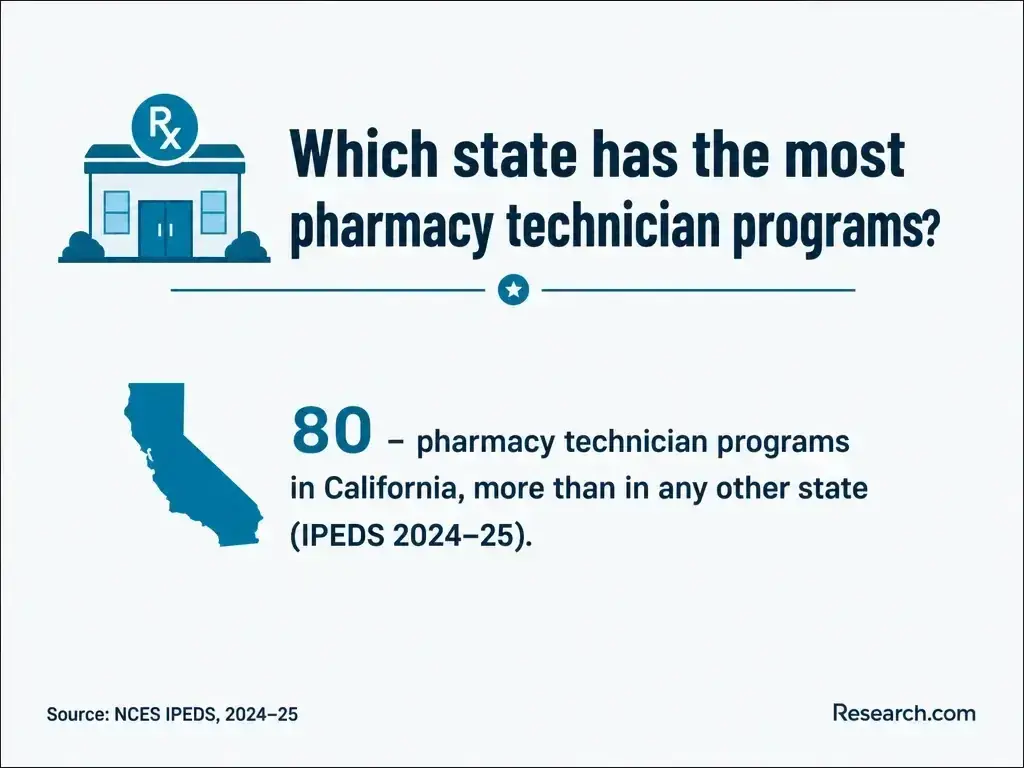
California pharmacy technician registration is the key state authorization for working as a pharmacy technician in San Francisco (California State Board of Pharmacy). National certification is a separate credential: it may provide a qualifying route under board rules or meet an employer preference, but taking a preparatory course does not itself confer certification or registration. Check the board's current application instructions for accepted education and certification routes, documentation, fees, and any applicable background-review requirements before enrolling.
For the Pharmacy Technician Certification Board's Certified Pharmacy Technician credential, candidates must meet its eligibility requirements, which include a recognized education or training program or
First establish your intended workplace and California registration route. Then compare programs on total net cost, time to eligibility, supervised practice, schedule, and documented outcomes. An affordability ranking can narrow the search, but its cost-and-debt score does not measure whether a particular externship suits your career goal.
Use these checks before committing money or leaving a job:
- Ask the California State Board of Pharmacy which current registration pathway the program's credential or planned certification supports.
- Request an itemized cost sheet and identify expenses paid directly to testing bodies, the board, or a placement site.
- Ask who arranges hands-on training, where it occurs, and what happens if a placement is delayed.
- Compare published completion and employment outcomes where available, noting how each provider defines them.
- Ask about credit for prior learning and whether employer training can shorten the route without weakening eligibility.
A warning sign is a provider that promises immediate employment or treats accreditation as proof of state registration eligibility. If your priority is occupational entry, material about an accelerated bachelor's degree online is not a substitute for checking the technician-specific pathway.
The most direct path is registered pharmacy technician work in a community or hospital pharmacy. With experience and employer-specific training, technicians may pursue specialized distribution, inventory, sterile-compounding, lead-technician, or supervisory duties. Additional certification can support a particular role, but its value depends on the employer and does not remove California registration requirements (California State Board of Pharmacy; Pharmacy Technician Certification Board).
If you need income immediately, compare entry-level employer training with a school program before taking on debt. If you want structured practice and placement support, a program may justify its cost - but verify those services. Material on easiest phd degree programs online concerns a different career objective and offers no shortcut into pharmacy technician work.
The U.S. Bureau of Labor Statistics projects 6.4% national employment growth from 2025 to 2035 for pharmacy technicians. That projection describes the United States, not a guaranteed number of openings in San Francisco. It supports considering the occupation, but local hiring decisions should rest on current vacancies, required registration or certification, shifts, and the experience employers request.
When reviewing postings, separate community-pharmacy openings from hospital roles: their schedules and skill expectations may differ. A program with a relevant local placement can be more useful to a hospital-bound student than a cheaper course without access to that setting, provided the added cost and time are manageable.
Most Affordable Pharmacy Technician Schools & Training in San Francisco for 2027
Investing in training is an important decision. Research.com developed the accompanying ranking to help readers compare pharmacy technician programs against other programs in the same occupation and location, rather than against unrelated schools. The team checks multiple education and industry sources to improve the ranking's credibility and accuracy. Only programs with completions reported to the Integrated Postsecondary Education Data System (IPEDS) can appear; an unlisted employer-training route or provider should not be assumed to be inferior or unavailable.
The most affordable ranking scores costs and debt: tuition, cost of attendance, median student debt, and federal loan default rate. Weights are assigned using an entropy-based method, under which indicators that vary more across programs receive more weight. Accreditation, training quality, and employment outcomes are not part of this affordability score. Research.com's separate best-programs methodology considers student outcomes; earnings and return on investment; costs and debt; and quality and recognition. Readers should therefore use the affordability ranking as a shortlist, then verify California registration eligibility and practical training themselves. More detail is available on the Research.com methodology page.
The following sources were used to create the ranking. Some cover education data broadly, while occupation-specific organizations help evaluate relevant recognition where applicable:
- IPEDS database
- National Center for Education Statistics
- College Scorecard database
- Peterson's database
- Commission on Accreditation of Allied Health Education Programs (CAAHEP)
- Accrediting Bureau of Health Education Schools (ABHES)
- Commission on Dental Accreditation (CODA)
- Dental Assisting National Board (DANB)
- National Center for Construction Education and Research (NCCER)
- Apprenticeship.gov Partner Finder
# 2 position
City College of San Francisco - Pharmacy Technician/Assistant.
certificate or diplomaFrequently asked questions about pharmacy technician programs in San Francisco
What is the cheapest way to train as a pharmacy technician?
Compare the net cost of a public-college program with paid employer-sponsored training. Include fees, travel, lost earnings, and any aid or wages; the lowest tuition is not necessarily the lowest-cost route.
Can I become a pharmacy technician through an entirely online course?
Online study can cover academic material, but do not assume a course alone provides the practical experience or qualifying route you need. Check its training arrangements and California registration eligibility with the California State Board of Pharmacy.
Is national certification the same as California registration?
No. A certifying body awards professional certification; the California State Board of Pharmacy controls state registration. Verify both sets of requirements if your intended employer asks for certification.
Do I need to attend trade school before applying for pharmacy technician work?
Not necessarily. Depending on the applicable board pathway and employer, qualifying certification or employer-based training may be an alternative. Confirm the current route before accepting a position or paying for training.
Should I choose the shortest program?
Only if it also supports your registration route and provides practice relevant to your target job. Ask whether its advertised duration includes placement and the steps needed after coursework ends.
- U.S. Bureau of Labor Statistics - Pharmacy Technicians
Used to verify salary, employment outlook, and typical education requirements.
https://www.bls.gov/ooh/healthcare/pharmacy-technicians.htm - NCES College Navigator (IPEDS)
Used to verify programs offered and institutional accreditation.
https://nces.ed.gov/collegenavigator/ - PTCB - Certified Pharmacy Technician (CPhT)
Professional certification reference for graduates of this occupation.
https://www.ptcb.org/credentials/certified-pharmacy-technician - City College of San Francisco - official website
Official school website (programs, tuition, admissions).
https://www.ccsf.edu/