# 1 position
Most Affordable Pharmacy Technician Schools & Training in Lancaster for 2027
Audited and Verified:
Our Editorial and Data Verification Process
Research.com uses government datasets, official education statistics and primary institutional information to support its career and degree guides. Our review process checks factual accuracy, occupational definitions, source dates and the requirements associated with the credentials discussed.
How This Article Was Fact-Checked
Our editorial team verifies salary estimates, employment projections, education requirements and program information against original data providers and official organizations. Salary figures are checked against the relevant occupational definitions and reporting periods. Information about licensure, accreditation and required in-person training is reviewed separately.
Fact-checked and verified on:

Co-Founder and Chief Data Scientist

Reviewed by Karolina Broda
Fact-Checker and Data Verification
Choosing pharmacy technician training in Lancaster means weighing more than the advertised tuition: you need a program that fits California's registration rules and your budget. The U.S. Bureau of Labor Statistics projects 6.4% national employment growth for pharmacy technicians from 2025 to 2035. This guide explains local training routes, costs, credentials, and career prospects. It also features a Most Affordable Pharmacy Technician Trade Schools in Lancaster for 2027 ranking created by the Research.com team of data scientists to help students decide which programs are worth considering.
Key findings about pharmacy technician degrees in Lancaster
- Check eligibility before price: California pharmacy technicians must obtain registration from the California State Board of Pharmacy; a school certificate alone is not a license (California State Board of Pharmacy).
- Use wages as context, not a promise: the national median annual wage was $45,750 in May 2025, across experienced and newly hired technicians alike (U.S. Bureau of Labor Statistics).
- Compare school with paid training: the Pharmacy Technician Certification Board permits its certification-exam eligibility through either a recognized training program or 500 hours of qualifying work experience, making an employer-supported route worth investigating (Pharmacy Technician Certification Board).
Table of Contents
- Most Affordable Pharmacy Technician Schools & Training in Lancaster for 2027
- What can I expect from a pharmacy technician trade school program in Lancaster?
- Where can I work with a pharmacy technician trade school training in Lancaster?
What can I expect from a pharmacy technician trade school program in Lancaster?
Expect instruction in dispensing workflow, medication safety, calculations, inventory, and pharmacy law, followed by practice that lets you apply those skills. Pharmacy technicians work under a pharmacist's supervision; training does not authorize independent clinical decisions (U.S. Bureau of Labor Statistics). In Lancaster, ask specifically where practical experience takes place and whether travel to a pharmacy outside the city is required.
The main routes differ in what you pay for, how you practice, and what you receive at the end:
| Training route | Typical credential or result | Best fit and key check |
| Career-school certificate or diploma | School-issued occupational credential | Students seeking structured instruction; verify labs, placement arrangements, and the California registration route. |
| Public-college certificate | College-issued occupational certificate | Students able to compare public-college pricing and schedules; check commute, availability, and required practical work. |
| Employer-sponsored training | Work experience; a school credential is not assured | Applicants who can secure supervised training or an eligible entry role; confirm wages, training duties, and how registration requirements will be met. |
A similarly named certificate does not guarantee equivalent worksite experience or eligibility. Ask a provider to identify its California registration-qualifying basis in writing before paying a deposit.
Where can I work with a pharmacy technician trade school training in Lancaster?
Potential settings include community pharmacies, hospital pharmacies, health-system outpatient pharmacies, and other medication-dispensing operations. Retail roles may emphasize prescriptions, insurance claims, and customer service; hospital roles may put more weight on medication distribution, sterile-workflow preparation, and coordination with clinical staff. Duties depend on employer policy, supervision, and training (U.S. Bureau of Labor Statistics).
For an Antelope Valley applicant, a program's placement geography matters as much as its classroom address. Ask which employers have hosted recent students, whether placements are arranged or student-sourced, and what commute and shift hours were required. A placement opportunity is not a job offer.
The U.S. median annual wage was $45,750 in May 2025 for pharmacy technicians, according to the U.S. Bureau of Labor Statistics. That is a national, occupation-wide midpoint - not a Lancaster starting wage or a forecast of what a program graduate will earn. Employer type, shift, experience, and specialized duties can change an individual offer.
For a useful local return-on-investment estimate, compare actual Lancaster-area job postings or written offers with the program's full cost and the pay you would give up during training. A cheaper course is not necessarily the better investment if its schedule delays entry or its practical training does not meet an employer's needs. Readers also comparing best paying college majors should keep those broader earnings figures separate from pharmacy technician wages.
Completion time depends on the provider's clock hours, calendar, attendance rules, and access to practical placements. A short, intensive certificate may get a student through classes sooner than a part-time schedule, but neither is automatically the faster route to work if required practice or California registration remains unfinished.
Request a written timeline that separates classroom hours, lab hours, worksite hours, any certification-exam preparation, and the steps needed to apply for state registration. Ask whether placement waits can extend the advertised end date. If you need paid work while learning, an employer-supported route may reduce lost earnings, though available positions and training arrangements vary.
A pharmacy technician occupational credential is also a different goal from 12 month master's programs: compare timelines only among pathways that lead to the job you actually want.
Online delivery can make terminology, calculations, law, and other classroom material easier to fit around work. On-campus instruction offers scheduled access to instructors and equipment. Either format can include in-person labs or pharmacy-site experience; "online" does not establish that practical competencies - or California registration requirements - have been satisfied.
Before choosing a school for trade skills online, request its attendance and placement plan. Find out who secures a supervised site near Lancaster, which activities require travel, what happens if a site falls through, and whether the provider's training qualifies under the route you intend to use for California registration. An on-campus program deserves the same scrutiny: scheduled labs are not necessarily worksite experience.
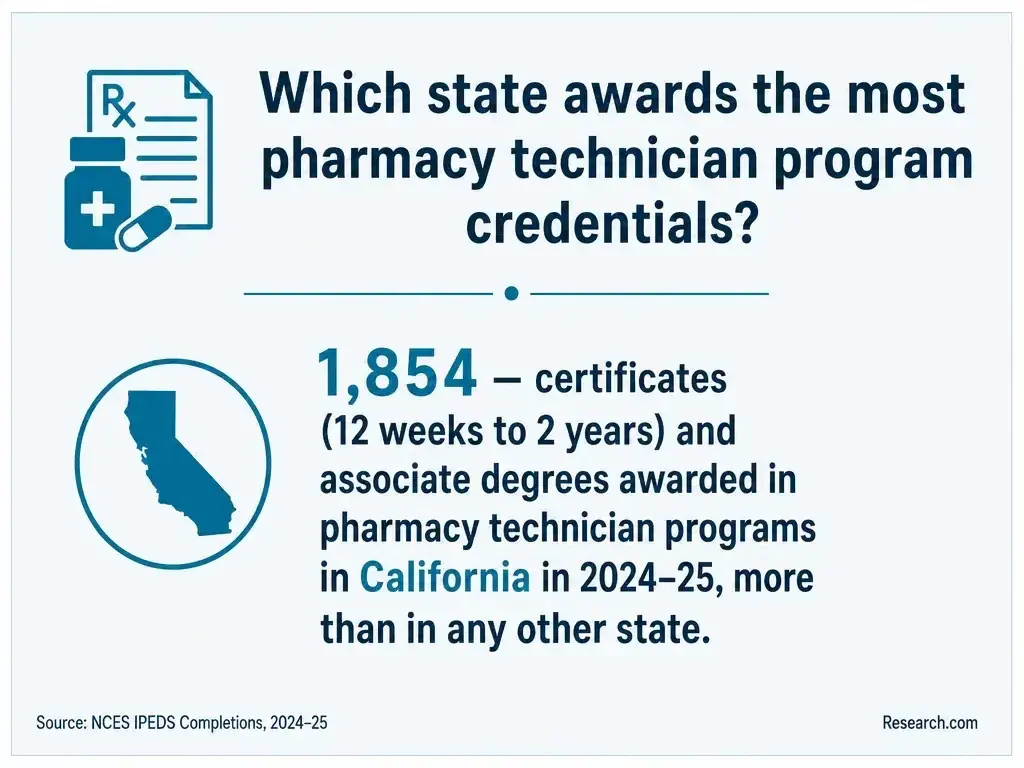
There is no reliable single Lancaster-wide average that covers career schools, public-college certificates, and employer training on the same basis. Published tuition is only the starting point. Request a written, itemized cost to become job-ready from every provider you are seriously considering.
That estimate should include mandatory fees, books or software, uniforms, supplies, any required screening, certification-exam and California application costs, and travel to labs or pharmacy sites. Add the earnings you might forgo if the schedule reduces your working hours. Then subtract only aid or employer support for which you are actually eligible; paid training can change the comparison substantially.
Federal aid depends on the institution and eligible program, not merely on a school calling itself accredited. If aid is essential, verify the specific program's eligibility with its financial-aid office; listings of accredited online schools that accept financial aid are not a substitute for that confirmation (Federal Student Aid). Compare written net-cost estimates rather than advertised tuition alone.
A training provider may award a certificate or diploma for completing its curriculum. That school-issued credential is distinct from professional certification, such as a credential earned through an eligible examination, and from California pharmacy technician registration, which is issued by the state board. Neither a graduation document nor certification should be described as the state registration itself (California State Board of Pharmacy; Pharmacy Technician Certification Board).
Before enrolling, ask the school to name the exact award, identify any exam for which it prepares students, and explain the documented basis on which its training supports a California registration application. If you might continue training later, ask whether another provider has agreed to accept the coursework; a "stackable" label is not a transfer-credit guarantee.
Schools set their own admission standards and may ask for proof of prior schooling, an application, and readiness for calculations or English-language coursework. A pharmacy placement may impose additional screening or scheduling conditions. Get the school's admission policy and placement conditions separately: acceptance into training does not ensure access to every worksite or approval for state registration.
California's registration application has its own education or qualification documentation and background-review requirements (California State Board of Pharmacy). Before paying nonrefundable charges, review the board's current application instructions and ask the program how applicants with a potentially relevant background concern can determine whether registration may be affected. Only the board can decide an individual application.
A useful curriculum connects medication names and dosage forms with prescription processing, measurement and calculations, inventory controls, insurance workflows, patient privacy, and error prevention. Labs should let students practice tasks such as interpreting prescriptions and checking calculations before they encounter a busy pharmacy workflow. Technicians carry out assigned tasks under pharmacist supervision, making accuracy and communication as important as speed (U.S. Bureau of Labor Statistics).
Ask to see a course outline and a separate description of lab and worksite activities. A program focused mainly on exam questions may fit someone who already has supervised pharmacy experience, but it may be a poor substitute for hands-on practice for a first-time applicant. Confirm which specialized activities, if any, students actually practice rather than assuming every pharmacy setting is covered.
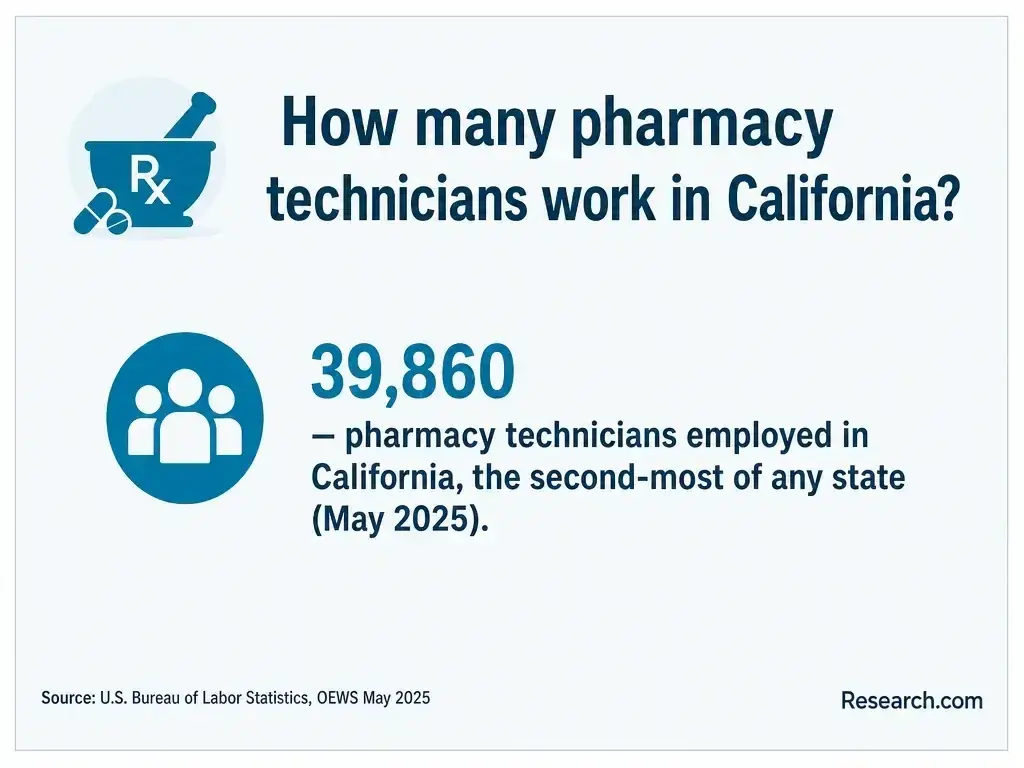
California requires pharmacy technician registration with the California State Board of Pharmacy. The board provides qualifying routes that include specified education or training and recognized certification pathways, subject to its current application requirements. Graduating does not itself grant registration, and a nationally issued certification is not the same as the state credential (California State Board of Pharmacy).
For the Pharmacy Technician Certification Board's CPhT route, eligibility for its examination can be based on a PTCB-recognized education or training program or qualifying work experience; its published work-experience route specifies 500 hours (Pharmacy Technician Certification Board). Check the certifier's current rules and the California board's current accepted documentation independently. Institutional accreditation, program accreditation, school authorization, certification, and state registration answer different questions; none should be assumed to replace another.
Start with your intended workplace and California registration route, then compare programs that can realistically support both. For local career-school comparisons, High Desert Medical College and San Joaquin Valley College-Lancaster are names to investigate, not endorsements; request current pharmacy technician program details directly rather than assuming an offering, schedule, or price has stayed the same.
Use the same questions with each provider so an attractive advertised price does not hide a weak fit:
- What credential is awarded, and which current California registration-qualifying route does the training support?
- How many classroom, lab, and supervised worksite hours are required, and who arranges the worksite?
- What is the complete written cost, including required supplies, screening, exams, application charges, and placement travel?
- What are the program's completion requirements, placement constraints, refund terms, and available student-support services?
Verify the institution's accreditation, any claimed pharmacy-technician program recognition, and California school authorization with the relevant issuer; verify registration rules with the state board. Do not treat an affordability ranking or accreditation as proof of licensure eligibility. If flexibility is the deciding factor, comparing easy online degree programs will not answer the more important pharmacy technician question: where and how will you gain qualifying practical training?
Training can support entry into supervised pharmacy technician work, with later moves into different settings or duties as experience and employer requirements permit. A technician interested in hospital work, for example, should ask about medication-distribution and relevant practical training; someone aiming for a community pharmacy should examine prescription-processing and customer-service practice. Changing settings may require additional employer training.
Experience can also support lead-technician or workflow-coordination responsibilities where employers offer them. Additional certification may help demonstrate skills, but it does not independently authorize duties beyond an employer's policies or California requirements. Choose initial training for the job you intend to seek first - not for a possible advanced title that may require years of experience.
The U.S. Bureau of Labor Statistics projects 6.4% growth nationally from 2025 to 2035 for pharmacy technicians. This indicates demand across the occupation, not the number of openings in Lancaster or a guarantee of placement. Local opportunity will depend on hiring at accessible pharmacies and health systems, commuting range, schedule availability, and competition for particular roles.
Use the national outlook as a reason to investigate - not as a reason to borrow without a plan. Before enrolling, review current openings within a commute you would accept and compare their stated registration, certification, experience, and shift requirements with what the program will provide. That check is especially valuable if your goal is a hospital role rather than any available entry position.
Most Affordable Pharmacy Technician Schools & Training in Lancaster for 2027
Investing in training is an important decision. Research.com designed this ranking to help readers compare affordable pharmacy technician programs against other eligible programs in the same occupation and location, rather than against unrelated schools. The team checks multiple education and industry sources to support the ranking's quality, credibility, and accuracy.
The most affordable ranking evaluates tuition, cost of attendance, median student debt, and federal loan default rates. It uses an entropy-based method to distribute weights among those measures. Accreditation, student support, earnings, and completion are not part of its affordability score; readers should assess those separately before enrolling. Only programs with completions reported to IPEDS are eligible, so a missing employer-training or other provider should not be assumed to be unavailable or poor quality.
The ranking draws on the following sources. Some industry-specific sources support Research.com's broader trade-school research rather than pharmacy technician accreditation or California licensing decisions:
- IPEDS database - program completions and institutional education data.
- National Center for Education Statistics - federal education data and definitions.
- College Scorecard database - available cost, debt, and outcomes measures.
- Peterson's database - supplementary institutional information.
- Commission on Accreditation of Allied Health Education Programs (CAAHEP) - allied-health accreditation information.
- Accrediting Bureau of Health Education Schools (ABHES) - health-education accreditation information.
- Commission on Dental Accreditation (CODA) - dental-program accreditation information.
- Dental Assisting National Board (DANB) - dental-assisting credential information.
- National Center for Construction Education and Research (NCCER) - construction-training and credential information.
- Apprenticeship.gov Partner Finder - registered-apprenticeship connections.
Use the ranking to narrow your cost comparison, then confirm each program's current charges, practical training, and California registration pathway directly. More detail on the ranking process is available in Research.com's methodology.
# 2 position
San Joaquin Valley College-Lancaster - Pharmacy Technician/Assistant.
associate# 3 position
San Joaquin Valley College-Lancaster - Pharmacy Technician/Assistant.
certificate or diplomaFrequently asked questions about pharmacy technician programs in Lancaster
What is the cheapest way to train as a pharmacy technician?
Compare complete net costs for eligible school programs with any paid employer-training opportunities you can secure. Include fees, travel, lost earnings, and the route to California registration; the lowest tuition may not produce the lowest total cost.
Can I become a pharmacy technician in Lancaster without trade school?
A school program is not the only possible route. California recognizes qualifying pathways beyond a particular career-school certificate, but you must satisfy the board's current registration requirements. Check an employer-training or certification plan against those rules before relying on it (California State Board of Pharmacy).
Can I complete pharmacy technician training entirely online?
Some coursework can be remote, but ask how the program provides practical training and documents any required experience. An online completion certificate alone does not establish eligibility for California registration.
Is national certification the same as California registration?
No. A certifying organization issues professional certification; the California State Board of Pharmacy issues state registration. Verify both sets of requirements if you plan to pursue certification (California State Board of Pharmacy; Pharmacy Technician Certification Board).
Are pharmacy technician wages in Lancaster the same as the national median?
Not necessarily. The national median covers workers across the country and experience levels. Use current local job offers and postings to estimate likely starting pay, then compare that estimate with your training cost (U.S. Bureau of Labor Statistics).
- U.S. Bureau of Labor Statistics - Pharmacy Technicians
Used to verify salary, employment outlook, and typical education requirements.
https://www.bls.gov/ooh/healthcare/pharmacy-technicians.htm - NCES College Navigator (IPEDS)
Used to verify programs offered and institutional accreditation.
https://nces.ed.gov/collegenavigator/ - PTCB - Certified Pharmacy Technician (CPhT)
Professional certification reference for graduates of this occupation.
https://www.ptcb.org/credentials/certified-pharmacy-technician - High Desert Medical College - official website
Official school website (programs, tuition, admissions).
https://www.hdmc.edu/ - San Joaquin Valley College-Lancaster - official website
Official school website (programs, tuition, admissions).
https://www.sjvc.edu/