# 1 position

Audited and Verified:
Our Editorial and Data Verification Process
Research.com uses government datasets, official education statistics and primary institutional information to support its career and degree guides. Our review process checks factual accuracy, occupational definitions, source dates and the requirements associated with the credentials discussed.
How This Article Was Fact-Checked
Our editorial team verifies salary estimates, employment projections, education requirements and program information against original data providers and official organizations. Salary figures are checked against the relevant occupational definitions and reporting periods. Information about licensure, accreditation and required in-person training is reviewed separately.
Fact-checked and verified on:

Co-Founder and Chief Data Scientist

Reviewed by Karolina Broda
Fact-Checker and Data Verification
Choosing dental assistant training near Southaven means comparing more than tuition: you need a credential, hands-on practice, and a route into the duties you want to perform. The U.S. Bureau of Labor Statistics projects 7.4% national growth in dental assistant employment from 2025 to 2035. This guide explains local training choices, Mississippi requirements, costs, and career prospects. It also accompanies the Best Dental Assistant Trade Schools in Southaven for 2027 ranking, created by the Research.com team of data scientists to help students identify programs worth considering.
Expect instruction in chairside assisting, instrument preparation, infection control, patient communication, dental records, and office workflow. A useful program moves beyond demonstrations to supervised practice in a lab and, where offered, a dental office. Ask how students practice four-handed dentistry, sterilization, and patient-facing work - and whether an externship is arranged or left to the student. The U.S. Bureau of Labor Statistics describes both clinical and administrative duties in this occupation.
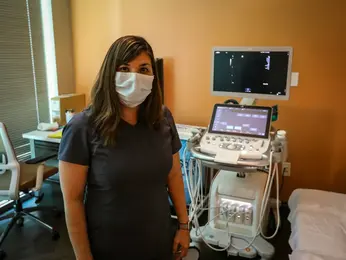
Concorde Career College-Southaven is a school to investigate if you want a structured local program. Request its current dental assisting catalog, schedule, clinical-placement terms, credential awarded, and complete price directly; program offerings and requirements can change. A shorter employer-training route may suit someone who has found an office willing to train them, but the duties an employee can perform still depend on applicable state rules and demonstrated competence.
Dental offices are the main setting for dental assistants; possible workplaces also include specialty practices such as orthodontic and oral surgery offices (U.S. Bureau of Labor Statistics). Southaven residents can consider jobs in DeSoto County and across the Memphis metropolitan area. That wider search can improve access to openings, but a Tennessee position requires checking Tennessee's rules rather than assuming Mississippi training grants the same permissions there.
Ask prospective employers which duties they assign to new assistants, whether they train new hires, and whether the schedule includes evenings or multiple office locations. If you are still deciding what can you do with a trade school diploma, distinguish dental assisting from jobs that require a different credential; the diploma's value depends on the specific occupation it prepares you to enter.
A reliable Southaven-specific median is not established here. The national median for dental assistants was $48,070 annually in May 2025 (U.S. Bureau of Labor Statistics). It describes workers at different experience levels across the United States, not what a newly trained assistant in Southaven should expect to be offered.
For a decision you can use, compare current DeSoto County and Memphis-area postings that match your intended duties, then ask employers about hourly pay, benefits, paid training, and required credentials. Compare offers on the same basis: a higher hourly rate may be less attractive if hours are limited or the commute across the state line substantially raises your costs.
The answer depends on the program's published calendar, attendance schedule, and clinical requirements; there is no single Southaven completion time. Certificate and diploma programs may offer a more direct route to entry than an associate-degree program, while office-based training can let someone begin earning sooner. Neither the shortest schedule nor the longest credential automatically provides better preparation. Request the current catalog's total clock or contact hours, lab hours, externship hours, and expected completion date.
If you are weighing a broader academic credential against a focused occupational program, what is the easiest associate's degree to get is a different question from which training best prepares you for chairside work. Prioritize required skills and worksite experience over a credential's name or advertised speed.
Online coursework can cover terminology, records, and some infection-control concepts. It cannot, by itself, show that you can position instruments, maintain a sterile field, or assist a patient safely. Campus labs and supervised office experience provide opportunities to practice and be assessed on those tasks. A hybrid program may reduce classroom commuting, but Southaven students should still budget for travel to required labs and clinical sites.
Before enrolling in a program advertised as online, get written answers about where practical assessments and externships take place, who arranges placements, and how its training aligns with any duties you intend to perform in Mississippi or Tennessee. Do not assume online completion alone establishes certification eligibility or permission to perform radiography; verify those matters with the relevant board and certifying organization (Mississippi State Board of Dental Examiners; Tennessee Board of Dentistry; Dental Assisting National Board).
There is no verified Southaven-wide average that fairly represents private programs, public options, and employer training together. Obtain a current itemized quote rather than relying on a tuition-only advertisement. The comparison below identifies costs that can change which route is affordable.
| Route | Costs to verify | Potential offset |
| School-based certificate or diploma | Tuition, mandatory fees, books, uniforms, supplies, clinical travel, and any exam fees | Grants, scholarships, or eligible student aid, if available |
| Employer-based training | Transport, required supplies, and any separate courses or exams | Wages or employer-paid instruction, if offered |
| Either route | Lost earnings while training and the cost of a delayed start to work | Flexible scheduling or paid training, where available |
Also ask whether background checks, health requirements, and certification applications are included in the quoted price. Federal student aid depends on both institutional and program eligibility; enrollment at a school alone does not establish eligibility (Federal Student Aid). For a realistic return-on-investment estimate, consider aid, borrowing, completion likelihood, earnings before and after training, and how long you expect to work - not just sticker price.
A school may award a certificate, diploma, or associate degree; the exact award depends on its program. An employer-training route may provide work experience without a school credential. These are distinct from professional certification: the Dental Assisting National Board administers its own credentials and eligibility requirements. Confirm the precise award in the catalog and ask whether the curriculum meets the eligibility route for any certification you intend to pursue (Dental Assisting National Board).
Institutional accreditation concerns the school. CODA accreditation concerns a dental assisting program when that program holds it; state school authorization and Mississippi rules governing dental duties answer different questions (Commission on Dental Accreditation; Mississippi State Board of Dental Examiners). Do not infer one from another. If your goal is a focused occupational credential rather than an academic degree, compare it with other certification that pay well options on entry requirements and actual job fit, not the credential label alone.
Requirements vary by provider. Ask for the current admissions checklist, including the school's education prerequisite, application steps, start dates, and any health, immunization, background-check, or clinical-site conditions. A clinical placement may impose requirements beyond those needed simply to enroll. Request the policy in writing before paying a nonrefundable fee.
An employer-training position has a different entry process: the office decides whom to hire and what training it will provide. If you have prior dental-office experience, ask whether a school offers documented prior-learning credit or advanced standing; do not assume experience automatically reduces required coursework or satisfies a certifier's eligibility rules.
A job-focused curriculum should connect anatomy and dental terminology to chairside procedures, infection prevention, equipment handling, patient preparation, documentation, and front-office communication (U.S. Bureau of Labor Statistics). Radiography instruction needs particular scrutiny: learning about X-rays in class is not the same as meeting a state's conditions for performing them.
Ask to see the skills checklist used in lab and clinical assessments. It should make clear which tasks students perform, which they only observe, and who verifies competence. That distinction matters more than a long course-title list when comparing programs that promise similar credentials.
Do not treat dental assisting as a single, uniformly licensed set of duties. Mississippi's rules distinguish what an assistant may do under a dentist's supervision from activities subject to additional conditions. Check the Mississippi State Board of Dental Examiners' current rules for radiography and any expanded function you want to perform. A school credential or optional national certification does not, by itself, override state restrictions (Mississippi State Board of Dental Examiners; Dental Assisting National Board).
Cross-border work is a practical issue for Southaven applicants: Tennessee regulates dental assisting duties under its own rules. If Memphis employment is part of your plan, ask the Tennessee Board of Dentistry whether your proposed training satisfies its requirements before enrolling. Obtain the answer for the specific duty, not just a general statement that a program "prepares dental assistants."
The best investment is the route that gets you competent for your intended job at a cost and schedule you can sustain. Use the ranking to identify a school to investigate, then compare its current offer with any realistic employer-training opportunity. Work through these checks before committing:
A red flag is an "all-online" clinical promise without a practical assessment plan, or a claim that accreditation alone permits every dental duty. Another is a price quote that excludes mandatory supplies or clinical travel. Neither a high ranking nor a low tuition figure resolves those gaps.
An assistant can build experience in general dentistry, then seek work in a specialty practice, take on more office coordination, or pursue duties for which additional training or state-specific conditions apply (U.S. Bureau of Labor Statistics; Mississippi State Board of Dental Examiners). Ask employers which progression is available in their office: a specialty title does not necessarily mean expanded clinical authority or higher pay.
Dental assisting is a direct occupational-entry decision, not a shortcut into an unrelated profession. Guides about what is the shortest masters degree or a 12 month doctoral program address different goals; neither changes the practical training or state rules relevant to this job.
National dental assistant employment is projected to grow 7.4% from 2025 to 2035 (U.S. Bureau of Labor Statistics, Employment Projections). That supports considering the occupation, but it is not a forecast for Southaven or a promise of an opening when you finish training.
For a local read, review current vacancies on both sides of the state line and note repeated requirements for experience, radiography, schedules, and specialty skills. Those requirements can tell you whether an accelerated program offers enough supervised practice - or whether an employer willing to train a beginner is the more practical entry route.
Investing in training is a consequential decision, so Research.com compares programs with others serving the same occupation and location rather than treating every trade-school option as interchangeable. The best-program ranking assesses student completion and retention; earnings after completion and relative to attendance cost; tuition, debt, and loan default; and institutional accreditation, occupation-relevant recognition, and student support. Only programs with completions reported to IPEDS are eligible. That limit means an unranked employer-training option is not necessarily a poor one.
Programmatic accreditation or relevant industry recognition accounts for 20% of the best-program score, institutional accreditation for 10%, and student support for 10%. Student outcomes, earnings, and costs make up the remaining 60%, with weights distributed by an entropy-based method that gives more weight to indicators that distinguish programs. Most-affordable rankings score only tuition, attendance cost, debt, and federal loan default using entropy-based weights; accreditation and other quality measures do not enter that score. The team uses the following sources to check comparable education, outcomes, recognition, and training information; some cover trades beyond dental assisting:
The ranking can narrow your shortlist, but it cannot establish whether a particular graduate may perform a regulated duty in Mississippi. Check current program details and board rules before paying a deposit. Research.com explains the scoring process further on its methodology page.
# 1 position
# 2 position
It may be if the program supplies hands-on skills and preparation for the duties you want at a manageable total cost. Compare its price and completion requirements with available paid employer training before deciding.
Employer-based training can be a route into some assistant work. Confirm what the office will teach and which duties Mississippi allows you to perform; additional requirements may apply to particular functions (Mississippi State Board of Dental Examiners).
Some theory may be online, but chairside skills require in-person practice and assessment. Ask where labs and any clinical placement occur.
Not automatically for every duty. Check Tennessee's requirements for the work you intend to do and confirm how your training fits them (Tennessee Board of Dentistry).
No. A school award and Dental Assisting National Board certification are separate credentials with separate requirements (Dental Assisting National Board).