Best Cybersecurity Associate Degree Programs & Schools in Nevada for 2027
Audited and Verified:
Our Editorial and Data Verification Process
Research.com uses government datasets, official education statistics and primary institutional information to support its career and degree guides. Our review process checks factual accuracy, occupational definitions, source dates and the requirements associated with the credentials discussed.
How This Article Was Fact-Checked
Our editorial team verifies salary estimates, employment projections, education requirements and program information against original data providers and official organizations. Salary figures are checked against the relevant occupational definitions and reporting periods. Information about licensure, accreditation and required in-person training is reviewed separately.
Fact-checked and verified on:

Co-Founder and Chief Data Scientist

Reviewed by Karolina Broda
Fact-Checker and Data Verification
Choosing a cybersecurity associate degree in Nevada means deciding whether a program will build practical skills, fit your budget, and lead toward the work you want. The stakes are real: the U.S. Bureau of Labor Statistics projects 21% national growth for information security analysts from 2025 to 2035, though that occupation is not typically an immediate first job for graduates. The Research.com team of data scientists created its Best Cybersecurity Associate Degree Programs in Nevada for 2027 ranking to help students identify programs worth considering. This guide explains how to judge those options for yourself.
Key findings about associate cybersecurity degrees in Nevada
- Choose by goal: a career-focused Associate of Applied Science (AAS) generally emphasizes technical job preparation, while a transfer-oriented Associate of Science (AS) warrants closer review of how its credits will apply to further study.
- Compare the full cost - not just tuition - of Nevada options such as the College of Southern Nevada and Truckee Meadows Community College, including fees, equipment, commuting, and time away from work.
- The BLS reports a $129,180 U.S. median for information security analysts in May 2025, but that occupation commonly requires substantial preparation or experience; it is not a reliable starting-salary estimate for a new associate degree graduate.
Table of Contents
- Best Cybersecurity Associate Degree Programs & Schools in Nevada for 2027
- What can I expect from an associate cybersecurity degree in Nevada?
- Where can I work with an associate cybersecurity degree in Nevada?
What can I expect from an associate cybersecurity degree in Nevada?
Expect a mix of general education, computer networking, systems administration, and security coursework, with labs that let you configure, monitor, and troubleshoot systems. Cybersecurity work involves protecting networks and information, but employers also need people who can document incidents, communicate clearly, and understand how systems normally operate before diagnosing a threat.
The degree title matters less than its requirements. A career-focused AAS may devote more space to applied networking and security; an AS may preserve more broadly transferable coursework. Ask the College of Southern Nevada or Truckee Meadows Community College for the current degree map, the precise degree awarded, lab requirements, and any written transfer agreement. A similarly named program elsewhere may have a substantially different balance of coursework. Neither an associate degree nor institutional accreditation alone guarantees a security job or professional certification.
Where can I work with an associate cybersecurity degree in Nevada?
Potential workplaces include managed IT service providers, healthcare organizations, public agencies, schools, financial services firms, and hospitality businesses. In Nevada, large hospitality operations can offer exposure to payment systems, guest data, and extensive networks; healthcare and government settings may place particular emphasis on access controls and documentation. An employer's actual openings - not its industry alone - determine whether it hires associate degree graduates into security work.
Location affects the search. Students near Las Vegas or Reno may have more nearby organizations to approach for IT support, internships, and eventual security work. Rural students should ask how a program provides lab access and employer connections without assuming that a remote security job will be available immediately. When comparing options, look for evidence of local employer projects or work-based learning rather than a broad promise of "industry connections."
Pay depends heavily on the job, experience, employer, and location - not simply on holding the degree. The U.S. Bureau of Labor Statistics (BLS) reports a May 2025 national median annual wage of $129,180 for information security analysts. That figure describes workers already in the occupation across experience levels; it should not be used as a Nevada wage estimate or as expected first-year pay for an associate degree graduate.
A more realistic first-job search may include IT support or junior network operations roles that build the troubleshooting experience needed for later security positions. Compare current Nevada job advertisements for those specific titles and locations, and ask each college for program-specific placement information, including the number of respondents and the jobs counted. If a school quotes an earnings figure, check whether it measures graduates of that degree or all students at the institution.
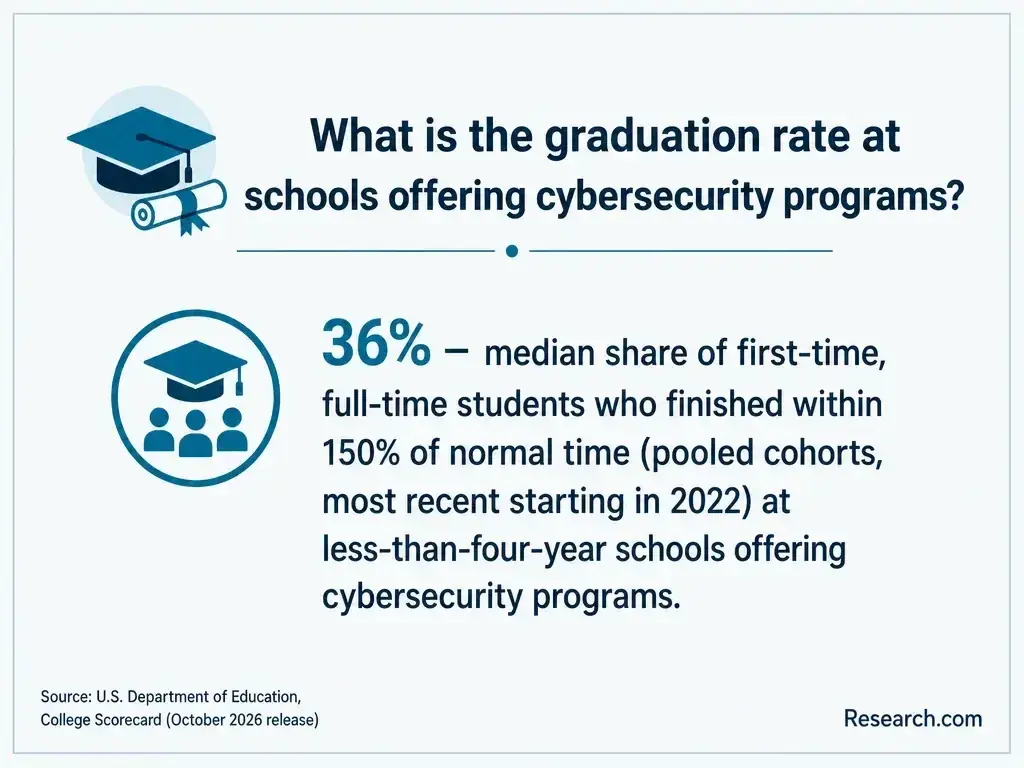
An associate degree is generally planned around two academic years of full-time study, but the actual timeline depends on required credits, course sequencing, placement results, transfer credits, and whether key technical courses are offered every term. Part-time study can preserve income while extending the time to completion; a compressed schedule may shorten the calendar but make networking and security labs harder to absorb.
Ask for a term-by-term plan showing prerequisites and when each required course runs. If speed is central to your decision, compare the published schedule with broader fast associate degree online options, then verify that any accelerated cybersecurity option still includes the practical work you need. Prior coursework or approved prior-learning credit may shorten a plan, but only the receiving college can confirm what applies to its degree.
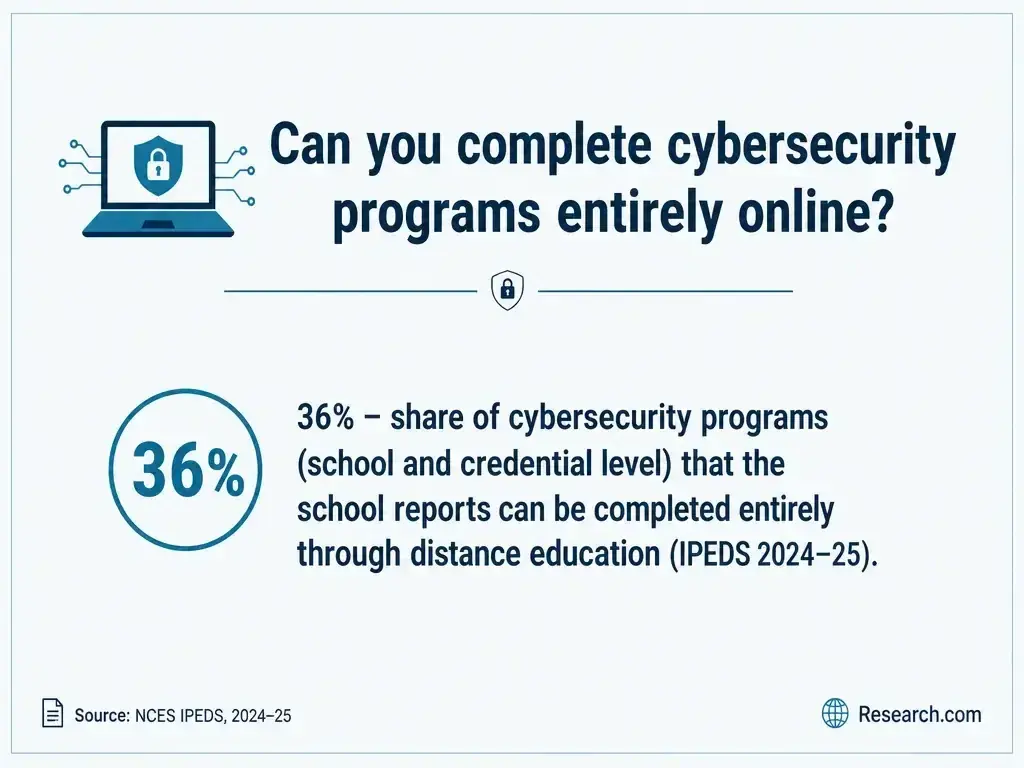
Online delivery can reduce commuting and make lectures or written assignments easier to schedule around work. Campus delivery can make it simpler to use lab equipment, get immediate troubleshooting help, and meet local classmates or employers. Either format can teach hands-on skills if students have meaningful access to virtual machines, network simulations, equipment, and feedback.
Before choosing an online or hybrid degree, ask which courses are fully remote, whether labs require scheduled campus visits, and how exams or employer placements work. A program appearing among the best ranked online universities is not automatically the right cybersecurity associate degree: inspect the specific degree map and lab access. For students outside Nevada's major metro areas, the decisive issue may be whether required in-person sessions are feasible - not whether lectures are advertised as online.
There is no single dependable price for every Nevada cybersecurity associate degree. Published tuition and mandatory fees depend on the institution, enrollment load, and applicable residency rules; the amount a student ultimately pays also depends on aid. Use the College of Southern Nevada and Truckee Meadows Community College's current tuition schedules and degree maps to build a personalized estimate rather than treating an annual tuition quote as the cost of completion.
For cybersecurity, include a suitable computer and internet access, textbooks or software, possible certification exam charges, and travel to required labs or work sites. Living expenses and earnings forgone while studying can exceed direct classroom expenses. An affordable-looking accelerated plan may cost more if it forces you to reduce work hours; a slower plan can cost more if additional terms add fees. Compare total cost through graduation against your likely aid, borrowing, and realistic first-job prospects.
Eligible students can use the Free Application for Federal Student Aid (FAFSA) to be considered for federal grants, loans, and work-study at participating institutions, subject to federal and school requirements (Federal Student Aid). Nevada students should also check institution-administered scholarships and eligibility rules for state programs such as the Nevada Promise Scholarship and Governor Guinn Millennium Scholarship; neither should be assumed to cover every expense or apply to every student (Nevada System of Higher Education).
Request a written aid estimate for the exact program and enrollment pattern you intend to follow. Ask whether a change to part-time study affects awards and whether an employer will reimburse tuition or certification exams. Compare net cost and debt at completion, not the largest advertised scholarship: aid that depends on continuing eligibility may leave a gap in later terms.
Start with the college's current admission and placement policies, then check prerequisites for the first networking and security courses. An applicant may be admitted to a college yet still need preparatory coursework before entering a required technical sequence. Prior IT experience can help, but ask whether the school awards credit for it rather than assuming it will waive a course.
Verify the institution's accreditation through a recognized accreditor and confirm that the specific degree is currently offered and authorized for your intended mode of study. Institutional accreditation is different from a cybersecurity curriculum's industry recognition, and neither establishes that credits will transfer. A list of nationally accredited colleges can prompt further research, but the receiving institution must decide whether particular courses meet its requirements. Nevada does not require an occupational license simply to work in a general cybersecurity role; individual employers may impose other hiring conditions.
Common subjects include networking fundamentals, operating systems, scripting, security principles, system administration, and incident response, alongside general education in writing, mathematics, or communication. Check the actual catalog: course names alone cannot show whether students repeatedly practice securing systems, reading logs, explaining findings, and working within authorized lab environments.
Ask to see a sample lab or capstone assignment and find out whether it is completed individually, in teams, or with an employer. A program emphasizing only security terminology may be a weaker fit for a first IT role than one that builds strong networking and troubleshooting foundations. Conversely, someone already working in IT may value more advanced security exercises. For either student, the sequence of prerequisites matters as much as the course list.
At the associate level, specialization often comes through electives, projects, or a program's overall emphasis rather than a formally named concentration. Compare whether available coursework leans toward network defense, systems administration, cloud security, or digital investigations. A network-focused route suits someone seeking infrastructure or operations work; incident-focused projects may better suit a student interested in monitoring and response.
Do not choose a specialization from its label alone. Ask which tools students use, how often they practice, and whether the choice changes required courses or delays graduation. Cybersecurity certifications are separate from the degree: a college may help students prepare for an exam, but preparation does not award certification, and certification is not generally a Nevada occupational license.
Start with the outcome you need: an initial IT job, a move from existing IT work into security, or credits intended for further study. Then compare programs against that goal - not just their ranking position. Use the same questions with each admissions office so that differences become visible.
- Confirm the exact degree awarded, current course sequence, prerequisites, and projected completion date at your enrollment pace.
- Ask for specific lab examples, access arrangements, employer projects, and any internship requirements or opportunities.
- Request a written estimate covering tuition, required fees, equipment, travel, and likely aid through completion.
- If you intend to transfer, obtain written guidance from the receiving institution on how each required course will count.
- Ask what jobs recent graduates entered and how the college collected and verified that information.
Watch for red flags: a quoted tuition figure that omits required costs, a transfer promise without course-level confirmation, or an implied guarantee of a security analyst job. If you are weighing a later fastest bachelors degree route, verify transfer requirements before selecting a career-focused associate degree; an AAS may not apply in the same way as an AS. The better investment is the program you can afford and finish that moves you toward your specific next step.
An associate degree can support applications for IT support, network support, or junior systems roles, especially when a student can demonstrate lab work and troubleshooting ability. Some graduates with prior IT experience may be ready to pursue security operations or junior security positions. Employers set their own experience requirements, so a security-focused degree title does not by itself make an applicant competitive for every analyst opening.
A practical progression is to build evidence of reliable IT work, seek security-related responsibilities, and consider an employer-recognized certification when it matches target job postings. Students pursuing further study should preserve syllabi and verify transfer credit early. More advanced degrees - including those discussed in resources on easiest master degrees - are not entry requirements for general cybersecurity work, and an associate degree graduate need not commit to that path before testing the local job market.
The national outlook is strong for one established security occupation: BLS projects 21% growth in information security analyst employment from 2025 to 2035. This is a U.S. occupational projection, not a forecast of Nevada vacancies or a prediction of jobs available to new associate degree graduates. Analyst openings may demand experience that an entry-level applicant has yet to build.
Use current postings in the Nevada area where you can work to test demand. Separate genuinely entry-level IT roles from security jobs requesting prior network or systems experience, and note whether employers mention particular tools, certifications, or shift schedules. That exercise makes the degree decision concrete: if nearby security postings consistently require experience, choose a program that also prepares you for the IT work through which you can gain it.
Best Cybersecurity Associate Degree Programs & Schools in Nevada for 2027
Investing in an associate degree is a consequential decision. Research.com created the accompanying ranking to help readers compare programs against other programs serving the same occupation and location, rather than against unrelated schools. Only programs with completions reported to the Integrated Postsecondary Education Data System (IPEDS) are eligible; absence from the ranking does not establish that another program is unavailable or poor quality.
The best-programs model evaluates student outcomes, earnings and return on investment, costs and debt, and quality and recognition. Relevant programmatic accreditation or industry recognition receives 20% of the score, institutional accreditation 10%, and student support services 10%. The remaining 60% covers completion and full- and part-time retention; earnings one year after completion and relative to annual attendance cost; and tuition, attendance cost, debt - including for students who withdrew - and federal loan default rates. An entropy-based method distributes that 60% among indicators according to how much they vary across programs. The separate most-affordable model scores only costs and debt, using entropy-based weights; it does not include accreditation or other quality indicators.
Research.com draws on the following sources when creating its occupation-specific rankings. Some recognition sources below concern other occupations and should not be mistaken for cybersecurity-specific accreditors.
- IPEDS database - institutional reporting on completions, enrollment, outcomes, and costs.
- National Center for Education Statistics - federal education data and definitions.
- College Scorecard database - federal institution-level cost, debt, and earnings measures where available.
- Peterson's database - supplementary college and program information.
- Commission on Accreditation of Allied Health Education Programs (CAAHEP) - occupation-specific recognition data where applicable.
- Accrediting Bureau of Health Education Schools (ABHES) - occupation-specific recognition data where applicable.
- Commission on Dental Accreditation (CODA) - occupation-specific recognition data where applicable.
- Dental Assisting National Board (DANB) - occupation-specific recognition data where applicable.
- National Center for Construction Education and Research (NCCER) - occupation-specific industry recognition where applicable.
- Apprenticeship.gov Partner Finder - information on relevant work-based pathways where applicable.
The ranking offers a starting point, not a substitute for checking a current catalog, aid offer, and employer-facing curriculum. Readers can find further detail on the ranking approach in Research.com's methodology.


Frequently asked questions about cybersecurity programs in Nevada
Can I get a cybersecurity job with an associate degree?
Possibly, particularly if you already have IT experience and can demonstrate practical skills. Many new graduates first pursue IT support or network roles, then move toward security responsibilities. Check actual employer requirements before treating an analyst title as an immediate outcome.
Is an AS or AAS better for cybersecurity?
An AAS may fit a student prioritizing applied job preparation; an AS may be easier to align with further study. Neither label guarantees a particular outcome. Compare required courses and obtain written transfer guidance if transferring matters to you.
Can I complete the degree entirely online?
That depends on the specific program. Ask whether labs, exams, or work-based activities require campus attendance and how remote students access equipment and instructor feedback.
Do I need a Nevada cybersecurity license?
General cybersecurity work does not have a Nevada occupational licensing requirement. Employers can still require experience, background screening, or particular certifications; confirm the conditions for the jobs you want.
Is a cybersecurity associate degree worth the cost?
It can be if you can complete it at a manageable net cost and its labs, coursework, and career or transfer options match your goal. Factor in aid, borrowing, lost earnings, and the likelihood of first entering a broader IT role - not an assumed analyst salary.
- U.S. Bureau of Labor Statistics - Information Security Analysts
Used to verify salary, employment outlook, and typical education requirements.
https://www.bls.gov/ooh/computer-and-information-technology/information-security-analysts.htm - NCES College Navigator (IPEDS)
Used to verify programs offered and institutional accreditation.
https://nces.ed.gov/collegenavigator/ - CompTIA Security+
Professional certification reference for graduates of this occupation.
https://www.comptia.org/certifications/security - College of Southern Nevada - official website
Official school website (programs, tuition, admissions).
https://www.csn.edu/ - Truckee Meadows Community College - official website
Official school website (programs, tuition, admissions).
https://www.tmcc.edu/