# 1 position
Best Cybersecurity Associate Degree Programs & Schools in California for 2027
Audited and Verified:
Our Editorial and Data Verification Process
Research.com uses government datasets, official education statistics and primary institutional information to support its career and degree guides. Our review process checks factual accuracy, occupational definitions, source dates and the requirements associated with the credentials discussed.
How This Article Was Fact-Checked
Our editorial team verifies salary estimates, employment projections, education requirements and program information against original data providers and official organizations. Salary figures are checked against the relevant occupational definitions and reporting periods. Information about licensure, accreditation and required in-person training is reviewed separately.
Fact-checked and verified on:

Co-Founder and Chief Data Scientist

Reviewed by Karolina Broda
Fact-Checker and Data Verification
Choosing a cybersecurity associate degree means weighing hands-on skills, transfer options, and total cost - not just a program's name. The stakes are real: the U.S. Bureau of Labor Statistics projects 21.0% growth for information security analysts from 2025 to 2035, but an associate degree alone does not guarantee that job. This guide explains California pathways, costs, and career prospects. It also features a Best Cybersecurity Associate Degree Programs in California for 2027 ranking, created by the Research.com team of data scientists to help students identify programs worth considering.
Key findings about associate cybersecurity degrees in California
- For California residents, community college enrollment fees are generally $46 per semester unit; a 60-unit degree would carry $2,760 in enrollment fees before other costs, aid, or future rate changes (California Community Colleges Chancellor's Office). Compare the full attendance budget instead.
- A career-focused cybersecurity AS may prioritize networking and security labs, while a transfer-oriented associate degree may allocate more credits to articulated general education and technical coursework. Confirm the exact degree and transfer agreements before enrolling.
- Information security analysts had a U.S. median annual wage of $129,180 in May 2025 and projected employment growth of 21.0% for 2025-2035 (U.S. Bureau of Labor Statistics). Those figures describe the occupation, not typical pay or guaranteed entry for new associate degree graduates.
Table of Contents
- Best Cybersecurity Associate Degree Programs & Schools in California for 2027
- What can I expect from an associate cybersecurity degree in California?
- Where can I work with an associate cybersecurity degree in California?
What can I expect from an associate cybersecurity degree in California?
Expect a combination of general education, computing foundations, and applied security work. A cybersecurity associate degree commonly covers operating systems, networking, scripting, system administration, and defensive security. The strongest fit depends on whether you want an initial IT role, a more security-focused role after gaining experience, or an associate degree whose credits will transfer efficiently.
Degree labels do not tell the whole story. The comparison below shows what to check in the catalog rather than assuming similarly named degrees have identical outcomes.
| Associate degree pathway | Likely emphasis | Best fit and key check |
| Career-focused AS or other applied associate degree | Technical courses and practical labs | Fits a student seeking near-term IT work; check whether security tools, networking, and employer experience are included. |
| Transfer-oriented AA or AS | Articulated general education alongside major preparation | Fits a student prioritizing transferable credits; confirm the receiving institution accepts each planned course. |
| Combined career-and-transfer pathway | Applied labs plus a carefully planned transferable course sequence | Fits a student keeping both options open; check whether the schedule can accommodate all requirements without extra terms. |
Hands-on work matters because employers need evidence that applicants can configure systems, diagnose network problems, document incidents, and explain risk. Ask for a recent course outline and find out whether labs use current operating systems, virtual machines, and realistic troubleshooting tasks. An internship can help, but its availability and whether it counts toward graduation vary by program.
Where can I work with an associate cybersecurity degree in California?
Potential employers include healthcare systems, financial firms, local governments, schools, managed IT providers, and technology companies. Their security needs differ: a hospital may emphasize access controls and sensitive records, while a managed provider may value rapid troubleshooting across multiple clients. BLS occupational descriptions indicate that information security analysts protect organizations' networks and systems; many analyst positions, however, call for substantial IT knowledge or experience.
Location changes the practical search. Students near major metropolitan employment centers may find more employers but also face longer commutes and stronger competition. Students farther from those centers should examine local IT-support and network-administration opportunities as well as remote-work policies, rather than assuming that a remotely delivered degree leads to a remote job.
There is no single salary for cybersecurity associate degree holders: pay depends on the job, location, employer, and prior experience. The U.S. median annual wage for information security analysts was $129,180 in May 2025 (U.S. Bureau of Labor Statistics). That is the median for everyone employed in the occupation nationwide - not a California starting wage, an associate-degree-specific outcome, or a realistic earnings guarantee for a first IT job.
For a useful comparison, request program-level placement and earnings information where available, then compare the actual job titles reported with positions you could reasonably pursue. If a college advertises analyst wages but its graduates usually begin in support roles, use the support-role pathway - not the analyst median - to assess your near-term budget.
A full-time student can often plan around roughly two academic years, but the calendar depends on required units, course sequencing, placement, and whether needed classes run every term. California community college associate degrees generally require at least 60 semester units under California Community Colleges regulations; a particular cybersecurity program can require additional or specifically sequenced coursework.
Part-time study can preserve earnings while extending time to completion. An accelerated schedule can shorten the calendar only if prerequisites, labs, and required courses are available when needed. Readers comparing fast adult degree programs online should ask for a term-by-term cybersecurity degree map rather than relying on a general completion-time claim.
Online delivery can make readings, discussions, and some virtual-machine labs easier to fit around work. Campus study offers scheduled access to equipment, instructors, and classmates. Hybrid formats combine the two, but "online" does not establish whether every lab, examination, or internship can be completed remotely.
Before choosing an online or hybrid program, ask which security labs require campus attendance, what computer specifications and software you must supply, and how instructors assess practical skills. Also verify the exact degree and transfer status; delivery format does not make credits automatically transferable. A student seeking an online degree low cost should include technology expenses and required travel in the comparison.
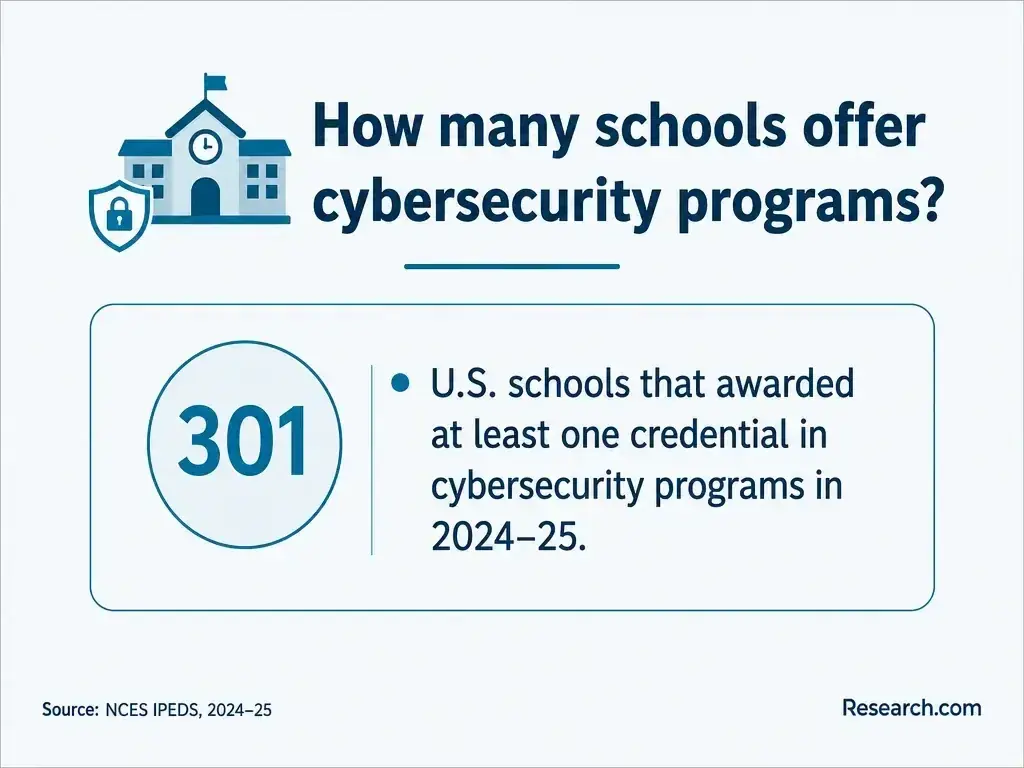
There is no reliable single statewide price for this particular degree: resident status, provider, course load, fees, aid, and living arrangements change the total. California community colleges generally charge eligible residents $46 per semester unit in enrollment fees (California Community Colleges Chancellor's Office). At 60 fee-bearing units, that is $2,760 in enrollment fees alone - not the total price of attending, and not a guaranteed 2027 rate. Nonresident charges and private-college pricing require separate estimates.
Use the same cost categories when comparing offers. The table separates charges that are easy to overlook from the enrollment fee.
| Cost category | What to verify for a cybersecurity degree |
| College charges | Enrollment or tuition, mandatory campus fees, and any additional course or lab fees. |
| Study and career-entry expenses | Books, software, a suitable computer, internet access, and optional certification examination fees. |
| Attendance and time | Transport to labs or internships, living expenses, and earnings forgone if work hours fall. |
| Cost offsets | Grants, scholarships, fee waivers, and employer tuition assistance for which you qualify. |
A lower advertised tuition can still mean a higher total cost if attendance takes longer or requires travel. Readers comparing the best affordable online colleges for working students should request a personalized, term-by-term estimate rather than compare sticker prices alone.
Eligible students may qualify for federal grants, loans, and work-study through the FAFSA, subject to federal and college requirements (Federal Student Aid). California options include the California College Promise Grant, which can waive eligible community college enrollment fees, and other state aid for qualifying students (California Community Colleges Chancellor's Office; California Student Aid Commission). A fee waiver does not necessarily cover books, housing, or technology.
Compare aid offers by net cost and borrowing, not by the largest total award: loans must be repaid. Ask each financial aid office whether your intended enrollment level qualifies, whether aid covers summer courses, and whether employer tuition assistance changes your remaining bill. Check the applicable state and federal deadlines before committing to a schedule.
Admission to a college and entry into a particular course sequence are different questions. A prospective student should check the college's admissions rules, placement process, and prerequisites for networking, programming, and mathematics courses. Existing IT experience may help in labs, but it should not be assumed to waive a required course.
Ask whether prior coursework or documented learning can count toward the degree and, separately, whether the receiving institution would accept those credits for a planned transfer. California's ASSIST articulation resource helps students inspect course agreements, but a college adviser should confirm that the resulting plan meets the student's specific requirements.
Common subjects include computer networking, operating systems, introductory programming or scripting, system administration, cybersecurity fundamentals, and general education. Some programs add digital forensics, ethical hacking, cloud security, or security policy. Course titles alone are a weak comparison: read the descriptions for lab time, prerequisites, and assessed projects.
A practical sequence should build from understanding networks and systems to securing and troubleshooting them. Look for assignments that require students to document a configuration, interpret logs, and communicate a finding to a nontechnical audience. Those skills connect technical work to the support and security responsibilities described by the U.S. Bureau of Labor Statistics and O*NET.
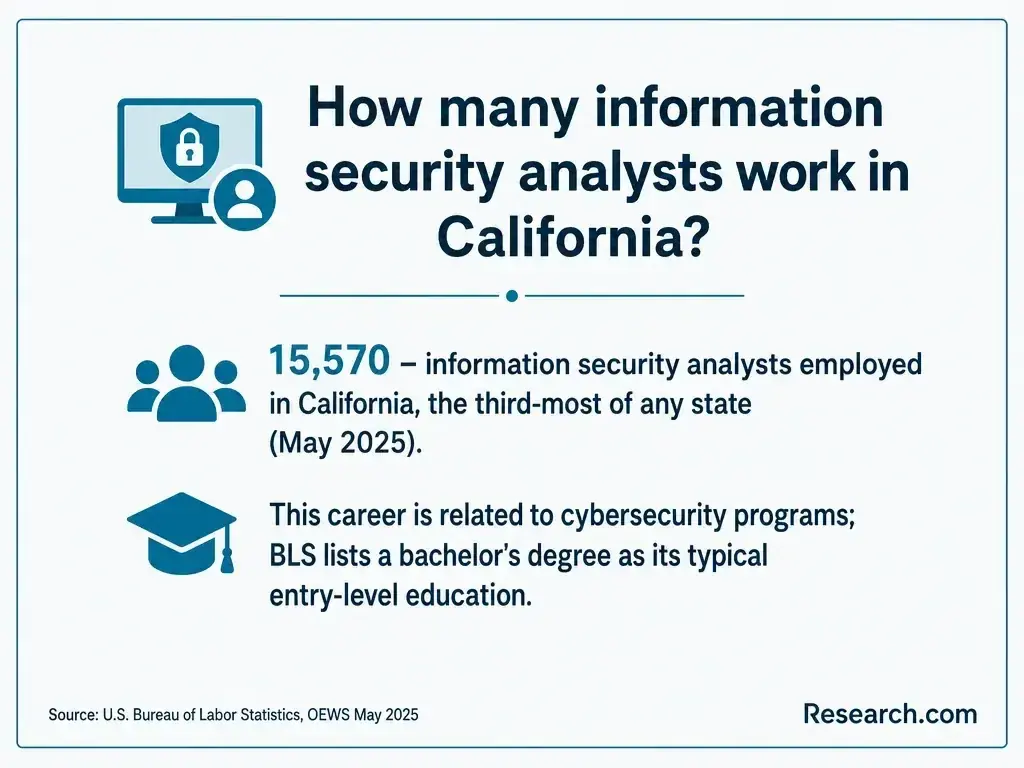
Specialization at the associate level usually appears through course choices or a program emphasis rather than a wholly separate occupation. Network defense suits students interested in configuring and protecting infrastructure; digital forensics emphasizes preserving and analyzing evidence; cloud-security coursework focuses on securing hosted systems. Availability and depth vary by college.
Choose a focus only after checking the foundations. A narrow security topic is less useful for an initial IT job if the degree leaves little room for networking, operating systems, and troubleshooting. Ask which specialized courses run regularly and what work product you will be able to show an employer.
Start with the job or transfer outcome you want, then compare programs against that goal - not just their ranking positions. The following checks expose differences that can change both your cost and your next step.
- Confirm the exact associate degree awarded and obtain its current course map, including general education, prerequisites, and lab requirements.
- Verify institutional accreditation through the recognized accreditor and confirm any claimed transfer agreement course by course; neither accreditation nor admission alone guarantees transfer credit.
- Ask for examples of assessed lab projects, internship arrangements, student support, and available outcomes for the jobs you intend to pursue.
- Request an individualized total-cost estimate covering fees, technology, travel, living costs, available aid, and the time you may need away from work.
- Compare your likely completion time, debt, and post-degree options against your current earnings and a realistic first job, not an experienced analyst's salary.
For return on investment, consider completion probability, lost earnings during study, aid, debt, the likely difference between current and later earnings, and how long you expect that difference to last. A lower-cost degree is not automatically the better investment if essential labs are unavailable or the courses do not meet your goal. Conversely, paying more for a cybersecurity label alone is a red flag.
Searches such as what is the easiest doctorate to get address a very different decision; they cannot tell you whether an associate degree offers the practical coursework and attainable next step you need now.
An associate degree can support applications for IT support, help-desk, network-support, and junior systems roles, depending on the applicant's skills and the employer's requirements. From there, security-related duties may grow through hands-on experience with access controls, monitoring, patching, and incident documentation. Some employers seek information security analysts with more extensive education or experience, so treat that title as a possible progression rather than an automatic first job (U.S. Bureau of Labor Statistics).
Professional certifications can demonstrate particular skills, but they are separate from the degree and should be chosen against actual job postings; a college's certification preparation is not a promise of exam eligibility or employment. California does not impose a general occupational license simply to work in a cybersecurity role. Searches for a doctoral degree no dissertation concern a different career stage and should not distract from evaluating the experience an entry-level IT or security employer expects.
National demand provides context, not a California placement forecast. The U.S. Bureau of Labor Statistics projects information security analyst employment to grow 21.0% from 2025 to 2035. That signals a growing occupation, but the projection covers all education and experience levels; it does not measure how many openings will accept applicants with a newly earned associate degree.
For a local decision, search current postings within a commute you can sustain. Separate jobs asking for general IT support from those requiring prior incident-response or systems experience, and note any employer-specific screening requirements. This gives you a more useful measure of immediate opportunity than counting every cybersecurity vacancy in the state.
Best Cybersecurity Associate Degree Programs & Schools in California for 2027
Investing in an associate degree is an important decision, so the Research.com team designed the ranking to help readers compare programs against other options in the same occupation and location. Only programs with completions reported to IPEDS are eligible; absence from the ranking is not, by itself, a judgment about a program's quality or availability.
Best-program rankings assess student outcomes; earnings and return on investment; costs and debt; and quality and recognition. They consider completion and full-time and part-time retention, earnings one year after completion, earnings relative to annual attendance cost, tuition, attendance cost, median debt including for students who withdrew, federal loan default rates, accreditation, relevant industry recognition, and student support. Programmatic accreditation or relevant industry recognition receives 20% of the score, institutional accreditation 10%, and student support 10%. Outcomes, earnings, and costs share the remaining 60%, with entropy-based weighting that gives more weight to indicators that vary more across programs. Most-affordable rankings instead use only tuition, attendance cost, median debt, and federal loan default rates, also with entropy-based weighting.
The ranking draws on the following databases and reference organizations. Some cover occupations outside cybersecurity; their inclusion among the ranking system's sources does not mean an allied-health or construction approval applies to a cybersecurity degree.
- IPEDS database - reported program completions and institutional measures.
- National Center for Education Statistics - federal education data and definitions.
- College Scorecard database - available cost, debt, and earnings measures.
- Peterson's database - supplemental college information.
- Commission on Accreditation of Allied Health Education Programs - occupation-specific reference for applicable health programs, not cybersecurity approval.
- Accrediting Bureau of Health Education Schools - occupation-specific reference for applicable health programs, not cybersecurity approval.
- Commission on Dental Accreditation - occupation-specific reference for dental programs, not cybersecurity approval.
- Dental Assisting National Board - occupation-specific certification reference, not a cybersecurity requirement.
- National Center for Construction Education and Research - occupation-specific industry reference, not cybersecurity recognition.
- Apprenticeship.gov Partner Finder - reference for relevant work-based pathways where applicable.
These measures offer a starting point, not a promise of individual earnings or transferability. Readers can use the ranking to narrow their choices, then verify each degree's current curriculum, cost, format, and outcomes directly with the college. More detail is available on the Research.com methodology page.






# 10 position

# 11 position

# 12 position
Clovis Community College
associateComputer and Information Systems Security/Auditing/Information Assurance
Delivery mode: On Campus (May Include Online Courses)
28.73
/ 100
Final score
- School graduation rate
- 48%
- Students receiving Pell Grants
- 20%
- In-state tuition & fees (per year)
- $1,334
- Out-of-state tuition & fees (per year)
- $10,714
- School website
- cloviscollege.edu
Accreditation
Institutional accreditation from Western Association of Schools and Colleges Accrediting Commission for Community and Junior Colleges.
Clovis Community College received a Research.com Trade Program Score of 28.73/100.
# 13 position
California Institute of Arts & Technology
associateComputer and Information Systems Security/Auditing/Information Assurance
Delivery mode: Online
28.69
/ 100
Final score
- School graduation rate
- 59%
- Students receiving Pell Grants
- 15%
- In-state tuition & fees (per year)
- $22,270
- Out-of-state tuition & fees (per year)
- $22,270
- School website
- ciat.edu
Accreditation
Institutional accreditation from Accrediting Council for Continuing Education & Training.
California Institute of Arts & Technology received a Research.com Trade Program Score of 28.69/100.


# 16 position



# 19 position


Frequently asked questions about cybersecurity programs in California
Is a cybersecurity associate degree worth it?
It can be if the program provides strong IT foundations, practical labs, and a manageable total cost for your intended job or transfer plan. Compare likely first roles and completion costs rather than assuming you will immediately become an information security analyst.
Can I study cybersecurity entirely online?
Some coursework and virtual labs may be remote, but attendance rules differ. Ask the college whether any labs, exams, or internships require travel and what equipment you must provide.
Do I need a license to work in cybersecurity in California?
There is no general California occupational license for cybersecurity work. An individual employer may still require specific experience, background screening, or a professional certification for a position.
Will my associate degree credits transfer?
Not automatically. Confirm the receiving institution's current articulation agreements and check each proposed course, not just the degree title.
Should I choose the cheapest program?
Choose the lowest effective total cost among programs that meet your goal. Include fees, equipment, travel, aid, time to completion, and whether the necessary courses and labs are reliably available.
- U.S. Bureau of Labor Statistics - Information Security Analysts
Used to verify salary, employment outlook, and typical education requirements.
https://www.bls.gov/ooh/computer-and-information-technology/information-security-analysts.htm - NCES College Navigator (IPEDS)
Used to verify programs offered and institutional accreditation.
https://nces.ed.gov/collegenavigator/ - CompTIA Security+
Professional certification reference for graduates of this occupation.
https://www.comptia.org/certifications/security - Asher College - official website
Official school website (programs, tuition, admissions).
https://www.asher.edu/ - Institute for Business and Technology - official website
Official school website (programs, tuition, admissions).
https://ibt.edu/ - City College of San Francisco - official website
Official school website (programs, tuition, admissions).
https://www.ccsf.edu/ - College of San Mateo - official website
Official school website (programs, tuition, admissions).
https://www.collegeofsanmateo.edu/ - Imperial Valley College - official website
Official school website (programs, tuition, admissions).
https://www.imperial.edu/