Choosing an Alabama speech pathology program means balancing licensure eligibility, clinical training, debt, and career goals. This guide explains undergraduate and graduate pathways, admissions, costs, online options, and employment considerations for aspiring speech-language pathologists. It also accompanies the 2027 Best Speech Pathology Degree Programs Ranking in Alabama, created by the Research.com team of data scientists to help students make an informed choice about which programs are worth considering. Use it to compare options, identify red flags, and plan a practical route to SLP practice.
Key findings about speech pathology degrees in Alabama
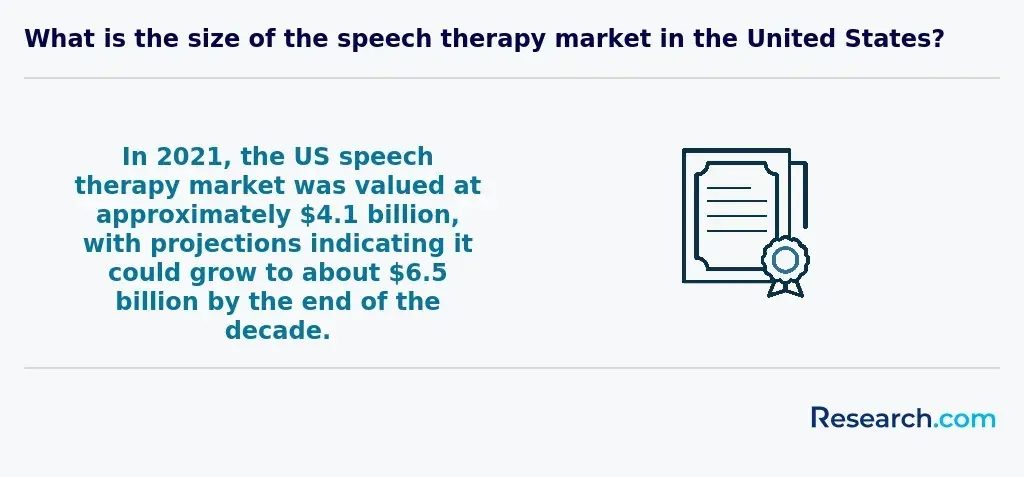
Alabama students who want to become licensed speech-language pathologists generally need a master's degree from a CAA-accredited program, supervised clinical experience, and compliance with Alabama Board of Examiners requirements.
Speech-language pathologists had a national median annual wage of $97,870 in May 2025, while BLS projects 17% employment growth from 2025 to 2035; earnings and openings vary by Alabama employer, setting, and location.
Compare total graduate-program cost, clinical-placement support, completion timeline, and debt - not tuition alone - before selecting among Alabama's public, private nonprofit, campus-based, and hybrid options.
What can I expect from a speech pathology degree in Alabama?
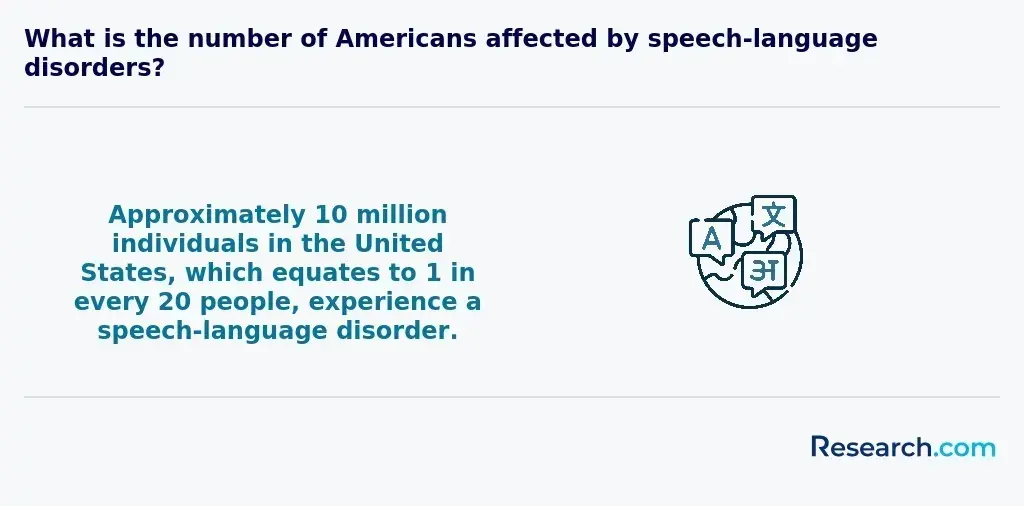
A speech pathology degree usually refers to education in communication sciences and disorders (CSD), speech-language pathology (SLP), or speech-language-hearing sciences. A bachelor's degree builds prerequisite knowledge; a master's degree is the usual professional degree for students seeking to diagnose and treat communication and swallowing disorders as speech-language pathologists.
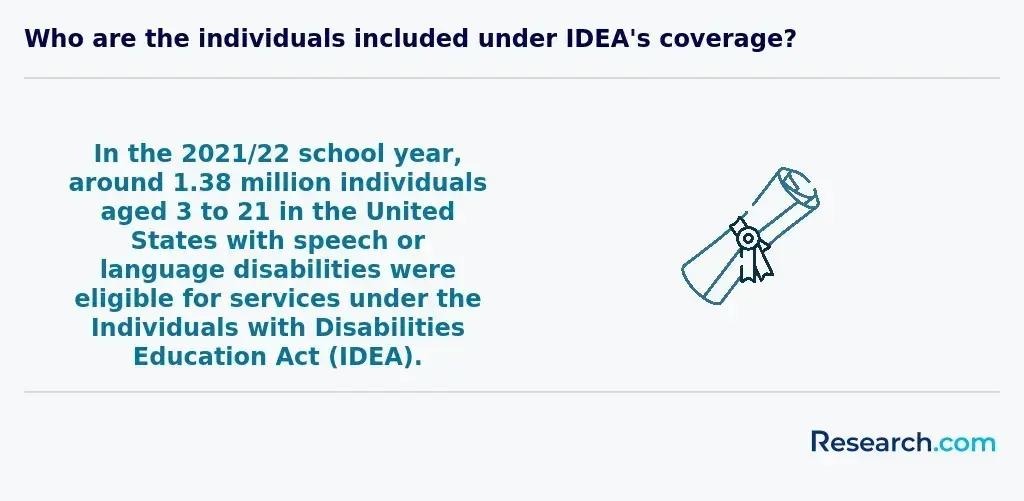
In Alabama, an undergraduate CSD major fits students exploring the field, preparing for graduate school, or considering related roles in education, rehabilitation, or health services. A master's program fits students committed to the regulated SLP pathway and prepared for intensive clinical training. It is not the best fit for someone seeking a quick credential: supervised practice, graduate admissions, and state licensure create a multi-year commitment.
Alabama licensure matters because graduation alone does not authorize independent practice. Students should confirm that a prospective graduate program is accredited by the Council on Academic Accreditation in Audiology and Speech-Language Pathology (CAA), supports required clinical education, and is appropriate for Alabama Board of Examiners licensure requirements.
Where can I work with a speech pathology degree in Alabama?
SLPs work where communication, swallowing, cognition, and developmental needs intersect with education and healthcare. Alabama's mix of school systems, hospitals, rehabilitation providers, early-intervention services, and rural communities can make placement access and willingness to relocate important parts of a career plan.
The table below shows common settings and the practical trade-off each presents.
How much can I make with a speech pathology degree in Alabama?
The newest BLS Occupational Outlook Handbook figure reports a national median annual wage of $97,870, or $47.05 per hour, for speech-language pathologists in May 2025. This is a national occupation-wide median, not an Alabama starting-salary guarantee; local pay can differ by setting, experience, employer, productivity expectations, and metropolitan versus rural labor markets.
For an investment decision, salary should be compared with the full cost of becoming eligible to practice. Include undergraduate prerequisites if needed, graduate tuition and fees, living costs during clinical semesters, reduced work hours, interest on borrowing, and the time needed to complete a Clinical Fellowship and secure licensure. A lower-priced program can be financially stronger only if it also supports timely completion and appropriate clinical preparation.
2027 Best Speech Pathology Degree Programs Ranking in Alabama
How do we rank schools?
Education is a major financial and career decision, so Research.com evaluates programs using a structured approach designed to make comparisons more credible and useful. The ranking considers academic and research strength, cost, graduate outcomes, student profile, and institutional quality, then ranks programs according to the dimension named in the ranking.
For campus-based programs, weighting is data-driven through an entropy-based approach that adjusts to the available indicators. Online-program evaluations use a distance-learning-adapted model that excludes campus-dependent indicators and applies fixed weights: graduation rate 30%, research 25%, institutional profile 15%, and students, cost, and course measures at 10% each.
The ranking draws on the following established education datasets:
IPEDS database: institutional reporting on enrollment, completions, costs, and outcomes.
Peterson's database: program and institutional information used to broaden comparisons.
Readers can use the ranking to create a focused shortlist, compare affordability and institutional indicators, and then verify program-specific accreditation, clinical-placement policies, and licensure alignment. More detail about the evaluation approach is available through Research.com's methodology page.
Council on Academic Accreditation in Audiology and Speech-Language Pathology (CAA) of ASHA
Status AccreditedID a9a33e3a-d59f-4897-af0f-0cdbb966d019Valid 2022-2030
Last known review scheduled for 2029
Verify accreditation
The University of Alabama earned a Research.com SLP Program Score of 97.57/100, supported by 97% Praxis pass rate and 96% program completion rate. Its Speech Language Pathology, MS is listed by ASHA EdFind as CAA-accredited through 2030, with the most recently listed accreditation review scheduled for 2029.
Admissions data from
ASHA EdFind
(updated 09/12/2025)
Council on Academic Accreditation in Audiology and Speech-Language Pathology (CAA) of ASHA
Status AccreditedID 65c9fd3a-31b4-4409-8d49-a1295378ed63Valid 2024-2032
Last known review scheduled for August 2031
Verify accreditation
Samford University earned a Research.com SLP Program Score of 91.64/100, supported by 99% Praxis pass rate and 100% program completion rate. Its Master of Science in Speech-Language Pathology (MSSLP) is listed by ASHA EdFind as CAA-accredited through 2032, with the most recently listed accreditation review scheduled for 2031.
Admissions data from
ASHA EdFind
(updated 11/07/2025)
Master of Science in Speech, Language, and Hearing Sciences
90.47
/ 100
Final score
Program length
2 years
Required credits
58-62 semester credit hours
Acceptance rate
36% (51 of 143 applications)
GPA range
3.34 - 4.00
Offers with funding
~25% (13 of 51 offers)
Application deadline
Fall admission: January 15th
Class size
24
Degrees granted
25
Application process
CSDCAS University online application
Prerequisites
Undergraduate prerequisites required: Yes; prerequisite courses offered; available online
Additional requirements
Comprehensive exam; Thesis
Accreditation
Council on Academic Accreditation in Audiology and Speech-Language Pathology (CAA) of ASHA
Status AccreditedID 489ef27d-e002-4885-bdd5-1bc35b1e75f7Valid 2025-2032
Last known review scheduled for February 2031
Verify accreditation
Auburn University earned a Research.com SLP Program Score of 90.47/100, supported by 98% Praxis pass rate and 100% program completion rate. Its Master of Science in Speech, Language, and Hearing Sciences is listed by ASHA EdFind as CAA-accredited through 2032, with the most recently listed accreditation review scheduled for 2031.
Admissions data from
ASHA EdFind
(updated 10/01/2025)
Master of Science (M.S.) education program in Speech-Language Pathology (residential)
77.40
/ 100
Final score
Program length
Two years (with undergraduate degree in CSD) or three years (with undergraduate degree in another area)
Accreditation
Council on Academic Accreditation in Audiology and Speech-Language Pathology (CAA) of ASHA
Status AccreditedID 23637a84-085e-4ee3-ab54-84b81af413ffValid 2019-2027
Verify accreditation
Alabama A & M University earned a Research.com SLP Program Score of 77.4/100, supported by 85% Praxis pass rate and 74% program completion rate. Its Master of Science (M.S.) education program in Speech-Language Pathology (residential) is listed by ASHA EdFind as CAA-accredited through 2027, with the most recently listed accreditation review scheduled for 2026 (in process).
Council on Academic Accreditation in Audiology and Speech-Language Pathology (CAA) of ASHA
Status AccreditedID 2b3ceed8-7d74-4605-a2cb-dfedbf44fc59Valid 2026-2034
Last known review scheduled for February 2033
Verify accreditation
University of South Alabama earned a Research.com SLP Program Score of 75.66/100, supported by 100% Praxis pass rate and 96% program completion rate. Its Master of Science in Speech-Language Pathology (MSSLP) is listed by ASHA EdFind as CAA-accredited through 2034, with the most recently listed accreditation review scheduled for 2033.
Admissions data from
ASHA EdFind
(updated 10/01/2025)
Master of Science (MS) in Speech-Language Pathology
62.64
/ 100
Final score
Program length
5 semesters full-time or extended track of 8 semesters
Required credits
66
Acceptance rate
39% (174 of 445 applications)
GPA range
3.00 - 4.00
Offers with funding
~2% (4 of 174 offers)
Application deadline
Rolling Admission
Class size
57
Degrees granted
27
Application process
CSDCAS
Prerequisites
Undergraduate prerequisites required: Yes; prerequisite courses offered; available online
Additional requirements
Comprehensive exam; Thesis; Portfolio
Accreditation
Council on Academic Accreditation in Audiology and Speech-Language Pathology (CAA) of ASHA
Status AccreditedID cef9137d-9aeb-463a-bb29-92bd7503557dValid 2022-2027
Last known review scheduled for 2026 (in process)
Verify accreditation
Faulkner University earned a Research.com SLP Program Score of 62.64/100, supported by 85% Praxis pass rate and 92% program completion rate. Its Master of Science (MS) in Speech-Language Pathology is listed by ASHA EdFind as CAA-accredited through 2027, with the most recently listed accreditation review scheduled for 2026 (in process).
Admissions data from
ASHA EdFind
(updated 10/29/2025)
Council on Academic Accreditation in Audiology and Speech-Language Pathology (CAA) of ASHA
Status AccreditedID f80d0a74-4c50-4b10-89ad-b7e30dcc702aValid 2025-2033
Last known review scheduled for February 2032
Verify accreditation
University of Montevallo earned a Research.com SLP Program Score of 61.65/100, supported by 97% Praxis pass rate and 97% program completion rate. Its Speech-Language Pathology, M.S. is listed by ASHA EdFind as CAA-accredited through 2033, with the most recently listed accreditation review scheduled for 2032.
Admissions data from
ASHA EdFind
(updated 10/29/2025)
What sets the top speech pathology programs apart?
The strongest programs differ less by broad claims of "hands-on learning" than by program level, clinical infrastructure, delivery design, and the student they serve. Verify current accreditation status, curriculum, admissions policies, and clinical placement details directly with each school before enrolling.
The University of Alabama: Its Department of Speech and Hearing Science provides an established university-based pathway spanning communication-disorders education and graduate clinical preparation. It may suit students who want a traditional research-university environment and should compare its graduate admission requirements carefully with their undergraduate preparation.
Samford University: Samford houses communication sciences and disorders within its College of Health Sciences, giving the discipline an explicitly health-professions context. This can appeal to students seeking an interdisciplinary clinical environment, though private-university pricing and aid packages should be assessed alongside total borrowing.
Auburn University: Auburn's Speech, Language, and Hearing Sciences unit offers students a dedicated disciplinary home within the College of Liberal Arts. Its structure may be especially useful for students who want broad undergraduate preparation before competing for graduate SLP admission.
Alabama A&M University: Alabama A&M offers communication sciences and disorders through its health-related academic structure, creating an in-state option for students beginning the prerequisite phase. Applicants should confirm the degree level offered and map any graduate-school prerequisites early, rather than assuming a bachelor's curriculum alone completes licensure preparation.
University of South Alabama: The University of South Alabama places speech and hearing education in the College of Allied Health Professions, connecting the field to a health-sciences academic setting. This can be a meaningful option for students in the Mobile region who value proximity to Gulf Coast healthcare and clinical communities.
Faulkner University: Faulkner specifically presents a Master in Speech-Language Pathology option, making it particularly relevant to applicants already ready for professional graduate education. Students should ask about cohort progression, clinical placement geography, and total program charges because an accelerated or private format can change both opportunity cost and financing needs.
University of Montevallo: The University of Montevallo can be relevant to students seeking a smaller public-university undergraduate experience before graduate study. Because the general institutional site does not itself establish a professional SLP master's pathway, applicants should verify the current CSD curriculum and intended transfer or graduate-school route.
These distinctions are useful only after confirming whether the program provides the exact degree level you need. An undergraduate option may be a sensible lower-cost starting point; it is not interchangeable with a CAA-accredited master's program required for the standard SLP licensure route.
How long does it take to complete a speech pathology degree in Alabama?
Timing depends on where you begin. Students entering college without prior coursework commonly spend about four years completing a bachelor's degree, followed by roughly two academic years of full-time master's study. Students with a non-CSD bachelor's degree may need additional prerequisites before or during graduate enrollment.
After graduate school, many graduates complete a Clinical Fellowship, a mentored professional experience required for ASHA certification and commonly relevant to state licensure planning. A five-year combined bachelor's-to-master's route can reduce transitions for eligible students, but it may offer less flexibility if their career interests change. Compare 5-year speech pathology programs only after checking whether the specific pathway meets your Alabama licensure plan.
What's the difference between an online and on-campus speech pathology degree?
An online or hybrid SLP graduate degree can reduce commuting and widen access for Alabama residents outside Birmingham, Huntsville, Montgomery, Tuscaloosa, or Mobile. However, speech pathology is not fully remote: clinical skills must be evaluated, and supervised practicum experiences generally require in-person or approved site-based participation.
The comparison below identifies the practical difference that matters most: whether a format can realistically deliver the clinical education and support required for your intended license.
Factor
Online or hybrid format
On-campus format
Course access
May reduce travel and support students living farther from campuses.
Provides scheduled face-to-face instruction and campus access.
Clinical placements
May require students to work with assigned or approved local sites; policies vary.
May provide closer access to campus clinics and regional partners.
Schedule
Can offer asynchronous coursework but clinical obligations remain time-specific.
Usually follows a fixed cohort and campus timetable.
Best fit
Working adults with reliable time, technology, and placement feasibility.
Students who want direct campus-based mentoring and local clinical infrastructure.
Do not assume an online program automatically qualifies graduates for Alabama practice. Confirm CAA accreditation, state authorization, clinical-placement responsibility, travel expectations, and whether the school will document requirements for the Alabama Board. Students prioritizing cost should compare cheapest online slp programs with local campus options on total - not sticker - cost.
What is the average cost of a speech pathology degree in Alabama?
There is no single reliable statewide average cost for an Alabama speech pathology degree because price changes by degree level, residency, institution, credit load, housing, and required clinical expenses. Public in-state tuition can be materially lower than out-of-state tuition, while private nonprofit institutions may use a single tuition rate but offer institutional scholarships.
Use this cost checklist when comparing offers. It prevents a common error: selecting the lowest tuition figure while overlooking costs that determine actual borrowing.
Graduate tuition and mandatory program fees for every required term.
Undergraduate prerequisite courses, if your prior degree is outside communication sciences and disorders.
Clinical supplies, background checks, immunizations, testing, travel, parking, and professional liability requirements.
Housing and lost earnings if clinical schedules limit full-time employment.
Scholarships, assistantships, employer support, and the net price after grants rather than published tuition alone.
A useful local starting point is the list of most affordable speech pathology programs in Alabama, but affordability should still be paired with accreditation, completion feasibility, and clinical-placement support.
What financial aid is available for speech pathology students in Alabama?
Financial aid can combine federal, state, institutional, and employment-based resources. Eligibility, award size, and application deadlines differ, so students should file the FAFSA early and ask each program whether aid is available to graduate CSD students, including students in required clinical semesters.
Potential funding sources include:
Federal Direct Unsubsidized Loans for eligible graduate and professional students, subject to annual and aggregate borrowing limits.
Graduate PLUS Loans for eligible graduate or professional students who meet federal requirements, complete the required application process, and do not have adverse credit history under applicable federal standards; these loans should be used cautiously because they can increase total debt.
University scholarships, tuition discounts, graduate assistantships, and department awards, which may be limited by cohort structure or clinical schedules.
Alabama-based workforce, school-district, healthcare-employer, and service-commitment opportunities when available; terms should be reviewed for repayment or employment obligations.
Ask financial-aid offices for a term-by-term borrowing estimate, not merely an annual tuition quote. Applicants comparing out-of-state choices may also find perspective in cheapest slp grad schools in arizona, but should account for residency rules and relocation costs.
View the chart data as a table
Annual wage by percentile for Speech-Language Pathologists (Alabama) (Source: U.S. Bureau of Labor Statistics (OEWS May 2025))
Category
Value
10th
58,010
25th
63,760
50th (median)
73,660
75th
88,990
90th
109,300
What are the prerequisites for enrolling in a speech pathology degree in Alabama?
Admissions prerequisites vary, especially between bachelor's and master's programs. Graduate applicants commonly need a bachelor's degree, a competitive GPA, prerequisite coursework in communication sciences and disorders or related sciences, recommendation letters, a personal statement, and sometimes observation or exposure to the profession.
Students without a CSD major are not automatically excluded, but they should expect a leveling plan. Common prerequisite areas include phonetics, language development, speech science, hearing science, anatomy and physiology of speech and hearing, audiology, and statistics. The key question is whether missing courses can be completed before admission, during enrollment, or only through a separate post-baccalaureate sequence.
Admission selectivity changes by cohort and year, so avoid treating a program as easy or difficult based on anecdotes. Review current requirements and compare them with easiest SLP masters programs to get into while keeping accreditation and clinical quality central to the decision.
What courses are typically in a speech pathology degree in Alabama?
Speech pathology curricula combine scientific foundations, clinical reasoning, and supervised practice. Course titles differ across Alabama institutions, but CAA-aligned graduate education typically develops competence across communication, swallowing, assessment, intervention, ethics, and evidence-based practice.
Students can expect coursework in the following areas:
Phonetics, speech science, anatomy, and neuroanatomy relevant to speech and swallowing.
Typical and disordered language development across childhood and adulthood.
Articulation, phonological disorders, fluency, voice, resonance, and motor speech disorders.
Audiology foundations and the relationship between hearing differences and communication.
Neurogenic communication disorders, cognition, dysphagia, and medical SLP practice.
Assessment, treatment planning, counseling, cultural responsiveness, research methods, and professional ethics.
Clinical practicum with direct client contact, documentation, supervision, and performance evaluation.
A good curriculum match depends on your target setting. Students leaning toward schools should examine pediatric language, literacy, and educational practicum options; those interested in medical work should look closely at dysphagia, neurogenic disorders, and adult clinical placements.
What types of specializations are available in a speech pathology degree in Alabama?
SLP master's programs usually prepare generalist clinicians because licensure requires broad competence. Specialization is more often built through electives, clinical placements, faculty research, continuing education, and later job choices than through a narrowly titled degree concentration.
Common areas students may pursue include pediatric language and autism-related communication, school-based practice, bilingual or multicultural service delivery, voice, fluency, augmentative and alternative communication, dysphagia, acquired brain injury, aphasia, and aging-related care. Choose a program with relevant placements and faculty support rather than relying on a specialization label alone.
How do you choose the best speech pathology degree in Alabama?
The best program is the one that makes your intended Alabama career path feasible at a manageable total cost. Rankings are useful for building a shortlist, but they cannot replace an accreditation and licensure review.
Before accepting an offer, take these steps:
Confirm the program's current CAA accreditation status and ask whether its curriculum supports Alabama licensure requirements.
Request a complete schedule of tuition, fees, clinical expenses, and expected terms of enrollment.
Ask who secures clinical placements, how far students may travel, and what happens if a placement is delayed.
Compare cohort progression, remediation policies, graduation requirements, and support for students balancing work or caregiving.
Evaluate net price after grants, likely borrowing, opportunity cost, and realistic early-career earnings rather than prestige alone.
Speak with admissions and, where possible, current students about advising, supervision, and placement experiences.
Red flags include unclear accreditation information, vague answers about placements, unusually optimistic salary claims, and pressure to enroll before you receive a written cost estimate. Students considering alternatives outside the state can compare approaches with the Affordable Speech Pathology Degree Programs Ranking in Cincinnati, OH.
View the chart data as a table
On-time completion rate (Source: ASHA EdFind / program reports)
Category
Value
<85%
1
85-90%
0
90-95%
1
95-99%
3
100%
2
What career paths are available for a speech pathology degree in Alabama?
A speech pathology degree can lead to more than one job title, but the master's-plus-licensure pathway is central for clinical SLP roles. A bachelor's degree alone can support entry-level support, administrative, research-assistant, or education-related work, but it generally does not qualify someone to practice as a speech-language pathologist.
Career direction should guide program selection:
School-based SLP: Best for professionals who want pediatric caseloads, special education collaboration, and school-calendar work patterns.
Medical SLP: Best for those interested in dysphagia, neurological conditions, rehabilitation, and hospital or post-acute care.
Early-intervention clinician: Best for professionals drawn to family coaching and developmental care for young children.
Private-practice or outpatient clinician: Best for those who want varied caseloads and may later pursue business responsibilities.
Research, doctoral study, or higher education: Best for students interested in evidence generation, teaching, and advanced specialization.
Alabama students should also consider whether they want to remain in-state after graduation. Mobility may expand access to certain specialties, but each destination state can have separate licensure rules.
View the chart data as a table
Total tuition + mandatory fees (resident, this ranking) (Source: Research.com SLP dataset)
Category
Value
30,000-35,000 USD
1
35,000-40,000 USD
3
40,000-45,000 USD
0
45,000-50,000 USD
1
50,000-55,000 USD
0
55,000-60,000 USD
0
60,000-65,000 USD
1
What is the job market for a speech pathology degree in Alabama?
The national job market for speech-language pathologists is favorable, with the U.S. Bureau of Labor Statistics projecting 17% employment growth from 2025 to 2035 and about 12,500 openings per year on average over that period. The projection reflects national demand rather than a guaranteed number of Alabama vacancies, but it supports the long-term relevance of a credential that enables work across schools and healthcare settings.
In Alabama, demand can look different by region and employer. Larger metropolitan areas may offer more specialized hospital, outpatient, and pediatric opportunities, while rural districts and healthcare providers may place greater value on professionals willing to serve broader geographic areas. Students should review current postings near their preferred location, ask programs where recent clinical placements occur, and avoid choosing a specialty based solely on a national growth figure.
Technology is also changing practice without replacing the profession. Telepractice, electronic documentation, augmentative communication systems, and remote collaboration can expand service delivery, but employers still need clinicians who can assess clients ethically, build treatment plans, and meet state and payer requirements.
Frequently asked questions about speech pathology degree in Alabama
Do I need a master's degree to become an SLP in Alabama?
Usually, yes. The standard route requires a graduate SLP degree, appropriate clinical education, and satisfaction of Alabama licensure requirements. A bachelor's degree is typically preparation for graduate study, not independent clinical practice.
Should I choose a CAA-accredited program?
Yes. CAA accreditation is a critical safeguard for students pursuing the customary ASHA certification and state-licensure pathway. Confirm current status directly before enrolling.
Can I become an SLP with a non-CSD bachelor's degree?
Possibly. Many programs accept students from other majors who complete required leveling coursework. The time and cost of those prerequisites should be part of your comparison.
Is an online SLP degree valid in Alabama?
It can be, but format alone does not determine eligibility. Verify accreditation, clinical placement requirements, state authorization, and Alabama licensure alignment with the school and licensing board.
How long does the path take?
A common route is four years for a bachelor's degree plus about two years for a master's degree, followed by a Clinical Fellowship. Timing can be longer for students completing prerequisites or studying part time.
Is speech pathology worth the cost?
It can be when the program supports licensure, completion, manageable borrowing, and your preferred work setting. Compare net cost, lost income while studying, clinical-placement quality, and realistic local job options rather than relying on salary alone.
See What Experts Have To Say About Studying Speech Pathology
ASHA EdFind - Accredited Speech-Language Pathology Programs Used to verify CAA accreditation or candidacy status for graduate SLP programs. https://find.asha.org/ed/