
2027 Best Social Work Degree Programs Ranking in Grand Rapids

Co-Founder and Chief Data Scientist
Choosing the right social work degree program can shape your future career in meaningful ways. This article presents the 2027 Best Social Work Degree Programs Ranking in Grand Rapids, created by the Research.com team of data scientists to guide you in making an informed decision.
Whether you're beginning your educational journey or considering a change, understanding which programs stand out will help you invest your time and effort wisely. A social work degree opens doors to rewarding opportunities and impactful work supporting communities.
Explore the options and feel confident about your next steps in Grand Rapids.
Key benefits of getting social work degree in Grand Rapids
- Graduates with a social work degree in Grand Rapids can expect competitive salaries, such as $68,800 annually for Social Workers and up to $83,400 for Youth Workers and Community Organizers, ensuring financial stability.
- Career paths for social work graduates include roles like Child Welfare Specialist, Residential Counselor, and Community Organizer, offering diverse opportunities to make a positive impact in the community.
- Obtaining a social work degree online provides flexibility and convenience, allowing students in Grand Rapids to balance work and study without compromising on quality education.
- Key benefits of getting social work degree in Grand Rapids
- What can I expect from social work degree in Grand Rapids?
- Where can I work with social work degree in Grand Rapids?
- How much can I make with social work degree in Grand Rapids?
- 2027 Best Social Work Degree Programs Ranking in Grand Rapids
- Key Findings
- How long does it take to complete social work degree in Grand Rapids?
- Student Support, Campus Life, and Networking Opportunities
- What's the difference between online and on-campus social work degree?
- Licensure and Certification Preparation
- What is the average cost of social work degree in Grand Rapids?
- Most Affordable Social Work Programs in Grand Rapids, MI
- What financial aid is available to social work degree students in Grand Rapids?
- Licensure and Certification Pathway in Michigan
- What are the prerequisites for enrolling in social work degree program in Grand Rapids?
- Cost Considerations and Financial Aid for Social Work Programs
- What courses are typically in social work degree programs in Grand Rapids?
- What types of specializations are available in social work degree programs in Grand Rapids?
- How do you choose the best social work degree in Grand Rapids?
- What career paths are available for social work degree students in Grand Rapids?
- What is the job market for social work degree in Grand Rapids?
- Top Trending Social Work Rankings
- See What Experts Have To Say About Studying Social Work
What can I expect from social work degree in Grand Rapids?
When considering the cost of earning a social work degree in Grand Rapids, students typically find that tuition and fees vary depending on the institution and degree level. For example, graduates from Grand Valley State University note that the Bachelor of Social Work (BSW) program usually costs between $8,000 and $12,000 per year for in-state students. Master of Social Work (MSW) candidates can expect higher tuition, often ranging from $12,000 to $18,000 annually. These amounts cover coursework necessary for accreditation by the Council on Social Work Education, a key factor for careers in Michigan.
Beyond tuition, graduates mention budgeting for textbooks, field placement materials, and transportation to internships at local organizations addressing homelessness or mental health. Many students find financial aid, scholarships, or work-study options helpful in managing their budgets.
Relating to real-life experiences, social work students often describe a balance of excitement and challenge during their practicum placements in Grand Rapids agencies. These hands-on opportunities are invaluable, directly preparing them for licensure requirements and job success, making the investment in their education feel worthwhile.
Where can I work with social work degree in Grand Rapids?
Graduates from social work programs at institutions like Grand Valley State University often find diverse career paths in Grand Rapids. Many begin in healthcare settings such as Spectrum Health or Metro Health, where they support patients with discharge planning and counseling-gaining hands-on experience that quickly builds confidence. Others secure roles in local public schools, collaborating with teachers and families to address student mental health and attendance challenges, making a tangible difference in children's lives.
Working in government agencies, such as Kent County's Department of Health and Human Services, offers graduates stable employment focused on family support and crisis intervention, providing a strong sense of purpose and job security. Nonprofit organizations like the YMCA of Greater Grand Rapids also attract social workers passionate about tackling homelessness and substance abuse, allowing them to see their impact on community well-being firsthand.
For students, strategically seeking internships and networking within these sectors multiplies opportunities. By aligning studies with local employers' needs, graduates feel empowered to start meaningful social work careers right here in Grand Rapids.
How much can I make with social work degree in Grand Rapids?
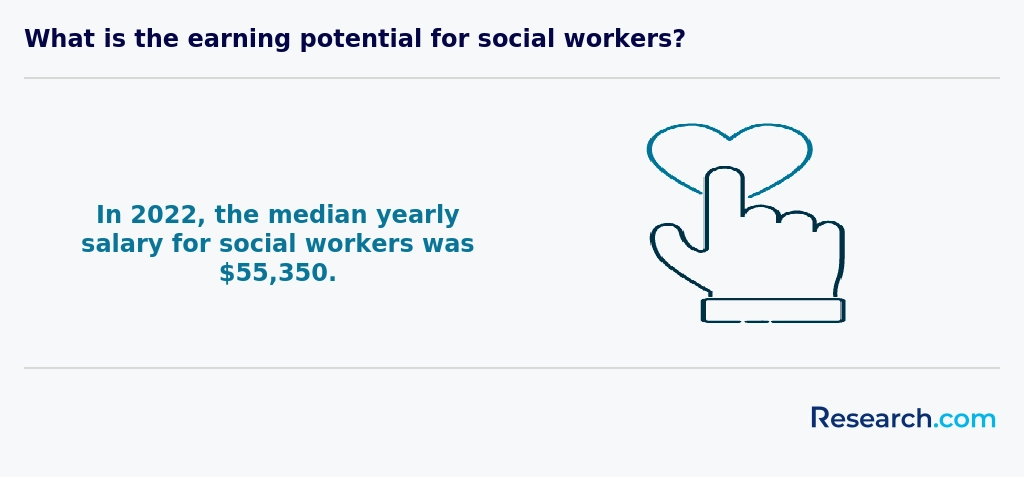
Graduates with a social work degree in Grand Rapids can expect to earn competitive salaries aligned with local demand and cost of living. For example, entry-level social workers often start around $45,000 annually, but gaining experience or earning an MSW can increase earnings closer to $68,800, which is the national mean salary for social workers. Students from well-known local programs often share how their internships within Grand Rapids agencies helped them secure roles paying between $55,000 and $65,000.
Specialized roles like Child Welfare Specialists and Residential Counselors in the area have mean salaries around $59,190, providing solid entry points for recent graduates. Meanwhile, Community Organizers and Youth Workers, also common career paths, command higher salaries closer to $83,400 per year, reflecting the value of strategic outreach and community engagement skills acquired in school.
Those pursuing clinical licensure report earning from $60,000 up to $80,000 when working at hospitals or social service agencies. Local graduates often describe their mastery of practical skills at Grand Rapids colleges as key to accessing these higher-paying positions, bringing rewarding community impact and financial stability together.
2027 Best Social Work Degree Programs Ranking in Grand Rapids
How do we rank schools?
Investing in your education is a significant decision that can profoundly impact your future, and the Research.com team recognizes the importance of providing trustworthy information to guide that choice. To support prospective students interested in social work in Grand Rapids, we have carefully developed the "2027 Best Social Work Degree Programs Ranking in Grand Rapids." Our dedication to quality, credibility, and accuracy is demonstrated through thorough research and detailed analysis.
We utilized the following reputable data sources to ensure a comprehensive evaluation of social work programs:
By consulting this ranking, readers will gain essential insights into the highest quality social work degree programs available in Grand Rapids, empowering them to make well-informed decisions about their educational journeys. For further information on how this ranking was compiled, please visit our Research.com methodology page.


Key Findings
- Social work degrees in Grand Rapids include Bachelor of Social Work (BSW) and Master of Social Work (MSW) programs accredited by the CSWE.
- The total cost for a bachelor's degree ranges from $25,000 to $40,000, while MSW programs typically cost between $20,000 and $35,000.
- Starting salaries for social work graduates average between $40,000 and $45,000 per year, increasing to $55,000 to $65,000 with experience or specialization.
- Employment in social work in Grand Rapids is expected to grow by about 8% over the next decade, slightly above the national average.
- Licensure in Michigan requires passing the ASWB exam and completing supervised experience, which is necessary for clinical practice and better job opportunities.
How long does it take to complete social work degree in Grand Rapids?
Completing a social work degree in Grand Rapids depends largely on the program and your schedule. At Grand Valley State University or Calvin University, a full-time Bachelor of Social Work (BSW) usually takes about four years. Many students juggling work extend this to five or six years by choosing part-time classes, allowing them to balance jobs and family more comfortably.
For those pursuing a Master of Social Work (MSW), full-time study generally lasts one to two years. Graduate students often share how flexible part-time options extending to three or four years helped them maintain steady employment while advancing their careers. These programs include required fieldwork, demanding 900 to 1,200 supervised hours, which can affect how long it takes to graduate.
Some students appreciate accelerated BS/MSW programs available locally, cutting total completion time to around five years by combining coursework and field placement efficiently. Planning your path with these options in mind will make the process smoother and more manageable.
Student Support, Campus Life, and Networking Opportunities
An often-overlooked aspect of selecting a social work program is the overall student experience beyond the classroom. Campus life and robust support services can play a pivotal role in both academic success and career readiness. Many programs in Grand Rapids offer dedicated student support centers providing academic advising, mental health services, and career counseling tailored specifically for social work students. These institutions frequently host networking events, workshops, and community service initiatives that help build lasting professional relationships and foster a strong sense of community. Students have reported that engaging in student clubs and university-sponsored social impact projects not only enriches their educational journey but also cultivates essential soft skills such as leadership, empathy, and effective communication. For those looking to further advance their education, exploring options like online masters of social work can offer additional flexibility and access to mentorship opportunities from industry professionals. This supportive campus environment, paired with strategic networking, can significantly enhance both personal growth and long-term career prospects in the field of social work.
What's the difference between online and on-campus social work degree?
Choosing between online and on-campus social work degrees in Grand Rapids revolves largely around your daily life and learning style. Graduates from Grand Valley State University often recall the energizing atmosphere of attending face-to-face classes, where immediate feedback from professors and spontaneous discussions with peers enriched their understanding.
On-campus programs also streamline securing local internships, a crucial step in social work training, by connecting students directly with nearby agencies. This hands-on experience can feel reassuring, fostering personal growth through real-world challenges.
In contrast, many online students appreciate the flexibility to study evenings or weekends while managing family or jobs. These programs, accredited and recognized by Michigan licensing boards, ensure virtual class sessions and require arranging local practicum sites, letting students balance work and education without commuting.
One graduate shared how online learning alleviated stress from travel, though they highlighted the importance of self-discipline to keep up with deadlines. On-campus learners emphasize vibrant campus life and building networks in person, which feel motivating and supportive during tough coursework.
Costs may differ too-public institutions in Grand Rapids offer more affordable tuition in-person, but online students often save on housing and transportation, making both options financially viable depending on personal circumstances.
Licensure and Certification Preparation
One of the most critical steps after earning a Social Work degree is obtaining the Licensed Master Social Worker (LMSW) or Licensed Clinical Social Worker (LCSW) credential in Michigan. Graduates must complete a CSWE-accredited program, accumulate supervised clinical hours, and pass the Association of Social Work Boards (ASWB) exam. Many programs in Grand Rapids integrate dedicated exam-prep workshops, study groups, and mentorship from faculty who have navigated the licensure process themselves. To sit for the LMSW exam, candidates typically need 3,000 hours of supervised post-degree experience under a qualified supervisor. Coursework in ethics, assessment techniques, and intervention strategies aligns closely with ASWB content areas, ensuring that classroom learning directly supports licensure goals. Students often benefit from mock exams and review sessions offered by their institutions, which can significantly boost pass rates. For those balancing budget concerns, exploring the most affordable msw programs can help reduce overall tuition costs while still fulfilling CSWE accreditation standards. After passing the LMSW exam, many graduates pursue LCSW status by completing an additional 3,000 hours of clinical supervision and passing the clinical-level ASWB exam. Grand Rapids schools frequently partner with local agencies-such as community mental health centers and hospitals-to facilitate these supervised placements. Career services offices also assist with licensure paperwork, application deadlines, and continuing education requirements, ensuring a smooth transition from student to licensed professional. By choosing a program with robust licensure support, aspiring social workers can confidently plan their path to state certification and long-term practice.
What is the average cost of social work degree in Grand Rapids?
The average cost of a social work degree in Grand Rapids generally centers around $35,714 for most students, with in-state learners paying closer to $27,660. Local graduates from institutions like Grand Valley State University often describe this investment as manageable when balanced against the strong career opportunities social work offers. Tuition and fees remain the primary costs, but including books, supplies, and living expenses will provide a realistic estimate of total spending.
Social work degree tuition and fees Grand Rapids students encounter vary notably between public and private colleges. Public universities provide more affordable options, with tuition often under $15,000 annually for residents. Out-of-state students can expect roughly 30-40% higher rates. Private institutions tend to be pricier, with some social work programs charging $25,000 to $35,000 annually, as graduates frequently share when reflecting on their budgeting experiences.
The journey to earning a Master of Social Work (MSW) can be a larger financial commitment. Many local students report paying around $600 per credit hour at public universities, which adds up since MSW programs usually require about 60 credits. This practical understanding helps new students plan ahead and seek scholarships or financial aid.
To stretch your budget effectively, consider exploring financial options tied to social work degrees and keep an eye on programs that align with your career goals. Some students start with more affordable online coursework, such as the online counseling degrees curriculum, to reduce upfront costs while building momentum toward completion.

Most Affordable Social Work Programs in Grand Rapids, MI
When budgeting for graduate school, identifying cost-effective options without sacrificing quality is essential for future social workers. Grand Valley State University leads the region with in‐state tuition rates averaging $10,500 per year for a Bachelor of Social Work, while Ferris State University offers part-time MSW tracks starting at just $8,800 per semester. Prospective students should weigh program expenses against outcomes-such as licensure pass rates and job placement-to ensure maximum return on investment. Many learners also explore online pathways to reduce relocation and commuting costs. For a comprehensive comparison of tuition, fees, and financial aid opportunities, consider our curated list of Affordable Social Work Degree Programs. Online programs at Calvin University, for example, charge approximately $600 per credit, offering flexibility and lower indirect expenses like housing. Beyond base tuition, look for programs that bundle practicum placements and exam preparation into the overall cost. Some institutions include field supervision fees and exam review workshops in their flat tuition rates, eliminating unexpected charges. Always verify whether stipend opportunities or graduate assistantships are available, as these can offset both direct and living expenses. Ultimately, the most affordable program balances upfront savings with long-term career benefits. By comparing total cost projections, financial aid packages, and alumni success metrics, Grand Rapids students can confidently choose a social work degree that aligns with both their budget and professional goals.
What financial aid is available to social work degree students in Grand Rapids?
Social work students in Grand Rapids can rely on several practical financial aid options to make their education affordable. Starting with federal aid, completing the FAFSA is crucial. This opens doors to Pell Grants, which in 2023 could provide up to $7,395 without repayment-a relief often praised by graduates from Grand Valley State University.
For those needing extra funds, federal student loans offer manageable interest rates and repayment plans. Many social work students at local community colleges secure these loans to cover living expenses while studying.
Michigan's Competitive Scholarships reward undergraduate social work students with financial need and strong academics. These awards have helped peers at institutions like Grand Rapids Community College reduce tuition costs significantly.
Institutional scholarships and grants specifically for social work majors are also common. Grand Valley State University, for instance, offers merit-based scholarships that many students say gave them peace of mind during their studies.
Work-study programs provide opportunities to earn while gaining hands-on experience in social work roles. Graduates often recount how these jobs made managing expenses less stressful and boosted their resumes.
Finally, the Public Service Loan Forgiveness program can be a game-changer for social work graduates committed to public service in Michigan, offering long-term financial relief after ten years of qualifying payments.
Licensure and Certification Pathway in Michigan
To practice as a social worker in Michigan, graduates must complete a multi-step licensing process and maintain professional credentials:
- Earn a CSWE-accredited BSW or MSW degree.
- Apply for and pass the ASWB Bachelor’s or Master’s licensing exam.
- Complete required supervised practice hours (e.g., 4,000 hours for clinical licensure).
- Pass the ASWB Clinical exam to obtain the Licensed Clinical Social Worker (LCSW) credential.
- Renew your license every two years with continuing education credits.
If you need an accelerated pathway, consider a fast track social work degree online.
What are the prerequisites for enrolling in social work degree program in Grand Rapids?
To enroll in a social work degree program in Grand Rapids, start by making sure you meet the basic academic requirements. For undergraduate programs, a high school diploma or GED is essential, while graduate-level Master of Social Work (MSW) applicants need a relevant bachelor's degree. Graduates from local universities like Grand Valley State University often find that having completed coursework in psychology or sociology beforehand helps them feel confident during admission.
Maintaining a solid GPA-typically between 2.5 and 3.0-is crucial, as most programs require academic transcripts that reflect consistent effort. Several graduates recall that meeting these GPA requirements was one of their first major milestones. Beyond grades, you'll want to prepare compelling letters of recommendation and personal statements that show your passion for social work and your readiness to tackle real-world challenges.
Especially for MSW hopefuls, gaining hands-on experience through volunteering or employment in social service agencies in Grand Rapids can make a big difference. Many graduates emphasize that this practical background not only strengthens their applications but also builds confidence as they step into demanding fieldwork.
Cost Considerations and Financial Aid for Social Work Programs
When considering a Social Work degree program in Grand Rapids, MI, one of the crucial factors to evaluate is the cost and the available financial aid options. The cost of pursuing a Social Work degree can vary significantly depending on the institution, program format, and level of degree. For instance, public universities like Grand Valley State University tend to offer more affordable tuition rates for in-state students compared to private institutions. To manage these costs, prospective students should explore various financial aid options, including institutional grants, federal loans, and state grants. For those interested in affordable options, researching the most affordable social work programs in Michigan can provide valuable insights. Additionally, many organizations offer scholarships specifically for Social Work students, which can significantly reduce the financial burden. By understanding the cost implications and available financial aid, aspiring social workers can make informed decisions about their educational pathways, ensuring they can pursue their passion for helping others without undue financial stress.
What courses are typically in social work degree programs in Grand Rapids?
In Grand Rapids, social work degree programs include practical, well-rounded courses designed to equip students for real-world challenges. At institutions like Grand Valley State University, students dive into human behavior, learning the psychological and social factors influencing individuals and families. This coursework resonates strongly with many graduates who recall connecting theory to everyday client interactions during internships.
Programs also emphasize social welfare policy, where students analyze how laws affect vulnerable groups. One graduate highlighted how understanding policy helped them advocate effectively for children in foster care. Social work practice courses develop hands-on skills, preparing students for direct work with clients, whether in community centers or healthcare settings in Grand Rapids.
Research methods training ensures students can gather and interpret data, essential for evidence-based decisions in their future roles. Field practicum placements in local agencies are a cornerstone; many find these experiences rewarding, providing insight and confidence by working alongside seasoned professionals in environments reflecting Grand Rapids' diverse population.
Electives like mental health or child welfare allow tailoring education to personal passions, helping students feel ready and excited to start their careers.

What types of specializations are available in social work degree programs in Grand Rapids?
Students pursuing social work degrees in Grand Rapids typically choose from specializations that align with local needs and career opportunities. Graduates from popular universities often select clinical social work, gaining skills to provide direct therapy and counseling in hospitals or community mental health centers. This specialization aligns well with the city's growing demand for mental health services.
Another common path is child and family social work, where graduates work with vulnerable children through foster care or adoption programs, frequently collaborating with local agencies like Children's Protective Services. This specialization offers a rewarding experience for those passionate about making a direct impact on families in Grand Rapids.
Students also find valuable options in gerontology, meeting the needs of the city's aging population by providing elder advocacy and healthcare access support. Other practical specializations include school social work and community organizing and policy practice, preparing graduates to support students or influence social policies.
For those needing guidance on career requirements, students at local colleges often refer to resources here. Choosing the right specialization is key to building a fulfilling social work career in Grand Rapids.
How do you choose the best social work degree in Grand Rapids?
When choosing the best social work degree in Grand Rapids, start by verifying that the program holds CSWE accreditation, which guarantees national standards and smooth paths to licensure. Graduates from Grand Valley State University often praise the curriculum's focus on Kent County's specific social issues like child welfare and substance abuse, giving them confidence in local practice. Cost is another key factor: Grand Rapids Community College offers affordable foundational courses, making it a practical choice for many. Some students combine these with BSW or MSW degrees from universities, balancing quality and expenses effectively. Look for programs offering internships or field placements in Grand Rapids-area agencies, as hands-on experience was a game-changer for many successful graduates. Flexibility matters too; part-time or online options accommodate working students. Finally, investigate graduation rates and job placements, and remember to check Michigan's Department of Licensing and Regulatory Affairs for licensure rules. For those aiming at counseling roles, exploring virginia licensed professional counselor qualifications may provide useful insights.
Choosing an affordable social work degree Grand Rapids means balancing costs with quality. Prospective students often find the mix of community college courses and university degrees a smart financial route. Look for scholarships and employer tuition assistance, which many local students have successfully utilized to manage tuition fees without sacrificing educational quality.

What career paths are available for social work degree students in Grand Rapids?
Graduates seeking social work career opportunities in Grand Rapids find diverse roles tailored to the city's healthcare and education sectors. Many leverage their degrees to become healthcare social workers in local hospitals or outpatient clinics, where they help patients navigate medical challenges and access vital resources. Others pursue jobs for social work degree holders Grand Rapids offers in school social work, supporting students facing emotional or family issues through the Grand Rapids Public Schools system. Graduates from institutions like Grand Valley State University often share how hands-on experience there prepared them for these roles, boosting confidence in their career start.
Community outreach and nonprofit case management also attract social work graduates, who enjoy making a tangible difference with vulnerable populations, including veterans and the elderly. Informed planning involves exploring practical options such as accredited programs emphasizing affordable tuition, which you can find by reviewing the most affordable social work programs in Michigan. These paths provide stable, meaningful employment aligned with the state's growing demand for qualified social workers.
What is the job market for social work degree in Grand Rapids?
The social work job opportunities in Grand Rapids continue to grow steadily, driven by healthcare, school social work, and community services. Graduates from local colleges often find clinical roles in hospitals like Spectrum Health or child welfare positions within school districts, where their skills are in high demand. One graduate shared how internships secured through their university led directly to a full-time position, demonstrating the strength of local networking and practical experience.
Employment outlook for social work graduates Grand Rapids remains promising due to regional efforts addressing social challenges. While the median wage is slightly below national averages, the cost of living balances this out, allowing new social workers to live comfortably. Pursuing licensure through the Michigan Board of Social Work, which requires a master's degree and supervised hours, is a common next step for graduates. For those seeking flexibility, enrolling in an online masters of social work program can enhance credentials without disrupting career progress.
Frequently Asked Questions About social work
Social work degree students in Grand Rapids can maximize their learning by engaging deeply with both classroom instruction and real-world experiences. Grand Rapids offers access to diverse populations, making field placements invaluable. According to the Council on Social Work Education, practical internships significantly improve job readiness.
Students should seek opportunities at local agencies like the Kent County Health Department or the Grand Rapids Children's Trauma Assessment Center. Networking with professionals through seminars or local NASW chapters enhances understanding of community needs and career paths.
Additionally, leveraging Grand Rapids' accredited programs, including Grand Valley State University's Bachelor and Master of Social Work degrees, ensures education meets national standards. Utilizing campus resources such as tutoring and study groups also supports academic success.
The field of social work is evolving rapidly, with several emerging niches gaining attention in Grand Rapids and across the U.S. One notable area is geriatric social work, driven by the aging Baby Boomer population. Professionals in this niche focus on supporting older adults with healthcare, housing, and social integration.
Another growing specialty is behavioral health social work, addressing the rise in mental health issues, especially among youth. According to the Michigan Department of Health and Human Services, demand for mental health services in West Michigan rose by 15% from 2020 to 2023.
Additionally, environmental social work is gaining traction, focusing on the intersection of environmental justice and community well-being, an important niche given Grand Rapids' commitment to sustainability initiatives.
Graduates with social work degrees in Grand Rapids can enhance their job prospects by gaining practical experience through internships and volunteer work with local agencies. The city's expanding social services sector, supported by organizations like the Kent County Health Department, offers valuable networking opportunities.
Obtaining licensure, such as the Licensed Social Worker (LSW) credential required in Michigan, is essential. This involves passing the Association of Social Work Boards (ASWB) exam.
Additionally, attending job fairs and connecting with regional professional groups like the Michigan Social Work Education Center (MSWEC) helps graduates stay informed about openings. According to the U.S. Bureau of Labor Statistics, social work jobs in Michigan are expected to grow by 10% through 2030, a positive indicator for new professionals in Grand Rapids.
Employers in Grand Rapids increasingly seek social work graduates with strong communication and interpersonal skills. These abilities are essential for effectively supporting diverse client populations and collaborating with community organizations. Additionally, critical thinking and problem-solving skills are highly valued to navigate complex case situations.
Understanding cultural competence is vital in this region due to its growing diversity, aligning with requirements noted by the Grand Rapids Area Social Work Association. Graduates who demonstrate ethical decision-making and proficiency in crisis intervention stand out in the local job market.
Data from the Michigan Department of Health and Human Services highlights the importance of knowledge about state and federal social welfare programs, which employers expect new social workers to possess.
Finding internships in Grand Rapids related to a social work degree involves several practical steps. Many local universities, such as Grand Valley State University, have partnerships with community organizations offering internships that meet academic requirements. Students can also explore opportunities through the Michigan Department of Health and Human Services, which provides placements in social services.
Networking with professional groups like the West Michigan Social Work Education Consortium can help connect students with agencies seeking intern support. Additionally, websites like Handshake and the National Association of Social Workers (NASW) local chapter often list relevant social work internships in the Grand Rapids area.
According to the Bureau of Labor Statistics, social work jobs in Michigan are expected to grow 7% over the next decade, increasing the number of internship options in the region. Early engagement with career offices and local social service providers is key to securing valuable field experience.
Earning a social work degree in Grand Rapids can significantly enhance career mobility and advancement. The city's growing demand for qualified social workers is supported by data from the Bureau of Labor Statistics, which projects a 12% growth rate in Michigan for social work jobs through 2031. A degree provides essential credentials for jobs in healthcare, schools, and government agencies, where licensure is often required.
Advanced degrees, such as a Master of Social Work (MSW), open doors to leadership roles and specialized fields like clinical social work. Employers in Grand Rapids value candidates with accredited degrees for their preparation in ethical standards and effective intervention techniques.
Additionally, local professional networks and ongoing education opportunities contribute to continued career development within the region.
Studying for a social work degree in Grand Rapids offers strong preparation for interdisciplinary roles by emphasizing collaboration across various fields. Programs incorporate coursework that covers psychology, healthcare, education, and public policy, reflecting the complexity of social work practice today. Local universities often engage students with partnerships involving hospitals, schools, and community organizations, allowing hands-on experience in diverse professional teams.
According to the Michigan Department of Education, nearly 60% of social workers in Kent County collaborate regularly with professionals from other disciplines, highlighting the demand for such skills. These programs also focus on communication and ethical decision-making, essential for effective interdisciplinary teamwork.
When choosing between a thesis and a non-thesis social work degree program in Grand Rapids, consider your career goals and learning preferences. Thesis programs emphasize research, requiring students to design and complete an original study, which can prepare you for doctoral studies or research-focused roles. Non-thesis options prioritize practical skills through additional coursework or fieldwork, ideal for those aiming for immediate clinical or community practice.
In Grand Rapids, institutions like Grand Valley State University offer both pathways. The Michigan Department of Education notes that social work employment in West Michigan is expected to grow 12% by 2030, favoring applied skills.
Understanding your professional goals will guide whether to pursue the research-intensive thesis or the practice-oriented non-thesis route.
Students based in Grand Rapids seeking to study social work abroad have several practical options through their home institutions. Local universities such as Grand Valley State University often facilitate study abroad programs or exchange agreements, mainly within Europe, Australia, and Canada. These programs allow social work students to gain international field experience while earning credits toward their degrees. The Council on Social Work Education (CSWE) supports such initiatives, emphasizing global competency.
It is important to note that while direct overseas social work degrees are uncommon for US students, opportunities for summer abroad sessions, internships, or dual-degree programs exist. Students should consult their academic advisors and the international programs offices for specific partnerships and scholarships.
Students pursuing social work degrees in Grand Rapids have various part-time job opportunities that complement their academic training. Positions such as case manager assistants, youth program facilitators, and crisis hotline volunteers provide practical experience relevant to social work.
Local organizations like the Grand Rapids Children's Museum and The Women's Resource Center offer roles that help develop critical skills in client communication and advocacy. According to the Michigan Department of Labor, social service jobs in the Grand Rapids area are expected to grow 7% through 2030, reflecting increased community demand.
Engaging in these part-time roles allows students to build professional networks and gain hands-on knowledge crucial for their careers.
Social work students in Grand Rapids have access to a variety of networking opportunities that can enhance their professional development. Local universities, including Grand Valley State University and Calvin University, offer student organizations and events specifically for social work majors. These groups often organize workshops, guest lectures, and volunteer activities, providing chances to connect with peers and professionals.
The Grand Rapids Area Black Social Workers Network and the Michigan Chapter of the National Association of Social Workers (NASW) host regular meetings and conferences where students can meet experienced practitioners. Internship placements in local agencies also serve as valuable networking platforms, often leading to job opportunities.
Alumni networks play a significant role in supporting social work degree students in Grand Rapids. These networks connect current students with experienced graduates who can offer mentorship, career advice, and job referrals. According to the Council on Social Work Education, students involved in alumni networks are 30% more likely to secure internships and employment after graduation.
In Grand Rapids, local alumni often work within community organizations, hospitals, and government agencies, providing valuable regional insights. This local connection helps students understand unique social challenges in the area, such as homelessness and substance abuse, and prepares them for targeted interventions.
Moreover, alumni events foster professional development opportunities, including workshops and continuing education, which are crucial for maintaining licensure in social work.
Customizing a social work degree program in Grand Rapids allows students to tailor their education to fit specific career goals. Many local universities offer elective courses focusing on areas such as clinical practice, community organizing, or policy advocacy. Choosing concentrations or specializations related to healthcare, mental health, or child welfare can enhance expertise relevant to Grand Rapids' community needs.
Fieldwork placements are essential for practical experience, and students can select agencies or organizations within the city that align with their interests. According to the Bureau of Labor Statistics, social work jobs in Michigan are expected to grow 8% from 2021 to 2031, underscoring the value of targeted skills.
Additionally, some programs support part-time study or evening classes, accommodating working professionals aiming to advance their careers in local social services.
Social work students in Grand Rapids often face a range of challenges tied to the demands of their education and local environment. One significant issue is balancing rigorous coursework with field placements, which require extensive hours in community agencies serving diverse populations. According to the Council on Social Work Education, many students report stress managing both academic and practical responsibilities.
Additionally, economic barriers such as tuition costs and living expenses in Grand Rapids can add pressure, particularly for those without substantial financial aid. Access to mental health resources is crucial, as studies indicate high stress levels are common among social work students nationwide, including in Michigan.
Finally, navigating complex social issues in the local context-such as opioid addiction and homelessness-complicates learning but also enriches practical experience.
With a social work degree in Grand Rapids, graduates can pursue professional certifications to enhance their credentials and career prospects. The most common certification is the Licensed Master Social Worker (LMSW), which requires passing the Association of Social Work Boards (ASWB) exam. Another is the Licensed Clinical Social Worker (LCSW), allowing clinical practice and therapy roles and typically requiring additional supervised experience.
The demand for LCSWs in Michigan, including Grand Rapids, is growing, reflecting a 12% projected employment increase in social work roles through 2030 according to the U.S. Bureau of Labor Statistics. Certifications such as Certified School Social Work Specialist (C-SSWS) are also relevant for those interested in educational settings. These certifications improve job opportunities and credibility in diverse social service environments.
Writing a winning application for a social work program in Grand Rapids begins with understanding program requirements. Most local universities, such as Grand Valley State University and Calvin University, expect applicants to hold a bachelor's degree with a competitive GPA, often around 3.0 or higher. Including relevant volunteer or work experience in social services strengthens your profile.
Craft a clear personal statement that explains your motivation for social work and ties your goals to community needs in Grand Rapids. Highlight familiarity with local social challenges, such as homelessness or youth support services, using recent data from the Kent County Health Department.
Strong letters of recommendation from professionals or professors who can attest to your commitment and skills are essential. Additionally, demonstrate knowledge of the Council on Social Work Education's accreditation standards, which local programs follow closely.
Social work careers are increasingly viewed through a global lens, reflecting diverse social, economic, and cultural needs. While social workers in Grand Rapids mainly address local community issues, the profession's principles align with international standards set by organizations like the International Federation of Social Workers. These standards emphasize human rights, social justice, and empowerment worldwide.
In the U.S., including Grand Rapids, social work education incorporates global perspectives to prepare students for cross-cultural competence. According to the Council on Social Work Education (CSWE), programs encourage understanding of global social problems such as migration and poverty, which are relevant locally and globally.
Research from the Michigan Department of Health highlights that social workers in Grand Rapids increasingly engage with immigrant populations, underscoring the practical importance of global knowledge in this field.
Students pursuing a social work degree in Grand Rapids can gain practical experience through various field placements and internships integrated into accredited programs. The Council on Social Work Education (CSWE) requires hands-on experience, which local universities facilitate by partnering with agencies such as the Department of Health and Human Services and community nonprofits.
Field placements often involve 400 to 900 supervised hours, depending on the program level. These experiences help students develop direct client interaction skills and understand case management in real-world settings. Grand Rapids offers a diverse network of organizations where students can volunteer or intern, including mental health centers and shelters.
Local job boards and university career centers also guide students toward part-time roles relevant to social work. According to the Grand Rapids Area Chamber of Commerce, demand for social workers grew by 8% from 2019 to 2023, emphasizing the value of practical experience for employability.
Choosing the right concentration within a social work degree program in Grand Rapids starts with understanding your career goals. Social work offers various paths such as clinical practice, school social work, or community organization. Each concentration focuses on different skills and populations.
Research local job trends in Grand Rapids, where healthcare and social assistance sectors grew by 5% from 2019 to 2022, according to the U.S. Bureau of Labor Statistics. Concentrations in healthcare or mental health social work may offer more job opportunities here.
Also, consider program accreditation by the Council on Social Work Education (CSWE), which is essential for licensure in Michigan.
Speak with advisors and local professionals to gauge which specialization aligns with your interests and the community's needs.
Related Social Work Rankings for Nearby Cities
- 2027 Best Social Work Degree Programs Ranking in Milwaukee
- 2027 Best Social Work Degree Programs Ranking in Chicago
- 2027 Best Social Work Degree Programs Ranking in Detroit
- 2027 Best Social Work Degree Programs Ranking in Aurora
- 2027 Best Social Work Degree Programs Ranking in Marion
- 2027 Best Social Work Degree Programs Ranking in Indianapolis
- 2027 Best Social Work Degree Programs Ranking in Columbus
- 2027 Best Social Work Degree Programs Ranking in Dubuque
- 2027 Best Social Work Degree Programs Ranking in Cincinnati
- 2027 Best Social Work Degree Programs Ranking in Louisville
Top Trending Social Work Rankings
See What Experts Have To Say About Studying Social Work
Read our interview with Social Work experts

References
- Social Work Degrees https://socialworklicensemap.com/social-work-degrees/
- WESTERN MICHIGAN UNIVERSITY https://tes.collegesource.com/publicview/TES_publicview03_group_report.aspx
- What qualifications do you need for a social work degree in the UK? https://www.stonebridge.uk.com/blog/distance-learning/what-qualifications-do-you-need-for-social-work-or/
- 1+ Social Worker Cover Letter Examples (with In-Depth Guidance) https://www.tealhq.com/cover-letter-examples/social-worker
- How To Become A Social Worker | Psychology.org https://www.psychology.org/social-work/how-to-become/
- Occupations: Social Workers https://www.mhc.org/social-workers
- My social work journey: from experience to practice https://socialworkwithadults.blog.gov.uk/2023/09/26/my-social-work-journey-from-experience-to-practice/
- Social Work Education: Interdisciplinary teams a growing area of training https://www.socialworkblog.org/featured-articles/2018/04/social-work-education-interdisciplinary-teams-a-growing-area-of-training/
- Social Work Students Can Get Funding for a Master’s Degree in Mi https://optimise.education/social-work-students-can-get-money-to-pursue-masters-degree/
- 14+ Michigan Master's in Social Work Programs | MSW Guide https://www.mswguide.org/schools/michigan/


